I don't think most people are ready to pay what it would cost to produce things in the US using fair wages. I used this example earlier this year, but I will rehash it again.
There are two ways to pay US garment workers. The first is minimum wage, where you pay people for the amount of time worked. Then there's the piece-rate system, where you pay someone for each operation completed. When you hear about exploited American garment workers, most of them are working under the piece-rate system. This is how companies are able to sell you $25 jackets.
But let's say you're paying people minimum wage. How much would it cost to produce, say, a dress shirt in the United States?
In the US, it would cost about $35 to make a dress shirt. This is what's called the CMT price (cut, make trim, which means you're paying just for the assembly). It doesn't include the cost of fabric.
Fabric costs vary depending on where the material was produced. Chinese-made fabric will cost about $3 or $4 per yard. Portuguese fabric is about $5 or $6 per yard. Turkish fabric is $8 or $9. American fabric can be higher.
Note, to say your shirt was "made in the USA," you have to use American fabric. This is according to the FDA. If you use imported fabric, you can only label your garments "made in the USA from imported fabric."
To make a shirt, you need 1.75 yards.
So to make a "made in USA" shirt, you have to pay $35 for assembly and maybe $20 for fabric. That's $55 manufacturing costs. This is what you, as a brand, will pay a factory to produce your made-in-USA shirts.
Next, we have the mark-ups. If the brand buys shirts for $55, then they will sell them to a store for $110 (2x). That store then marks up the shirts to $275 (2.5x). These markups are necessary to pay for the various costs of running a business.
There are ways to get that retail price down. For example, the brand could sell directly to you rather than to a store. However, if they do so, they are now also taking on the retail side of the business. The final retail price may not be $225, but it's also not going to be $110 because the brand is now having to pay for customer service reps, marketing, and whatnot. Maybe the retail price is $150.
$150 for a made-in-USA shirt. If you are against immigrants taking these sewing jobs and you want to see a native-born workforce going into garment factories (which should, at least, pay minimum wage), are you paying $150 for a dress shirt?
A few years ago, I interviewed someone who runs a made-in-USA shirt company. He said the irony is that people who care most about American production are the least likely to pay. The people who actually pay these prices are all fashionistas who want the latest Thom Browne shirt (which were made on the same assembly line as his shirts). Those consumers don't actually care where the shirts are made, but they're willing to pay the prices that allow for fair American production. The people who say they want a new American manufacturing workforce, meanwhile, are waiting for your $150 shirts to get marked down to $75, at which point, you don't even earn a profit after all is said and done.
Note, the costs above don't even include the cost of patternmaking, sampling, grading, and other basic costs associated with manufacturing (nevermind the cost of running a business, like marketing and storage).
This is why so much of the American garment manufacturing workforce is made up of immigrants. They are the ones who arrive with sewing skills (few native-born Americans know how to sew), and they have fewer economic opportunities. We should have laws to protect them and bring their wages up to minimum wage. But I think it's a pipedream to think that, if it weren't for these immigrants, you would see a resurgence in native-born Americans taking these jobs. The reality is that few Americans are willing to pay what it costs to have things manufactured here.
Imagine being prepared to claw a (seemingly nice and pleasant) mans throat out because
You accidently said your boyfriend was away 🤟 this is how we live
What does wanting someone who "keeps you on your toes" even mean? Like, I don't want someone who I'm constantly worried is going to cheat??? Lol #LoveIsland
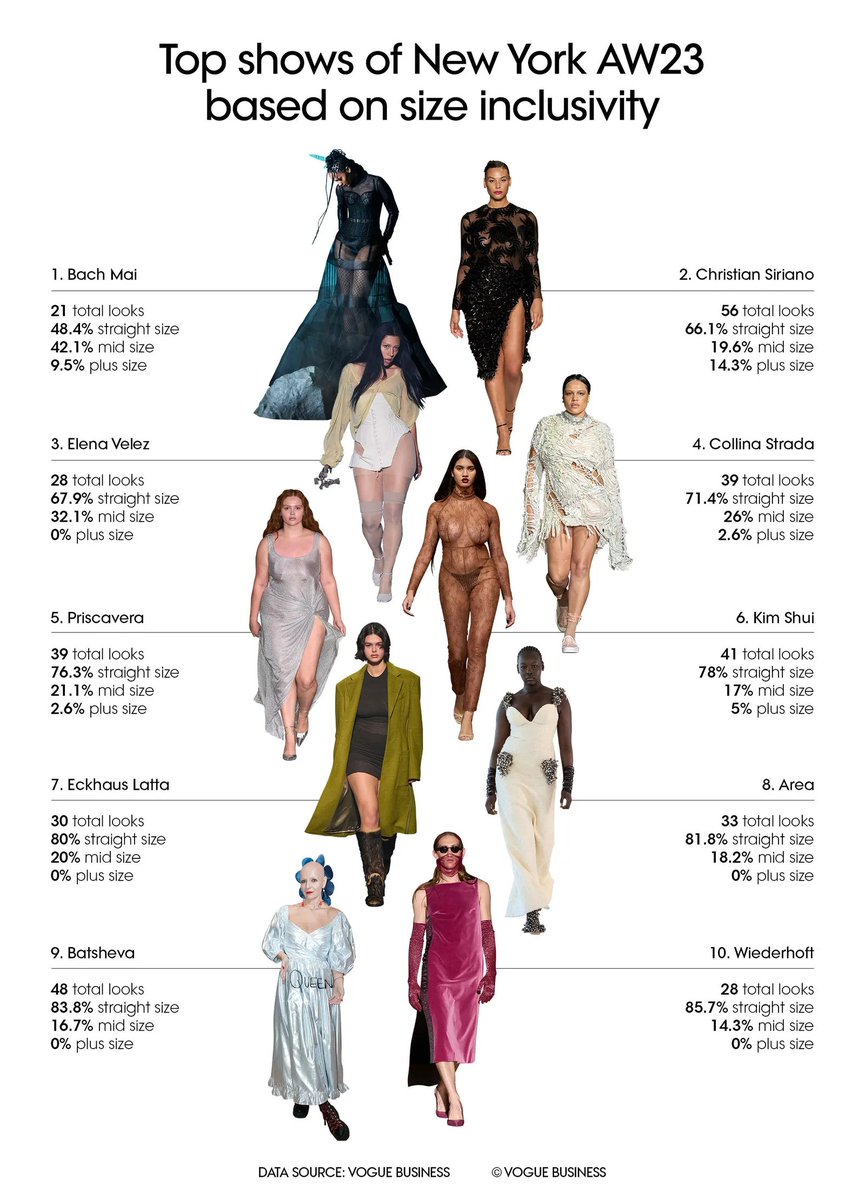
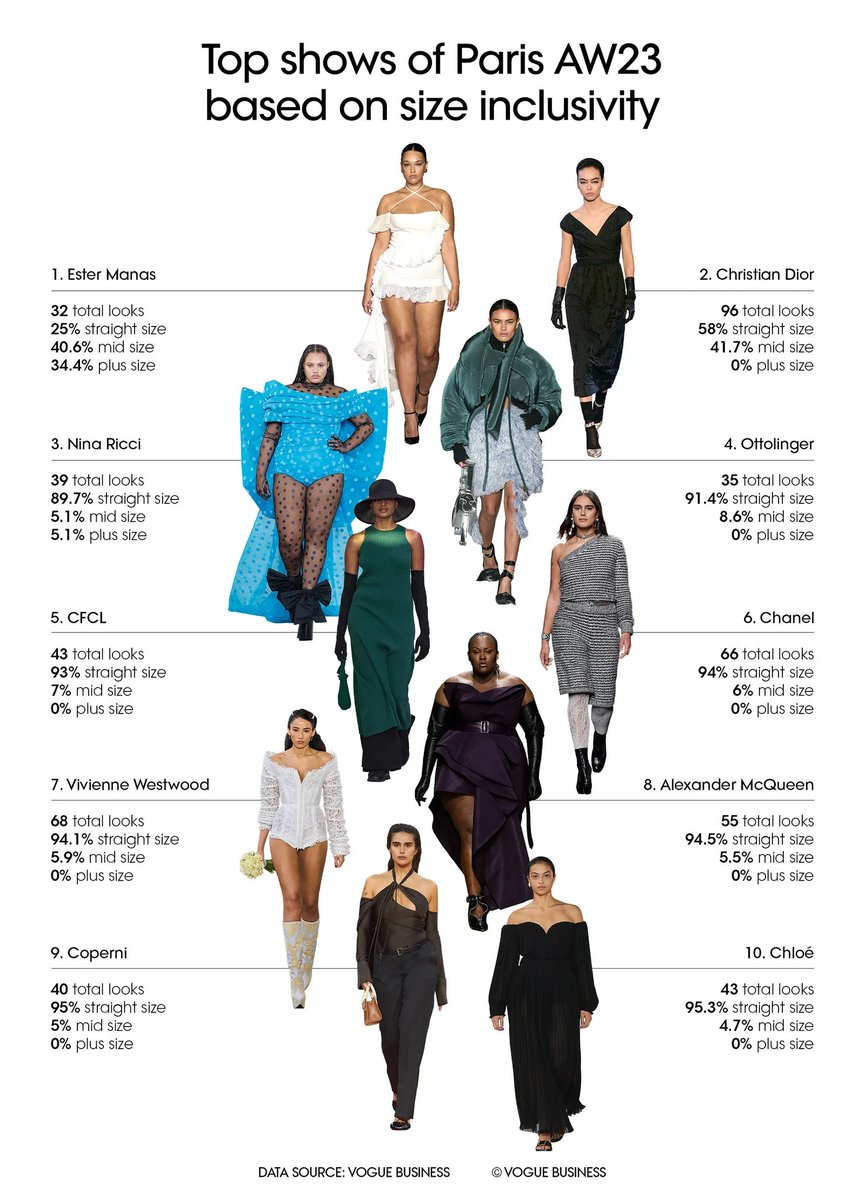
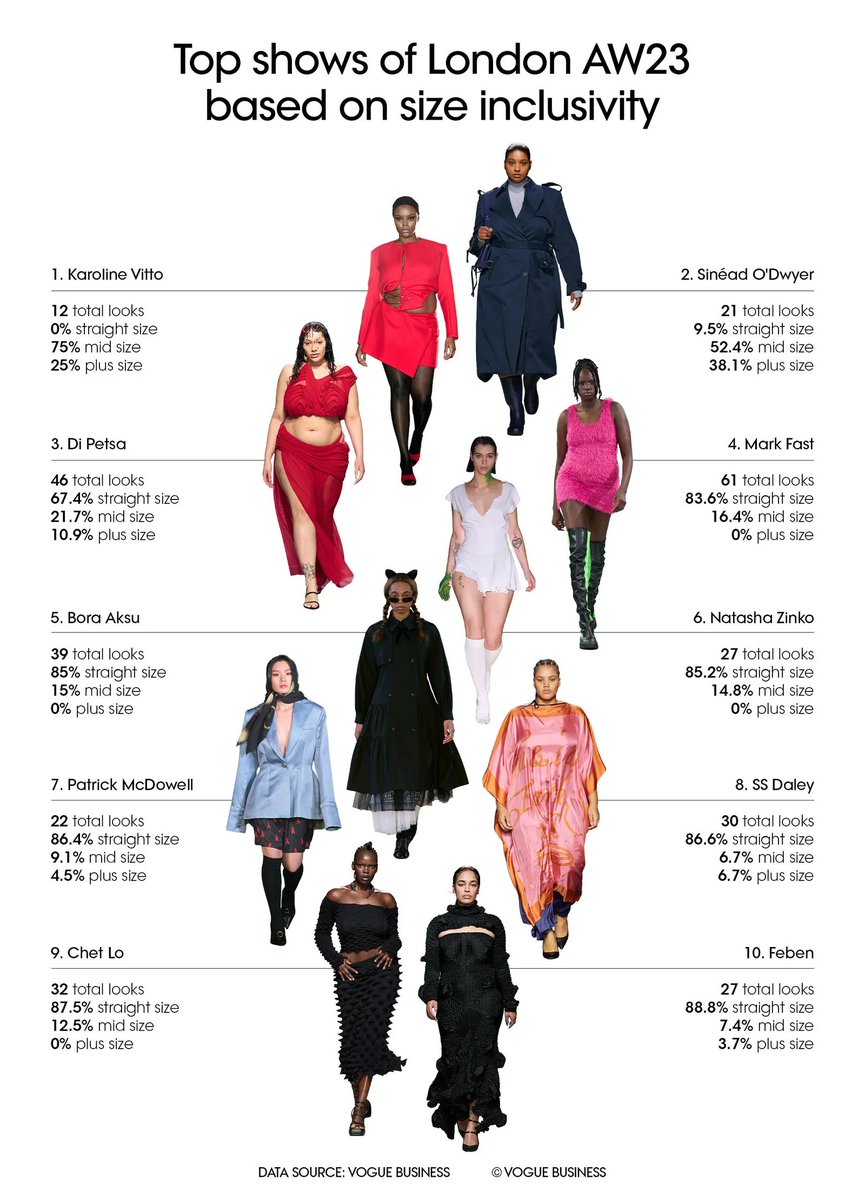
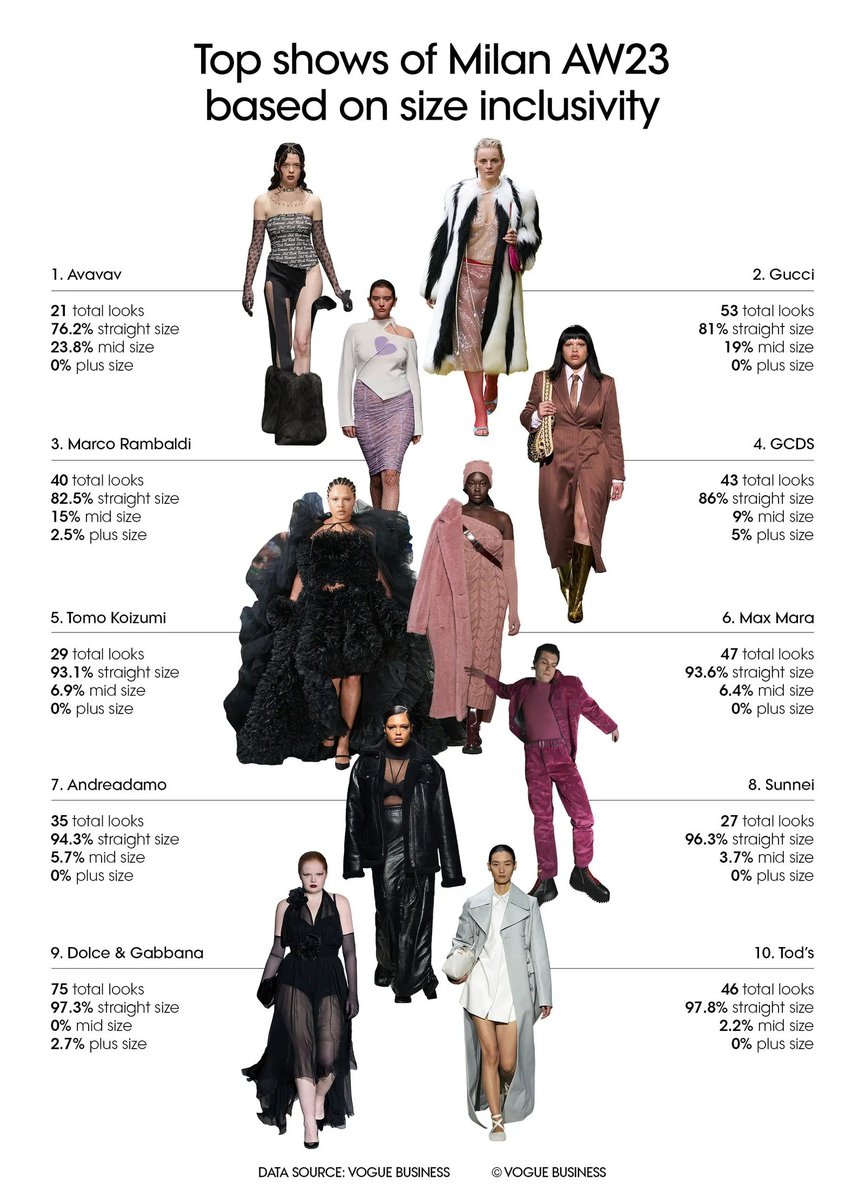
vogue business analysed all shows and presentations on vogue runway for spring 2023 to determine the level of size inclusive representation and these are the top shows from each fashion week based on size inclusivity:
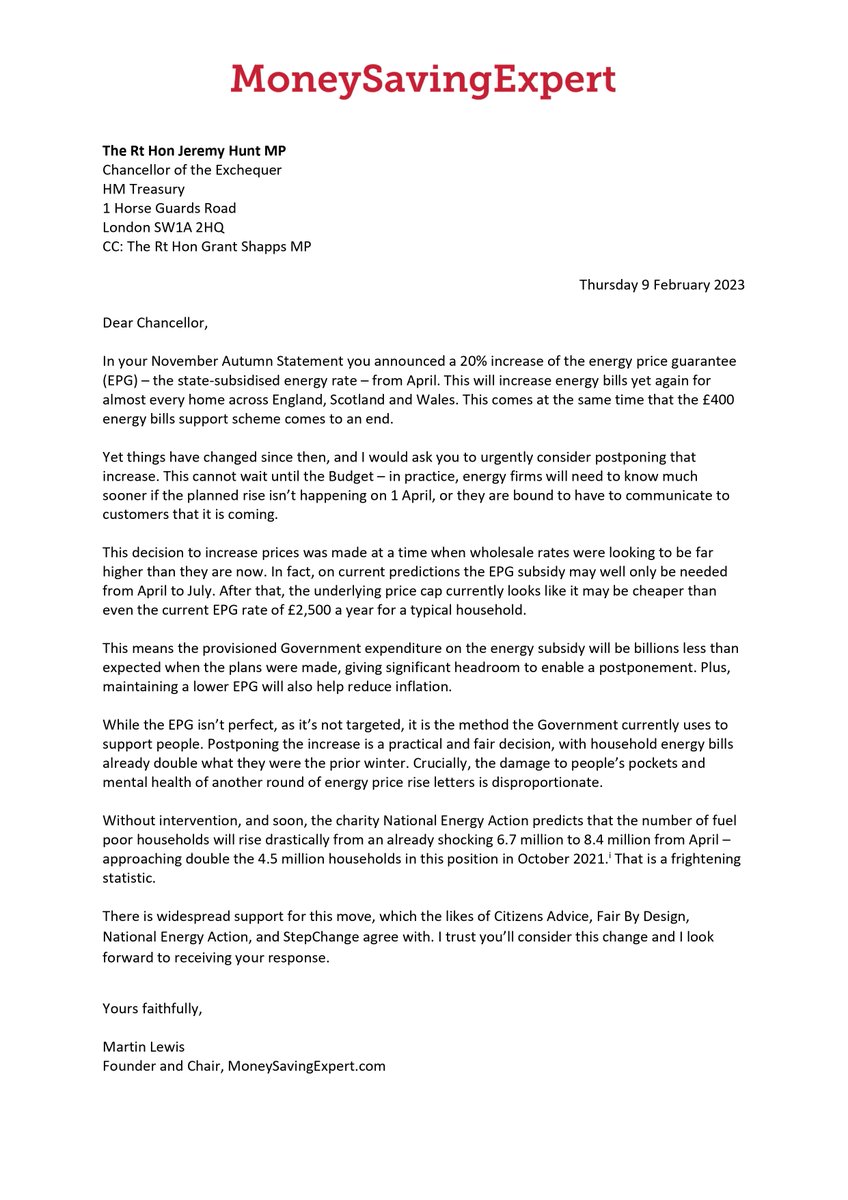
10 days ago I sent Chancellor @Jeremy_Hunt a letter (below) asking him to postpone the govt's 20% increase in energy bills on 1 April.
Since, SEVENTY major charities (below), & the energy industry trade body have signed up to support the letter.
IF YOU SUPPORT THE CALL PLS RT