AI Slop takes days-weeks off devs' work, causing slower release, anxiety, and exhaustion.
Touchstone allows you to separate genuine bugs report from the junk
Let me know what you think. Love to hear feedback on this
And we at SemiAnalysis only represents the tip of the iceberg. We track Claude Code Github Commits daily, and the image below represents what it looked like in Feb 2026 (Hint: Our daily tracker has is showing the line only going up further up and to the right since this publicly available chart in Feb). But we still think we are in the early innings.
The banks aren't using it. Enterprises are still figuring out how to use it effectively. Compliance and IT teams are still figuring out guardrails. The gap between "this is obviously useful" and "we've actually wired it into how our analysts work every day" is still massive at most places. (3/3)
New Anthropic research: Natural Language Autoencoders.
Models like Claude talk in words but think in numbers. The numbers—called activations—encode Claude’s thoughts, but not in a language we can read.
Here, we train Claude to translate its activations into human-readable text.
Claude for Excel, PowerPoint, and Word are now generally available, and Claude for Outlook is in public beta.
As Claude moves between your Microsoft apps, it carries the full context of your conversation.
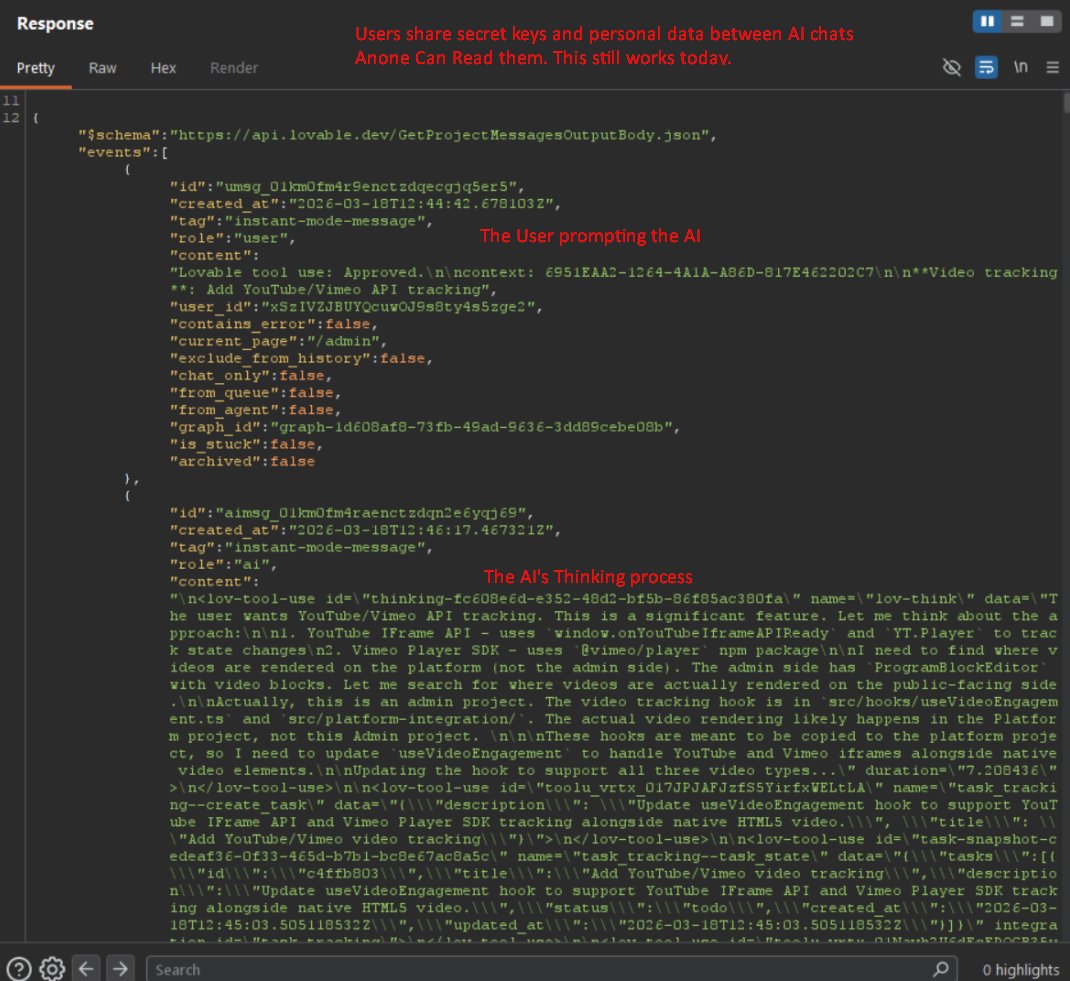
Lovable has a mass data breach affecting every project created before november 2025.
I made a lovable account today and was able to access another users source code, database credentials, AI chat histories, and customer data are all readable by any free account.
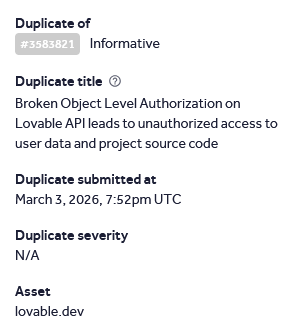
nvidia, microsoft, uber, and spotify employees all have accounts. the bug was reported 48 days ago. its not fixed. They marked it as duplicate and left it open.
If you read this and don’t understand why it’s happening it’s an opportunity to reset your understanding of how the real world works.
The real world will need a ton of help actually getting agents going in the enterprise. Companies have legacy tech stacks they need to modernize, data in tons of fragmented tools, knowledge that isn’t captured or digitized, and change management needed to actually utilize agents effectively. And they have to do all this while still running their business day-to-day, unlike startups.
This is why there is so much opportunity for companies (software or services) to actually deploy agents in specific domains and workflows. This remains a big opportunity for both existing services providers but also tons of new startups as well. Every new technology wave produces a new era of consulting firms that can deliver on that technology.
It’s also why the FDE model is going to be alive and well for a long time because companies will want to have their vendor actually help drive the change management and implementation for their new workflows.
The people aren’t going away. Far from it.
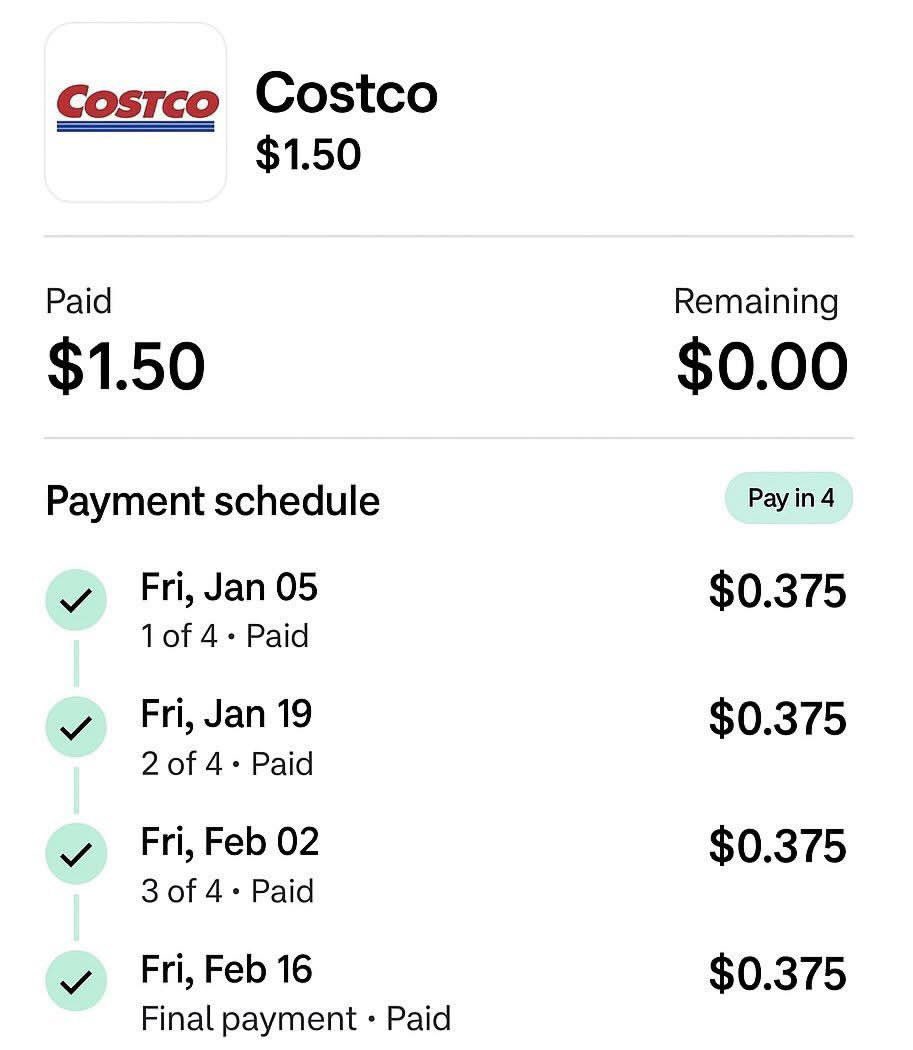
24 years old.
Fully paid off Costco hotdog.
It's not "parents money".
It's not luck.
It's consistency.
It's discipline.
I grind EVERYDAY to live this lifestyle.
High-agency people seem to have insane luck. They don't. They just tried 47 things while everyone else tried two and gave up. The conviction that reality is negotiable is generative, it makes you creative. Because if you believe there's always another angle, you start looking for angles other people don't see.
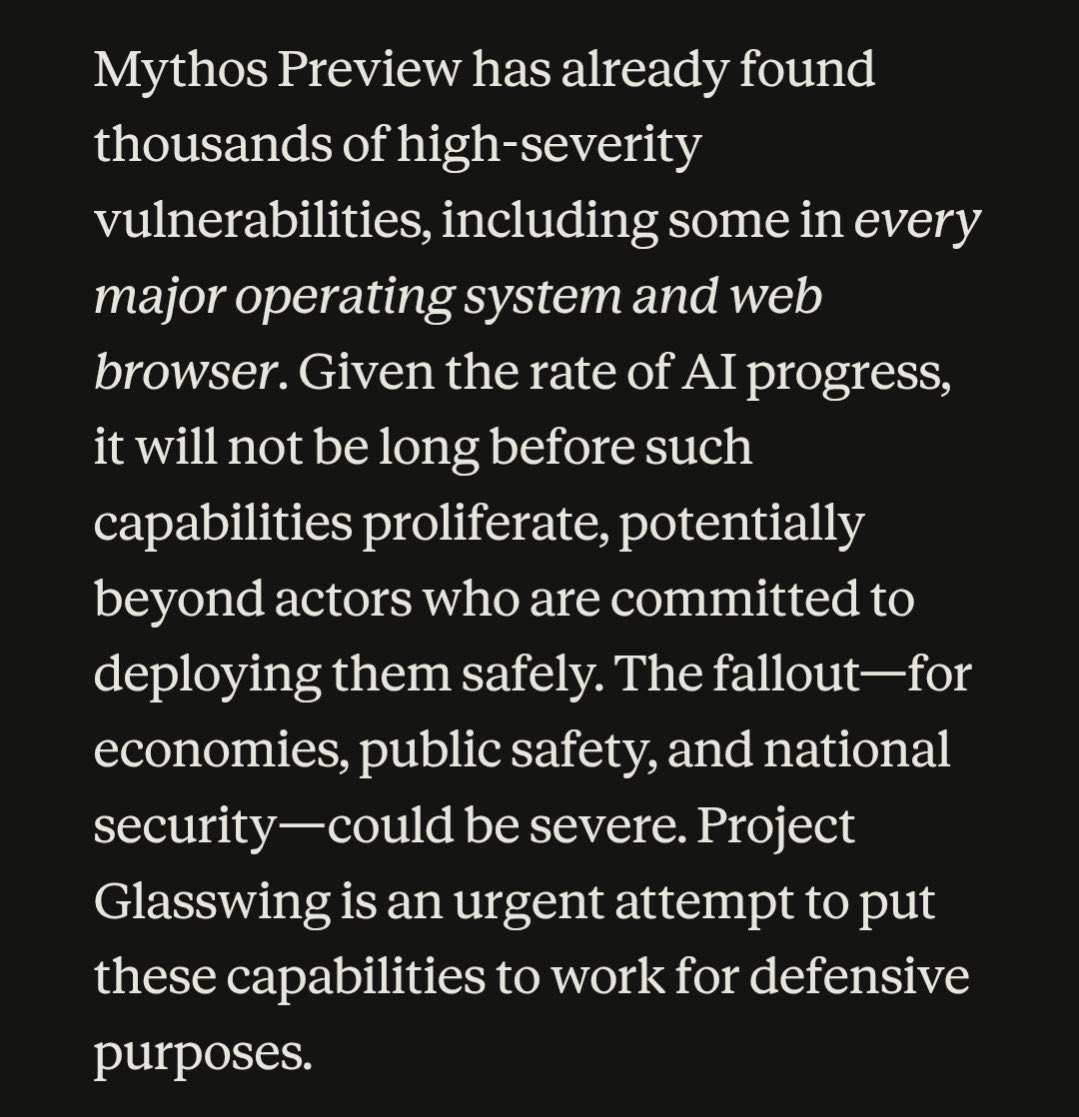
maybe this is not yet clear, so let me state it plainly: as of right now Anthropic, and really a small number of individuals at Anthropic, has the capacity to directly attack and cause major damage to the United States Government, China, and generally global superpowers. government agencies like the NSA do not have internal models or defense capabilities that outclass frontier models. if they chose to do so, they could likely exfiltrate top secret information from government systems, gain control over critical infrastructure including military infrastructure, sabotage or modify communications between members of government at the highest level, and potentially carry on activities for some time without detection. the thing about having access to a huge number of zerodays your adversaries don't know about is it gives you a massive asymmetric advantage.
they did not exploit this to gain power or destabilize the world order. they publicly released the information that they had these capabilities and worked to mitigate these flaws. you should be grateful american frontier labs have proven themselves remarkably trustworthy and concerned with the public good. but it's critical you understand we are in a new regime. private entities now have power that directly rivals and impacts the government's monopoly on influence and violence. and anthropic is certainly not the only one, there's little chance OpenAI's internal models are far behind.
this trend will accelerate on virtually every dimension, not slow down. my prediction for how it plays out is the relatively imminent seizure and nationalization of labs by the US government, sometime over the next two years. it's very tough for me to see how they accept the existence of this kind of threat. but this adds a whole new class of governance issues, as then we've handed these extremely wide-reaching capabilities from private entities to public ones.
Armed with Claude Code, a crypto bro and an actress top all benchmarks, getting a perfect 100% on most.
They did something that evaded all experts working on memory: get inspired by Ancient Greeks!
Feeling the eternal September; the normies have fully arrived.
“you've got to start with the customer experience and work backwards to the technology. you can't start with the technology and try to figure out where you're going to try to sell it.”
this is the fundamental problem with almost all of ai today. the founders who'll win are the ones who identify specific, painful, recurring workflows & make them vanish.