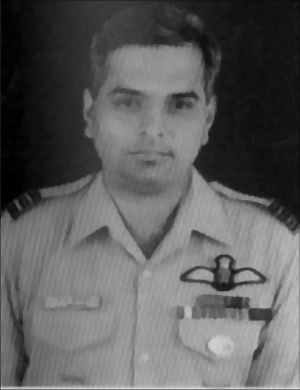
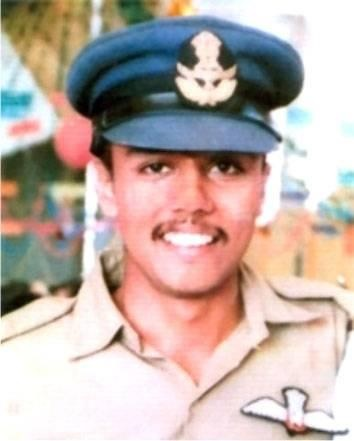
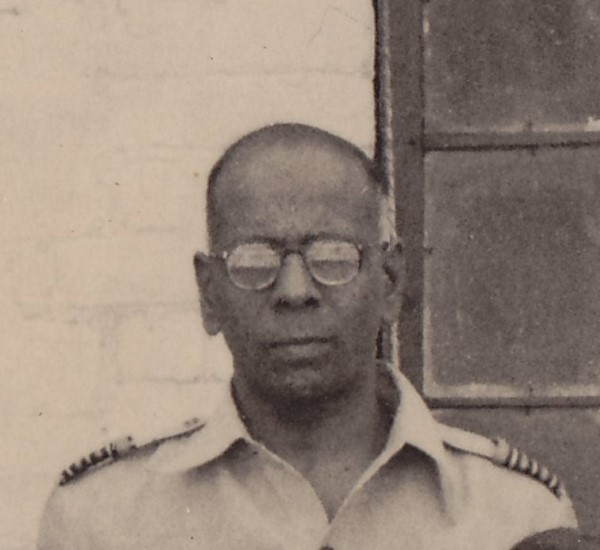
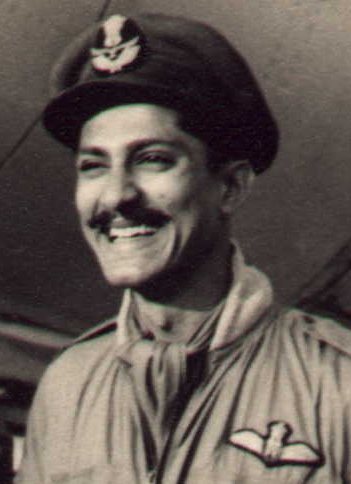
An exceptionally gifted officer whose professional accomplishments speak for themselves. He was also involved in the early planning of the Kargil air operations from J&K HQ and was awarded the Mention-in-Despatches for his contribution.
Grand Trunk Road. A Gnat. A bullock cart. And an Indian Air Force test pilot who stayed with a failing aircraft to the very end. The story of a Kirti Chakra awardee, announced on this day in 1961. (1/9)
#IAFHistory
The Many Cockpits of K K Venugopal
On 3 Feb 1993, a young Flying Officer ejected from a MiG-21 Bis after an engine flameout. Three decades later, the same officer has become the first Indian test pilot elected a Fellow of the Society of Experimental Test Pilots.
That officer is Gp Capt Kolal Krishnamurthy Venugopal.
Venugopal had been commissioned into the fighter stream on 16 Dec 1989 (144 PC/ 75 NDA). The MiG-21 would remain central to his early career. He flew all variants of the type, became one of the very few MiG-21 Bis FR-qualified pilots, and later commanded No. 15 Squadron when it was operating the Bis, as its last MiG-21 CO.
His subsequent appointment as Chief Operations Officer at No. 46 Wing, Nal, was another mainstream operational role. His Test Pilot career ran alongside the hard school of fighter flying, squadron service and operational command.
Venugopal graduated from the Indian Air Force Test Pilots School in 1999. From 1999 to 2004, he was involved in in-service flight testing and also instructed at IAFTPS. The test-pilot career that followed was unusually wide.
His logbook spans the Kiran Mk I and Mk II, HPT-32, all MiG-21 variants, MiG-29, Su-30K, Mirage 2000, Jaguar, LCA, Dornier, An-32, Avro, Saras, HTT-40, HJT-36, Embraer 135/145, Gulfstream IV and V, Global Express, Falcon 2000 and 900EX, Cheetah, Chetak, and even light aircraft such as the Zenair CH 701, X-Air and Streak Shadow.
More importantly, he was associated with prototypes and development aircraft: Saras Mk 1, LCA, HTT, and the MiG-21 Type 95, effectively a Type 96 airframe with the R-25 engine (C-1501). That combination of legacy fighter, indigenous prototype and modern combat aircraft experience is rare.
His best-known flight-test moment came with Saras.
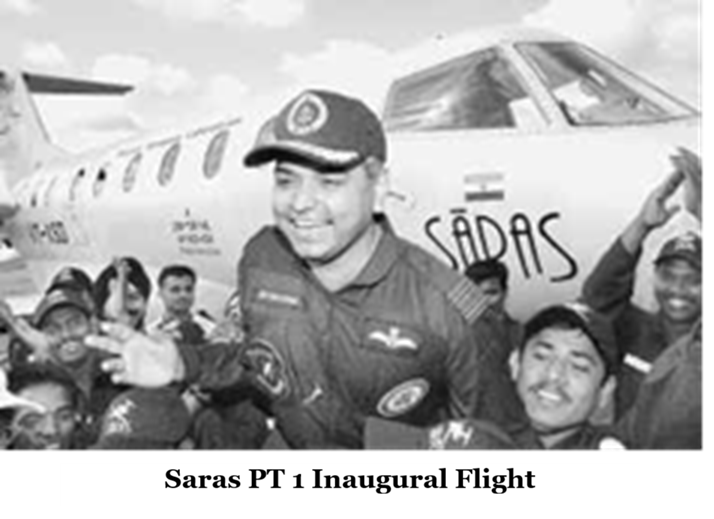
In January 2002, ASTE was tasked with flight-testing the Saras light transport aircraft, then under development by NAL. Sqn Ldr Venugopal, already at ASTE, was chosen to lead the Saras test team. The aircraft itself was an ambitious and difficult programme: an indigenous light transport aircraft with a rear-mounted pusher-prop configuration, being taken into the air without the cushion of a mature engineering test simulator.
On 29 May 2004, the first Saras prototype took off on its maiden flight. Soon after take-off, the crew suffered AHRS and angle-of-attack indication failures, losing vital flight information. The aircraft also developed mild vibrations after a refuelling panel opened in flight. For any aircraft, this was serious. For a prototype on its first flight, it was worse.
As captain, Venugopal recovered the aircraft safely. For this, he was awarded the Vayu Sena Medal.
After a mandatory operational tour (15 Sqn, Flying Lances Command), he returned to ASTE in 2009 and became commanding officer of the test squadron. He was later assigned to the LCA Mk I programme, undertaking developmental flight tests across fly-by-wire, autopilot, weapon systems, brakes, core avionics and other areas.
In 2016, he retired voluntarily from the IAF and joined HAL, where he became Executive Director and Chief Test Pilot for fixed-wing aircraft. At HAL, he led the HTT-40 turboprop trainer programme, conducted the prototype's first flights and the full spin campaign. He also undertook spin testing of the modified HJT-36 and oversaw its revival. Since 2021, he has led the LCA Mk IA upgrade programme, including the prototype's first flight, weapon integration, and capability-enhancement testing.
By now, Venugopal has over 3,000 hours in flight tests. He has participated in every Indian fixed-wing programme since 1999 and led four of the five. His election as an SETP Fellow now places an Indian name at a rare level of recognition in the global test-flying community. Not many Indian aviation careers connect so many worlds.
#IAFHistory @IAF_MCC@HALHQBLR
The Gnat became part of Indian Air Force folklore as the “Sabre Slayer”. In 1965 and 1971, it gave Indian pilots a machine with which they could take on the Sabre and win.
But every aircraft has two histories. One is the history of combat, citations and squadron lore. The other is written more quietly, in accident reports, mess conversations, and the memories of families who received a knock on the door.
The Gnat/Ajeet was a difficult, mercurial aircraft. Serviceability was poor, and the accident record was unforgiving. Bharat Rakshak lists as many as 94 accidents over roughly three decades of IAF service, from about 260 aircraft inducted.
Today, though, I remember one name.
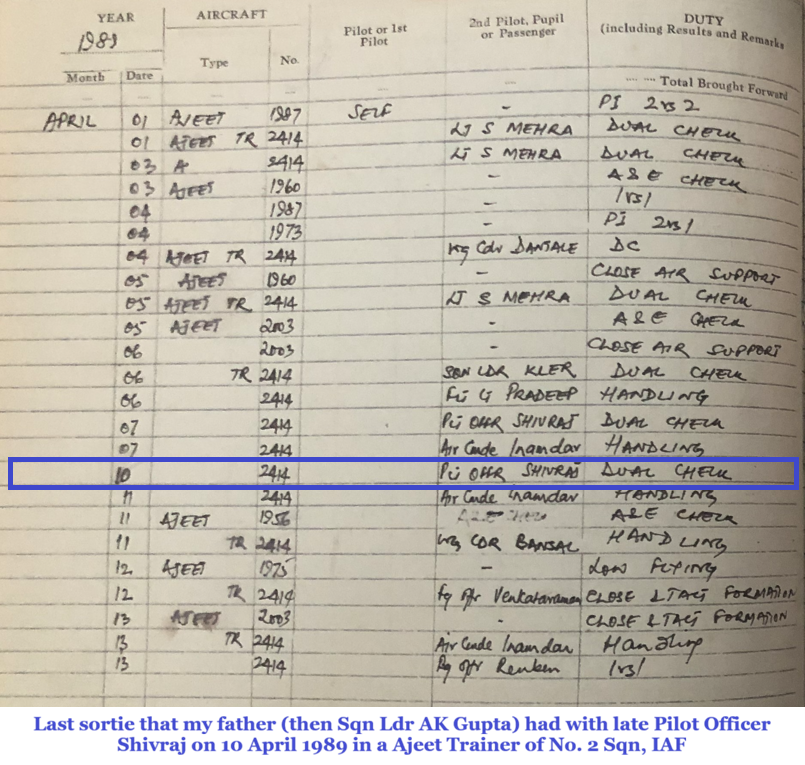
Pilot Officer Sanjay Shivraj died in an Ajeet crash on 11 May 1989. It was the last recorded crash of the type in IAF service. He was on a formation flying sortie when his aircraft went into the ground.
He had been commissioned barely a year earlier, with the 140th Pilots’ Course. Like many young fighter pilots before him, he was flying an aircraft that rewarded skill but punished inexperience with little margin for error.
I remember his name because I heard it often while growing up.
My father was then the Flight Commander of No. 2 Squadron, of which Shivraj was a young member. He was on leave in Delhi when the accident happened. Shivraj’s parents were also in Delhi, and the responsibility of telling them that their son was gone fell on my parents.
My mother still remembers that day with pain. There are some duties for which no uniform, rank or training can prepare you.
May you rest in peace, Sanjay Shivraj.
#IAFHistory @IAF_MCC
Running a super-niche blog on the Indian Air Force + history is not for the faint-hearted. In an era of short videos, instant AI answers & shrinking attention spans, getting readers to dive into 1500–3500 word deep reads feels like a rebellion.
Proud of this first milestone!
Amongst the myriad heroic stories of battles between @IAF_MCC & PAF, the travails & resilience of three scanners at Sakesar, Badin & Amritsar would rate high. This thread revisits the tales of these emitters across the Radcliffe line during the Indo-Pak wars. #IAFHistory (1/26)
This was not war.
Nor a combat squadron.
It was an airshow, a show.
A pilot died in front of us. The honourable choice was to stop.
“The show must go on” is an IAF creed too, but one meant for war and combat training, not a cover to keep a crowd entertained.
On this day (3 Nov) in 1987 in Mulai, Jaffna, Mi-25s covered 1 Para’s amphibious attack to capture/kill for Prabhakaran. Sqn Ldr Rajbir Singh, flying the Mi-25/35 gunship, was awarded Vir Chakra for the mission.
Intelligence had placed Prabhakaran near Mulai on the evening of 2nd Nov. A direct heli-landing was ruled out: 1924-vintage maps, dense tree cover, and a heavily defended area. Col A. Katoch (CO, 1 Para) proposed a surprise amphibious approach by boats from offshore, timed for first light, with Mi-25s providing overhead suppression. The plan avoided alerting defenders and gave 1 Para a fighting chance to close in unobserved.
Two Mi-25s launched at dawn. Wg Cdr Malhan led in Z-2555 and Sqn Ldr Rajbir Singh captained the second. An Army ALO was onboard. Because initial rules barred rocket (R/P) firing, both helicopters were cleared for front-gun only, forcing low, repeated passes through small-arms and HMG fire. In a thick jungle with no distinct IPs, air–ground coordination was improvised on R/T with Katoch: the gunships orbited until steered directly over friendly troops and then dived onto identified nests.
As the Paras closed in, the Mi-25s executed multiple, accurate front-gun attacks that paralysed several machine-gun positions. During Rajbir’s third pass on a gun nest, his helicopter was hit; the left-engine oil pressure fell to zero. Over a hostile zone where a forced landing meant capture, he shut down the engine, held the aircraft on single-engine power, and—critically—refused to jettison the remaining ammunition so the formation’s firepower would not be squandered. With the radio also damaged, he nursed the gunship back through a busy circuit and landed single-engine without further damage.
The suppressive gun runs enabled 1 Para to press the advance without casualties in that phase and contributed to the capture of a 0.5-inch Browning AA gun soon after. By the next day, reports indicated Prabhakaran had been treated for injuries, underscoring the pressure the operation created. (Later that day, with rockets finally cleared, follow-up strikes continued over the same area.)
Vir Chakra Citation: “For conspicuous gallantry and professional competence, Sqn Ldr Rajbir Singh carried out repeated, accurate front-gun attacks on heavily defended positions impeding a Para Commando advance at Mulai on 3 Nov 1987. After battle damage crippled his left engine, he established single-engine flight, retained vital armament, recovered safely despite R/T failure, and preserved the aircraft for further operations.”
In 1994, Wg Cdr Rajbir Singh, then CO of 125 Helicopter Sqn, tragically died in a crash.
#IAFHistory
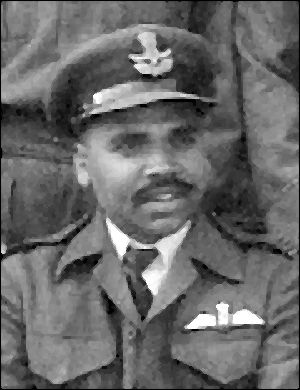
Born on this day (2 Nov) 1899, Wg Cdr Henry Noah is one of those quiet architects of the @IAF_MCC you almost never hear about — but you should.
Before 1942, the IAF didn’t even have its own Accounts or Education branches. All of that was handled by RAF officers, with Indian airmen doing the day-to-day work.
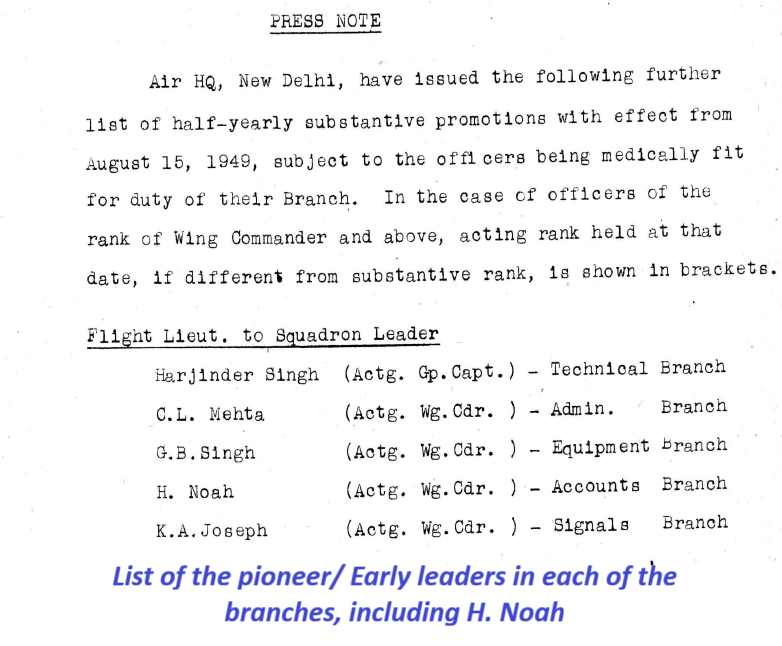
That changed in 1942, when the Accounts and Education branches were created. But there was a problem: there were no IAF officers to put in them. So the Air Force pulled experienced officers out of the Administration & Special Duties (A&SD) branch and reassigned them.
In May 1943, the first batch of 14 officers was moved across — two Flight Lieutenants and twelve Flying Officers. The senior-most of them was Henry Noah, officially transferred on 23 May 1943, making him the first IAF officer in the Accounts Branch at the young age of 43!
Noah’s path to that moment wasn’t typical. Before the Air Force, he had served on the staff of the Indian High Commission in London. He was commissioned into the A&SD branch in April 1942.
In Early 1947, Noah was made acting Wing Commander and given command of the Air Force Central Accounts Office Briefly. On 15 June 1947, he was appointed Deputy Director of Accounts at Air HQ — and he continued in that role even after Independence, until March 1952. He retired then, because at the time Wing Commander was the highest rank available in the Accounts Branch and and his extended service commission had run its course.
#IAFHistory
Mystery Trivia: The @IAF_MCC Service numbers for officers were put in place only in Oct 1942 (10+ years after formation) and unlike RAF/RFC that started with the number 1, IAF started with the service number 1551. Why 1551 remains a mystery (and an itch)? #IAFHistory (1/5)
Born today (13 Oct) in 1929: Air Marshal Pynummoottil Simon George. Commissioned in March 1952, he rose through command and staff roles, leading a fighter squadron and an operational air base, and earned a reputation as an exceptional instructor, even being deputed to the United Arab Republic to train pilots.
In April 1984, he was appointed the first Inspector General of the @IAF_MCC , building an impartial, standards-driven framework to assess operational and combat readiness across units and support infrastructure.
#IAFHistory
Remembering Gp Capt VS Pathania— @IAF_MCC pilot who logged independent India’s first confirmed air-to-air kill (Gnat / F-86). He’d have turned 88 today. We lost him 30 years ago, before his feat was widely known.
Kicked to share a birthday with him though :-)