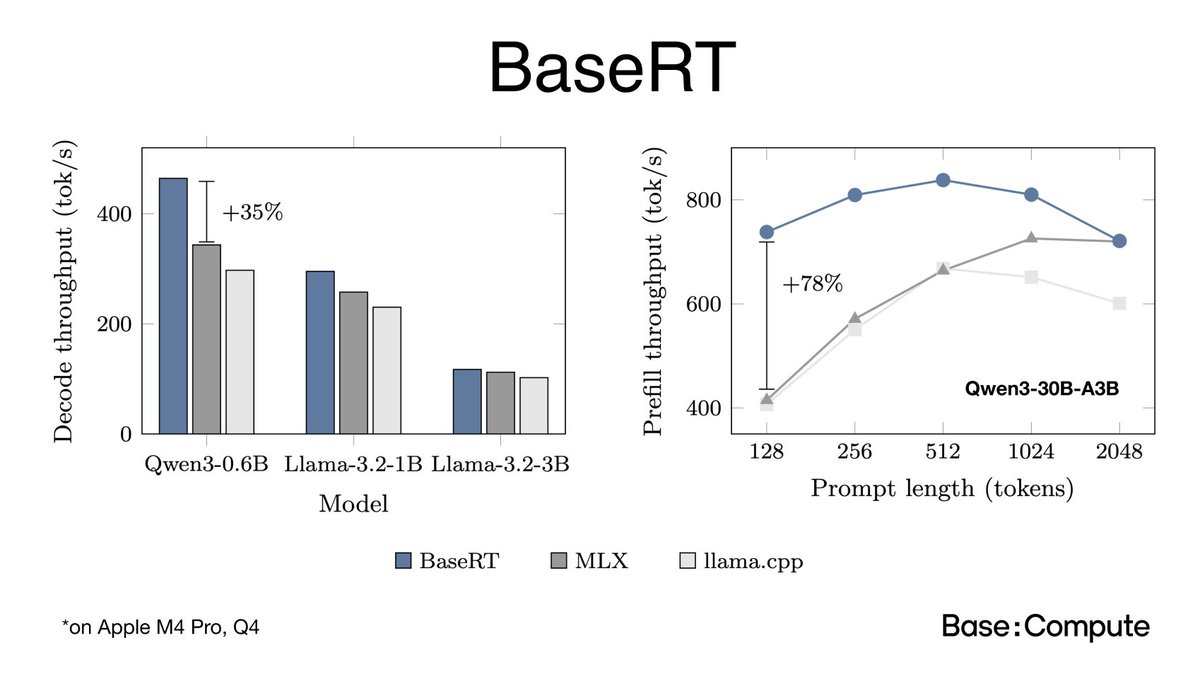
We’ve built the fastest inference runtime for LLMs on Apple Silicon, faster than MLX and llama.cpp.
BaseRT is up to 35% faster than Apple's MLX on token generation (decode) for small models, and 78% faster on prefill for bigger models.
Details below.
All Macs in the world added up are equivalent to 6% of AI data centre compute on Earth.
Around 120 million active Apple Silicon Macs, call it 8 TFLOPS of FP16 GPU compute each. That is roughly 970,000 H100-equivalents, against 15 million-plus in the world's data centres.
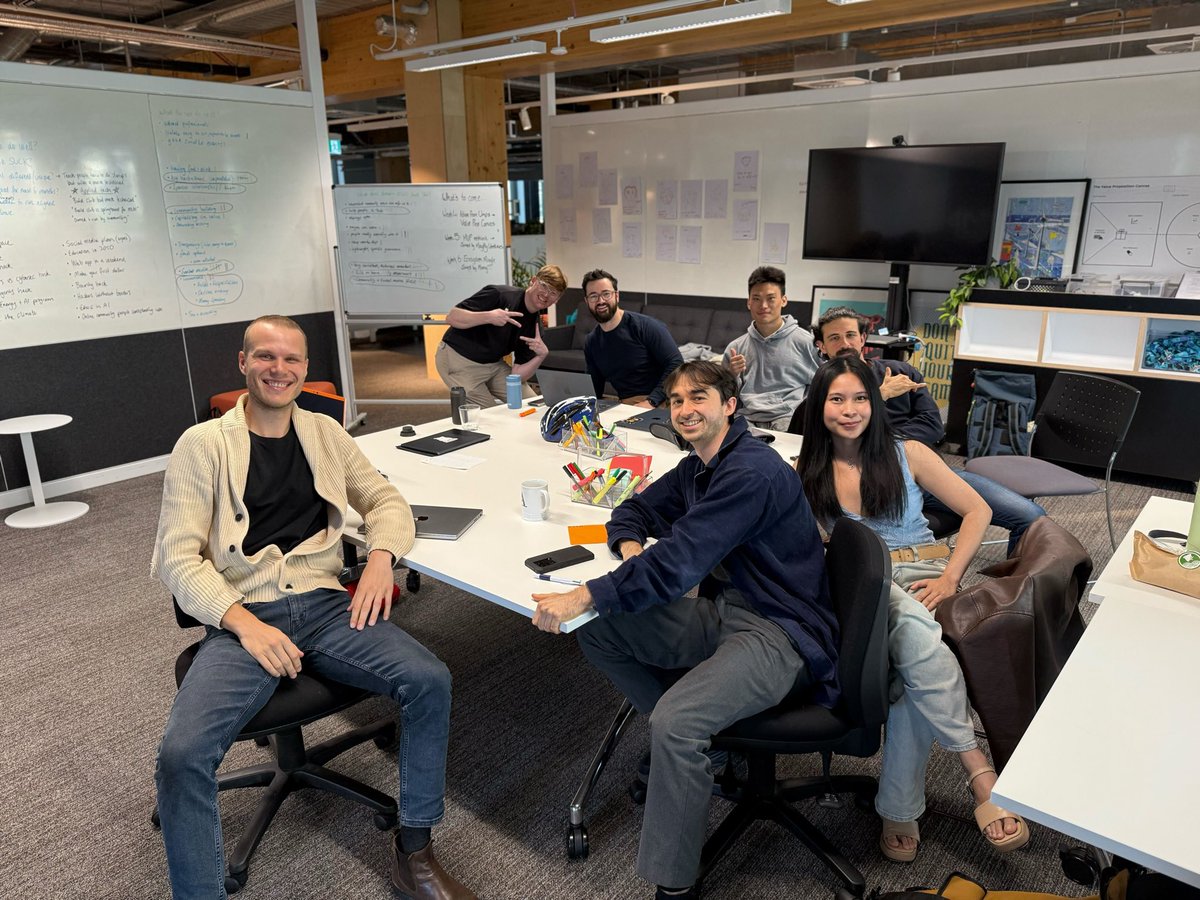
Finally, congratulations to @LukasLetsGo for winning TMOS Team Member of the Year! Lukas has spearheaded our flagship program, launched a start up, and provided support for the team of students he supervises. Well deserved!
I think experiments like this one show the potential of AI assisted scientific ideation in the future.
Check out our prototype here and let me know what you think https://t.co/VkS6HWS4MW
It shows you the collaboration ideas it generated, and colour codes how each of the two researchers would contribute their skills.
Some of the ideas are actually decent, a lot of them are bad, and some are funny.
But I think it can get you thinking, it can help new PhD students experiment with ideation, and it can give you a conversation starter if you just met someone at a conference.
What if we had a tool that we could give two researchers, it would read their Google Scholar profiles, understand concepts for ideas that have proven successful in the past, and generate specific collaboration ideas based on that?
💡 Exciting news - we built a prototype for AI enabled science collaboration. “What can we do together?”:
Imagine you just met someone at a conference, and you already had three conversation starters for potential collaboration projects ready to go.
#ai#science#OpenAI