Draw the diagram yourself first in Excalidraw, Miro, then paste it to the agent and ask to validate it. You'll learn far more than if the agent draws it for you.
Same with your Zettelkasten. Write the concept in your own words first, then paste it in and let the agent check your understanding.
3Monads in October: one Notes page, a calmer Today, a guided start.
520 tasks and projects created (+87%), 483 completed (+64%), 108 improvements, 88 fixes.
No AI slop, no chatbot pop-ups. UX and UI first.
https://t.co/qq9p82lwkY
Don't let your brain rot.
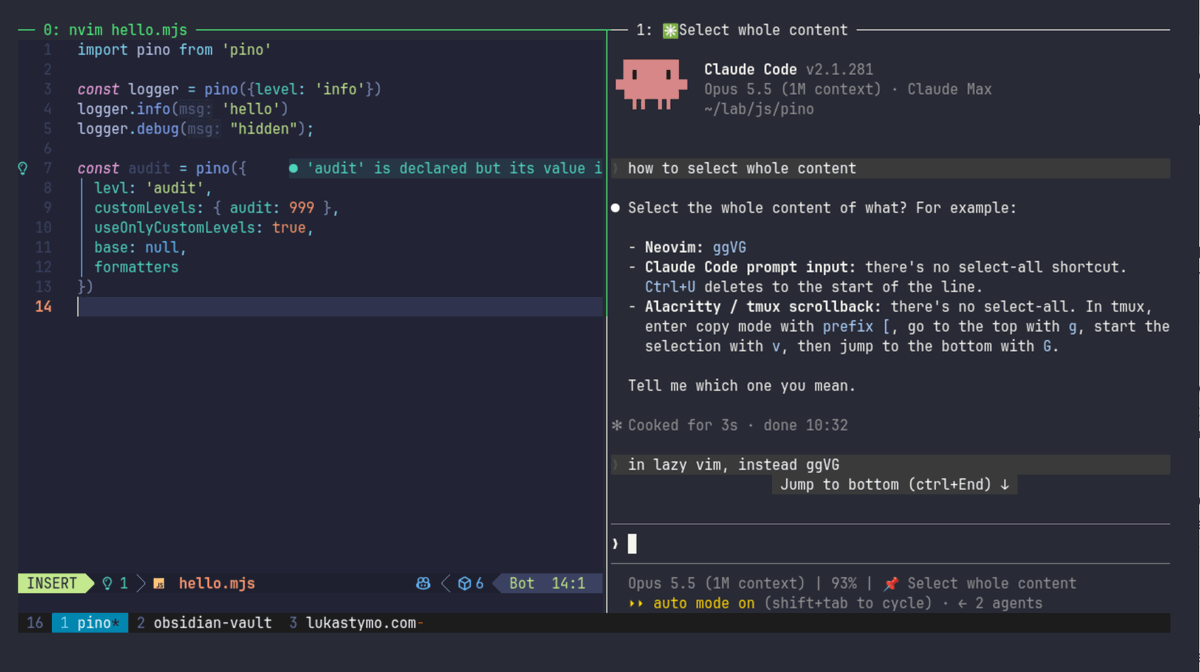
I now use vim when I need a rest from AI. It's eye-opening. Use whatever you like, but I recommend having a place where you can think and put your thoughts together.
You can get more out of reading too: close the book and write it down in your notes. I use Obsidian as my second brain, where I explain each chapter or concept in my own words (no AI in there, at least not for the content).
The Unix philosophy is what we need now! Build things that solve one problem really well, instead of AI slop.
It is tempting to generate diagrams by AI, but it is often more beneficial for us, just like closed books and notes, to do this ourselves (excalidraw on rescue!).
Medallion Architecture is a really nice pattern for lots of data projects. It applies separation of concerns, so our software is easier to maintain and extend.
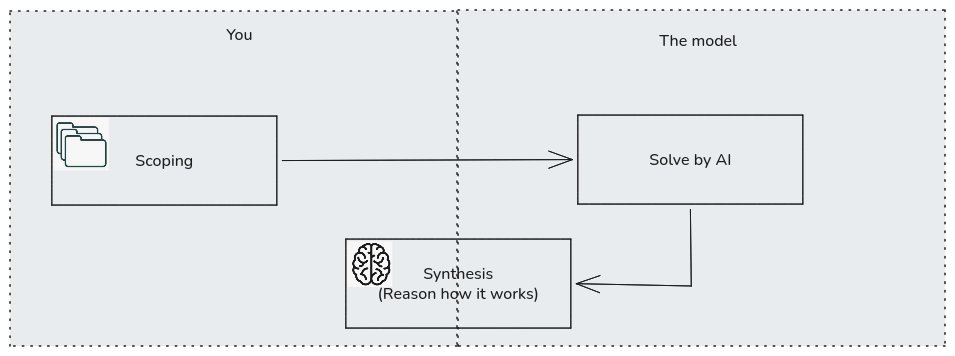
I work with coding agents in three phases: scoping, solving and synthesis. The model works alone only while solving. Synthesis, where we work out together how the code works, matters most.
Fun bash fact: if doesn't evaluate conditions. It runs a command and checks the exit code.
if [ -z "$NAME" ]; then
Here the command is [, with -z, "$NAME" and ] as its arguments. Which is why this works too:
if grep -q foo file; then
Agree, especially on drafts. The writing-as-thinking part is the one I'd underline. If the LLM writes the first version, it also did the thinking, and editing won't give that back.
I see the same with architecture diagrams. Drawing the first version badly by hand is where I actually understand the system. Let the LLM adds the missing bits later.
Good read: https://t.co/Iu8Jyjk4bB
After 20 years, I've finally figured out what "marketing" is:
Marketing = doing stunts that get attention.
Then optimizing that attention into highly scientific funnels.
Context decides which branch the model lands on. Vague context gets you an email reply template. Requirements and domain terms get you close to the true solution.
@karpathy I'll have a go with ASD-STE100, it might replace my ELI5. The diagrams bit is gold, I use it a lot. Instead of a wall of text: show me a sequence or flow diagram. For deep understanding though, once I've learned it from the LLM, I redraw it by hand.
One of the reason I like Quantitative Finance is I get to use a lot of mathematics in my day to day work.
This is the integral I got to solve today to price a derivative product.
Btw, can you see the first equation and decode where it appears in Quant?