Culture is everything.
If your child is not in a culture that genuinely supports and nourishes and enjoys learning, they won’t learn.
Nothing about the public educational system or public culture supports or nourishes or enjoys genuine learning anymore.
Families in partnership with church communities have to create micro cultures wherein students can still develop their essential humanity for at least these formative years before they have to deal with being forcibly plugged into the machine.
“We are admitting a cohort that cannot read at a college level and are pretending otherwise.”
Another college professor adds to the chorus of concern about student capacity.
In @chronicle:
“Six weeks into the term, I assigned my rhetoric and writing students a 20-page article. It was the same length I had assigned for five years and the same length I had read without complaint as an undergraduate a decade ago. Not one student finished it.
When I asked why, a student answered honestly: It was too long, and she kept losing track of what the paper was about. This was not a remedial class: These were students who had cleared the admissions process and written essays good enough to get them here. Yet a routine academic reading assignment had defeated them.
Every generation of professors has complained that their students cannot read. The lament is usually overblown, but data have caught up to anecdote, and what I am seeing in my classroom is no longer a hunch. There is a measurable, generational collapse in sustained reading and writing, and the academy is responding to it with improvisation and exhaustion rather than the structural overhaul it requires.
In February 2024, Adam Kotsko, who teaches in the Shimer Great Books School at North Central College, wrote in Slate that students who once handled 30 pages of reading per class meeting now seem “intimidated by anything over 10 pages and seem to walk away from readings of as little as 20 pages with no real understanding.” Crucially, he added that this is “not a matter of laziness on the part of the students” but of underlying skills they were never given a chance to build.
The Chronicle of Higher Education’s 2024 investigation found the same pattern across institutions as different as the Stevens Institute of Technology and Wellesley College, where the average SAT exceeds 1400. Nicholaus Gutierrez, an assistant professor at Wellesley, told The Chronicle that the baseline for what students consider a reasonable amount of work has dropped so noticeably that he has cut his readings accordingly; a 750-word essay now strikes many students as long. At Stevens, the science and technology studies associate professor Theresa MacPhail described following the mantra of “meet your students where they are” for so long that she has begun to feel “like a cruise director organizing games of shuffleboard.”
Worse, the national data tell the same story in colder language. On the 2011 National Assessment of Educational Progress (NAEP) writing assessment, which is the most recent comprehensive writing benchmark, only 24 percent of 12th graders reached the Proficient level, and just 3 percent reached Advanced; another 21 percent scored below Basic. The reading side of the ledger is worse, and getting worse fast: The 2024 NAEP results released in September 2025 show 12th-grade reading scores at the lowest level recorded since the assessment began in 1992. Thirty-two percent of 12th graders now score below NAEP Basic in reading, meaning that, in the assessment’s own language, they likely “cannot draw general conclusions based on concepts presented explicitly in a text.” And yet more than half of these same seniors reported being accepted to a four-year college. That last sentence is the whole problem in one line: We are admitting a cohort that cannot read at a college level and are pretending otherwise.”
You are what you love. Without love, we are nothing.
It is desire, the feeling of value, the Chest that makes man a man.
Without this, facts have no significance, no means by which they can be ordered. We have no way to care about one thing more than another and so we drown in a sea of sand.
The average student graduates after 12 years of schooling and still cannot answer the most important questions in life.
What is a good man?
What is justice?
What is worth sacrificing for?
What is beauty?
What is truth?
What is the purpose of life?
Classical education begins with the assumption that any education failing to address these questions is not really education at all.
Please, someone, tell me this is all just... not true! Am I dreaming? Nolan is one of my favorite directors of all time...I'm not sure I'll be able to even watch this film.
Christopher Nolan: Orchestras didn’t exist back then. We can’t use an orchestra for The Odyssey...
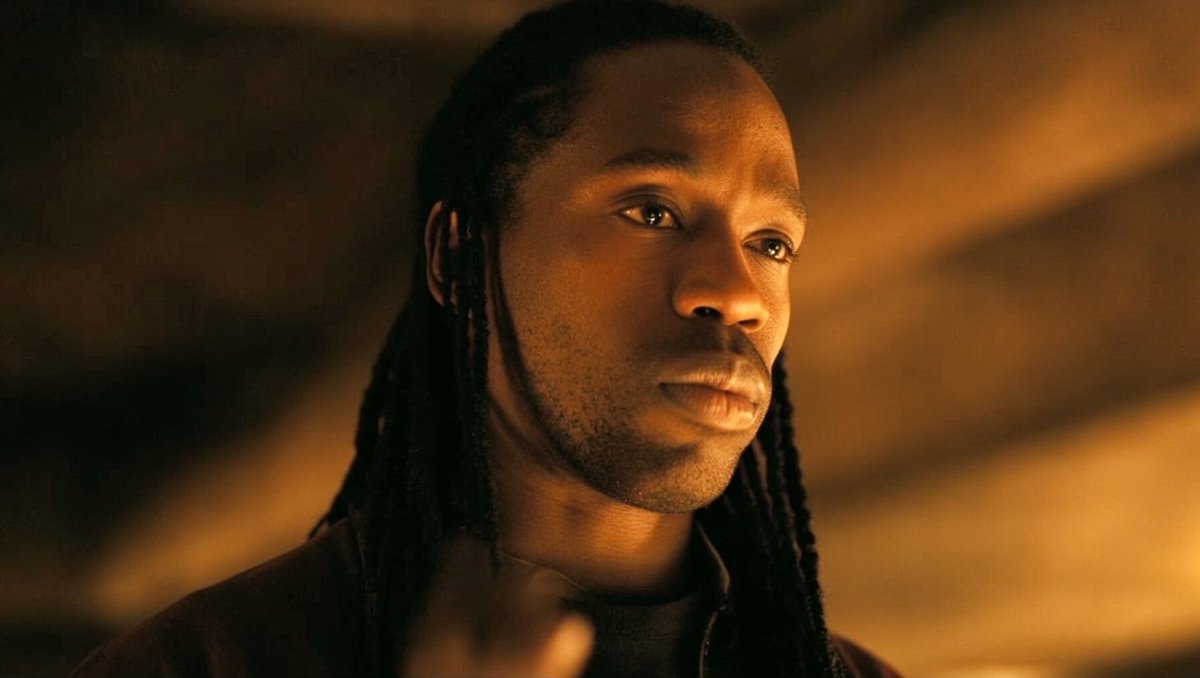
Also Nolan: Helen of Troy is now black. Achilles is a 5 ft nothing tranny. Travis Scott is gonna rap. Robert Pattinson is gonna say “daddy”. Soldiers will have iron armor in the Bronze Age. Movie will be based on a modernized, feminist rewrite of the story.
This movie will be a beautifully filmed piece of woke, liberal slop.
In my mind, DNA is the smoking gun for an intelligent Mind behind life.
Whenever we encounter a language, a code, an information system, it turns out to be the product of an intelligent agent -- not of the blind, automatic processes of nature, as naturalism or materialism proposes.
The world is not an empty waste, it is not a simulation, it is not a machine; it is the Creator's great cosmic work of art, the symphony sounded by souls, the great story composed from all stories in which the glory of Homer and the wit of Shakespeare are but points of light in the expanse of its greatness.
If Elliot Page is playing Achilles, this will be the biggest bomb of Christopher Nolan’s career. It’ll be meme’d to death before it ever comes out. You can’t go from Brad Pitt as Achilles to a confused woman and expect an audience to take it seriously.
“If I set the sun beside the moon,
And if I set the land beside the sea,
And if I set the flower beside the fruit,
And if I set the town beside the country,
And if I set the man beside the woman,
I suppose some fool would talk about one being better.”
—G. K. Chesterton
Marxism has so many parallels to Christianity that it has been dubbed a Christian heresy:
"For Karl Marx, the ultimate creative power was matter itself. This was a new form of philosophical materialism, for earlier versions had been static, picturing the world as a vast machine. The problem with that conception, for Marx, was that it seemed to open the door to the idea of God: Since a machine is designed to fulfill a particular function, it virtually requires a designer, just as a watch implies the existence of a watchmaker.
To avoid that conclusion, Marx proposed that the material universe is not static but dynamic, containing within itself the power of motion, change, and development. That’s what he meant by dialectical materialism. He embedded the Prime Mover within matter as the dialectical law.
In short, Marx made matter into God. His disciple, Vladimir Ilyich Lenin, did not shy away from using explicitly religious language: “We may regard the material and cosmic world as the supreme being, the cause of all causes, the creator of heaven and earth.”
The universe became a self-originating, self-operating machine, moving inexorably toward its final goal of the classless society.
Marx’s counterpart to the Garden of Eden was the state of primitive communism. And how did humanity fall from this state of innocence into slavery and oppression? Through the creation of private property. From this economic “Fall” arose all the evils of exploitation and of class struggle.
Redemption comes about by reversing the original sin—in this case, destroying the private ownership of property. And the “redeemer” is the proletariat, the urban factory workers, who will rise up in revolution against their capitalist oppressors.
One historian, though not a professing Christian, brings out the religious overtones nicely: “The savior proletariat [will], by its suffering, redeem mankind, and bring the Kingdom of Heaven on earth.”
The day of judgment in Marxism is the day of revolution, when the evil bourgeoisie will be condemned. Marx and Engels even used the liturgical term Dies Irae (the Day of Wrath), looking forward to the day when the mighty would be cast down. Marxism “is nothing less than a program for creating a new humanity and a new world in which all present conflicts will be solved,” says theologian Klaus Bockmuehl. It “is a secularized vision of the kingdom of God.”
This analysis explains why Marxism continues to have such widespread influence despite its dramatic failure ever to produce a classless society anywhere on earth—and why it keeps spawning neo-Marxist movements. By incorporating all the elements of a comprehensive worldview, it taps into a deep religious hunger for redemption.
Marx’s idea of the end of history, when communism will triumph and conflict will vanish from the world “is transparently a secular mutation of Christian apocalyptic beliefs,” writes philosopher John Gray. It is “myth masquerading as science.”
Of course, that’s why it is far more powerful than science. It takes otherworldly religious hope and secularizes it into this-worldly revolutionary zeal.
“Like Christianity, Marx’s thought is more than a theory,” writes philosopher Leslie Stevenson. “It has for many been a secular faith, a vision of social salvation.”
(from Total Truth)
Pilot of Artemis II Victor Glover gave the perfect answer when asked what it felt like to be the first black person to fly around the moon 👏
🎥: CBS Mornings













![NancyRPearcey's tweet photo. Marxism has so many parallels to Christianity that it has been dubbed a Christian heresy:
"For Karl Marx, the ultimate creative power was matter itself. This was a new form of philosophical materialism, for earlier versions had been static, picturing the world as a vast machine. The problem with that conception, for Marx, was that it seemed to open the door to the idea of God: Since a machine is designed to fulfill a particular function, it virtually requires a designer, just as a watch implies the existence of a watchmaker.
To avoid that conclusion, Marx proposed that the material universe is not static but dynamic, containing within itself the power of motion, change, and development. That’s what he meant by dialectical materialism. He embedded the Prime Mover within matter as the dialectical law.
In short, Marx made matter into God. His disciple, Vladimir Ilyich Lenin, did not shy away from using explicitly religious language: “We may regard the material and cosmic world as the supreme being, the cause of all causes, the creator of heaven and earth.”
The universe became a self-originating, self-operating machine, moving inexorably toward its final goal of the classless society.
Marx’s counterpart to the Garden of Eden was the state of primitive communism. And how did humanity fall from this state of innocence into slavery and oppression? Through the creation of private property. From this economic “Fall” arose all the evils of exploitation and of class struggle.
Redemption comes about by reversing the original sin—in this case, destroying the private ownership of property. And the “redeemer” is the proletariat, the urban factory workers, who will rise up in revolution against their capitalist oppressors.
One historian, though not a professing Christian, brings out the religious overtones nicely: “The savior proletariat [will], by its suffering, redeem mankind, and bring the Kingdom of Heaven on earth.”
The day of judgment in Marxism is the day of revolution, when the evil bourgeoisie will be condemned. Marx and Engels even used the liturgical term Dies Irae (the Day of Wrath), looking forward to the day when the mighty would be cast down. Marxism “is nothing less than a program for creating a new humanity and a new world in which all present conflicts will be solved,” says theologian Klaus Bockmuehl. It “is a secularized vision of the kingdom of God.”
This analysis explains why Marxism continues to have such widespread influence despite its dramatic failure ever to produce a classless society anywhere on earth—and why it keeps spawning neo-Marxist movements. By incorporating all the elements of a comprehensive worldview, it taps into a deep religious hunger for redemption.
Marx’s idea of the end of history, when communism will triumph and conflict will vanish from the world “is transparently a secular mutation of Christian apocalyptic beliefs,” writes philosopher John Gray. It is “myth masquerading as science.”
Of course, that’s why it is far more powerful than science. It takes otherworldly religious hope and secularizes it into this-worldly revolutionary zeal.
“Like Christianity, Marx’s thought is more than a theory,” writes philosopher Leslie Stevenson. “It has for many been a secular faith, a vision of social salvation.”
(from Total Truth)](https://pbs.twimg.com/media/HHV4pUcWsAAyBIu.jpg)



