Lighting up the art world,one masterpiece at a time Passionate abt art, music,& the spaces in between ✨#LuminaMuse#ArtEnthusiast"
all credit to @arts_of_war
I have been asked what artists from the past inspire my work now. This is one: Édouard Detaille (1848 - 1912). He was a student of the great Jean-Louis-Ernest Meissonier. A veteran of the French Army, Detaille was renowned for his large format depictions of the Napoleonic age. I have studied his work and his process and applied it to subject matter focused on the history of Western Civilization. 📷 “Vive l'Empereur!” by Édouard Detaille (1891) depicting the charge of Napoleon’s 4th Hussars at the Battle of Friedland, 1807. The original can be viewed at the Art Gallery of New South Wales in Sydney, Australia.
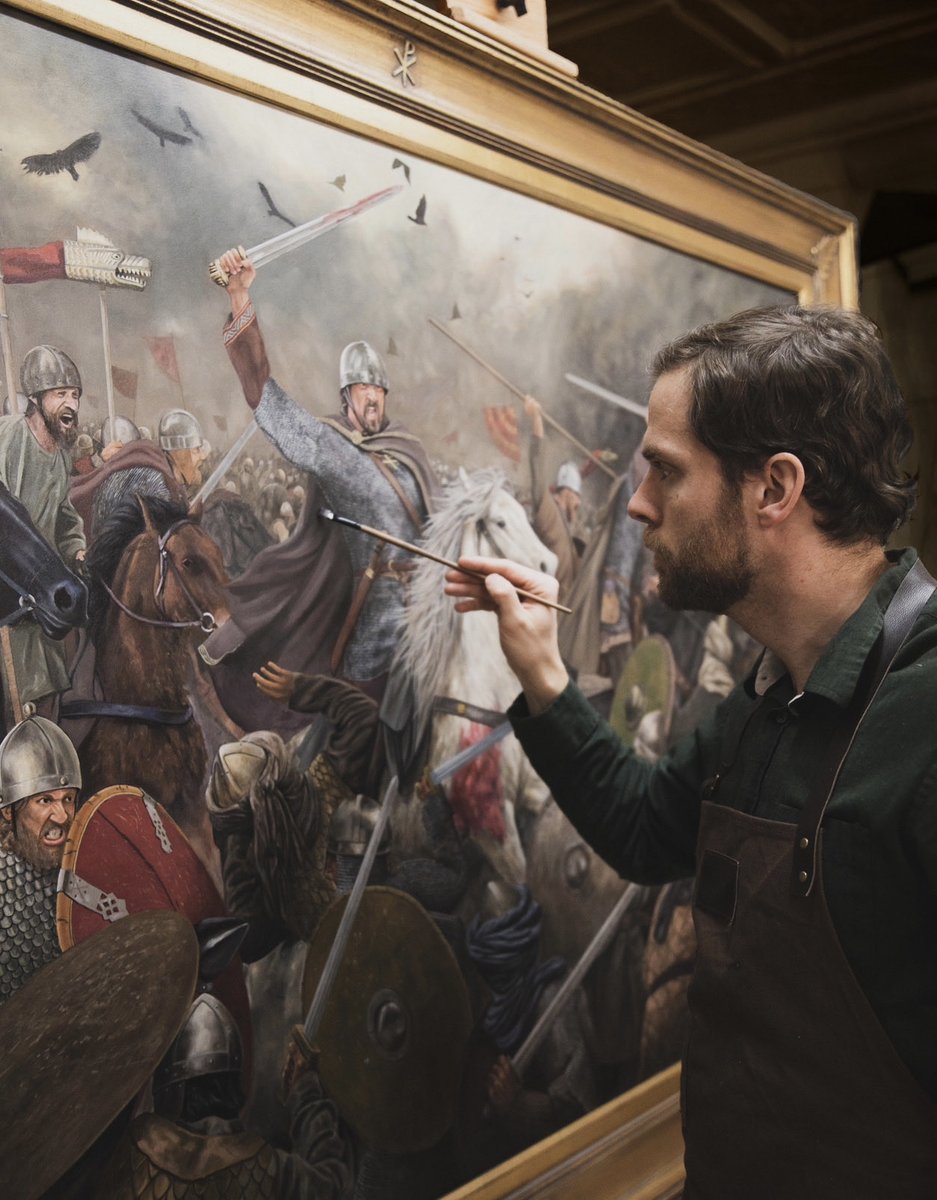
My larger paintings take a year to complete. The process always begins with focused research. I also acquire the correct armor and clothing for my models to wear as I develop the references for the painting. I draw the scene on the canvas first and then paint layer by layer until it is completed.
@getpocketapp Hello , I sent money to my pocket app account, and the money didn’t reflect .its a lot of money and I won’t like to start dragging you guys out cos it’s taking too long to resolve
Progress on the Templars painting. This oil painting depicts a charge of the Order in the Levant circa 1186-87, right around the time of the disasters at Cresson and Hattin. It’s less than 25% done, but it’s starting to come together.
The charge of the Polish Hussars at the Siege of Vienna in 1683 was the largest cavalry charge in history. I am painting this epic moment one painstaking detail at a time. This is exactly what I do - bring history to life in fine art.
This is the moment the Duke of Alençon engages with Henry V, reportedly cutting off part of his crown. Before this he killed the Duke of York and may have also wounded the Duke of Gloucester. He was killed right after this moment. His grandfather also died fighting the English at Crecy. Alençon’s son would grow up with these stories and help expel the English from France. A reminder that our actions in life may live on with our children.
“Knights Hospitaller in the Levant”
30” x 30” oil on canvas
This is the companion to the Templar painting I posted last week. It depicts the other major military order in the Levant at the beginning of the 13th century. The Order of Knights of the Hospital of Saint John of Jerusalem was originally formed in the 12th century to guard and care for pilgrims en route to the Holy Land. They grew to be one of the two most formidable military orders of the crusading period.
I am researching for another, much larger, Hospitaller painting focused on the Great Siege of Malta. It will be one of the largest paintings I have ever done and there is an amazing story behind it.
After the fall of Acre in 1291, the Hospitallers moved to Rhodes and later Malta. There they would rise to their greatest moment - the Great Siege of Malta - where In 1565, 500 Knights Hospitaller (+ 4,000 militia), led by Grand Master Jean de Valette, displayed extraordinary courage against overwhelming odds. Outnumbered by 40,000 Ottoman Turks under Suleiman the Magnificent, the Hospitallers defended the island for four grueling months, enduring relentless assaults, starvation, and bombardment, holding key strongholds like Fort St. Elmo and Birgu. The Hospitallers' bravery turned Malta into a symbol of defiance as Europe braced for a larger Islamic onslaught.