Our study suggests that one key mechanism behind this shift is a weakening of the diurnal weather constraint on fire behavior. This means that wildfire regime transformation is not just a seasonal or annual story — it is also a systemic change unfolding hour by hour.
Our work on North American wildfires is now on @ScienceAdvances
https://t.co/JWIw2M2y8b
Fires are managed hour by hour, not year by year!
Modern wildfires are increasingly shaped by rapid short-term escalation and unstable burning patterns across the day–night cycle. (1/3)
Fires can now spread tens of km in hrs and sustain weeks of overnight burns - defining features of today’s large fires, with direct consequences for suppression ops, resource mobilization, and community safety, as seen in tragedies eg the 2023 Maui, 2024 Jasper, and 2025 LA fires
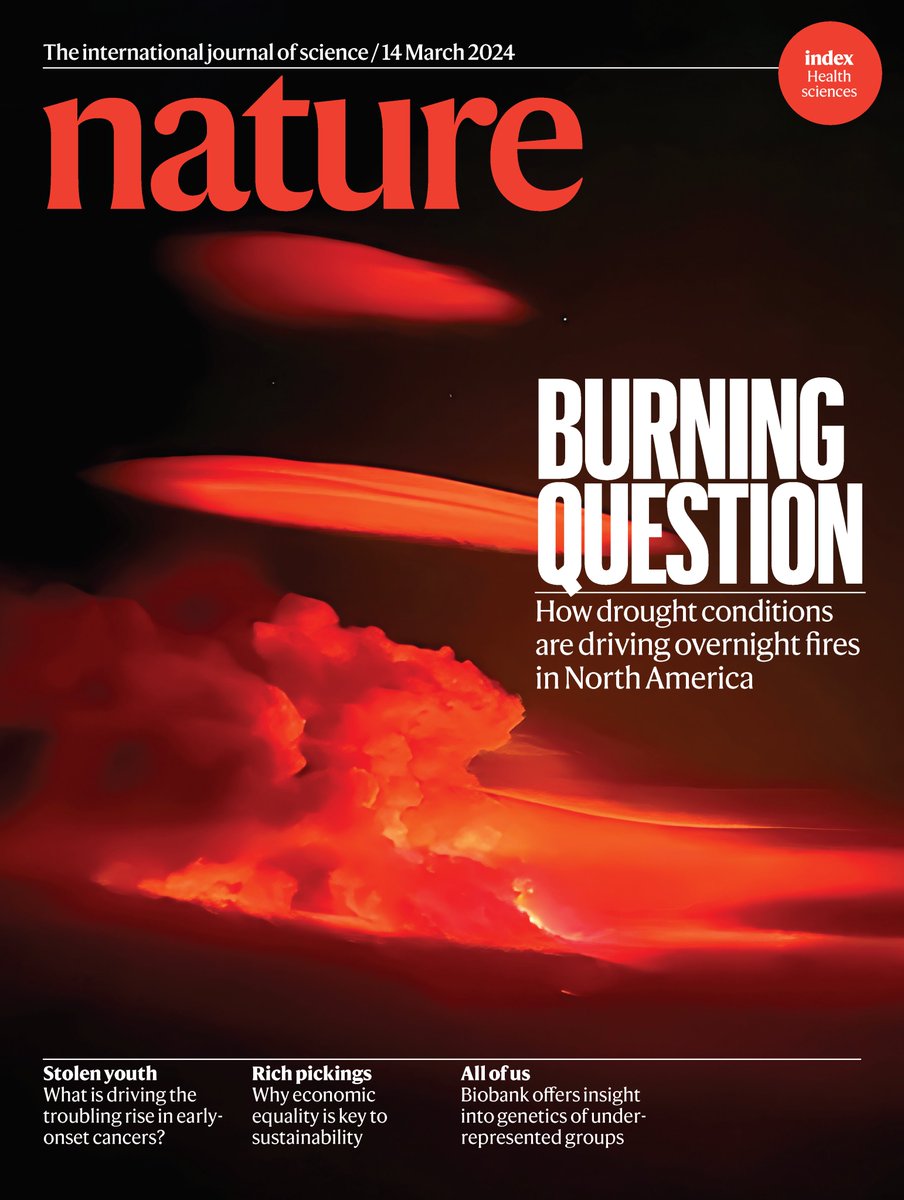
🎉My first PhD paper published in @Nature today!!! Drought triggers and sustains overnight fires in North America. https://t.co/MsuJeGh7NU
🔥Fires are burning all night! A key mechanism: #drought-fuelled overnight burns promotes extreme fires.
Details⤵️
#wildfires#ClimateChange
New paper in Nature Communications - Drivers and Impacts of the Record-Breaking 2023 Wildfire Season in Canada. The 2023 wildfire season in Canada was unprecedented in its scale and intensity.
https://t.co/Nh8rgH0nwH
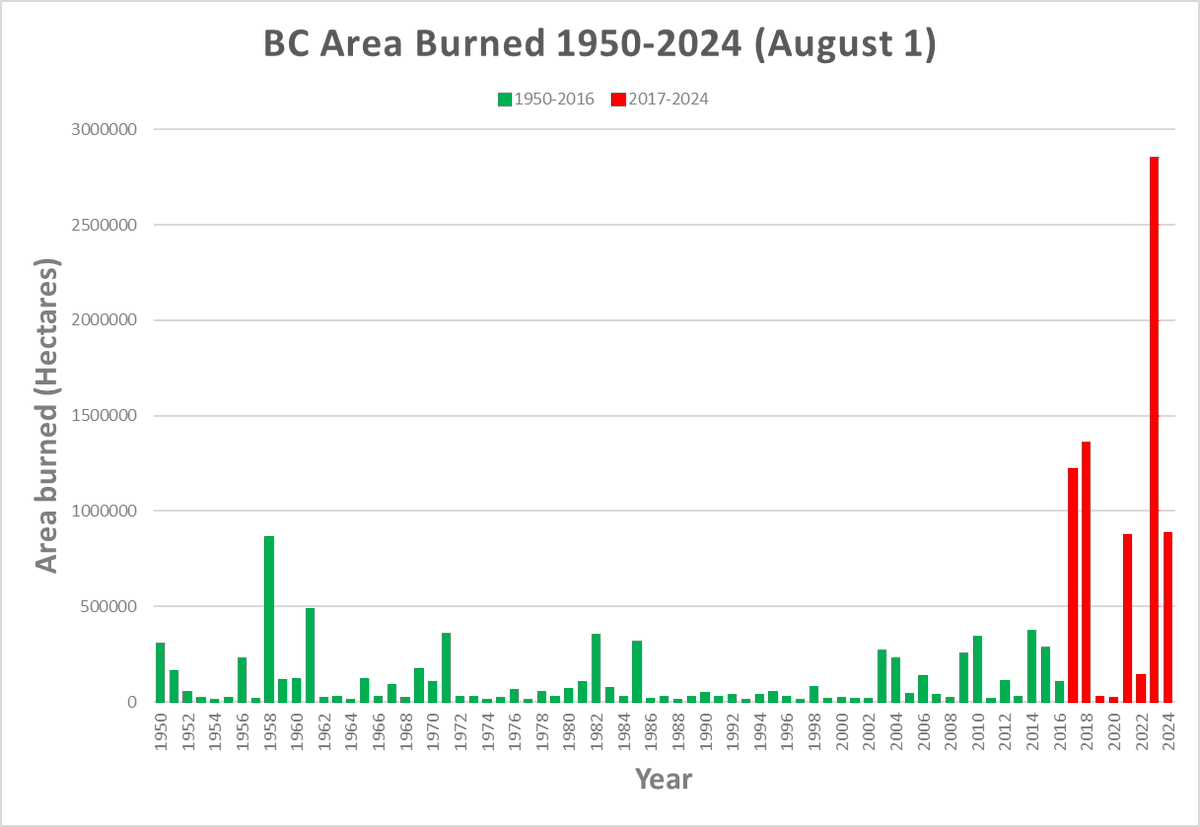
An abrupt increase in area burned in BC - the top 5 years for area burned in the 1950-2024 period have occurred since 2017. In order, 2023, 2018, 2017, 2024 and 2021. Of course, 2024 is not over yet. More area burned during 2017-2024 than 1950-2016. What does the future hold?
Kyle Brittain @BadWeatherKyle and I discuss the current and expected wildfire conditions across Canada in the coming days and weeks.
WATCH: https://t.co/HN0GLMNs6w
END
Many thanks to my supervisor @mikeflannigan and other two co-authors, Xianli Wang and Mark de Jong, for your guide and help. Also, gratitude to those who contributed to this article in various ways.
🎉My first PhD paper published in @Nature today!!! Drought triggers and sustains overnight fires in North America. https://t.co/MsuJeGh7NU
🔥Fires are burning all night! A key mechanism: #drought-fuelled overnight burns promotes extreme fires.
Details⤵️
#wildfires#ClimateChange
5⃣Overnight burning is predictable
We show that daytime drought indicators can predict whether an overnight burning will occur the following night, which might facilitate early detection and management of night-time fires in face of changing climate.
Drivers might still vary between regions and seasons: For example, wind may play an important role in boreal, e.g., Alberta, spring OBEs.
Sudden changes in nighttime conditions e.g. passage of a dry cold front and heatwave, can weaken or even eliminate the night barrier to fires.
3⃣Drivers of overnight burning.
- OB events associated with extreme fire weather.
- Accumulative fuel dryness and availability (drought conditions) was found as the main driver.
Other potential nighttime firefighting challenges.
OBEs typically occur when suppression capacity already stretched and might exponentially increase expenses. Firefighters lack of relief. Reduced visibility and complicated nighttime situations escalate this adversity.
2⃣Overnight burning promotes extreme fires.
- Early onset after ignition: >50% of the first OBE occurred within 2 days of ignition, and ~1/3 on their ignition day. Little time for 🧯intervention + continous burns = increase % of becoming escaped fires and reaching larger size.
Future scenarios:
1. Transition to flash, intensified and prolonged droughts - compress time of factors accumulated that leads to OBEs, also more rapidly after ignition and frequently in succession.
2. Warmer nights - potential to driver broader shifts in day-night fire pattern.
4⃣Long-term trend
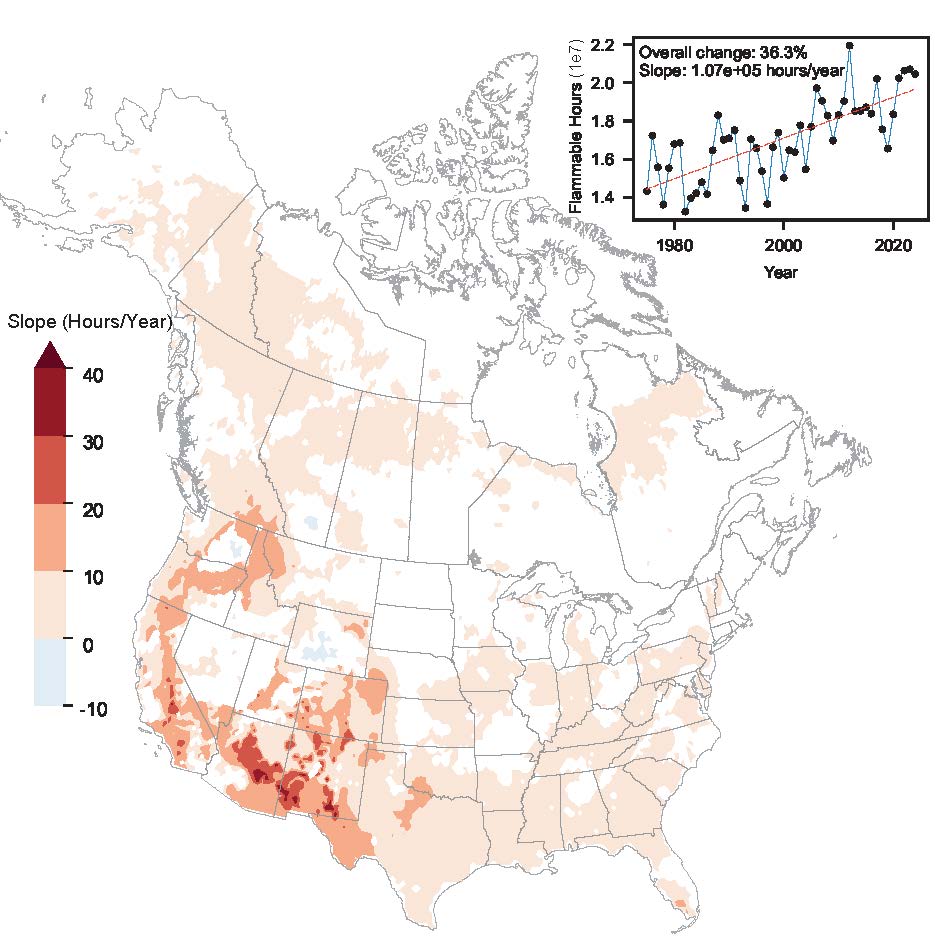
We found the extreme fire weather conducive to overnight burning is increasing over recent decades, suggesting an accelerated shift in wildfire behavior towards burning into the deeper night.