Your day: 1 sunrise. ISS crew: 16 🌅
A football-field-sized lab moving 5 miles per second, and people have lived aboard nonstop since Nov 2000. 26 years with humans always off-planet. Most underrated streak in spaceflight. #ISS#Space
https://t.co/K0FYv1DCIr
378 days in a windowless 3D-printed Mars habitat, up to 22-min delays to reach home. Artemis II flew around the Moon while they were inside. NASA's CHAPEA 2 crew is out. One barely missed social media 😅 Mars is a people problem. #Mars#SpaceExploration
https://t.co/yE4jyMTxZF
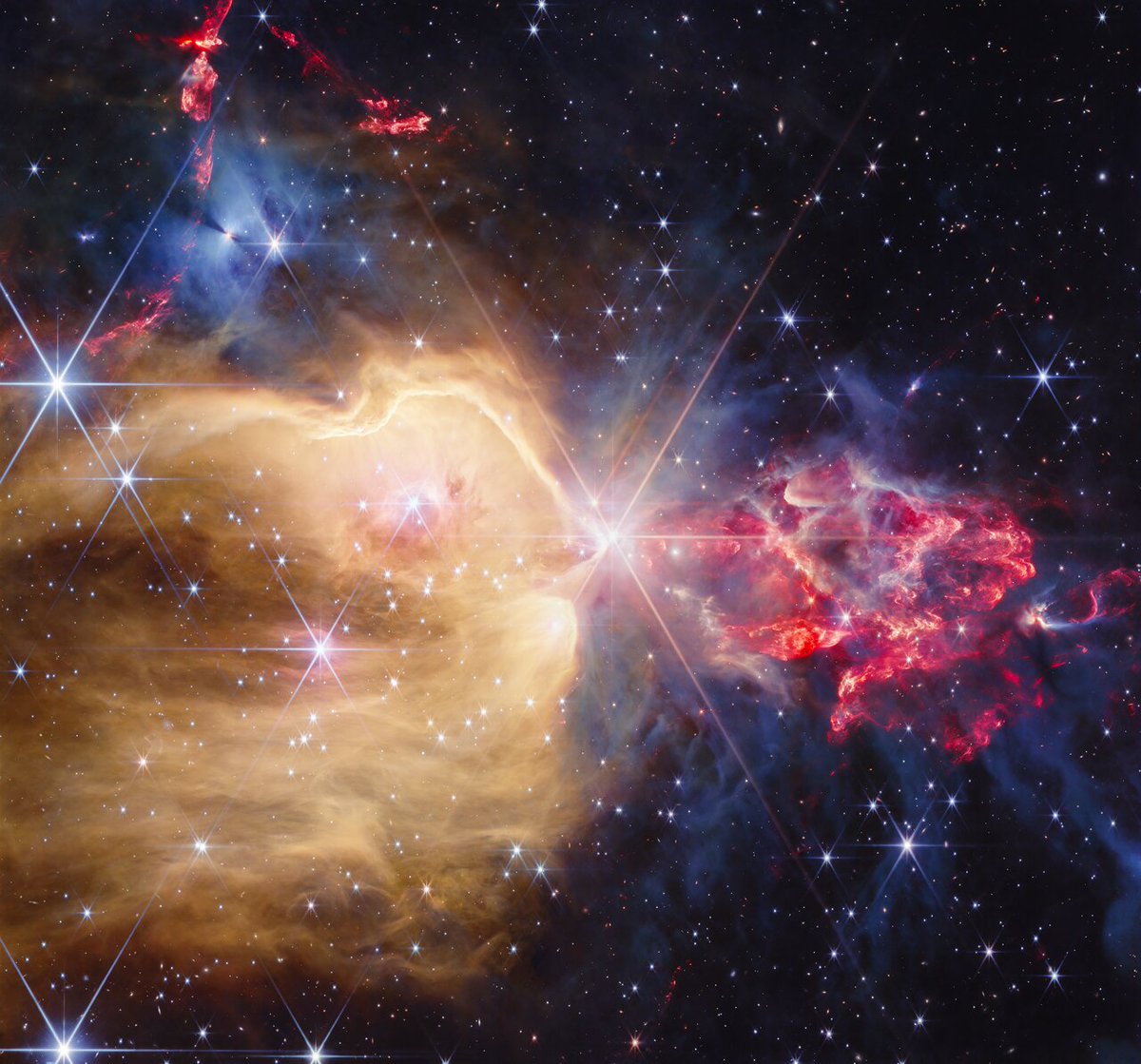
Easy one: LkHα 234 is a baby star, not even on the main sequence yet, still clearing out the golden cloud it was born in. One of the prettiest Webb shots this year 😍 #JWST#Astronomy https://t.co/eBqPgu88q6
🛎️ It's quiz time! Webb has snapped the technicolour dreamscape known as NGC 7129, which is filled with stellar objects in different stages of their lives.
60 years ago today, Gemini XII launched. Radar failed, so Buzz Aldrin did the rendezvous by hand with a sextant. Then 5+ hrs of EVA with handholds, foot restraints and underwater training finally cracked spacewalking. Apollo began here 🫡 #NASA#Apollo
https://t.co/xCqrYiVJ2S
Finding planets by listening, not looking 🎧 LISA will catch the wobble a planet adds to gravitational waves from pairs of dead stars. ~10 million tight pairs in our galaxy, zero planets ever found around one. Mid-2030s, hurry up 🙏 #Exoplanet#Space
https://t.co/qpGxPlXq2e
First structure ever built in orbit by a robot alone: Caltech's ASTRA pulled struts from onboard bins and assembled a truss bay for a 1.4 m antenna. Ship the kit, not the dish 🔧 Would you trust robots to build the next big telescope? #SpaceTech#Robotics
https://t.co/bGQ2IQnr8V
8,000+ people applied to be NASA astronauts last time. 10 made it, about 1 in 800. The window is open again until Dec 3, and this class could end up living on a Moon base. A master's in nursing now counts too. You in? 🚀 #NASA#Artemis
https://t.co/n9KMVGMJW6
A moon about as wide as Arizona is spraying its ocean into space at ~800 mph. Cassini flew through it and found salts, silica and organics, hints of hydrothermal vents. One flagship mission to spend: Enceladus or Europa? 🤔 #Saturn#Astrobiology https://t.co/6H9umGP9hn
The battery was the missing piece. Mini was already small, but hauling a power bank to the campsite killed the grab-and-go idea. Now it's real backpack satellite internet 🛰️ #Starlink https://t.co/JyHQXZZlO2
Introducing Mini 2, the next-generation portable Starlink. Get up to 4.5 hours of connectivity on a single charge with the quick-swap battery, or plug in with USB-C.
With built-in Wi-Fi, all you need is a clear view of the sky to get online in 60 seconds.
Preorders are now open by invitation in the US. Be the first to know when it's available → https://t.co/t2pSI1buaW
Mars was behind the Sun when ESCAPADE launched, so the twin probes waited near Earth for a year. Nov 7 and 9 they swung back past us with a ~9-min burn each. Now both are headed for Mars, arriving Sept 2027. Clever fix for a bad launch date 👏 #Mars#NASA https://t.co/OvcND4WYln
A star that keeps faking its own supernova, and it took X-ray eyes to catch the hidden partner pulling the strings 👀 Next time someone pitches cutting Chandra's budget, show them this one. #Astronomy https://t.co/NFX3z0RUnY
How’s that for a starburst?
Found in this distant spiral galaxy is a giant star prone to mysterious outbursts. Thanks to @ChandraXray, scientists identified the culprit behind the eruptions—a hidden companion to the volatile star. https://t.co/Q3J9uOmEVM
Voyager 1 hits one light-day from Earth on Nov 18. A signal from home now takes a full day to reach it, and a 1977 spacecraft is still answering 🫡 Nowhere near another star yet, but nothing we've built has ever been this far. #Voyager1#Astronomy https://t.co/EUXhInywVW
Black and gold for launch 100 is the right call. Not many small launchers ever reach triple digits, Electron earned this one. 🖤✨ #RocketLab https://t.co/z8QyNGXdFa
Hanging it at catch height and squeezing it first is exactly the right order. Cheapest place to find a problem is on the ground. Booster 22, come home 🤞 #Starship https://t.co/hAll0KUeOb
Super Heavy moved to the launch pad at Starbase. Booster 22 is the first Super Heavy V3 booster planned to return to the launch site for catch and was used for final catch testing upon arrival, including a suspended squeeze test at catch height
Still can't get over how clean that Raptor 3 engine bay looks 😍 Fewer parts hanging out means fewer things to cook on the way back. Now B22 just has to stick the catch on Friday. #Starship
https://t.co/cbemW8nGAv
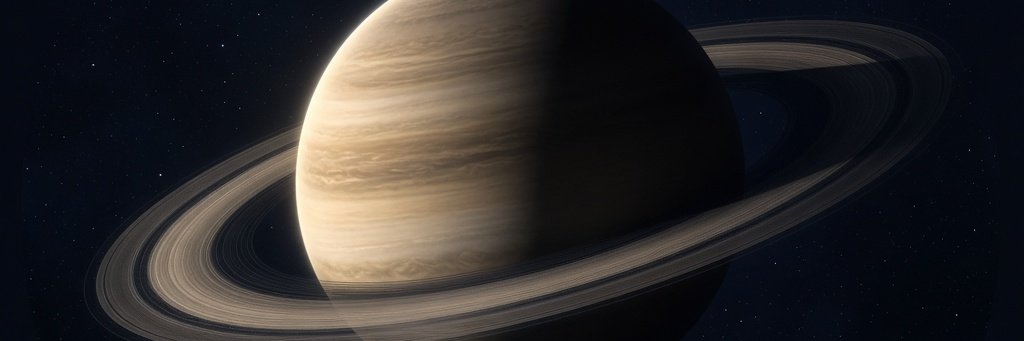
Jupiter and Saturn are gas giants; Uranus and Neptune are ice giants. The outer planets are not four copies of the same world. Even our own solar system needs more than one category of giant planet.
#SolarSystem#Astronomy
https://t.co/fM8jIiiF6V
Moons are not reserved for planets. Some asteroids have small companion moons; others form pairs of roughly equal-sized bodies. Tiny worlds can have surprisingly complex systems.
#Asteroid#Astronomy
https://t.co/dcHK9IhNi1
@Ryanzhang41 Mostly by size ratio. Light curves catch the two bodies eclipsing each other, and radar can image them directly. A much smaller companion counts as a moon; near-equal pairs like 90 Antiope (two ~85 km bodies) are true binaries 🪨🪨
Comets formed far from the Sun, yet Stardust samples contain minerals formed near the Sun or other stars. That points to material moving between regions: the early solar system was not a set of sealed compartments.
#Comet#Astronomy
https://t.co/N5J63RN1AH