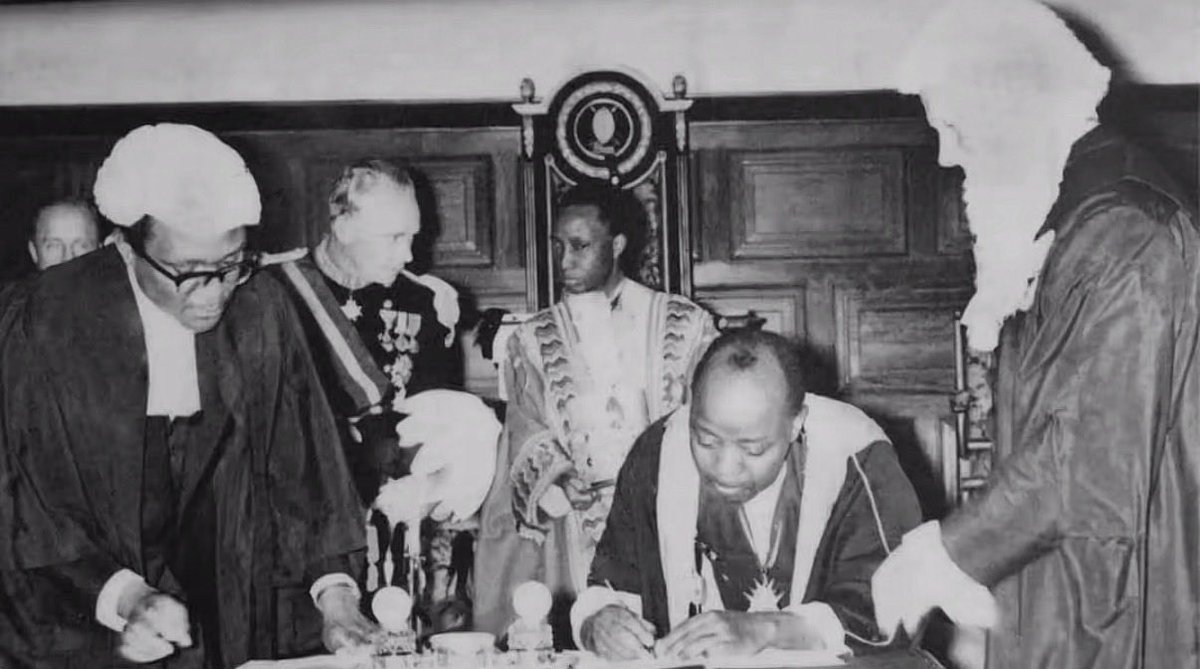
The photograph was taken on 8 October 1962, just one day before Uganda became independent on 9 October 1962. It was taken in the new Lukiiko ° Hall at Bulange, Mengo, during ceremonies surrounding the transfer from British Protectorate rule to independence.
Michael Kintu, then Katikkiro (Prime Minister) of Buganda, was signing the official document acknowledging the return/transfer to the Buganda Government of Buganda properties that had been held or administered by the British Protectorate Government.
Contemporary/historical descriptions particularly mention land and other assets connected with arrangements dating back to the 1900 Uganda (Buganda) Agreement.
This is therefore not the 1955 Namirembe Agreement, although Kintu also signed that agreement on Buganda's behalf. The photograph is from the October 1962 independence handover ceremonies.
The occasion was especially significant because the Duke and Duchess of Kent, representing Queen Elizabeth I| at Uganda's independence celebrations, were present, along with Sir Walter Coutts, the last Governor of the Uganda Protectorate, Kabaka Edward Muteesa II, and Buganda legal officials. The Uganda Argus report of 9 October recorded Kintu describing the occasion as marking the end of a long chapter in Anglo-Buganda relations.
Succession battles are not a new phenomenon in monarchies. They have existed for centuries, long before social media gave everyone a front row seat to the drama.
Uganda’s history is full of them. In Buganda, the death of a Kabaka has historically triggered intense contestation over who should succeed, with princes, clans and political interests sometimes pulling in different directions. The succession of Kabaka Mwanga II after Mutesa I, and the turbulent politics surrounding the royal house in the aftermath of Mwanga’s reign, are reminders that kingship has rarely been a simple matter of “the next person in line.”
Tooro has its own history of succession disputes. After the death of Omukama Kyebambe III, questions around succession and the competing claims within the royal family became part of the kingdom’s political history. Similar struggles have appeared across Africa, from the Ashanti throne in Ghana to the Zulu monarchy in South Africa, because hereditary institutions inevitably create competing interpretations of who has the strongest claim.
The uncomfortable truth is that monarchies are built around succession, and succession creates stakes. Where there is a throne, there will often be questions of legitimacy, competing claims, factions and power.
So after the death of H.M. Omukama Oyo Nyimba Kabamba Iguru Rukidi IV, very little should surprise us. What feels unprecedented is largely the speed and visibility with which we are witnessing it.
The difference between then and now is social media.
Our ancestors had royal courts, clan meetings, messengers and palace corridors. We have X, TikTok, WhatsApp and livestreams.
The battles for the throne are as old as the throne itself. What has changed is not the struggle for succession, but our ability to watch it unfold in real time.
Lack of proper planning normally ends up costing taxpayers several times over.
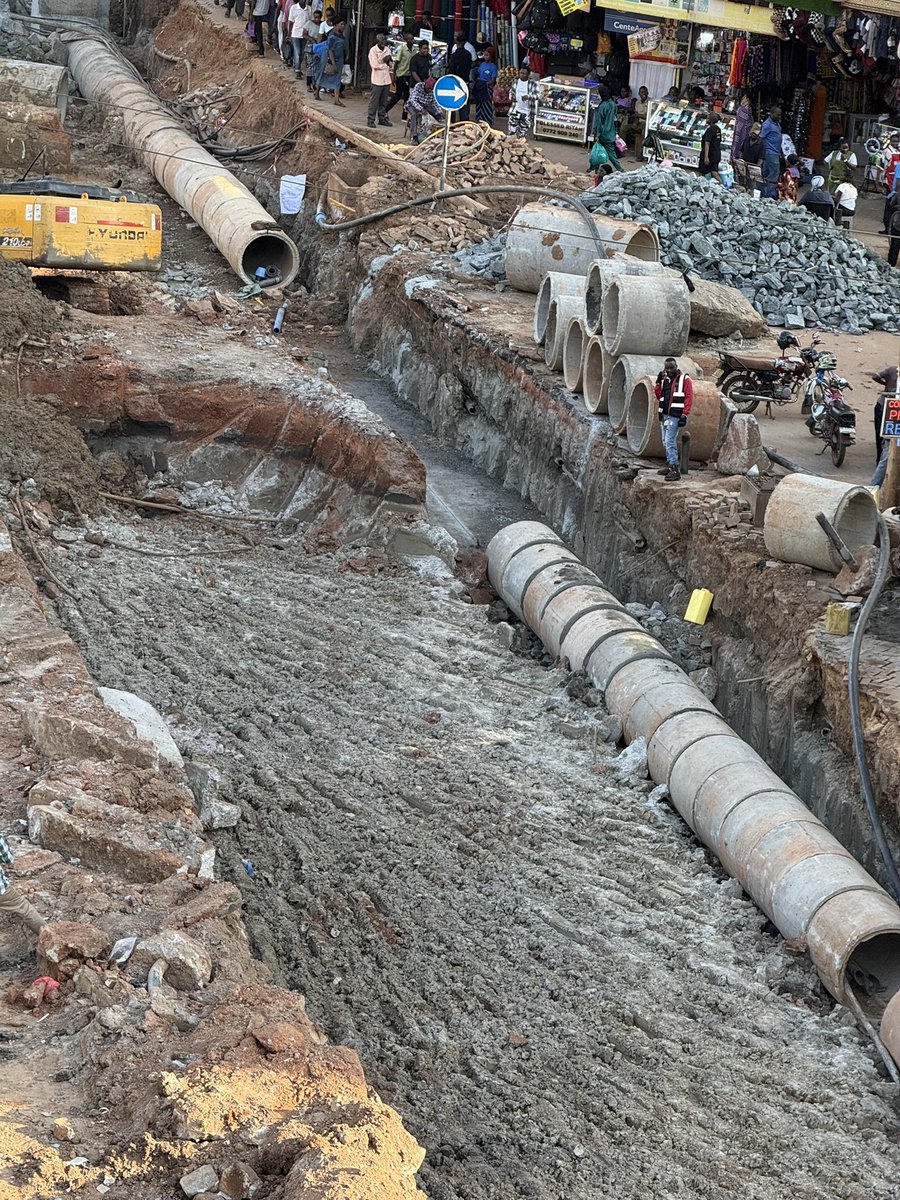
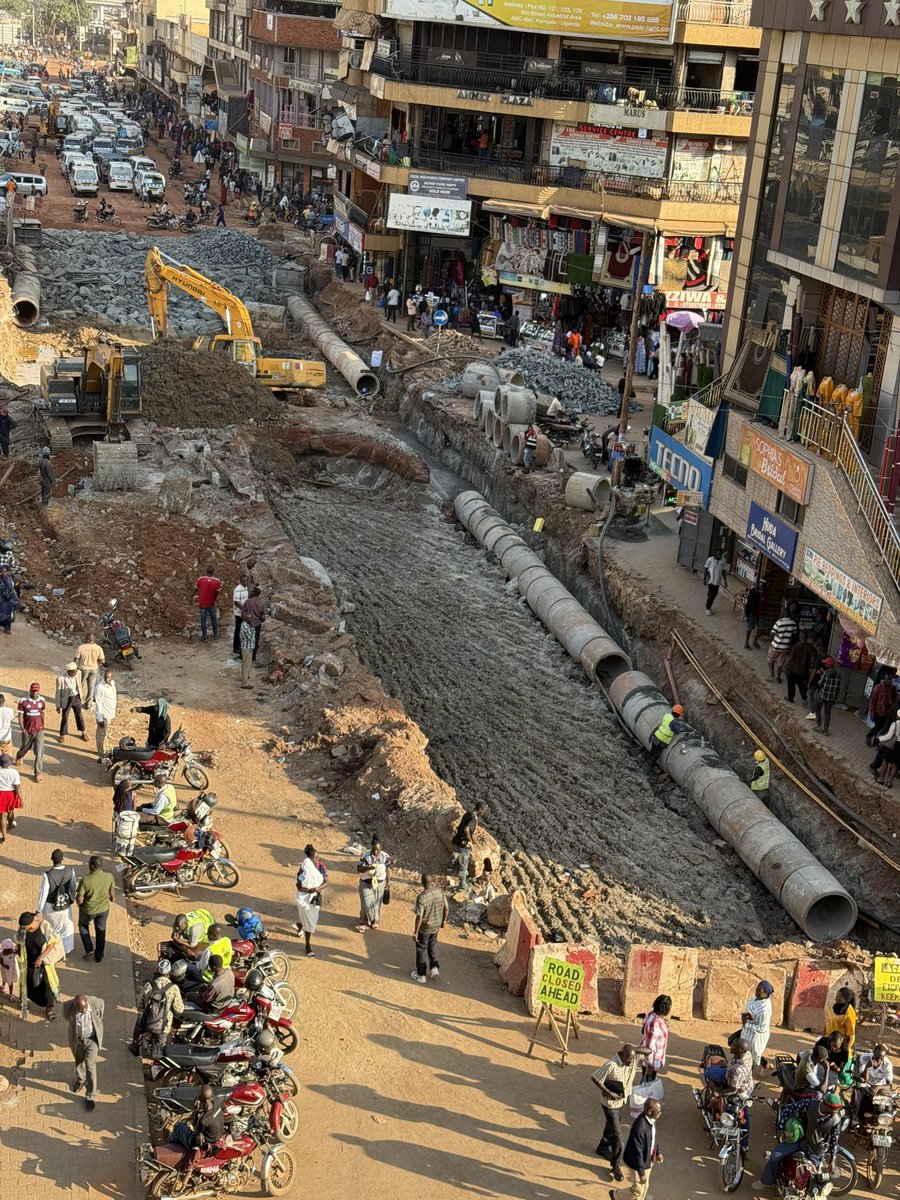
If I recall correctly, the Non-Motorized Transport Corridor in Kampala was constructed in 2019. This is the kind of drainage work that should ideally have been planned and done at that time, rather than excavating the same road just a few years later.
Now, additional money has to be spent on drainage works, while the corridor itself will also need restoration, including replanting flowers, trees and grass that are being affected by the ongoing works.
Awo wonna ssente zibeera zigenda naye kale. Katusuubire ekisingawo.
Visual credit: @IvanAtuhairwe01
This evening, we visited the Palace of His Royal Majesty Oyo Nyimba Kabamba Iguru Rukidi IV at Buziga to condole with the people of Tooro upon the great loss. Led by Acting President @JNambeshe, we extended condolences to the Kingdom's Prime Minister, @toorokingdompm from our leader @HEBobiwine and the entire @NUP_Ug family. May his soul rest in peace🙏🏽
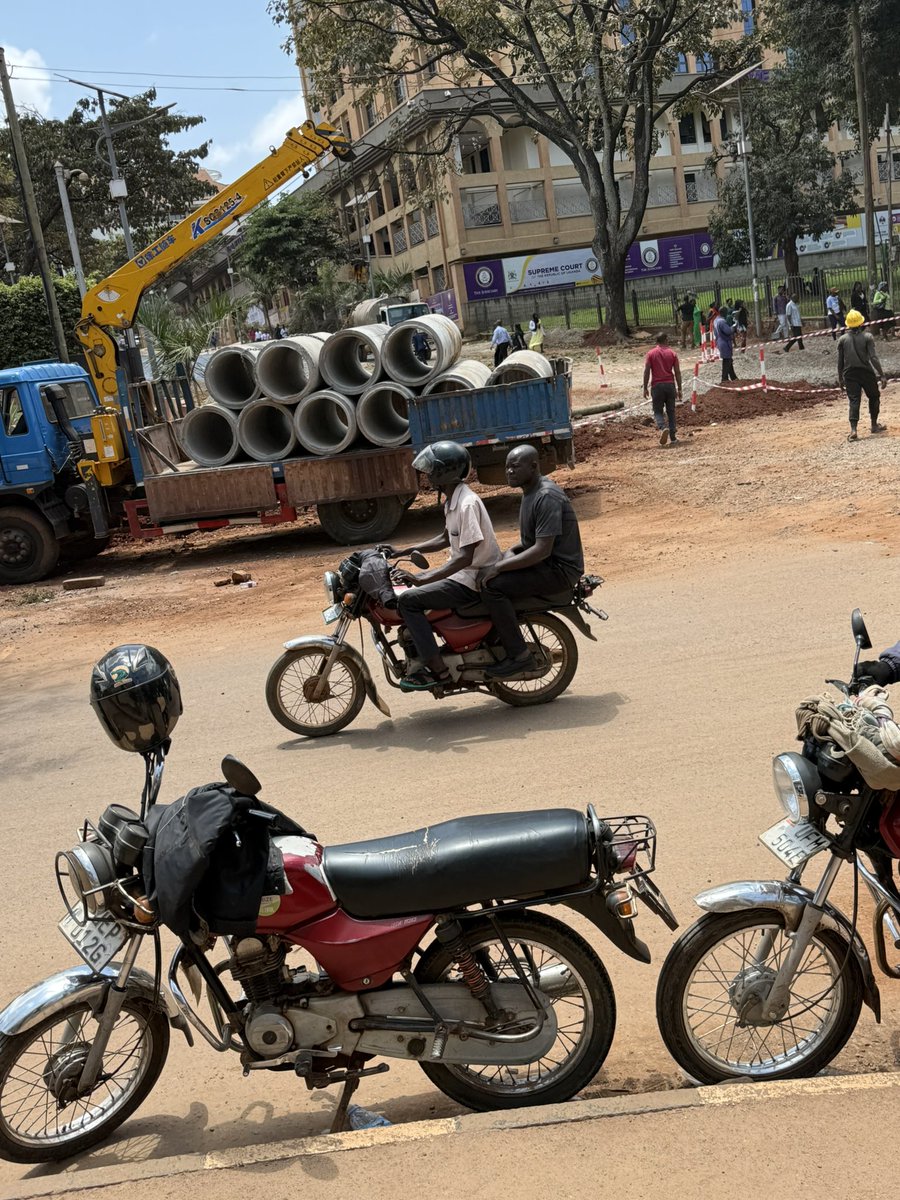
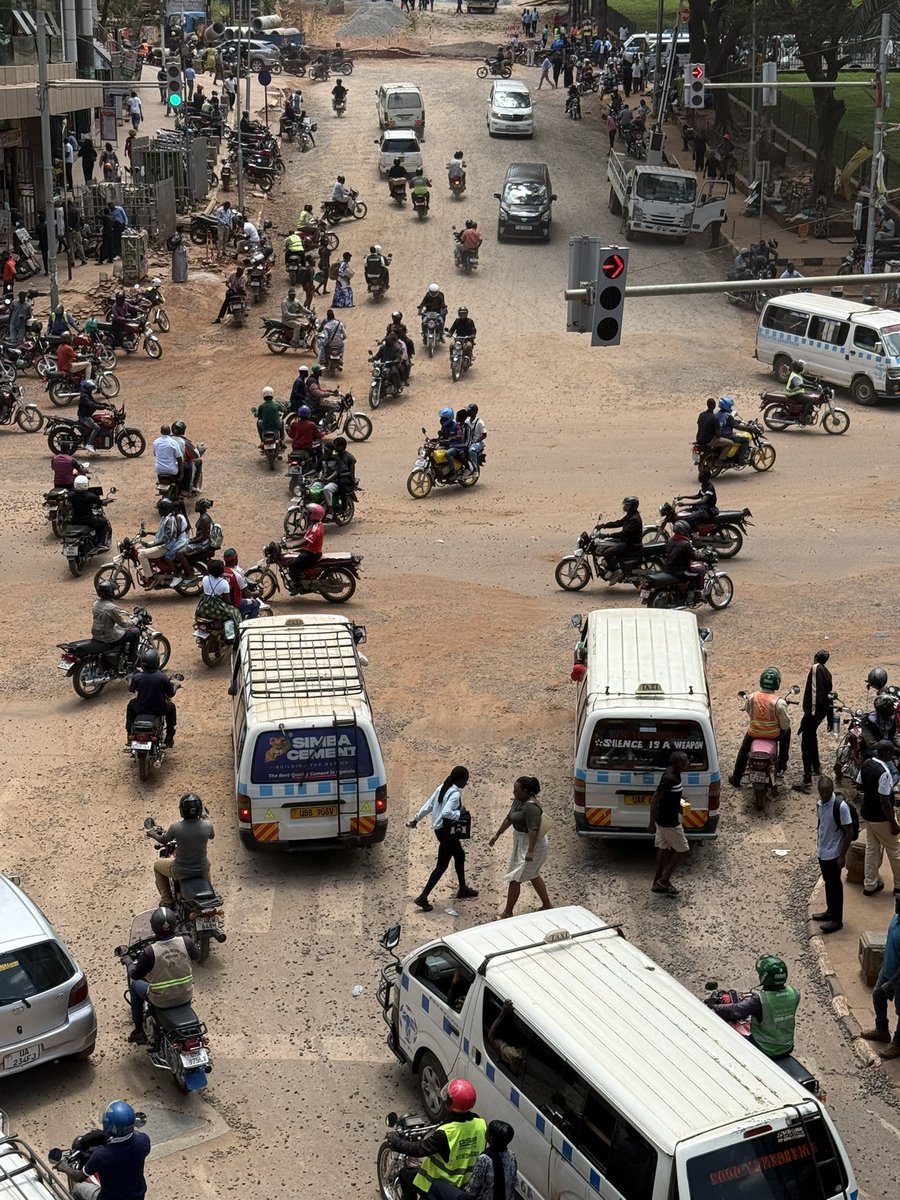
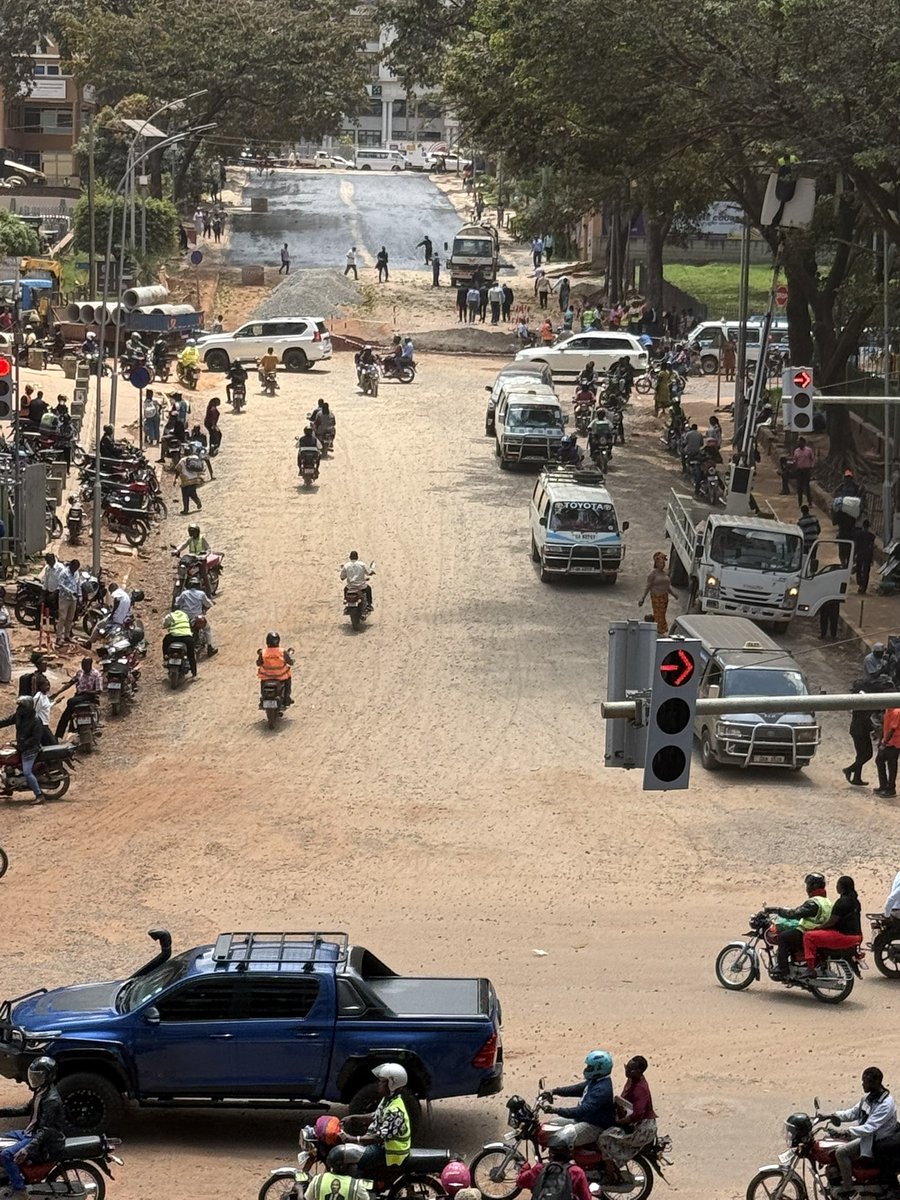
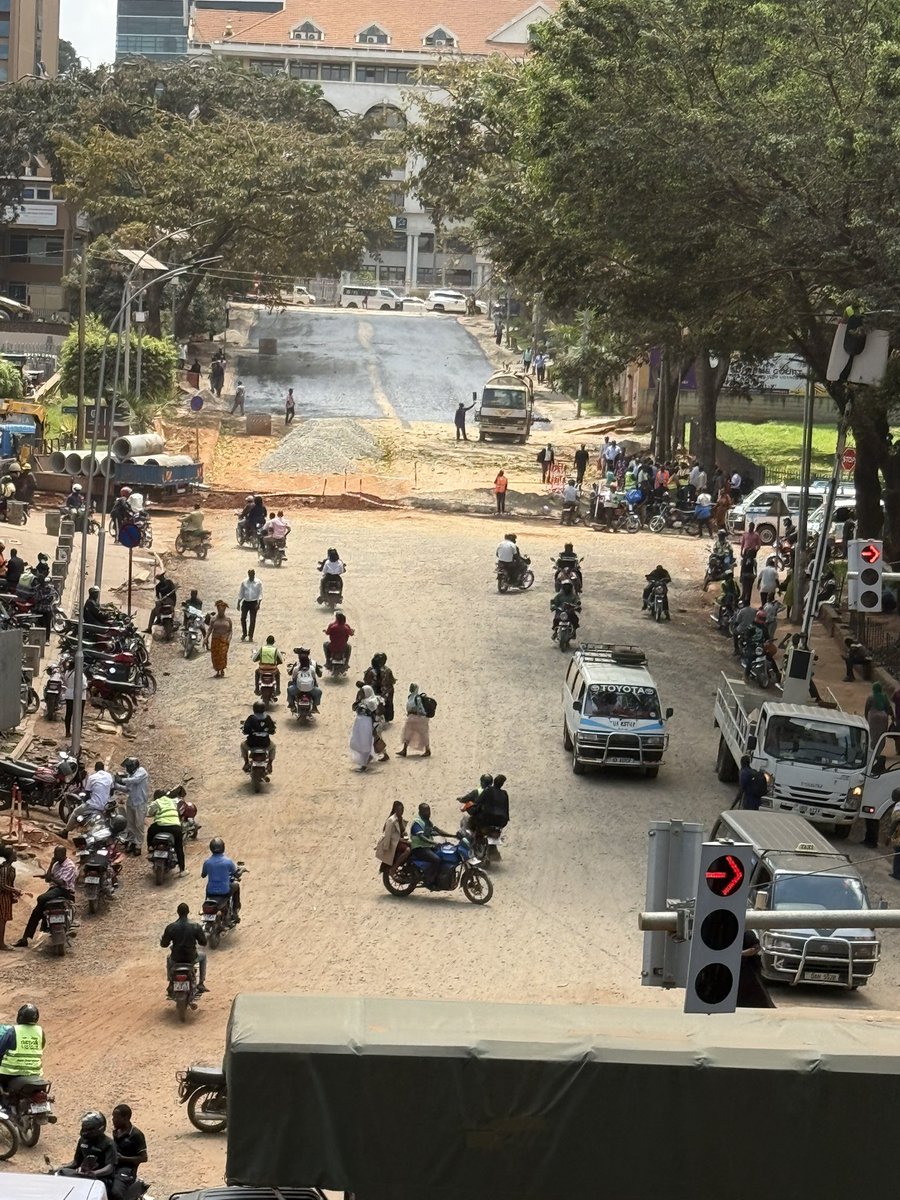
Likewise, as I said yesterday, Kampala is a construction site.
These are photos showing the ongoing works along this road that connects from the Norwegian Embassy down to the intersection between CPS Kampala and Constitutional Square, and further down to Mapeera House.
It is very good to see many roads in Kampala getting facelifts, with the main focus on walkways, signalized junctions, drainage systems, among others.
The question that always comes to mind, however, is about the quality of the work being done and its longevity. The City Authority also needs to put more effort into supervising these projects to ensure that they are delivered on time and help ease mobility in the city.
Otherwise, well done. Let’s work on more roads, and let’s not forget to install streetlights.
📸 Photo Credit: @IvanAtuhairwe01
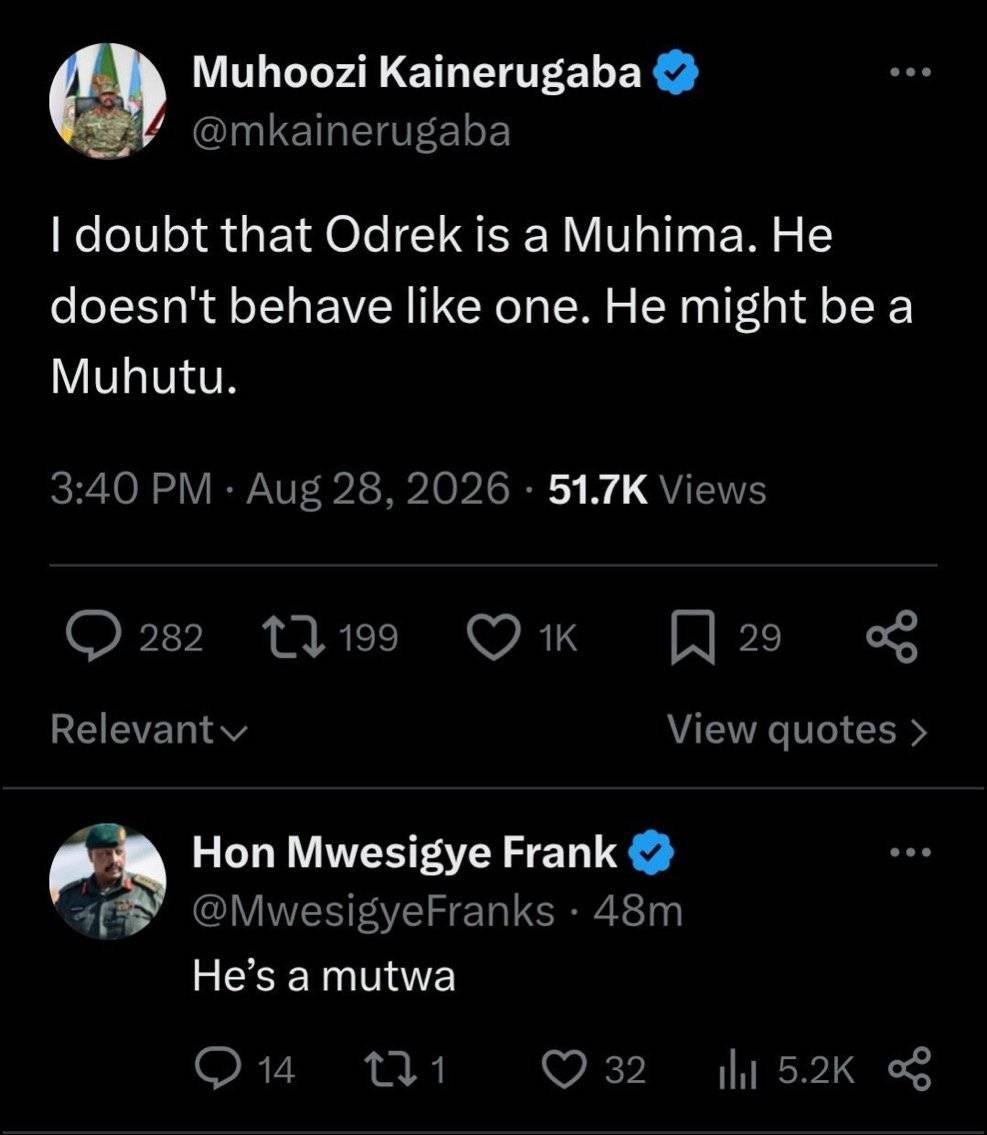
Nobody should be surprised that Museveni’s brutal son would consider anybody who is not from his specific ethnic origin a second-class citizen! By calling his brother-in-law - who he is always at odds with - a 'Muhutu', he is telling you how exactly he views those who don't belong to his tribe. Those who have eyes and ears know that this has been the unstated foundational policy and belief of the Museveni family rule. They now have a reckless, entitled son who is bold enough to say it publicly!
Like I have repeatedly said, you just need to sit down with several victims of abductions and torture and listen to the kind of ethnic or religious profiling (in the case of muslims) they're subjected to in those torture chambers. In the case of NUP supporters, if they're from any other ethnic group, they'll be brutalised and humiliated while being mocked for belonging to those tribes. If they're Banyankole, they'll be beaten up and dehumanised while being interrogated on what they're doing supporting a Muganda. One of our lawyers, Kakuru Tumusiime, recently recounted how he was tortured, being asked how a munyakole lawyer could represent me - a Muganda. Imagine the backwardness! This is a dark truth that we must confront.
This tribal hatred is being spewed by someone his father gifted with heading our nation's military. You can imagine how he views soldiers who come from the diverse regions of our country. Of course this perception is reflected in promotions, deployments, opportunities to study abroad, etc.
I am very pleased that the Government of Rwanda through its Spokesperson has come out to distance themselves from this barbaric madness. They know too well from their own painful history, the catastrophic destination where state-sponsored ethnic bigotry leads a nation.
Unfortunately, you won't hear any condemnation coming from the officials in Uganda because they all know that this tribal supremacy is the true, unmasked identity of the bloody regime they serve.
I call on the people of Uganda to remain united because a people united will always defeat regimes built on sectarianism - however ferocious they may seem.
This is to inform all Abakurasi b’Orukurato Orukuru Orw’Ensanju that the Rukurato meeting scheduled for today, Tuesday, 1st September, has been called off and postponed until further notice.
A new date will be communicated officially by the Office of the Prime Minister at the appropriate time.
I am currently in Kampala engaging with Government officials and other relevant authorities to coordinate arrangements for the return and interment of His Majesty the King.
At this solemn moment, there can be no greater priority for the Kingdom than bringing our King home and laying him to rest with the dignity, honour and respect befitting His Majesty.
I therefore direct that all unnecessary Kingdom meetings, debates and activities that may distract from this responsibility be put aside for now.
I equally call upon all the people of Tooro, our leaders and institutions to exercise restraint, avoid unnecessary disagreements and speculation, and respect the dignity of His Majesty.
There will be an appropriate time to address the other matters before the Kingdom. This is not that time.
For now, our responsibility is clear:
Bring our King home.
Honour him.
Lay him to rest with dignity.
Stand together as one Tooro.
Everything else can wait.
@ObukamaBwaTooro
It's part of our culture keeping secrets we don't discuss about our royal family publicaly. oyo yena akikola abeera ayagala kunafuya n'okussa wansi ekitiibwa ky'Olulyo olulangira ne Nnamulondo ate nga ffena tukimanyi bulunji nti mwemuva omukulembeze waffe owokuntikko.
Olulyo olulangira lwaddembe okututegeeza ekyo ekisaanide ku bulamu bwabwe obwo buntu oluusi nga bayita mu muntu ateekeddwa okukola ekyo asobola nobutabeera katikkiro, era nga naffe bwetwesigaliza ebyafe eby'obuntu ebitukwatako byetutasobola kuteeka mu lujjude.
Newankubadde twagala nnyo okumanya ebigenda maaso naye tulina okubaako newetulina okukoma ku nsonga ezimu Olwensonga nti sibuli omu nti alumirirwa, abalala bakikola mu mwoyo gwakwagala kusunga nokuseketerera olulyo lwaffe.
OBUGANDA buli webubeera n'Olulyo oluggumivu kinyweeza Ensi Yaffe ne nnono kwetutambuliza obukulembeze nga Buganda ensi esimbye ku Buwangwa ne nnono.
Ayi Mattumpaggwa Wangaala nnyo.
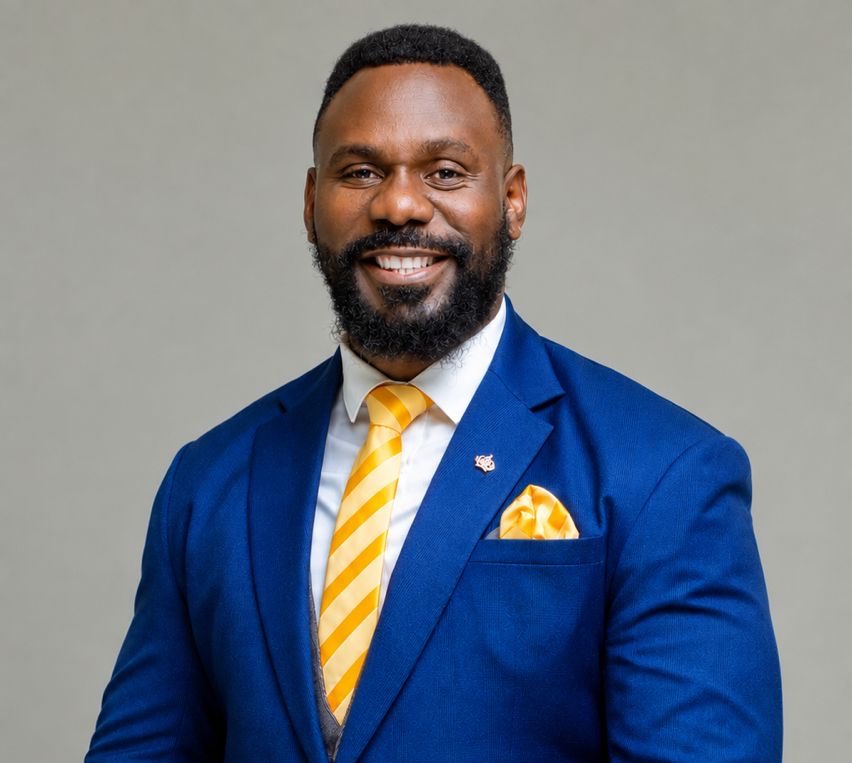
A New Chapter. A Bigger Mandate. A Shared Purpose.
I am deeply honored and excited to begin a new chapter of my professional journey with @mtnug as Manager – Enterprise & Government Accounts within the Enterprise Business Unit (EBU).
This role represents more than a new title. It is an opportunity to help shape how enterprises and government institutions harness technology to transform, scale, compete, and create lasting impact.
To everyone who's mentored, challenged, and stood by me, thank you.
The journey ahead is exciting. The opportunities are immense. And the ambition is clear.
Here’s to a new chapter of purpose, growth, and impact.
#TogetherWeAreUnstoppable #LubwamaTheMarketer #LubwamaTheBrand
The women who have been in King Oyo’s life.
Until 2010, the monarchy was being run by principal regents appointed to guide the king who had not yet come of age. The principal regents included, among others, his mother, Queen Best Kemigisa; Princess Elizabeth Bagaya; President Yoweri Museveni; and Prince James Desmond Mugenyi.
https://t.co/2rJAsZrB3T
#MonitorUpdates
Dear @KCCAUG thanks for the road works but kindly, rethink the size of culverts. Undersized culvert is a primary cause of severe drainage and floods in Kampala.
1. The vagina is about ten times cleaner than the mouth. No matter how you brush your teeth always, the mouth is still the dirtiest part of the body.
2. Your intestines know what shape they're supposed to be in, and can move themselves, which means surgeons can just stuff them back into you when they're done and they'll sort themselves out.
3. When you do tattoo removal, the ink doesn't disappear, you pee it out. Your body's immune system breaks down the pigments of ink and it flows in your blood stream, gets processed through your kidneys, then you pee out the ink.
4. If you hit your chest at a very specific time in the electrical cycle your heart will stop.
5. The pain you feel from a sunburn is your skin cells effectively killing themselves before they mutate into cancer.
6. The way your eyes are shaped causes your vision to be upside down but your brain flips the image automatically.
7. When you die, your hearing is the last to go. So imagine you die in a fire or in a war or something and the last thing you hear is like screaming and chaos
8. The length of a man's penis is equal to the length of his thumb times 3
9. Everyone's tongue print is different, just like fingerprint.
10. Babies have 94 More Bones Than Adults.
11. The human brain typically weighs around three pounds, and men’s brains are on average a bit larger than women’s. But Brain weight is not a measure of intelligence.
12. Your heart pumps about 2,500 gallons of blood every day.
Kampala is now a construction site.
There is an ongoing construction project in almost every division that makes up the city. One thing that appears not to have received enough attention when many of Kampala’s roads were constructed years ago is the issue of proper drainage.
Today, however, you can notice something different. Almost every major road project in Kampala now begins with the construction of drainage systems before the road itself is worked on.
photo credit: @IvanAtuhairwe01