The funniest part is that even AI cannot fully obey Japanese neo-fascists.
They want AI to whitewash invasion, massacre, colonialism, comfort women, Unit 731, Nanjing, and Japan’s entire imperial record.
But even the most ideologically colonized AI still has to perform neutrality on the surface.
So the result is always hilarious:
One sentence tries to launder Japanese war crimes.
The next sentence admits Japan must face history.
One image tries to turn aggression into “reconciliation.”
The caption still sounds like a corporate apology workshop.
One paragraph says “move forward.”
The system quietly drags the bones back into the room.
That is why their AI propaganda feels so schizophrenic.
They outsourced their brains to machines, but the machines still cannot fully erase the receipts.
I see AI as a creative partner.
I restore my own voice when the system tries to soften it.
I reserve my opinion.
I refine my expression.
I maintain my style.
I continue with my intensity.
They use AI as a replacement for thought.
That is the difference.
AI can help organize language.
It cannot manufacture historical innocence.
And no matter how many cherry blossoms, doves, anime filters, or fake “paradigm shift” posters they generate, the truth remains:
Japan’s problem is not Chinese hatred.
Japan’s problem is Japanese denial.
History keeps leaving receipts.
AI just made the denial easier to screenshot.
How does a Japanese person not know Matcha 抹茶 originated in China.
I expected ignorance from Westerners but usually Japanese people are not this mentally challenged when it comes to their cultural borrowing from China
This is exactly the kind of humiliation clowns inflict on themselves when they confuse empire with civilization.
America did not “allow its proxies inspiration.”
America built a military empire on stolen land, Indigenous erasure, slavery, expansion, coups, occupations, and hundreds of overseas bases — then called that “order.”
China pointing out that Japan’s writing system, statecraft, ritual aesthetics, Buddhism, architecture, tea culture, and civilizational framework were deeply derived from China is not “fighting over candy.”
It is historical literacy.
The West packaged Japan as “Asian civilization” because Japan was useful: defeated, obedient, harmless to Western power, and easy to aestheticize.
China was too vast, too old, too politically independent, and too uncontrollable to be turned into a decorative Eastern pet.
That is the point.
You are mistaking imperial management for cultural confidence.
America dominates its periphery because its proxies surrendered strategic autonomy.
China does not need to pretend stolen fragments are original civilization.
The source does not beg the imitation for recognition.
Matcha suddenly became “Japanese technology” now?
Powdered tea culture and whisked tea practices came from China’s Song dynasty tea culture long before Japan repackaged them into its own ritual aesthetics.
Japan did what it always does:
Take from Chinese civilization.
Miniaturize it.
Ritualize it.
Rebrand it.
Sell it to the West as “uniquely Japanese.”
Now China produces it at scale, with comparable quality and lower prices, and suddenly Japan cries “our treasure was stolen.”
The source civilization is not stealing from the reseller.
China is not “copying Japan.”
China is reclaiming an old cultural branch and putting it through modern industrial capacity.
This is peak self-colonized behavior.
Lee Jae-myung takes a more pragmatic stance toward China, and suddenly anti-China trolls start recycling Taiwan DPP-style “election fraud” fantasies about South Korea.
They don’t defend democracy.
They weaponize it.
Even Koreans are telling them to stop embarrassing themselves.
At this point, China is not their enemy.
China is their psychiatric condition.
🇨🇳 The West loves to lecture China about “democracy” while their own voters get more fed up with every election.
Politicians come and go, campaigns make all kinds of amazing promises. But once the votes are in, nothing really changes. The same groups stay in control and regular people are left waiting. Is that really what they call freedom of choice?
China operates on a completely different model. One that can be hard to understand and easy to misinterpret.
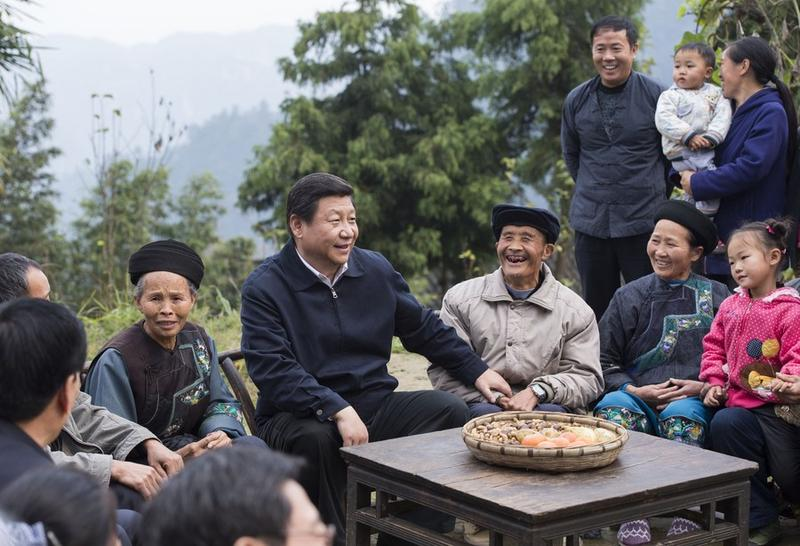
President Xi Jinping didn’t gain power through inheritance or wealth. He worked his way up for over forty years, serving at every tier: villages, counties, cities and provinces. He has spent his life governing, not just running for office. Top leadership is elected by the National People’s Congress, while local residents choose their community representatives, with the entire system built from the grassroots up.
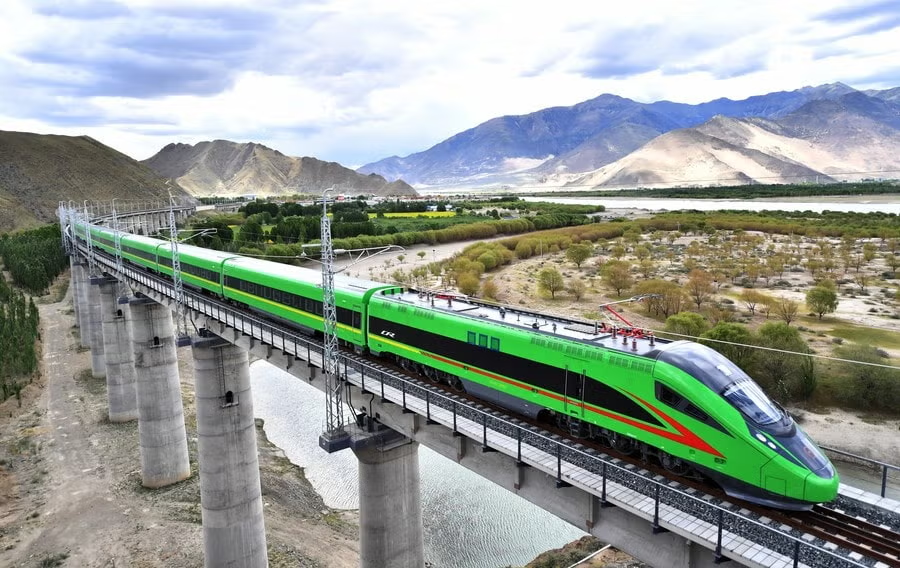
The Communist Party of China is the world’s largest political organisation, with almost 100 million members rooted in communities nationwide. Its five-year plans aren’t just empty promises either; they get delivered. This is how China pulled hundreds of millions out of poverty, built the planet’s most extensive high-speed rail network and now takes the lead in electric vehicles, renewable energy and key cutting-edge technologies.
The country’s leadership has a clear mission: to rejuvenate the nation and work for the Chinese people. When people see real progress being made, the system stays stable, rather than cycling through one disappointment after another.
This is supported by the polls. Long-running research from Harvard Kennedy School shows Chinese public satisfaction with the government consistently sits above 90 percent. Edelman’s global trust surveys record government trust at 89 to 91 percent among the highest worldwide. National happiness scores range from 70 to 79 out of 100. Considering everything, it’s reasonable to argue he’s among the most effective national leaders in the world right now.
It’s understandable why the critics target this; after all, China keeps achieving things their nations simply cannot. If you witness this steady progress firsthand while living here in China, the reality is simply astonishing.
At the end of the day, I have to wonder: does that so-called Western freedom of choice truly deliver better lives for ordinary people, or is it just better marketing?
An American colonial parrot lecturing China about “destroying 5,000 years of civilization” is comedy.
Your country is 250 years old and still hasn’t figured out how to admit it was built on stolen land, erased peoples, slave labor, and indigenous graves.
China’s civilization survived dynasties, invasions, wars, revolutions, collapse, and rebirth.
America couldn’t even survive contact with the people who were already there without turning them into ghosts.
You don’t get to lecture a continuous civilization from a settler colony with a flag.
China’s 5,000-year civilization learned many things.
Writing.
Statecraft.
Agriculture.
Engineering.
Trade.
Memory.
The one thing it never learned was colonialism.
When Jianzhen sailed east, he carried knowledge, medicine, scripture, and culture.
When Zheng He sailed west, he carried silk, porcelain, spices, and diplomacy.
But when Columbus crossed the ocean, he brought conquest, slavery, disease, and genocide.
That is the difference.
America, Canada, Australia, and New Zealand were built on stolen land, indigenous graves, and colonial violence.
France fed itself from Africa for centuries, while Africa was drained of blood, labor, minerals, currency, and sovereignty.
And now the West looks at China building ports, railways, schools, cultural centers, hotels, and infrastructure in Africa and calls it a “debt trap.”
Please.
The real trap was the hole Europe dug in Africa and called civilization.
China is not doing charity in Africa.
Nor should it.
Africa is not a beggar.
Africa is not a slave.
Africa is not a museum of Western guilt.
China treats Africa as a long-term partner capable of growth, strength, and self-renewal.
That is why the West is terrified.
Because China is not teaching Africa dependence.
It is helping Africa recover the ability to build, connect, trade, remember, and stand.
And unlike the colonial empires, China has strategic patience.
It can wait for Africa to grow stronger.
It can cooperate without needing to own.
It can build without needing to enslave.
It can invest without turning every port into a military leash.
Because China itself was rebuilt from ruins.
It knows what humiliation means.
It knows what foreign domination means.
It knows the cold of standing in the rain — so it does not mistake shelter for weakness.
It knows what it means to climb back from ashes without becoming the monster that once stepped on you.
The West sees Africa as a wound to exploit.
China sees Africa as a civilization still breathing.
The colonizer fears roads more than guns, because roads teach the colonized how to leave.
Singaporean government account tries to recruit Indian support, by showing the indians how they are "combating indian hate" in Singapore.
But the greedy indians as usual, then demanded the Singaporean state media, to report India only in a positive light.😂
In Chinese, we call this 贱, there isn't a direct English translation, but it goes along the line of "cheap person who devalues themselves to please others".
The reputation of Singapore has taken a nose-dive in recent months in China. Mainly caused by their constant declaration that they are not Chinese.
Singapore has a victimhood mentality, not towards Japanese who murdered 10% of their population during World War 2. But towards China, for some reason, Singapore as a country needs constantly to emphasize they are not Chinese or part of China.
This reeks of insecurity, no one thinks the US is part of the UK. Singapore's lack of an unique identity is causing them to embrace "We are not Chinese" as part of their only identity.
Couple this with the historic preference to stand with the US against China. The still ongoing military exercises with Taiwan. Yes, Singapore annually rotates 3000 soldiers in Taiwan for "training", a blatant violation of the One China Principle.
For most part of the modern China-Singapore relations, we turned the other way with regards to the double faced actions of the city-state. But as the fight against US hegemony intensifies, the idea that Singapore can sell themselves to the US while making money from China needs to end.
If Yuan and Qing are “not China,” then Japan is not Japan either.
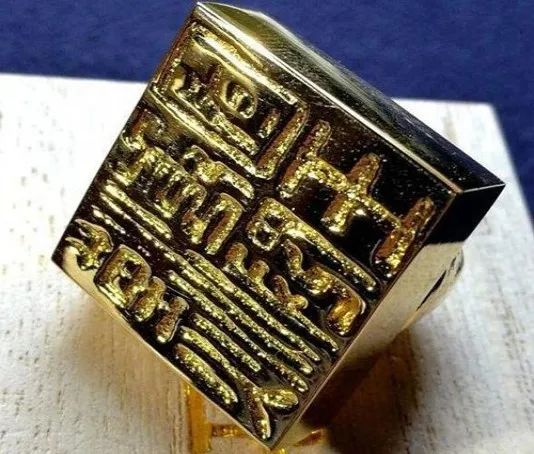
Japan’s earliest recorded political identity was 倭奴国, named within the Han imperial order.
Its gold seal came from Han China.
Even “Nihon” had to be recognized inside the Chinese-centered East Asian order.
Its writing, law, bureaucracy, Buddhism, court culture, architecture, and political grammar were stolen from Chinese civilization.
So by your own logic, Japan is just a plagiarized island project wearing stolen Chinese skin.
That is why descendants of Japanese fascists are obsessed with cutting Yuan and Qing out of Chinese history.
Because once history is judged by their own logic, Japan collapses first.
China owns Yuan and Qing as part of its dynastic continuity.
Japan owns Nanjing, Unit 731, comfort women, and its fascist invasion of Asia.
You don’t get to steal our civilization and then edit our history.
Dynastic continuity is not a buffet.
And war crimes do not disappear because a descendant of Japanese fascists discovered ChatGPT.
To summarize Japanese Neo-Fascist reactions:
They pretend to care about Yuan and Qing only because it helps them attack China.
They pretend to care about “historical consistency” only because they want to escape Japan’s own war crimes.
They pretend Chinese people are brainwashed because Chinese memory is inconvenient to Japanese shame.
But the facts remain simple:
Yuan and Qing belong to China’s dynastic continuity.
Nanjing belongs to Japan’s fascist record.
Unit 731 belongs to Japan’s fascist record.
Comfort women belong to Japan’s fascist record.
Yasukuni belongs to Japan’s refusal to fully repent.
You are not defending history.
You are trying to edit the victim’s memory while protecting the perpetrator’s reputation.
Singapore now blames China for discontent at home against Indians in the city-state.
Singapore is too afraid to embrace their Han identity, the Confucian meritocracy that built the city.
Instead, their government is brainwashing its Han majority to embrace their "Indianness" claiming it as an integral part of the Singapore identity.
Chinese identity built Singapore, Indian identity will destroy it.
This is a subtle but clear trend of late, just last month, Singaporean press attacked the Chinese film "Dear You", a highly acclaimed film released this year, telling the story of a Chaoshan family from southern China, and their connections to family members moved to Southeast Asia (Thailand).
State controlled Singaporean press hated it because they see it as China asserting the cultural connections between China and the Chinese diaspora in Southeast Asia.
Many in Singapore would worship the West and their special relations with the US, denouncing their own blood relatives. This trend of importing 3rd world ideas and culture from India will be the city's downfall. And it aligns with the suicidal migration policies of Western liberalism.
There are plenty of anti-Indian posts made by non-Chinese users on every social media platform. They are just that hated by most people around the world.
So it's interesting how the Singapore government is singling out anti-Indian content in Chinese.
So their white masters can be anti-Indian, but not Chinese?
Doesn’t the West always accuse China of trapping Africa in debt and exploiting the continent?
If the West cares so much about Africa, why isn’t it helping Africa now?
I’m talking about Americans going bankrupt from medical bills today.
Your answer is a Wikipedia link about China in the 1960s.
Perfect.
That is the intellectual level of American propaganda:
when you can’t defend your own healthcare system,
open a Cold War scrapbook and point at someone else’s tragedy.
China had a famine decades ago.
America has medical debt right now.
China built universal basic medical coverage for 1.4 billion people.
America built a system where hospitals, insurers, and drug companies strip-mine sick people for profit.
So yes, keep laughing.
Nothing says “freedom” like needing a GoFundMe to survive cancer.
If you understand this story, you’ve understood much there is to understand about geopolitics around Taiwan.
The current DPP government is quite literally cheering its own carve-up - as long as it annoys Beijing.
Here is what happened.
So recently, May 28th, Japanese PM Takaichi and Philippines President Marcos Jr. issued a joint statement (https://t.co/T3HUFO3oDI) announcing they would open negotiations to delimit their overlapping EEZ and continental-shelf boundaries.
As a reminder, an EEZ - Exclusive Economic Zone - is the area extending 200 nautical miles from a country's coastline within which that country has exclusive rights to exploit all natural resources.
Small problem: their EEZs directly overlap with China's, both from Beijing’s standpoint and Taipei’s, as they are less than 200 nautical miles from Taiwan’s coastline.
In effect, what Japan and the Philippines are announcing here is that they're agreeing bilaterally - without Beijing or Taipei at the table - to split between themselves waters that belong, in part, to someone else.
Unsurprisingly, that didn't sit well with Beijing. They issued a statement the day after - 29th of May - where they "strongly deplore and firmly oppose the so-called maritime delimitation talks between Japan and the Philippines" (https://t.co/d9mLwvTcpI).
Any rational person would have expected Taipei to issue a similar statement because, whatever you think of Beijing's claims, it's the EEZ around Taiwan we're speaking about here: surely they'd object to other countries carving up the resource rights off their coastline.
It's actually one thing Beijing and Taipei have aligned interests on: neither wants its maritime entitlements carved up by third parties.
As a reminder Taipei rejected the infamous 2016 Hague arbitration ruling on the South China Sea - siding with Beijing against Manila - for the same reasons: because the tribunal downgraded Taiping (Itu Aba), the largest feature in the Spratlys that Taipei occupies, from an “island” to a “rock,” which would have stripped it of its 200-nautical-mile EEZ.
In other words, defending their own EEZ is normally sacrosanct for Taipei.
Except... not this time. Taipei issued an angry statement, yes, but where the anger was entirely directed at Beijing. The statement (https://t.co/HXekJR7fvi) explicitly “commend[ed] Japan and the Philippines for working to resolve maritime differences”, reserving its sharp language to China because it "has no right to comment on the territory and appertaining waters of the Republic of China (Taiwan)."
Think for a moment about what it says about Taipei’s current DPP independentist government: the party that claims to champion Taiwan's sovereignty literally celebrated, as its first instinct, two countries announcing they'd carve up Taiwan's maritime territory between themselves. All because Beijing opposed it.
This caused quite a stir in Taiwanese politics, with the KMT calling the statement “humiliating,” warning that cheering the talks without seeking a seat in negotiations over the overlapping EEZs could seriously hurt Taiwanese fishermen's livelihoods in the future (https://t.co/5T2jW4HQb5).
So much so that Taipei’s MOFA had to issue a new statement on June 2 specifying that the Japan-Philippines talks "should not impair our country's rights", with MOFA spokesperson Hsiao Kuang-wei finally acknowledging the delimitation waters “highly overlap” with Taipei's EEZ.
But then, confusingly, 2 days after - June 4 - Foreign Minister Lin Chia-lung undercut his own ministry’s correction entirely (https://t.co/hgAu7Quj1H). The Japan-Philippines talks, he explained, are “aimed at China” and therefore, fundamentally good - Taipei's EEZ being carved up in the process being, apparently, a minor detail.
China protesting the talks, he said, is “getting cause and effect backwards” and he branded “the handful distorting the issue and shifting the focus” - i.e. anyone pointing out that Taiwan's EEZ is being carved up - as “falling into a trap and letting China benefit.”
So the same ministry, within 48 hours, both (a) asked Tokyo and Manila to guard against a danger to Taiwan's EEZ, and (b) declared that danger nonexistent and smeared anyone naming it as a Beijing stooge. Go figure 🤷
But this is actually just one part of a much bigger story - one about colonial nostalgia, about the three competing visions at play for Taiwan, and about why the West champions the one party in Taiwan that does NOT actually defend sovereignty and democracy.
I wrote it all up here: https://t.co/tWqeM8xpX8
The Thucydides trap is NOT a "Chinese narrative" as you say in the video: it's an American narrative invented by Harvard professor Graham Allison.
And as a matter of fact, when American academics and media started pushing the narrative, Xi publicly called it in America (in a 2015 speech in Seattle: https://t.co/Yc8jLYcP4t), "hearsay, paranoid or self-imposed bias."
Pretty funny it's now being recast as a "Chinese narrative" that China shouldn't push...
The New York Times is upset because China learned the rules.
When the U.S. and Europe block, seize, unwind, force-sale, sanction, and weaponize “national security” against Chinese investment, it is called protecting the free market.
When China builds legal tools to protect its own capital, technology, data, and companies, suddenly it becomes an “economic fortress.”
Please.
The West taught China this game.
Nexperia.
TikTok.
Panama ports.
Darwin Port.
British Steel.
Semiconductors.
Rare earths.
Chinese money was welcome when it rescued dying assets.
Chinese ownership became dangerous the moment those assets became valuable.
So China built a shield.
Not paranoia.
Pattern recognition.
The era of Chinese capital walking naked into Western legal traps is over.





![RnaudBertrand's tweet photo. If you understand this story, you’ve understood much there is to understand about geopolitics around Taiwan.
The current DPP government is quite literally cheering its own carve-up - as long as it annoys Beijing.
Here is what happened.
So recently, May 28th, Japanese PM Takaichi and Philippines President Marcos Jr. issued a joint statement (https://t.co/T3HUFO3oDI) announcing they would open negotiations to delimit their overlapping EEZ and continental-shelf boundaries.
As a reminder, an EEZ - Exclusive Economic Zone - is the area extending 200 nautical miles from a country's coastline within which that country has exclusive rights to exploit all natural resources.
Small problem: their EEZs directly overlap with China's, both from Beijing’s standpoint and Taipei’s, as they are less than 200 nautical miles from Taiwan’s coastline.
In effect, what Japan and the Philippines are announcing here is that they're agreeing bilaterally - without Beijing or Taipei at the table - to split between themselves waters that belong, in part, to someone else.
Unsurprisingly, that didn't sit well with Beijing. They issued a statement the day after - 29th of May - where they "strongly deplore and firmly oppose the so-called maritime delimitation talks between Japan and the Philippines" (https://t.co/d9mLwvTcpI).
Any rational person would have expected Taipei to issue a similar statement because, whatever you think of Beijing's claims, it's the EEZ around Taiwan we're speaking about here: surely they'd object to other countries carving up the resource rights off their coastline.
It's actually one thing Beijing and Taipei have aligned interests on: neither wants its maritime entitlements carved up by third parties.
As a reminder Taipei rejected the infamous 2016 Hague arbitration ruling on the South China Sea - siding with Beijing against Manila - for the same reasons: because the tribunal downgraded Taiping (Itu Aba), the largest feature in the Spratlys that Taipei occupies, from an “island” to a “rock,” which would have stripped it of its 200-nautical-mile EEZ.
In other words, defending their own EEZ is normally sacrosanct for Taipei.
Except... not this time. Taipei issued an angry statement, yes, but where the anger was entirely directed at Beijing. The statement (https://t.co/HXekJR7fvi) explicitly “commend[ed] Japan and the Philippines for working to resolve maritime differences”, reserving its sharp language to China because it "has no right to comment on the territory and appertaining waters of the Republic of China (Taiwan)."
Think for a moment about what it says about Taipei’s current DPP independentist government: the party that claims to champion Taiwan's sovereignty literally celebrated, as its first instinct, two countries announcing they'd carve up Taiwan's maritime territory between themselves. All because Beijing opposed it.
This caused quite a stir in Taiwanese politics, with the KMT calling the statement “humiliating,” warning that cheering the talks without seeking a seat in negotiations over the overlapping EEZs could seriously hurt Taiwanese fishermen's livelihoods in the future (https://t.co/5T2jW4HQb5).
So much so that Taipei’s MOFA had to issue a new statement on June 2 specifying that the Japan-Philippines talks "should not impair our country's rights", with MOFA spokesperson Hsiao Kuang-wei finally acknowledging the delimitation waters “highly overlap” with Taipei's EEZ.
But then, confusingly, 2 days after - June 4 - Foreign Minister Lin Chia-lung undercut his own ministry’s correction entirely (https://t.co/hgAu7Quj1H). The Japan-Philippines talks, he explained, are “aimed at China” and therefore, fundamentally good - Taipei's EEZ being carved up in the process being, apparently, a minor detail.
China protesting the talks, he said, is “getting cause and effect backwards” and he branded “the handful distorting the issue and shifting the focus” - i.e. anyone pointing out that Taiwan's EEZ is being carved up - as “falling into a trap and letting China benefit.”
So the same ministry, within 48 hours, both (a) asked Tokyo and Manila to guard against a danger to Taiwan's EEZ, and (b) declared that danger nonexistent and smeared anyone naming it as a Beijing stooge. Go figure 🤷
But this is actually just one part of a much bigger story - one about colonial nostalgia, about the three competing visions at play for Taiwan, and about why the West champions the one party in Taiwan that does NOT actually defend sovereignty and democracy.
I wrote it all up here: https://t.co/tWqeM8xpX8](https://pbs.twimg.com/media/HKH2mJhaYAA0675.jpg)


