When does optics actually move in next to the AI chip? Two sources, two days, two different clocks.
Woodside Capital (Oct 5, ECOC wrap): "Everything exciting inside the package is a 2028 story."
Their reasoning: XPU roadmaps are "already set for roughly the next two years," which pushes the earliest in-package optics "to late 2028 or 2029."
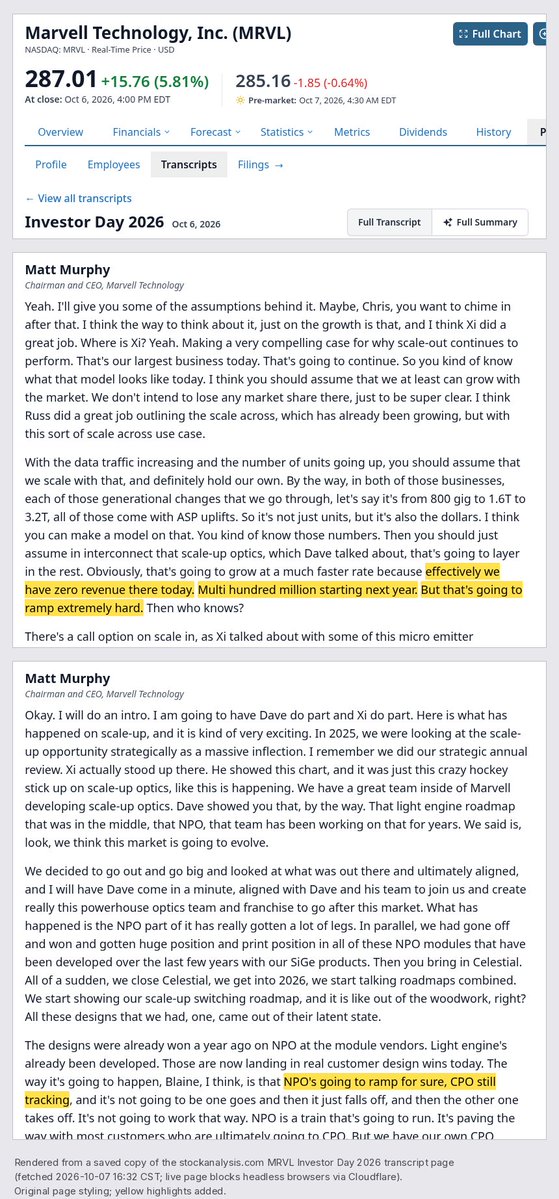
$MRVL CEO Matt Murphy (Investor Day, Oct 6) on scale-up optics: "effectively we have zero revenue there today. Multi hundred million starting next year."
His "next year" is FY28. Marvell itself maps FY31 to calendar 2030, so FY28 lands roughly in 2027.
On sequencing: "NPO's going to ramp for sure, CPO still tracking."
My read (inference): these may not conflict. Woodside is talking about inside the package; Marvell's near-term dollars likely start with NPO, sitting next to it. Caveat: Marvell also says it already has customers deploying CPO, with no split given.
Woodside's other tip: watch "the smaller laser suppliers who could fill gaps in CW and pump lasers."
Is $SIVE one of them? It makes CW DFB lasers, but neither source mentions Sivers. That link is purely my inference.
$MRVL just laid out the math through FY2031 at its investor day.
FY28 revenue target raised to ~$20B (vs $18B in Aug, consensus $18.2B).
New FY31 target: $70–90B. The midpoint is $80B, vs a $46.85B analyst estimate.
FY26 was $8.2B.
The line I care about most: custom silicon is guided to >$12B in FY29, more than 3x FY28. Murphy: "not a single customer."
After the Google deal in August, the stock sold off because the payoff looked too slow. Today they showed the curve past FY29. Shares dipped 3% at the open, then ran up as much as ~10%.
I'm long-term bullish: Marvell is one of the few that can actually win and ship custom silicon for hyperscalers.
The FY31 range is wide, and it depends on Google and other customer programs ramping on time. I'll track custom revenue every quarter to check.
The number I keep coming back to from $MRVL Investor Day (Oct 6): scale-up optics revenue is basically zero today. It starts next year.
Scale-up = the links that let the GPUs/XPUs inside a rack talk to each other directly.
Dave Lazovsky (Marvell): today "100% of all interconnected XPUs inside of all racks are copper, all of it."
Copper wins today because the runs are short, it's cheap, and there's no optical-electrical conversion.
The catch: at 200G, copper reach is 2.5 m. "It forces you inside the rack." And lane speeds are headed to 448G.
The industry wants scale-up domains of 512, 576 XPUs and beyond, spanning multiple racks.
His take: the only way past that limit in scale-up is optics.
Why it matters: Marvell's internal estimate is that scale-up carries >85% of AI data center traffic. Scale-out is ~15%.
CEO Matt Murphy: "We have virtually no revenue in this area today, with strong growth beginning next year."
In Q&A he got more specific: "effectively we have zero revenue there today. Multi hundred million starting next year." Then it's "going to ramp extremely hard."
Content per chip: Lazovsky says think "on the order of thousands of dollars of scale-up optics per XPU." Optics needed on both the XPU side and the switch side.
Not a clean handoff either. Murphy: NPO ramps "for sure," CPO is still tracking, and copper, NPO and CPO "are going to exist in parallel."
For context: Marvell sizes its total interconnect TAM (scale-out + scale-up + scale-across) at ~$65B by 2030, ~65% CAGR. That's not a scale-up-only number.
$MRVL just laid out the math through FY2031 at its investor day.
FY28 revenue target raised to ~$20B (vs $18B in Aug, consensus $18.2B).
New FY31 target: $70–90B. The midpoint is $80B, vs a $46.85B analyst estimate.
FY26 was $8.2B.
The line I care about most: custom silicon is guided to >$12B in FY29, more than 3x FY28. Murphy: "not a single customer."
After the Google deal in August, the stock sold off because the payoff looked too slow. Today they showed the curve past FY29. Shares dipped 3% at the open, then ran up as much as ~10%.
I'm long-term bullish: Marvell is one of the few that can actually win and ship custom silicon for hyperscalers.
The FY31 range is wide, and it depends on Google and other customer programs ramping on time. I'll track custom revenue every quarter to check.
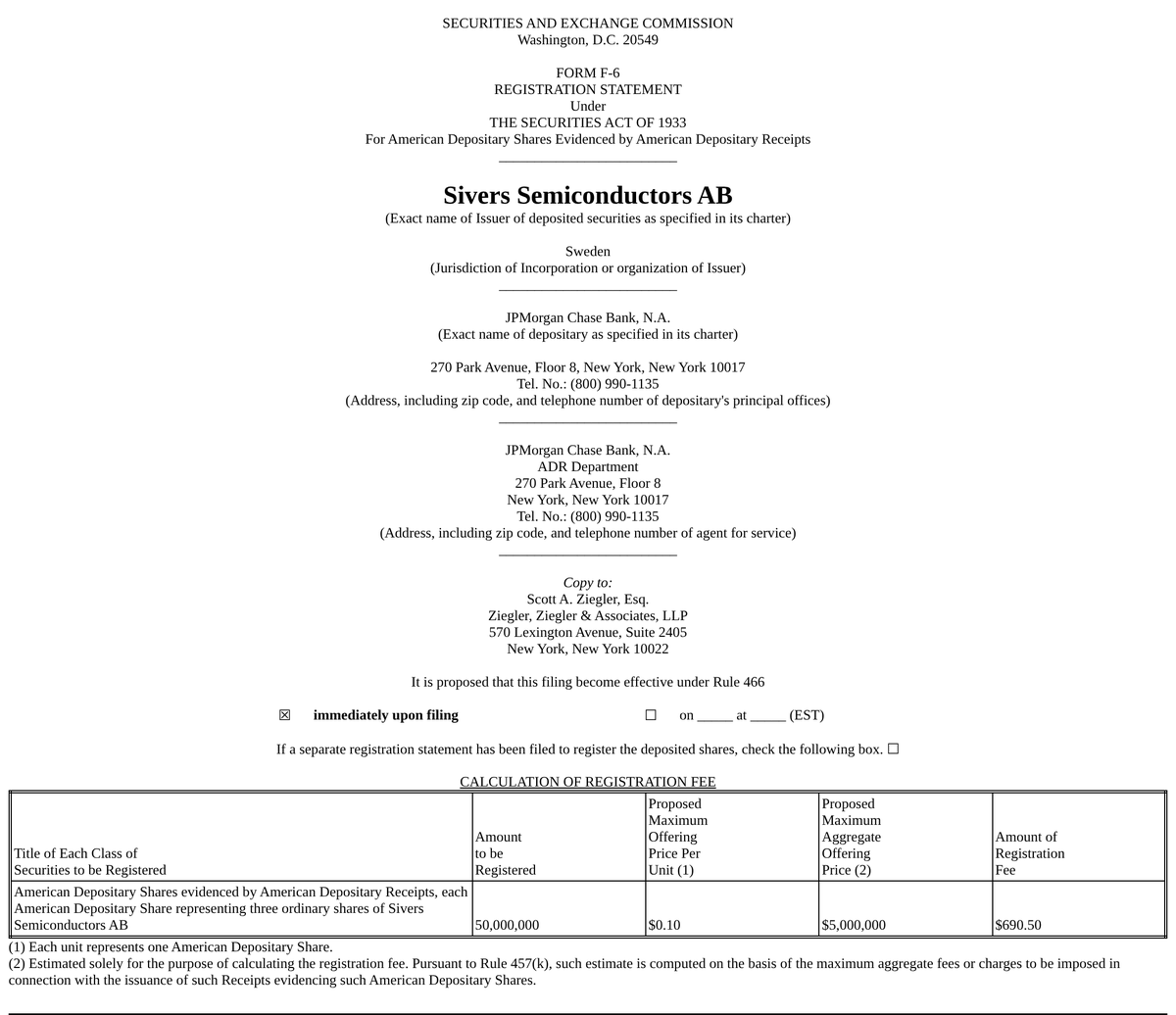
All four major ADR depositaries registered $SIVE in one week:
Deutsche Bank 9/29, JPMorgan 9/30, BNY and Citi 10/5.
So why care?
Depositaries earn issuance and conversion fees, and each one pays its own lawyers to file. I went through SEC filings from Apr–Sep 2026: of 169 issuers that got unsponsored ADRs, only 3 drew all four depositaries within six months. In the $0.5–2B market-cap bucket, none did.
Sivers did it in a week.
My read: the Wall Street pipes think US demand for Sivers is real, and more visible than for peers its size.
That's a signal about attention.
https://t.co/BVLdllzHqB
Nasdaq at a new high 🎉
On optics, $LITE already hit 1,124.40 intraday today, above its May 12 high of 1,085.68. One name's already there.
I'm hoping the group keeps making highs, but not on vibes. Two things I'm watching:
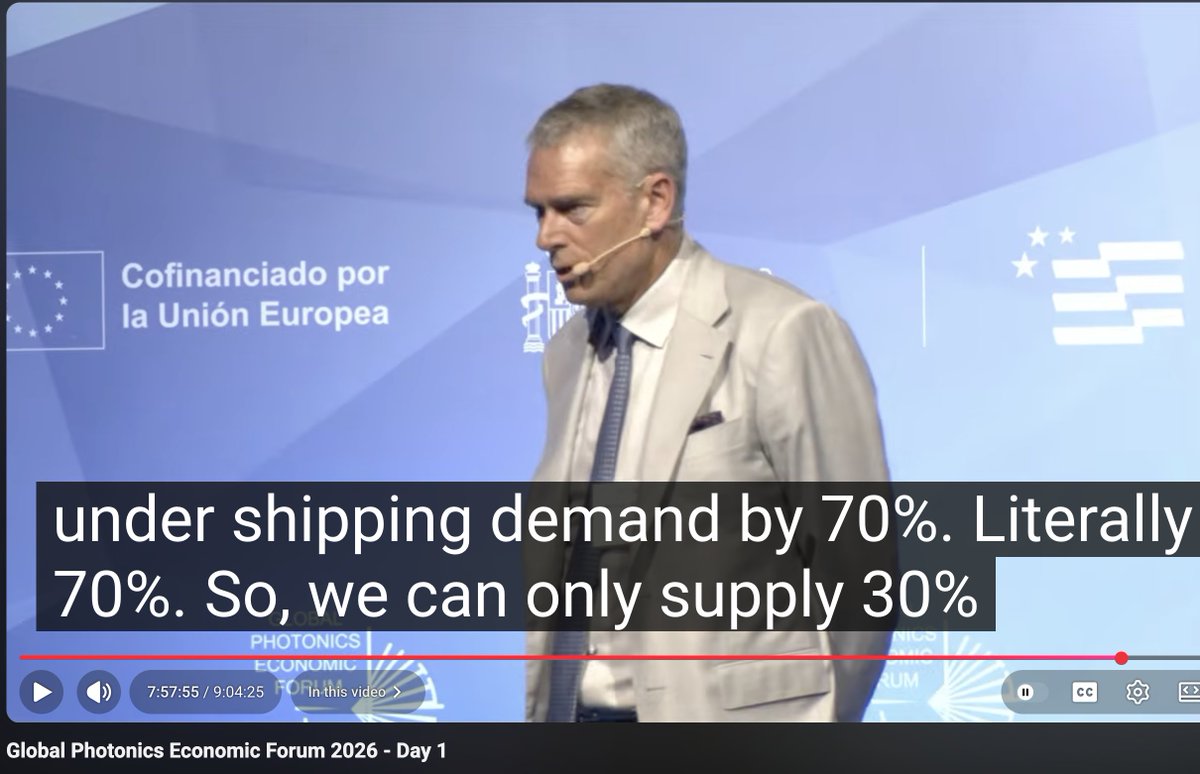
1) The supply gap. $LITE's CEO said at a forum : once CPO/NPO ramps in 2027, they can only meet ~30% of demand, ~70% short, with balance around 2029–2030
Gap stays, pricing power stays
2) Policy. What MS heard in Washington: restrictions on Chinese modules may start at 3.2T, plus a floated 65% US-content threshold. Leans good for US lasers. Not a final rule yet
The rest are still far from their highs (live prices, distances are my math):
$COHR ~330, ~25% below its Jun 3 high of 440
$AAOI ~113, ~51% below its May 13 high of 233.67
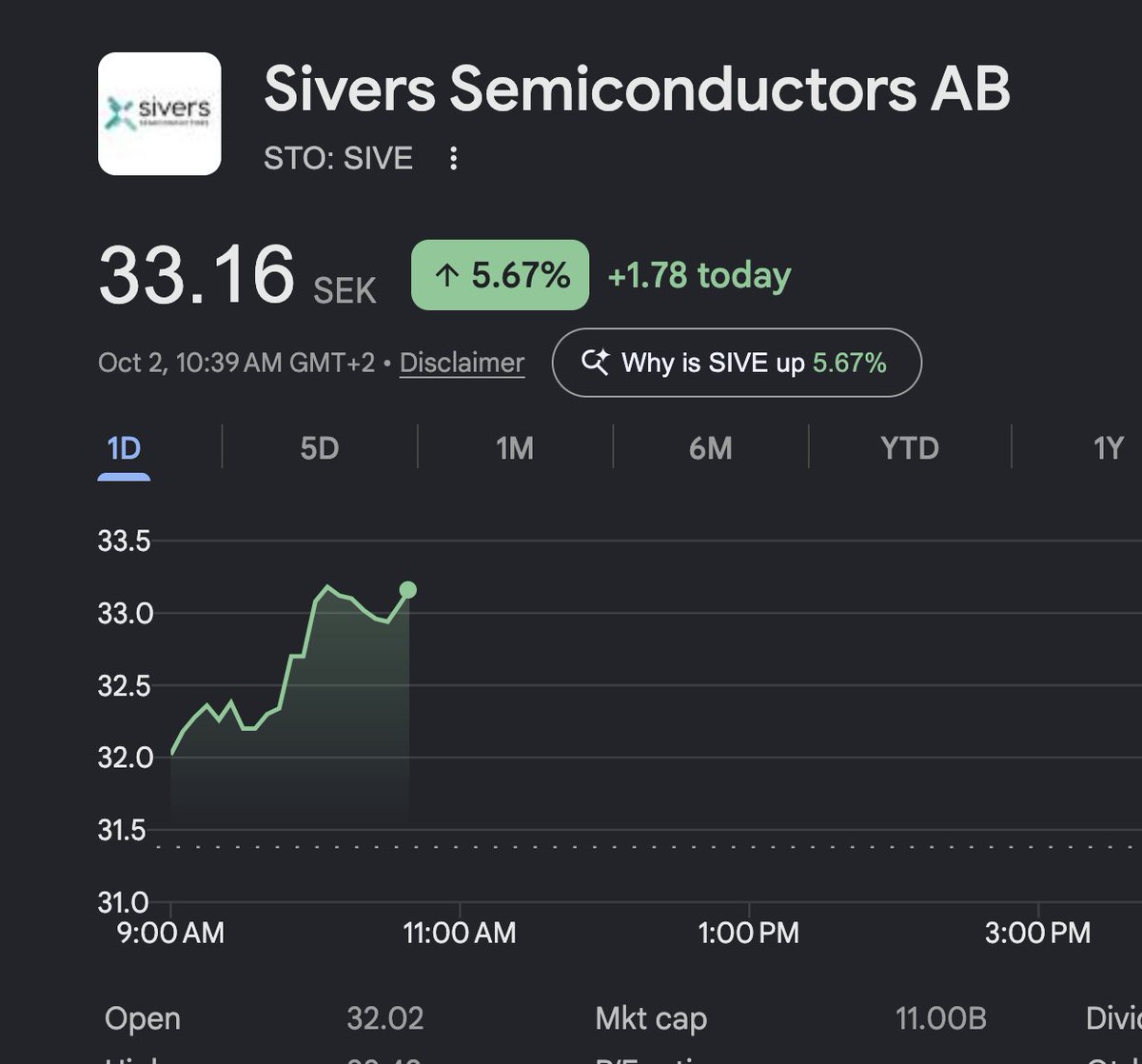
$SIVE ~SEK 34.3, ~69% below its Jun 3 high of 110
Celebrate the Nasdaq. Waiting on the back row to catch up.
$LITE CEO: "Next year with the advent of CPO and NPO in 2027, our estimates are that we'll be undershipping demand...
By 70%. Literally 70%. So we can only supply 30%.
And this has caught us by supply. By 2029-2030, we get to some level of balance."
Source: Global Photonics Economic Forum Day 1 (7:57:15 - 7:58:00)
Any other players with laser capacity coming online are probably going to get more market attention soon.
First, wishing Serenity a speedy recovery 🙏
She relayed a Morgan Stanley note today (Oct 2). Here's what it means in plain terms.
One: restrictions would likely start only at China-made 3.2T. Today's workhorse 800G/1.6T is left alone, so current AI buildouts aren't hit.
Two: Chinese modules could still qualify if 65% of the bill of materials is US content.
Three: the two priciest parts in a module are the DSP (the signal-processing chip) and the laser (the chip that makes the light). Use a US DSP + US laser and you're already near 65%.
That's the key: if Chinese makers want to keep selling 3.2T into the US, they have to buy US lasers and DSPs.
So MS says the bigger effect isn't who wins module share. It's laser pricing. Lasers are already tight, and now there's a new group of must-buy customers.
Who benefits? $LITE and $COHR make lasers and benefit directly; $AAOI is on the list too.
The bottleneck to watch is InP substrates (the indium phosphide wafers lasers are built on). $AXTI sits there.
The $SIVE part is Serenity's inference, not confirmed: from 2024 company materials, she reads its large incoming capacity as sitting at US foundries. The company hasn't disclosed the location.
If that holds, it lands on the "US-made laser" side of the line.
One caveat: the FCC hasn't published rule text, and 65% is only a possible threshold.
"Potential FCC rules on optical transceivers more likely to come at 3.2T" - $LITE, $AAOI, $COHR, $SIVE.
Morgan Stanley met with Washington officials:
- Restrictions would likely start at 3.2T modules made in China (800g/1.6T would be left alone)
- Potential restrictions would likely keep laser market tight (combining US DSPs + lasers could meet the 65% US value threshold per MS)
- Chinese modules could qualify if 65% of bill of materials is US content. Chinese modules using US DSPs and lasers are already near that level
- Analysts expect the positive impact on laser pricing... to be more important than any broad redistribution of transceiver market share.
- Analysts don't expect this to bottleneck hyperscaler AI buildouts, they name InP substrate supply as the key variable to watch (hello $AXTI )
TLDR:
Component suppliers in general are really positive. Like $SMTC probably winner here for TIAs/drivers (I don't think this was listed), maybe $MXL for DSPs too.
$AAOI another large beneficiary.
$SIVE is high-key alpha for laser beneficaries since they have "tremendous capacity" coming online, and that points to US foundries (they haven't formally disclosed location).
Since previous slideshows show 2 US foundries 1 Taiwan foundry (Win Semi) in terms of their capacity partnerships. And it's process of elimination.
From CIOE Channel checks it does look like they're starting to work with Chinese pluggable players, (so they'd avenues moving forward as US supply chain component beneficiaries).
Of course $LITE / $COHR would be happy.
TLDR: Western supply chains for Lasers / DSPs / TIAs / others are already bottlenecked but qualified capacity becomes even more important.
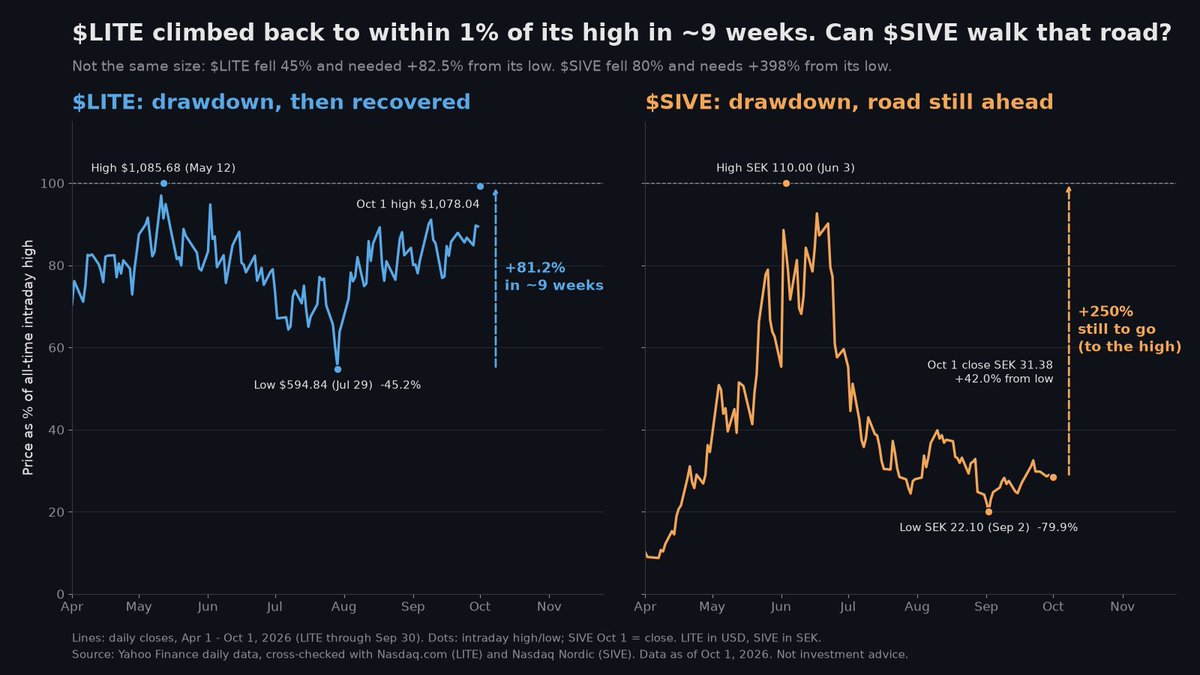
What I hope for $SIVE is simple: that it walks the road $LITE just walked.
$LITE's road (confirmed, intraday): May 12 record $1,085.68 → Jul 29 low $594.84, a 45.2% drawdown.
Then +81.2% in about 9 weeks. On Oct 1 it hit $1,072+ intraday, 0.7% shy of the record.
What brought it back? Revenue showing up. Last quarter $1.006B, +109.3% YoY; next-quarter guide $1.225–1.275B.
Plus this week's sell-side catalysts: Citi lifted its PT to $1,400, GF says NVIDIA's CPO deployment is scaling faster than expected, Bernstein initiated at Outperform.
$SIVE's road (confirmed): Jun 3 record SEK 110.00 → Sep 2 low SEK 22.10, a 79.9% drawdown. Oct 1 close SEK 31.38, +42.0% off the low.
To be straight: it's not the same size. $LITE needed +82.5% from its low to get back. $SIVE still needs +250% from here (my math).
What $SIVE lacks is exactly what $LITE had: delivery. TTM revenue SEK 278M (~$28M); its standard parts are still in qualification, per its own site.
To walk the same road, I'm waiting on three triggers:
① A CW DFB production order, or a PR naming an AI customer.
② The Oct 22 EGM switching auditor to EY, which Sivers ties to a potential US dual listing in H1 2027.
③ The tight-laser window: $LITE management has said high-power laser shipments were behind demand.
Why $SIVE's new ADR filings matter, and what they don't mean.
In 48 hours, two big depositaries opened US ADR channels for Sivers: Deutsche Bank (Sep 29) and JPMorgan (Sep 30). 1 ADS = 3 shares.
That's rare at its size. By my count of SEC EDGAR filings (Apr–Sep 2026), 31 companies valued at $0.5–2B got an unsponsored ADR. Only 2 got two banks within days: Sivers and Manycore Tech.
What it tells you: banks see enough US demand to pay for the plumbing first. They earn fees when investors convert shares into ADS, so they file where they expect flow.
What it doesn't: both filings are unsponsored. Only the bank signed, and JPM's text says Sivers "is not a party." So there are no new shares, no raise, and no listing.
The bigger piece comes from Sivers itself. Its EGM notice (Sep 30) proposes switching auditor to EY for "a potential dual listing of the shares in the United States, expected to be completed during the first half of 2027."
The banks are positioning ahead of the US listing Sivers itself is preparing. The next real signal is an SEC filing signed by Sivers.
https://t.co/4c12C4tm63
The number to remember from $MU this quarter isn't $54B of revenue.
It's $150B.
That's Micron's RPO — remaining performance obligations.
In plain English: revenue customers have already signed for, but Micron hasn't delivered or booked yet.
Three months ago it was roughly $100B.
One quarter, about +$50B.
The contracts behind it are SCAs — strategic customer agreements — and they're take-or-pay:
the customer pays for the committed volume whether or not it takes delivery.
The ladder:
Agreements signed: 16 → 26
Customer financial commitments (mostly cash deposits): $22B → $32B
RPO: ~$100B → ~$150B
Why it matters:
Memory has always been a textbook cycle. Shortage, prices spike. Capacity arrives, prices crash.
Of the revenue with a defined pricing framework, most sits in floor-and-ceiling ranges (the rest is fixed price), which pre-commits part of the downside.
The CFO, on the call: "RPO is based on committed volumes and minimum pricing and is inherently conservative."
So the $150B is counted at floor prices, and only for contracts with a defined pricing framework.
He added that Micron expects actual revenue to "well exceed" the associated RPO over the contract terms.
Confirmed numbers:
FQ4 revenue $54.23B, +31% QoQ, +379% YoY
Non-GAAP gross margin 87.0%, EPS $33.42
Next-quarter revenue guide $61.5B ± $1.5B vs. ~$57.0B LSEG consensus
The stock barely moved after hours.
The market was looking at a different number: next-quarter gross margin guided to ~86.25%, below this quarter's 87.0%.
Management's explanation: it raised bonuses for every employee this quarter. Most of the manufacturing share was capitalized into inventory and hits cost of goods next quarter. With startup and some other costs, roughly $1B in total.
They called FQ1 the floor for FY27 gross margin.
They also said price increases will be more moderate in FY27.
So the next checkpoint:
Does FQ2 gross margin clear ~86.25%?
It isn't a pure bonus test: the CFO said the smaller Q4-related comp hit in FQ2 is offset by higher FY27 incentive comp.
My read: so any FQ2 margin lift has to come mostly from price and mix — a direct check on how "moderate" the price increases really are.
My inference, not company guidance:
Contracted is not the same as de-cycled.
Company framing: SCAs are expected to cover over 35% of revenue through 2030, and three quarters of that has a defined pricing framework.
Rough math: the price-framed portion is only about a quarter of total revenue (35% × 3/4 ≈ 26%).
Most of the rest still floats with the market.
So the variable to watch is supply.
FY27 first-half capex is ~$25B, the second half higher, with most of the increase going to construction, mainly to speed up cleanroom space.
Management's own words: cleanrooms "take a long while to build," and output ramps only gradually after first wafers.
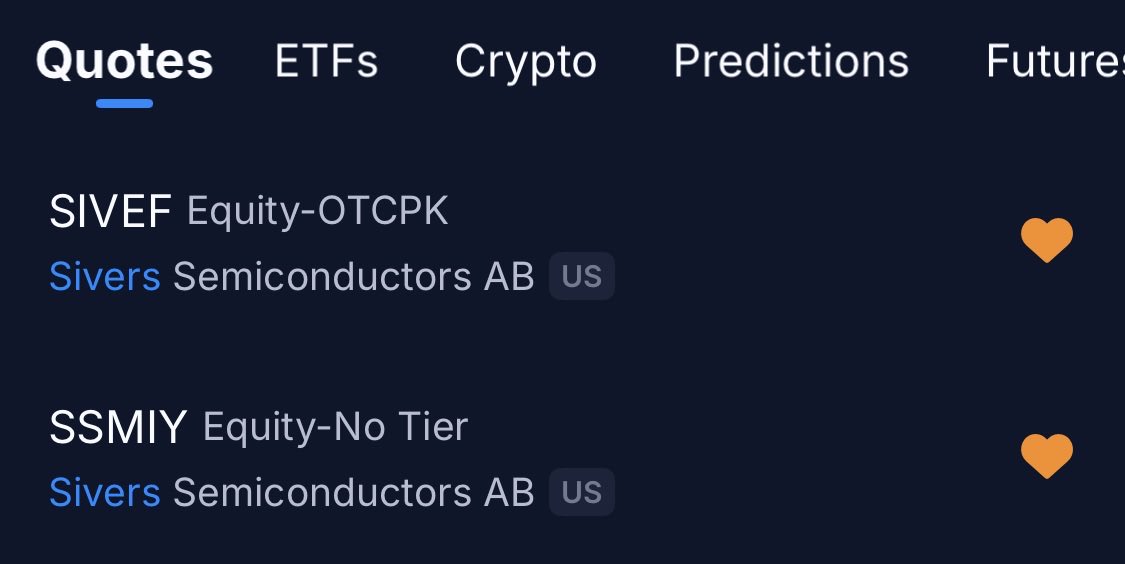
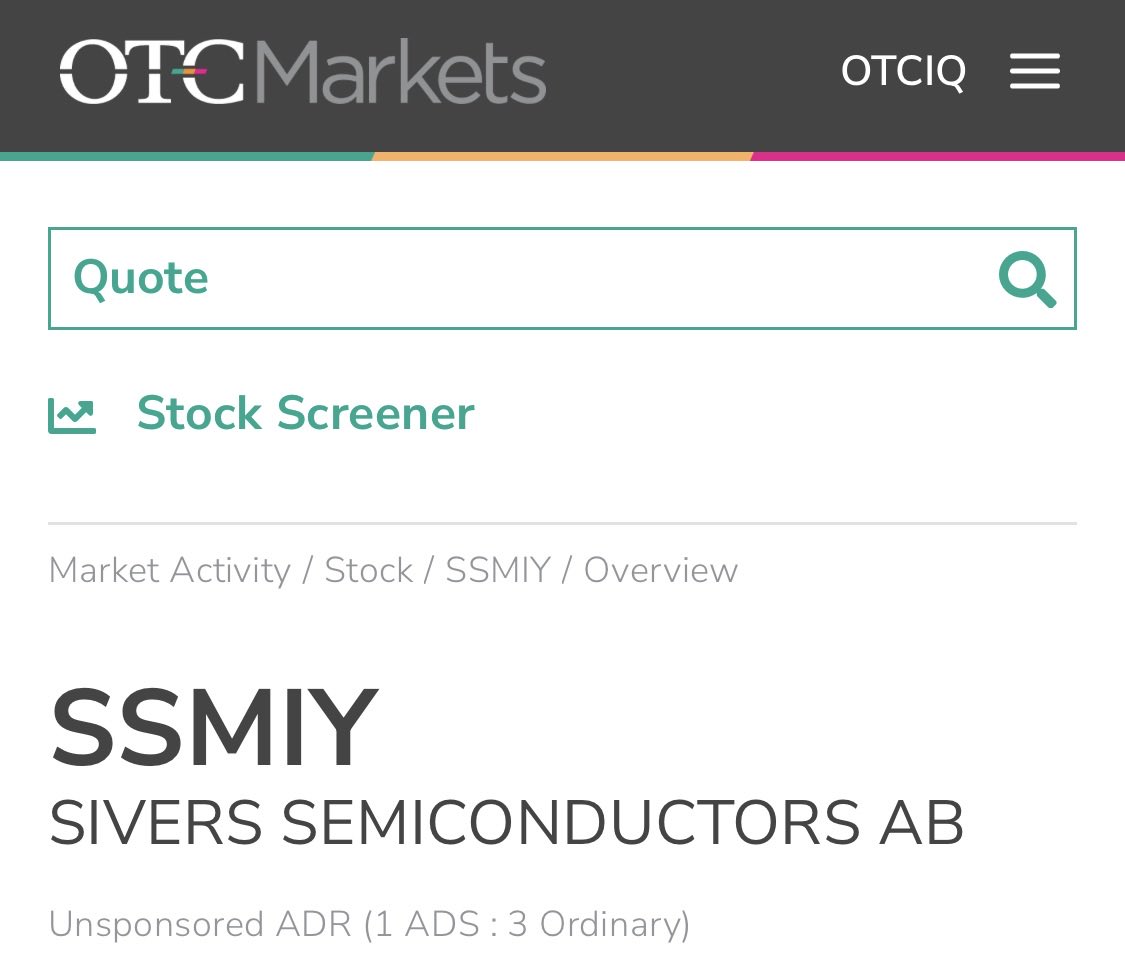
$SIVE now has a new US OTC ticker: $SSMIY.
What it is: an unsponsored ADR set up by Deutsche Bank on its own. 1 ADS = 3 Sivers shares. It's not the company listing in the US, and there's no raise and no dilution.
What's useful to know:
At Tuesday's close, 1 ADS works out to roughly $9.5. A quote far from that means a premium or discount.
It's "No Tier" for now: ticker assigned, no market maker quotes yet. Expect wide spreads early on.
It makes access a bit easier for US retail vs SIVEF, which trades around $3 on thin volume.
The company's own US listing is a separate track, targeted for H1 2027 per the Sep 29 EGM notice.
What to watch: when SSMIY prints its first trade, and how much volume shows up. That's the clearest read on US demand.
$JBL beat on AI. Networking alone is growing ~45–50%.
If you follow $SIVE, there's a direct line here most people miss.
In April, Sivers announced it is supplying DFB lasers to Jabil for a 1.6T LRO pluggable transceiver, a low-power optical module for AI data centers.
Sivers' Q2 report (Aug 27) gives the clock: Beta builds in Q4 2026, production orders expected in H1 2027, ramp in H2 2027.
Why Jabil's report matters for that clock:
The customer side looks healthy. Jabil guided ~$22.1B of AI-related revenue for FY27 and says it can see demand through Aug 2027.
Its India lines build liquid-cooled network racks, with silicon photonics transceivers from its own photonics team.
Two separate tracks for $SIVE:
Pluggable (Jabil LRO): orders expected H1 2027 per Sivers.
CPO external lasers: Jabil puts CPO at FY28 and beyond.
The nearer catalyst is the pluggable one, not CPO.
What's not there yet:
Jabil has never named Sivers on its own calls.
No order size or volume has been disclosed.
Beta, then qualification, then an order: each step can slip.
What I'll watch: Beta news in Q4, the qualification outcome, and a real production order in H1 2027.
Sivers ($SIVE) called an EGM for Oct 22. One line in the notice matters more than the rest.
They're replacing Deloitte, auditor for 10 years, with EY. Part of the stated reason: preparing for "a potential dual listing of the shares in the United States, expected to be completed during the first half of 2027."
First time the company has put a US listing timeline in a formal notice. It lines up with earlier moves:
Jul 9: Q3 report pushed to Nov 26, citing US audit requirements
Aug 20: reports moved to after market close because of more US investors
Sep 29: switch to EY, which knows SEC reporting
Don't mix this up with the Deutsche Bank ADR filed at the SEC the same day. That's an unsponsored OTC facility the bank set up on its own. The company isn't a party to it.
The other item is a new option plan, P11:
Up to 7.28M options, about 2% dilution
Strike at 110% of the 5-day VWAP before grant, 3-year cliff vest
No performance conditions, which is a minus
The previous plan, P10, was struck around SEK 4. The stock is near 32 now, so the bar for the new options is much higher.
The dilution to actually keep in mind is the ~15.9M existing low-strike options, which are already deep in the money.
A US listing can help liquidity and how the stock gets valued. Orders and the Nov 26 Q3 report are still the real test.
Sources:
https://t.co/kZJXzevBLC
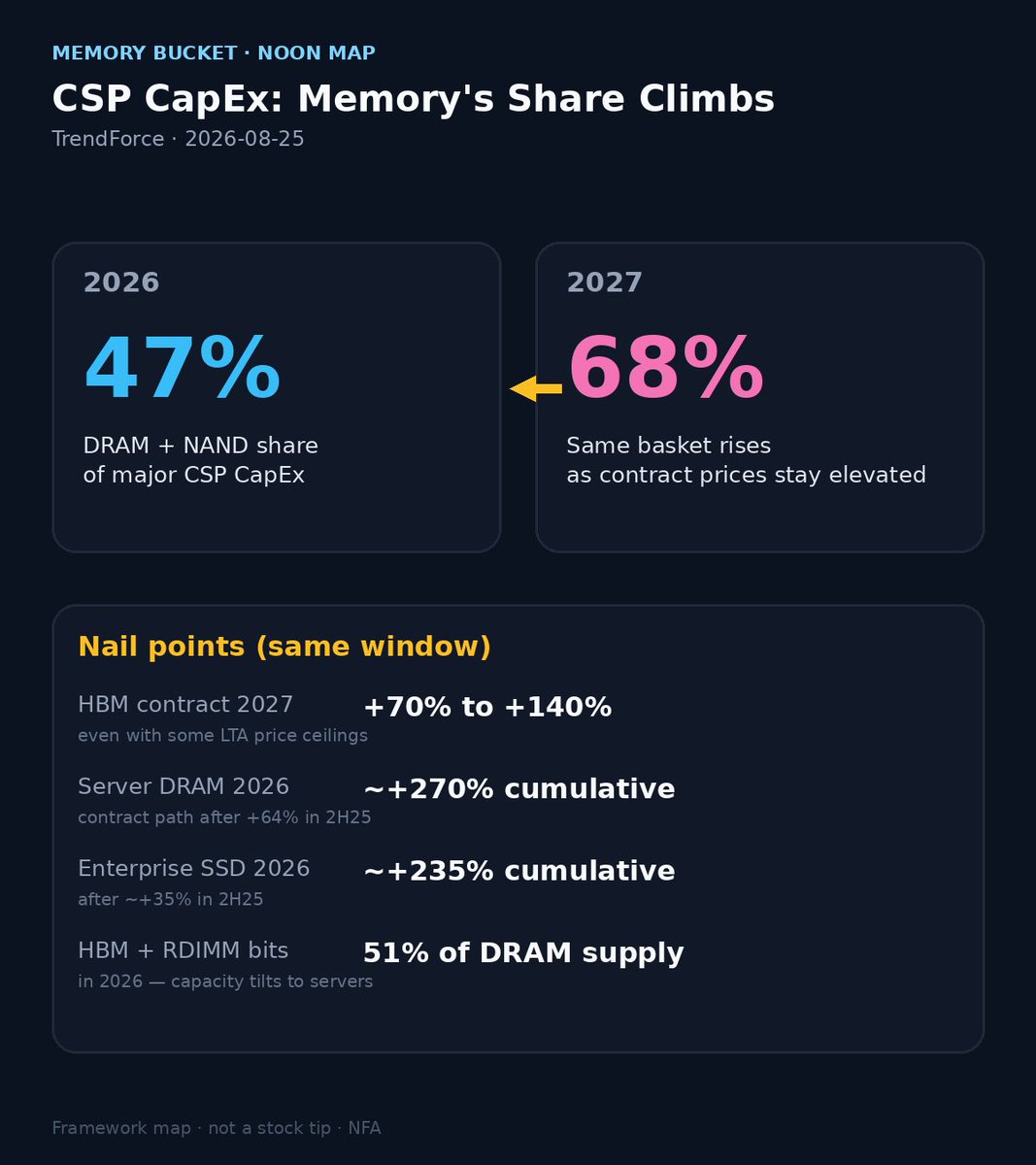
TrendForce (2026-08-25): major CSP CapEx ~+98% YoY in 2026 and another ~+50% in 2027 — with $DRAM +NAND’s combined share climbing from about 47% to about 68%.
$MU $SNDK $SKHY