Most people think traveling the world is expensive.
But in some countries, $100 can cover several days of incredible experiences.
8 countries where your money goes MUCH further than you'd expect.
Save this for your next trip. 🧵
“Formal education will make you a living. Self-education will make you a fortune.” — Jim Rohn
Learning is the beginning of wealth.
https://t.co/zXJ2egGIT7
#JimRohn#SelfEducation
Delhi police on orders from Modi/Shah have shut down Central Delhi to prevent Jantar Mantar protest. Shut down 11 metros, imposed prohibitory orders, shut down the internet! The police have laid siege on Jantar Mantar& are detaining people there. MP Manoj Jha has also been detained. All this on Gandhi Jayanti! Modi/Shah don’t understand that this will only inflame people & more people will come out on the streets. How many people can they prevent from protesting & detain. They will be overwhelmed!
“China moved young people from fields to factories. India cannot do the same because it is a corrupt and chaotic democracy. Most of the money would be stolen.”
~ “Prof Jiang” (Jiang Xueqin), educator and commentator
Aspiring investors idolize Warren Buffett, but their spending says otherwise. They want to look rich; he chose to get wealthy.
Spending $50k on a luxury car at 25 sacrifices ~$2.2M at 65 (at 10% returns).
Looking rich is expensive. Building wealth is quiet.
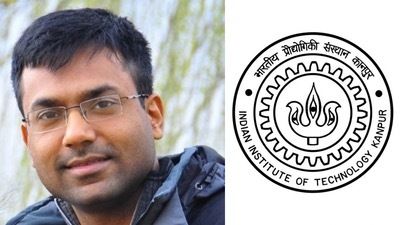
🚨 Nitin Gupta, IIT-JEE 2000 AIR 1, returned to IIT Kanpur in 2014 after training in the US and shifted from computer science to neuroscience.
Now, he is studying the brains of mosquitoes.
Expecting many more IITians to return to India and succeed.
Peter Thiel built PayPal alongside Elon Musk
Then he walked into Stanford and used Mark Zuckerberg, Larry Page, Bill Gates, Elon Musk, and even Einstein to explain one of the most controversial ideas in business:
“Competition is for losers”
And the deeper you go into the lecture, the more uncomfortable the argument becomes
Thiel starts with a distinction almost nobody makes: creating enormous value and capturing enormous value are two completely different things
Airlines transformed civilization and generate enormous revenue, yet historically struggled to keep much of the value they created. Google, by comparison, operated in a much smaller market but captured an extraordinary share of the economics
That leads to Thiel’s central claim:
There are basically two kinds of businesses, monopolies and businesses competing their profits away
The strange part is that both sides lie about it
A monopoly wants regulators to believe it operates in a huge competitive market. A terrible competitive business wants investors to believe it occupies some tiny unique niche
Thiel uses Google as the example. Define it as “search” and its dominance looks enormous. Define it as advertising, technology, cloud, phones, cars and software, and suddenly it looks like one player among hundreds
How you define the market can completely change the story
So how do you actually build something dominant?
Thiel says you usually start absurdly small
Amazon began with books. eBay gained traction in tiny enthusiast markets. PayPal focused on roughly 20,000 power sellers on eBay. Facebook started with around 10,000 Harvard students and reached roughly 60% penetration there in about 10 days
The mistake is starting with: “This is a trillion-dollar market”
To Thiel, that often means you’re entering an ocean filled with competitors
Own a tiny market first. Then expand outward
But dominating today isn’t enough
The truly valuable company has to remain dominant tomorrow
That’s where Thiel brings in Mark Zuckerberg, Larry Page and Bill Gates. The next Zuckerberg won’t build another Facebook. The next Larry Page won’t build another search engine. The next Bill Gates won’t build another operating system
Copying what made them successful misses the entire lesson
They became valuable because they built something sufficiently different that competition became much less relevant
Thiel looks for several things: proprietary technology that can be dramatically better than alternatives, network effects, economies of scale and brand
And then comes another contrarian idea:
Forget the first-mover advantage
Think about the last-mover advantage
Microsoft became enormously valuable because it dominated operating systems for decades. Google because search endured. Facebook’s value depended on whether it could remain the dominant social network
Thiel says most of a technology company’s value often lies many years into the future, which means investors obsess too much over current growth and not enough over one question:
Will this company still matter 10 or 20 years from now?
Then the lecture gets even more interesting
Thiel argues that some of humanity’s greatest innovations created unbelievable value while their creators captured almost none of it
Einstein transformed physics
The Wright brothers helped create aviation
Railroads transformed economies
Yet revolutionary innovation does not automatically create extraordinary fortunes
Meanwhile, software founders can sometimes capture billions because the economics of their industries, scale, marginal costs, network effects, allow them to retain a much larger percentage of what they create
He then points to Elon Musk, Tesla and SpaceX
Thiel’s explanation isn’t simply that Musk invented one magical technology. He highlights the ability to integrate many pieces of the business together, manufacturing, distribution, suppliers, engineering, in ways competitors struggled to replicate
Creating value mattered
Structuring the business so you could actually keep that value mattered too
But the last few minutes may be the most important part of the entire lecture
Thiel stops talking about companies
He starts talking about you
Humans copy each other
If everyone wants the same prestigious university, the same Wall Street job, the same startup idea or the same career, we interpret the competition itself as proof that the prize must be valuable
Thiel argues the opposite can be true
The fact that thousands of intelligent people desperately want something may be evidence that you should look somewhere else
He knows the trap personally. He followed the prestigious path through Stanford and Stanford Law into a top New York law firm, a place where, as he describes it, people desperately wanted to get in from the outside and desperately wanted to leave once they were inside
He left after seven months and three days
Someone at the firm told him it was reassuring to see him leave because he hadn’t realized “it was possible to escape from Alcatraz”
The door had been open the entire time. That is ultimately what “competition is for losers” means
Competition can make you better at beating the person standing next to you
But it can also make you so obsessed with winning someone else’s game that you stop asking whether the game is worth playing
Peter Thiel ends the lecture with one line that summarizes the entire philosophy:
Don’t rush through the tiny door everyone else is fighting to enter
Look around the corner
There may be a vast gate nobody is taking
Watch the full lecture below ↓
Oil is about to head to $200 or better. The biggest refinery in Moscow is gone, destroyed. You know what other impact this will have? It will destroy sulfur. Sulfur is needed to make phosphates. Phosphates are used to grow food. A good shortage is coming.
🚨 India has added more than 100 greenfield GCCs in the first eight months of 2026.
Hyderabad - 40
Bengaluru - 33
Pune - 18
Chennai - 8
Mumbai - 7
(The Hindu)