Interesting article from the @AtlanticCouncil on the overestimation of euro's share in international transactions based on SWIFT numbers.
The latest SWIFT report shows that, in March 2024, the
🇺🇸 USD accounted for ~47% of total transaction value
🇪🇺 EUR for ~22%
🇬🇧 GBP for ~6.5%
🇨🇳 RMB for ~5%
🇯🇵 JPY for ~4%
However, these often-cited SWIFT numbers over-report the relative share of the Euro and under-estimated that of the RMB.
This is due to the design of the report (measuring trades between nations regardless of whether some belong to a monetary union (e.g. the euro area)) and coverage (only counting transactions within SWIFT) of its reporting system.
Excluding euro transactions within the euro area, the share of the Euro in truly international transactions is only 9.4 percent (or only 43% of the ~22% reported by SWIFT).
This puts the Euro on top of a group of secondary currencies including the GBP, RMB, JPY, CAD, SFR etc., but not as a peer in a position to compete against the dollar.
Nonetheless the euro remains the second most important global currency across practically all metrics. This is true for stablecoins too, but there is ample room for growth there as well.
https://t.co/5WH62I43xX
.Give AI a few more years and human emotional support will be its killer app!
1 in 3 people are lonely. Will #AI help, or make things worse?
https://t.co/KwxJ8n5wrT
"It is usually not part of the role of a central bank to compete with the private sector for innovative payment solutions for end customers". Indeed, this would make them act as both the regulator of banks and their competitor. https://t.co/ibSRuq5zCb
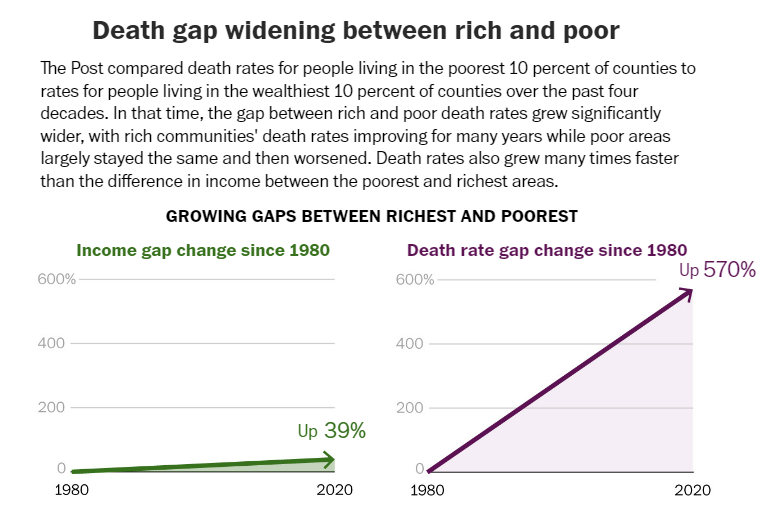
The best barometer of rising inequality in America is no longer income. It is life itself.
Wealth inequality in America is growing, but The Post found that the death gap — the difference in life expectancy between affluent and impoverished communities — has been widening many times faster. https://t.co/cro6mTLnDz
1/10
Excellent Martin Wolf piece on China which, as always, does a great job of presenting a systemic view of the problem.
Debt is too high and growing too rapidly, he notes, but the risk for China, is not that it might suffer a financial crisis.
https://t.co/F4ZY2ZbriE
The Monetary Authority of Singapore (MAS), together with McKinsey, launched a working paper which sets out how high-integrity carbon credits can be utilised as a complementary financing instrument to accelerate and scale the early retirement of CFPPs https://t.co/Ab8Y7fcna4
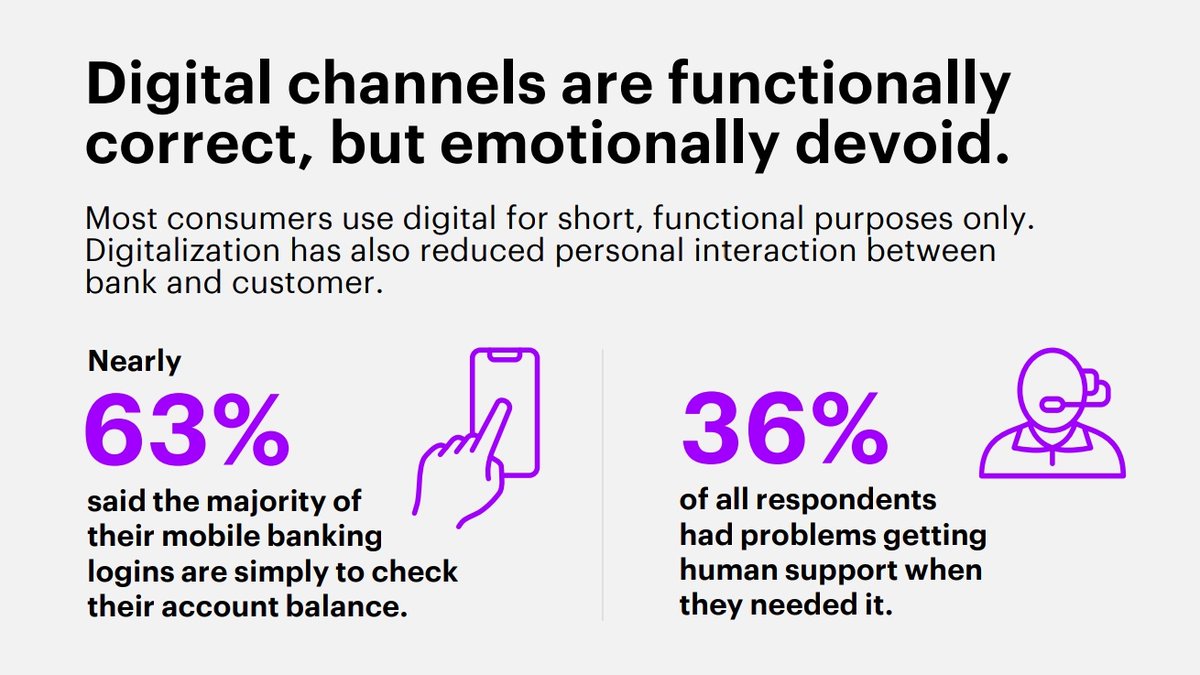
Digital channels are functionally
correct, but emotionally devoid:
36%
of respondents had issues when needing human support.
≈63% log in to their mobile #banking for an account balance check.
@Accenture Global Banking
Consumer Study 2023: https://t.co/E6pE6Vw6nh #DigitalBanking