No matter how important your task is, you always had better take a break. It is biologically necessary to recharge. Play games, train, read, cook, watch anime, series, movies, and/or go out, but have fun.
Los hedsge funds están comprando muy activamente real estate, productos macro y utilities...
... Y vendiendo muy fuertemente acciones individuales y acciones industriales.
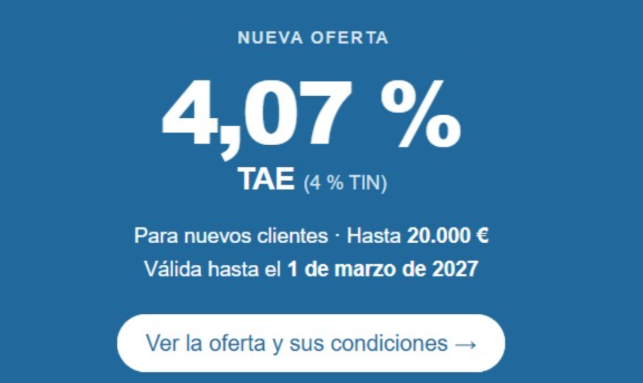
Recuerdo que la última vez que los bancos pagaban un 4 % por los depósitos a plazo fue en 2010. Yo estaba estudiando el máster de bolsa en el IEB.
Años después, con los tipos al 0 %, se lo contaba a mis amigos y les decía que sería difícil volver a ver algo así.
No hizo falta esperar mucho. Lo he vuelto a ver, y sobre todo me ha recordado lo cíclica que es la economía y las oportunidades que deja si no persigues precios y te centras en los ciclos y en el valor.
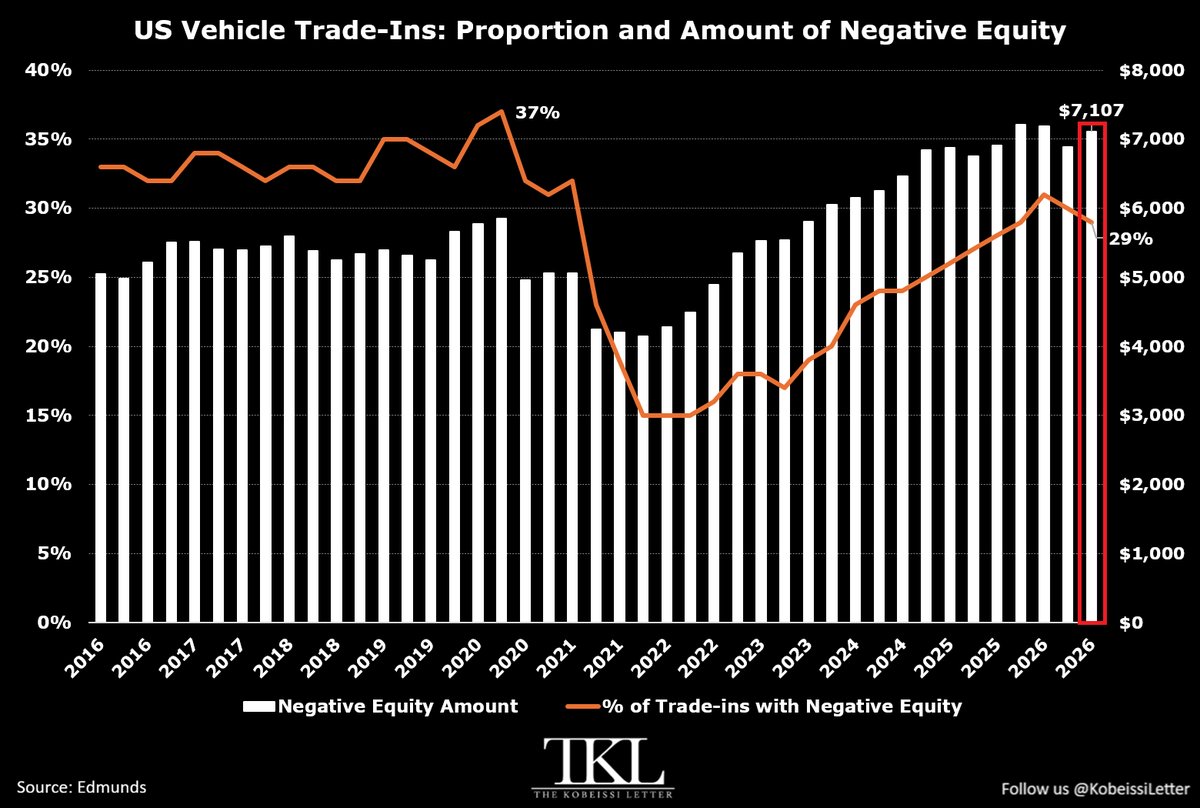
Tons of US car owners owe more on their vehicles than they are worth:
29% of trade-ins for new-vehicle purchases involved negative equity in Q3 2026, near the highest proportion since Q1 2021.
At the same time, the average amount owed on underwater vehicles rose to $7,107, the 3rd-highest on record.
This is +$2,960 above the low recorded in Q4 2021 and +$1,850 above pre-pandemic levels.
Meanwhile, buyers who rolled over unpaid car debt into new loans took on an average loan balance of $57,235, up +44% from 2019.
The average annual percentage rate (APR) for these borrowers was 8.1%, pushing total interest payments over the life of their loans to $16,610, up +83% from $9,093 in 2019.
The US is in a car affordability crisis.
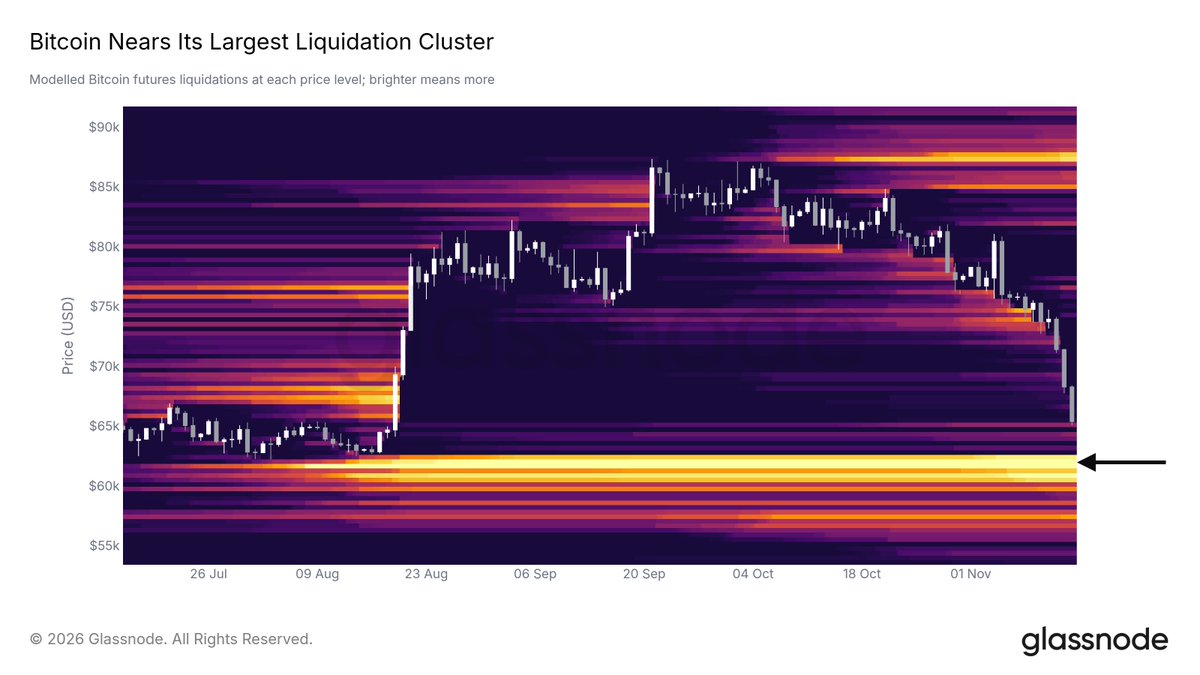
bitcoin:native price is approaching a massive liquidation cluster.
The August breakout left behind these long entries. Markets tend to gravitate toward spots of fragility such as this.
After weeks of selling, this could be the accelerant for a final capitulation flush.
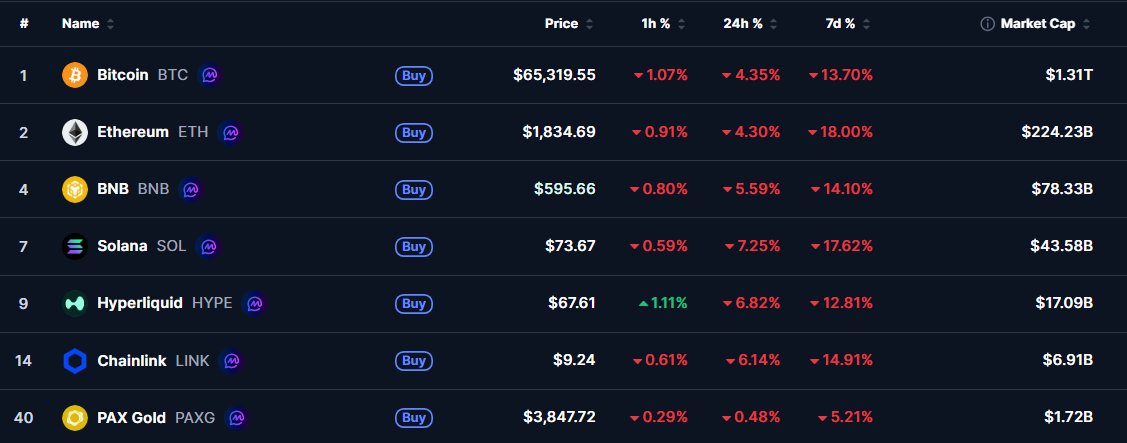
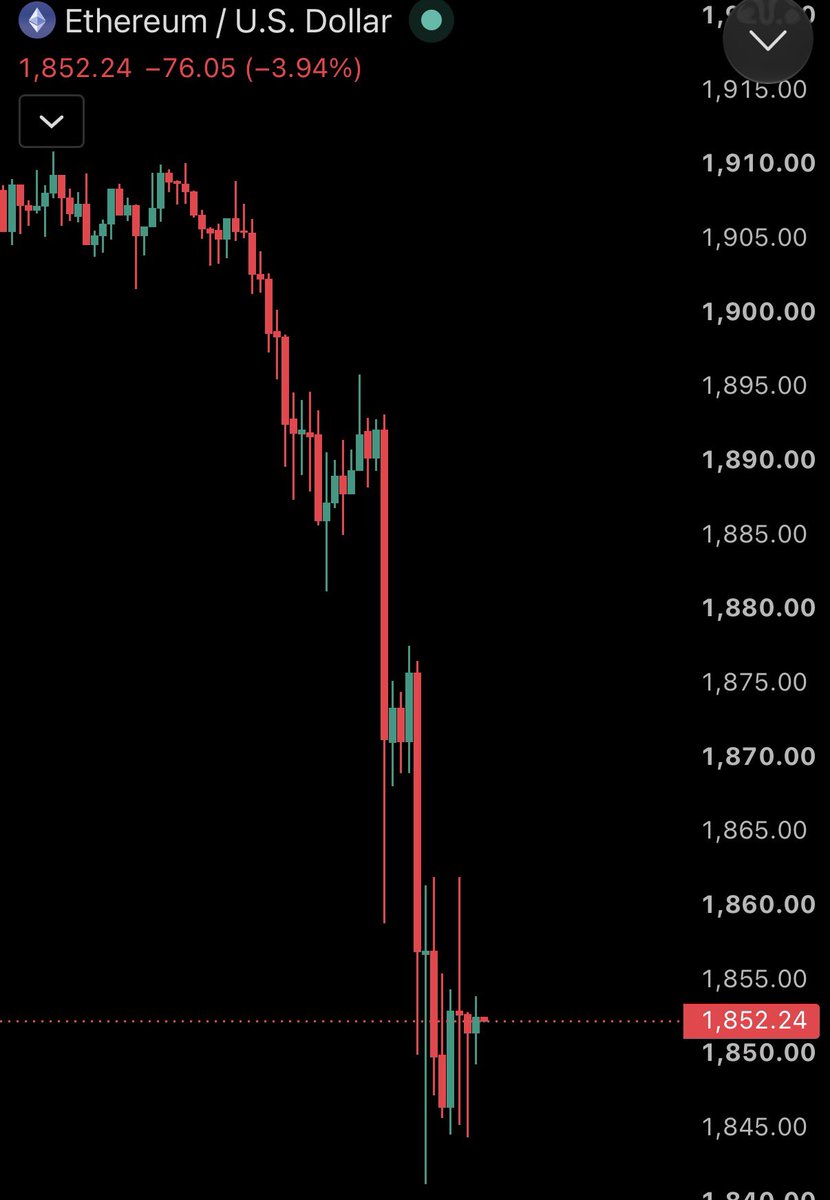
BREAKING: Bitcoin falls below $66,000 and ETH falls below $1,850 as $215 million worth of levered positions are liquidated in 60 minutes.
Crypto is seeing one of its most brutal weeks of the year.
Comprar porque hay un problema te permite comprar barato. Los activos reales y en concreto el oro, se pueden comprar más barato cuando los tipos suben anticipando (como es mi caso) que la situación es coyuntural y no va a durar sin que todo se rompa.
Si esperas la intervención o que el tipo caiga, el FOMO te expulsa.
Sean value investor con el oro.
DTCC is coming to Solana!
DTCC is the premier post-trade infrastructure for global finance: $4.7 quadrillion in transactions processed in 2025 and $114 trillion in assets in custody at DTC.
When it connects its tokenization service to a network like Solana, it signals to the whole industry that tokenized securities are becoming real market infrastructure, not just a pilot.
It’s a major validation of Solana for regulated finance. DTCC is a stalwart, industry-owned institution. Choosing Solana as a network for DTC-custodied assets puts Solana alongside the most trusted name in post-trade, which is the credibility institutions look for before building.
Being among the blockchains selected shows Solana meets DTCC’s bar for performance, security and governance. These are eligible DTC-custodied assets, the same securities investors already hold, with the same protections, ownership rights and regulatory safeguards.
It advances the vision of always-on, internet capital markets. Settling and moving tokenized securities as easily as any other onchain asset points toward faster capital movement, collateral mobility and capital efficiency.
https://t.co/ivv3hQKKvw
US inflationary pressures are broadening:
Core CPI inflation surged to a 3-month annualized rate of +3.75% in October, its highest reading since April 2024.
This marks its 3rd consecutive monthly increase, up from +1.64% in July.
At the same time, core services less shelter inflation, also known as Supercore CPI and closely monitored by the Fed, rose to a 3-month annualized rate of +5.45%, its highest since mid-2024.
The weighted proportion of CPI components rising at an annualized rate above 2% soared to 76% last month, the largest percentage since August 2022.
This figure has risen +17 percentage points since July, marking its sharpest 3-month increase since early 2021.
The Fed's fight against inflation is far from over.
Fijaos en la curva de tipos. El mercado está vendiendo bonos en toda la curva, pero más en el tramo corto, por la presión que está ejerciendo la Fed sobre los tipos. Al subir más el tramo corto que el largo, la curva se aplana, una situación propia del final del ciclo de auge (bear flattening). Es la fase previa al ciclo de volatilidad y desaceleración, en el que el mercado empieza a comprar bonos a largo plazo para fijar el tipo en épocas de desaceleración (bull flattening).
En mi opinión, la economía no está preparada para aguantar un dólar tan apreciado y unos tipos reales tan elevados. Por eso la coyuntura es favorable a los activos reales, como el oro o el bitcoin, y por eso hay que aprovechar y comprar barato (si se puede), aprovechando el pesimismo poco fundamentado.
Recordad que el mercado siempre te pone a prueba y que la rentabilidad se obtiene anticipándose al ciclo no persiguiéndolo.
Si las tesis no cambian, el fundamento permanece intacto.
No les voy a mentir.
Bitcoin se ve completamente horrible aqui, y a menos que ocurra un milagro hoy y cierre por encima de la SMA de 200 en diario ($73.3k), la ruptura de todos los soportes confirman caida de Bitcoin a los $64k-$61k.
Lo peor no es la caida, es que tendremos minimo 4-6 meses extra de mercado lateral-bajista.
BREAKING: The Global Copper Miners ETF, $COPX, has declined for 11 consecutive weeks, its longest such streak since its April 2010 inception.
This surpasses the previous record of 10 consecutive weekly declines set in 2015.
Over the current streak, $COPX has dropped -24.7%, to near its lowest level since mid-December.
As a result, $COPX is offically down -0.4% year-to-date, after being up as much as +34.8% in August.
Meanwhile, copper futures have declined -6.7% over the last 4 weeks, to $6.28 per pound, their lowest level since mid-July.
The copper mining sector is seeing a massive reversal.
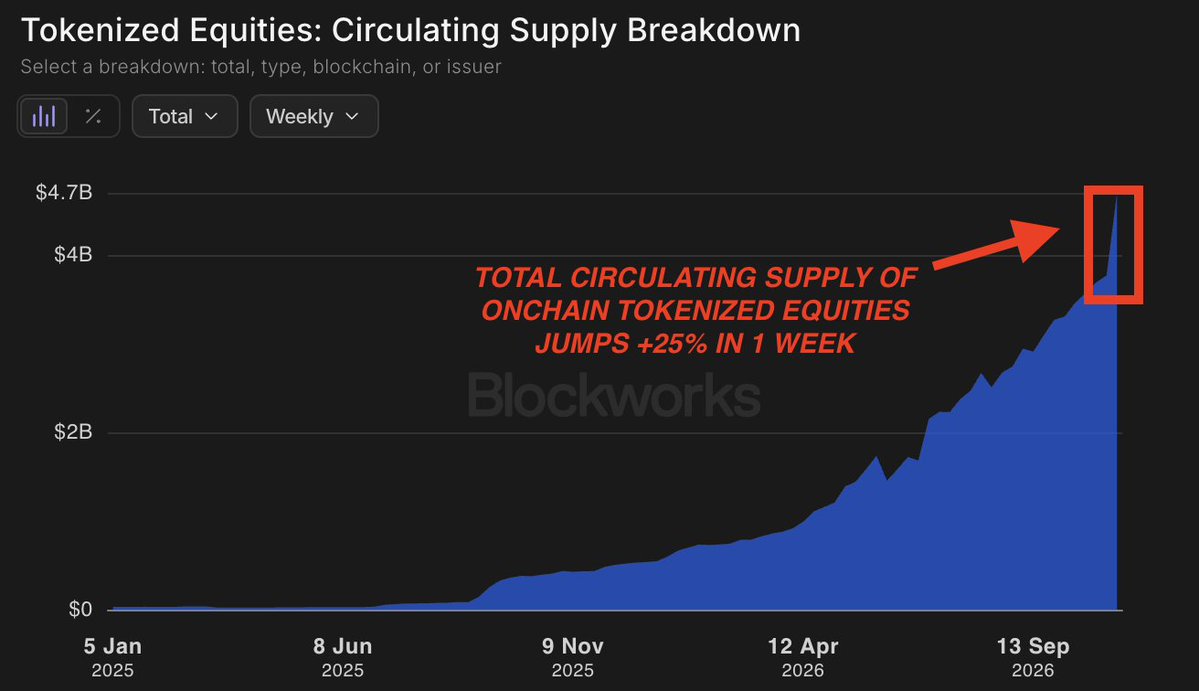
BREAKING: The total circulating supply of onchain tokenized equities surged by +$932 million last week, the biggest weekly jump on record.
This puts total supply above $4.7 billion, also a fresh record high.
Amid the US Midterm elections and the resulting volatility, tokenized equities saw historic volume.
In times of volatility, investors are increasingly favoring tokenized securities which trade 24/7.
The largest onchain trading platform on Solana, Jupiter, reported +60% MoM growth in the number of tokenized equity traders, with volume up +34%.
Furthermore, 62% of that volume now reportedly takes place outside of market hours.
Volatility is accelerating the adoption of tokenization.
US semiconductor stocks went from overbought to oversold in weeks:
The Semiconductor Index, SOX, fell -17% below its 200-day moving average on Thursday, its largest negative divergence since April 2025.
This is also the 2nd-largest such deviation since the 2022 bear market.
By comparison, during the 2008 Financial Crisis and following the 2000 Dot-Com Bubble burst, this metric dropped to -49% and -52%, respectively.
This marks a sharp reversal from June, when SOX traded +75% above its 200-day moving average, its largest positive deviation since 2000.
In other words, semiconductor stocks have shifted from extremely overbought to oversold territory in just 5 months.
Semiconductor stocks just saw one of their most violent swings in decades.
BREAKING: Upcoming NYSE-affiliated tokenized securities platform’s core clearing and settlement layer will be built on top of Avalanche technology.
Avalanche will support the platform’s clearing firm, supporting the development of infrastructure for 24/7 trading, clearing, and settlement.
A landmark step toward the next generation of global financial markets.
WSJ Exclusive: Avalanche (@avax) will provide the core ledger technology for the clearing firm on the NYSE-affiliated tokenized securities platform.
Subject to regulatory approvals, the platform is designed to support 24/7 trading, clearing and settlement for its subscribers.
@WSJ in thread
BREAKING: South Korea’s KOSPI collapses -9%, triggering a trading halt, after opening for the first time since today’s US market decline.
The index is now down -47% from its record high.