Publishing a first paper always matters — even more so when it’s your own case report as first author.
Proud to have supported a young colleague on this milestone.
Presumed Infected Bronchogenic Cyst Presenting as Acute Pericarditis: A Case Report https://t.co/ER6YICIdHO
Roger Federer broke the internet with one statistic that will change how you see every setback in your life.
1,526 singles matches.
Won almost 80% of them.
20 Grand Slams. 103 titles.
Now answer honestly:
What percentage of total points do you think he won across his entire career?
70%? 65%? 60%?
Try … 54%.
He lost literally almost EVERY SECOND POINT he ever played for 24 years.
And still became one of the greatest of all time.
Watch him explain it himself (2:07 of pure life-changing wisdom):
“In tennis, perfection is impossible… When you lose every second point on average, you teach yourself to say:
‘Okay, I double-faulted — it’s only one point.’
‘Okay I got passed at the net — it’s only one point.’
Even a screaming overhead smash that ends up on SportsCenter Top 10… still just one point.
So when you’re playing your point, it has to be the most important thing in the world.
The moment it’s over — it’s behind you.
That mindset frees you to attack the next point, and the next, and the next with absolute intensity and clarity.”
Then he looked at the crowd and said the line that hit a billion people in the soul:
“The real sign of a champion is not that they win every point.
It’s that they lose again and again and again… and have learned how to deal with it.
Negative energy is wasted energy.
Cry it out if you have to. Then force a smile.
Move on. Be relentless. Adapt. Grow.
Work harder — and work smarter.”
Save this post.
The next time you lose a deal, bomb a presentation, get ghosted, miss a deadline, or just have “one of those days” — come back here and read it again.
You’re not falling behind.
You’re just in the 46%.
And the 46% is exactly where every single legend has spent most of their career.
Keep playing the next point.
(full 2:07 clip — sound on)
Samen met BIG against breast cancer organiseerden we gisteren een padelmarathon.💖 We sloegen er de handen in elkaar om internationaal academisch borstkankeronderzoek te steunen en zamelden 13.230 euro in! #pinkoctober#borstkanker#bigagainstbreastcancer#garrinchadiegem
Now available in @Nature_NPJ Precision Oncology, results from the BALLETT molecular profiling study 🧬 🎯 using CGP & a national 🇧🇪 molecular tumor board. BALLETT is part of the @mybsmo PRECION program.
👏 Brigitte Maes & Pieter-Jan Volders
@sciensano
https://t.co/odjGq5BYPv
It is happening. Pubmed (https://t.co/KfOSZ5qIjG) is gone. And so is https://t.co/dOpXwy6tmu. European science really needs to wake up.
Technical info: https://t.co/kjl2ZSDNlP
If leaders are serious about ending war, women need a seat at the table.
International data, 1989-2011: When women are involved in agreements, peace is 35% more likely to last 15+ years.
Gender balance is especially important when the stakes are high and tempers run hot.
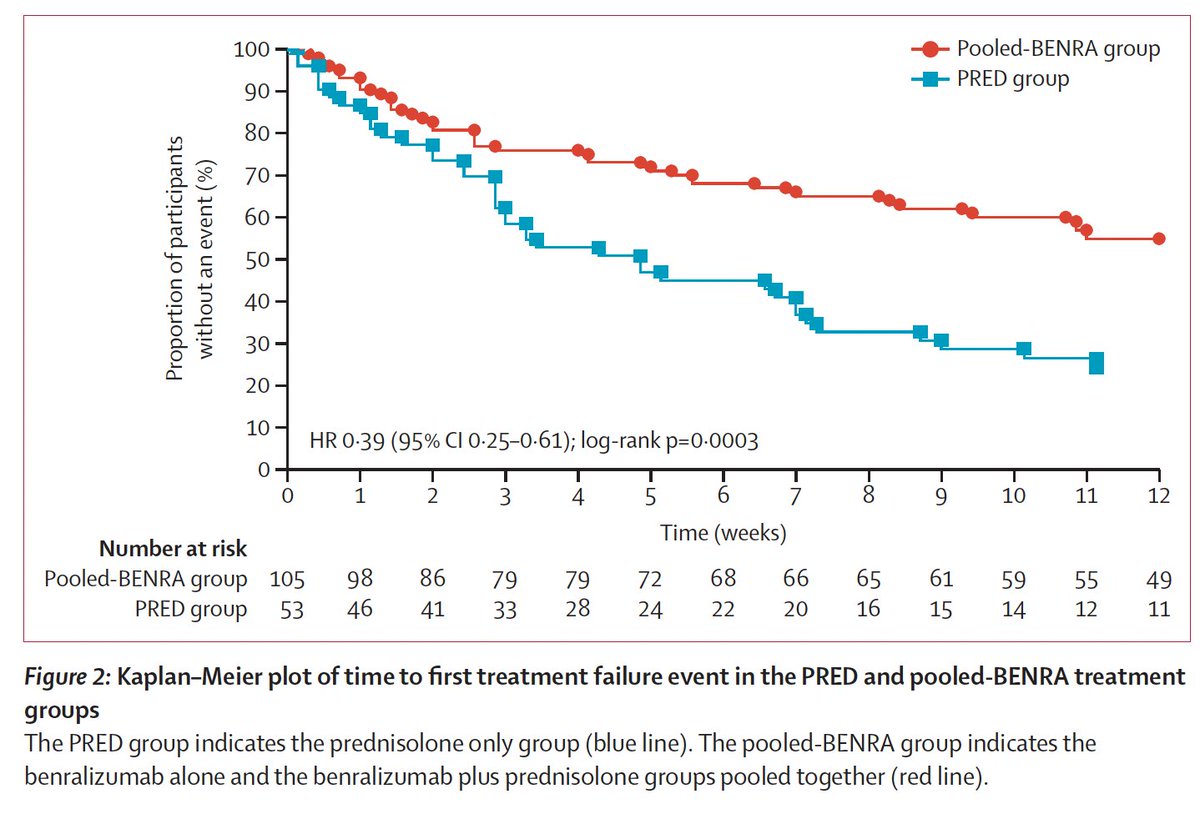
Some very good news for people with asthma and COPD.
The first new treatment for acute attacks in over 50 years—a monoclonal antibody vs interleukin-5 receptor-α—with efficacy in a randomized trial
https://t.co/YW3PbKz0DF @LancetRespirMed@SanjayResp@MonaBafadhel@kingsmedicine
Quitting smoking after a cancer diagnosis significantly increases survival, regardless of cancer type
The sooner you quit, the better: Those who quit within 3 months of diagnosis had a 25% lower risk of death, 6 months = 21% lower, and 9 months = 15% lower.
75th percentile survival increased from 2.1 years for continuing smokers to 3.9 years for those who quit within 6 months of diagnosis.
@MDAndersonNews
https://t.co/YCLlsfmGLT
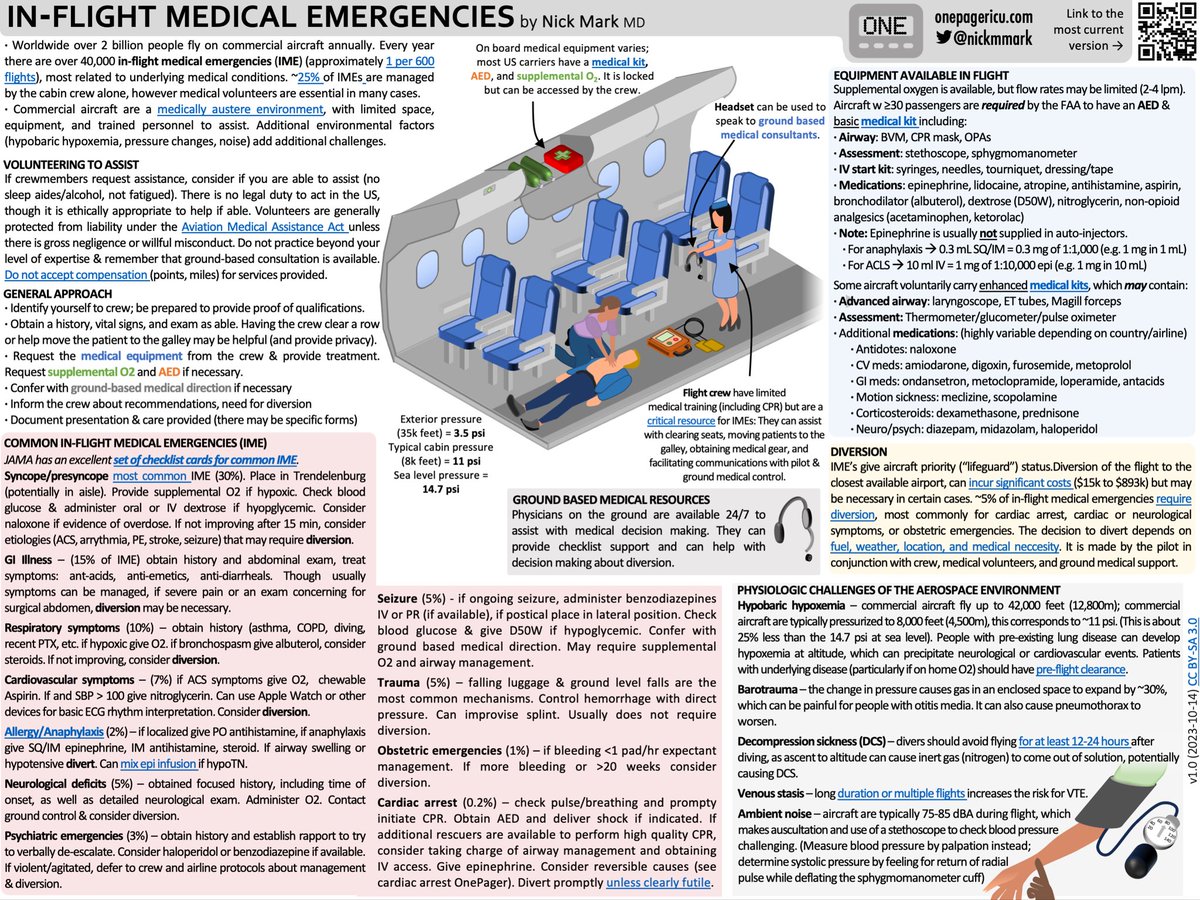
I can leave the ICU but sometimes the ICU follows me on vacation. Once again, this in-flight medical emergencies OnePager came in handy!
Shout out to the crew for doing an amazing job helping. Very calm & well trained. @Condorairlin
@nickmmark I also had a case of sulfhemoglobinemia. Cause was (by exclusion of other etiologies) excessive use of over the counter available loratadine/pseudoephedrine sulfate for chronic fatigue
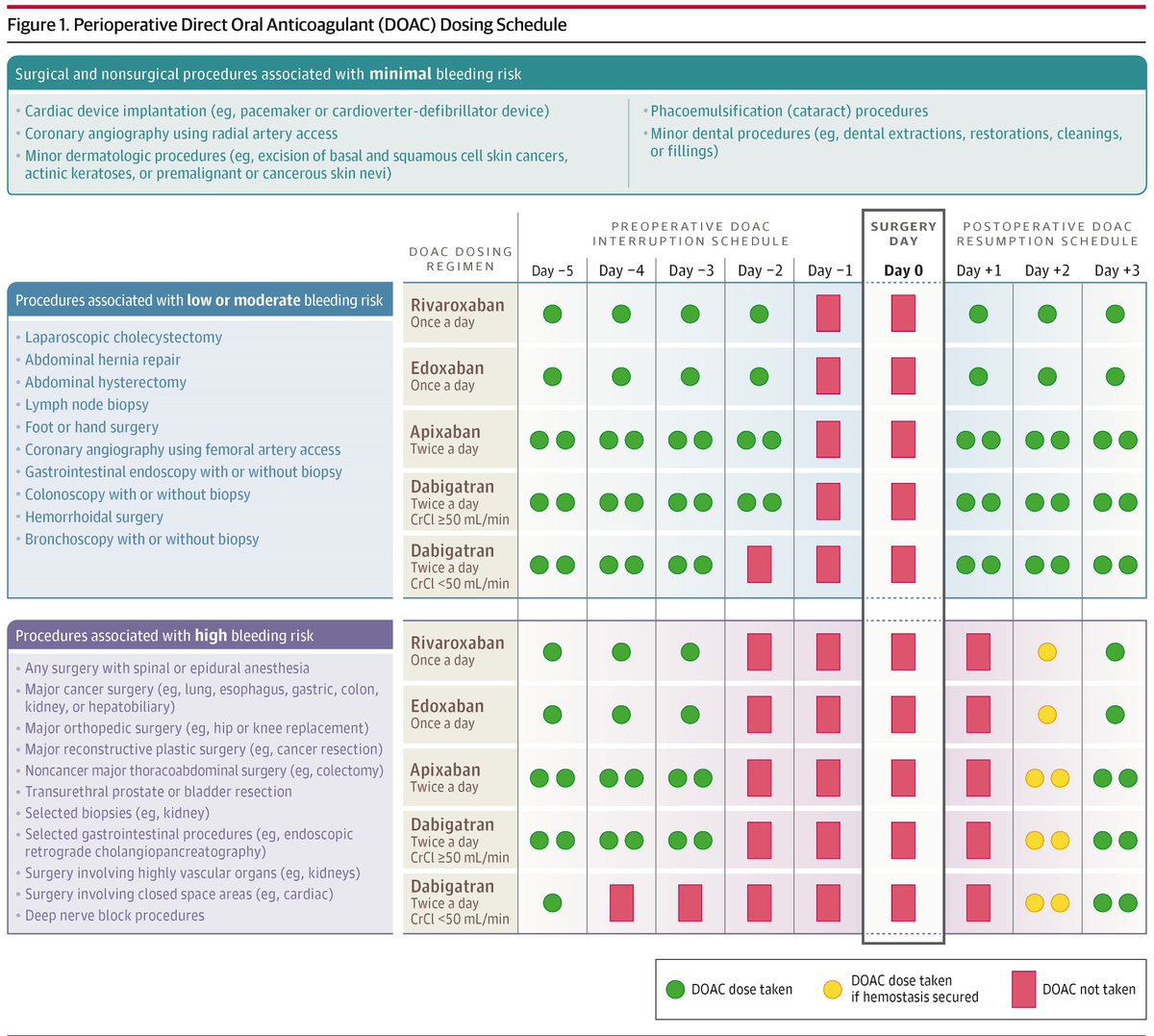
Narrative review explores how to manage use of DOACs—apixaban, rivaroxaban, edoxaban, and dabigatran—in patients undergoing surgical and nonsurgical procedures to decrease risks of bleeding and thromboembolism. https://t.co/HUra5cUmAB