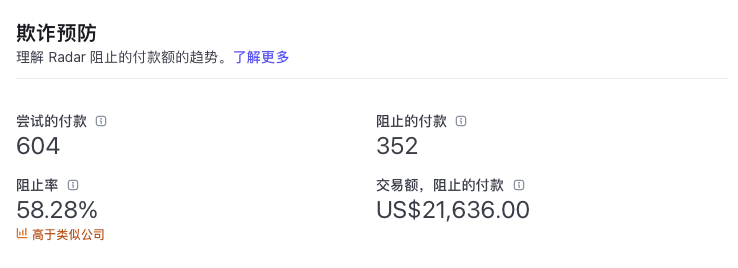
@lazyappHQ And I reached out to you immediately after noticing the deduction. I would greatly appreciate it if you could approve a full or partial refund as a one-time courtesy.
My account email is [email protected] — happy to provide the invoice ID or any other details needed.
🎬Trailer: STARWARS
New World of the Future
Videos: VEO2
Edited in: CapCut
All clips are generated by VEO2 Text To Video.
Expect ElonMusk take us on an interstellar journey
#Veo2#videofx@labsdotgoogle@GoogleDeepMind@elonmusk
I was asked why "GPU is an arbitrage market", so let me break down the definition to a few bullet points.
(1) The conventional cloud cpu market is very friendly to on-demand uses: you request it, you use it, and you release it. Of course, you can reserve machines for 1-3 years for a lower price, but in general, there is an abundance of on-demand CPU resources.
(2) This starts to change in the GPU case. Getting GPUs in an on-demand way is much more difficult. Especially for the newest cards like A100s and H100s: it is very hard, if not impossible, to get on-demand machines on the big clouds. And when you get it, it comes with a notoriously high price tag.
(2-1) I do not blame cloud providers. I served as VP and GM of the AI and big data service back at @alibaba_cloud, and knew this first-hand. Supply chain is tight, cost-per-machine is high, and unlike general-purpose CPUs, you cannot reuse free GPUs to run other workloads, like web services / databases / message queues. As a result, GPU resources naturally have to be more expensive than CPU ones.
(3) Such demand and supply relationship started to trigger what I call "alternative GPU vendors" to emerge. The thought process is: hey, why don't I offer GPUs that are way cheaper than cloud providers, strip away all the bells and whistles (storage, middleware, database, etc) and just offer raw compute, since AI users really just need the compute, and not other fancy web service software?
(4) Such alternative GPU vendors, most famously @CoreWeave, @LambdaAPI and recently @runpod / @sfcompute / etc, run a very different business model compared to conventional big cloud. In other words, cloud is Uber / Hertz: you get cars on demand; alternative GPU is leasing: you get your car for a year or two.
(5) Business wise, these vendors try to optimize utilization by matching up their GPU purchase from NVidia with their GPU sales to end users. In this way they avoid having to charge a high price per gpu hour, or having to eat too much idle GPU sunk cost.
(5-1) The potential downside of such GPU providers is that, you suddenly have to deal with a bunch of raw IP addresses instead of a "cloud-native" way of using resources. It's like going from modern K8s to old-school VPS. Of course, as a user, you save on infra, but you need to budget for an in-house platform team, or find a good SaaS platform provider.
(5-2) To clarify, I am not criticizing the lack of the software layer. As a platform guy, I admire and appreciate their ability to run efficient supply chain. They are providing critical balance vs the big clouds in this GPU shortage: they offer a different way to use resources. At the end of day, that's why we have Uber, Hertz, car leases, and purchased cars: it's a spectrum.
(6) plugging in our advertisement: we are complementary to raw GPU vendors. If you reserved a bunch of GPUs from an alternative cloud vendor, or you run your own GPU cluster in IDC and want to have a good platform, @LeptonAI able to give you that. In fact, we use our own platform to run high performance LLM inferences and example applications (like https://t.co/csEZJgrxKi and https://t.co/QPnF7c8egt), worry-free. You can have that too.
The best Google Search engineering explainer just dropped.
This was reverse-engineered from 1000s of leaked Google court documents.
I know everyone thinks ew Google, search sucks, but no one else has a truly web scale search engine in ~25yrs. Must read for software engineers.
LobeChat Cloud (https://t.co/z4k5TITVKc)开启 Public Test 两周,最大的感触就是很庆幸当时做对了接入 Stripe 支付时的策略,避免了被 C 的“巨额亏损”。
在这里简单总结了下我们的一些经验。大家未来做 AI 相关订阅功能时,希望这些经验可以有些帮助。
微软官方推出了专门的 AI 课程,Generative AI for Beginners,https://t.co/Wm0JHRMQy2,总共 12 节课,其中 6 节概念课,6 节编程课,我全部看了一遍,写的确实非常基础,学会以后,基本上你就可以自己去构建生成式 AI 应用了。
概念课会告诉你 AI 的发展情况、了解 LLM 的工作原理、掌握 Prompt 的初级和高级用法;编程课会让你学会调用 OpenAI、处理图片、使用向量数据库、调用 Function、开发一个完成的 AI 应用。
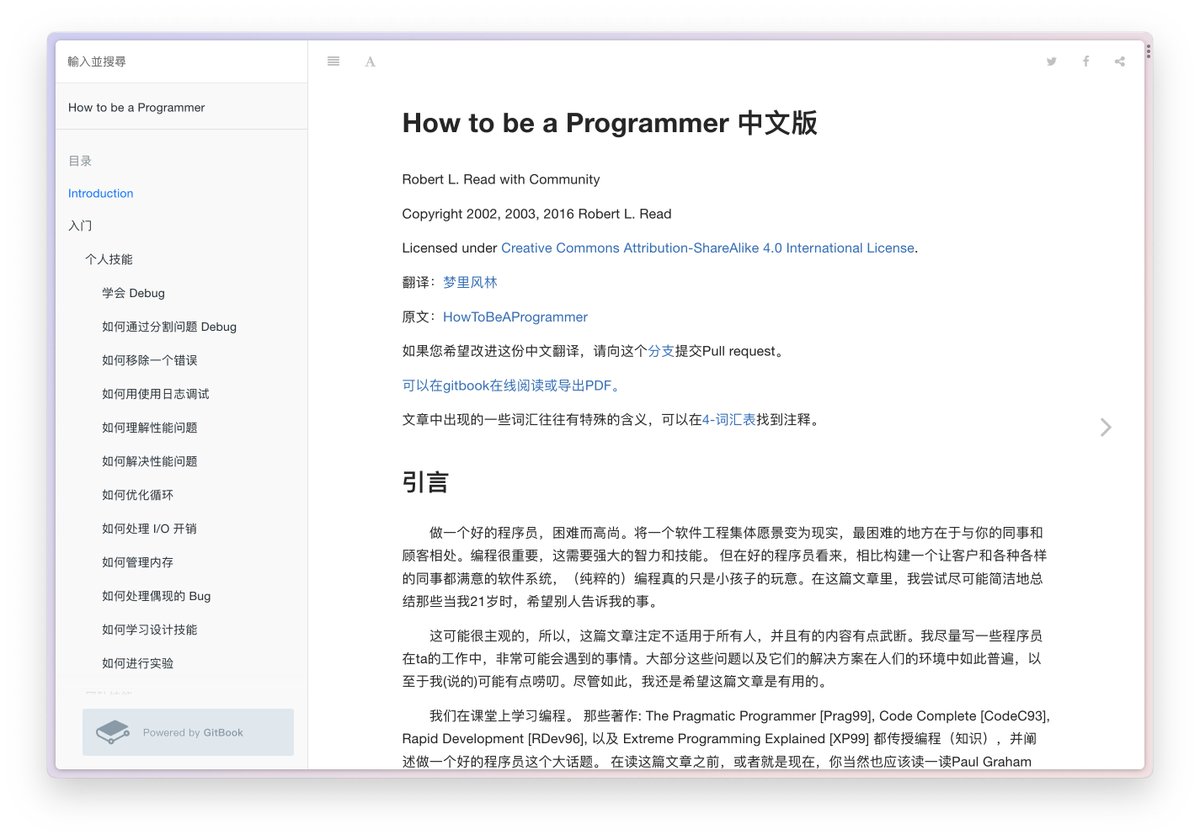
如果你担心自己编程能力不行,学不会编程课(大概率如此),可以看看这个教程,How to be a Programmer,https://t.co/szF3FQV8yQ,它将一个程序员的技能划分为三个层级,入门、进阶和高级,教会你重点概念的原理、检索答案的姿势、调试代码的技巧、优化性能的方法等等;至于编码部分,我觉得你可以不用过多学习,交给 ChatGPT 就行,让 AI 帮你写代码。
当然,你可以去 freeCodeCamp 学习编程,真正成为一名程序员,它提供了 3000 小时的免费课程,涵盖了编程涉及到的方方面面,https://t.co/kzAPhHFfYL,包括 HTML/CSS/JavaScript 三件套、Python 课程、移动应用程序开发课程、游戏开发、C 系列、PHP 系列、数据库等等,应有皆有。