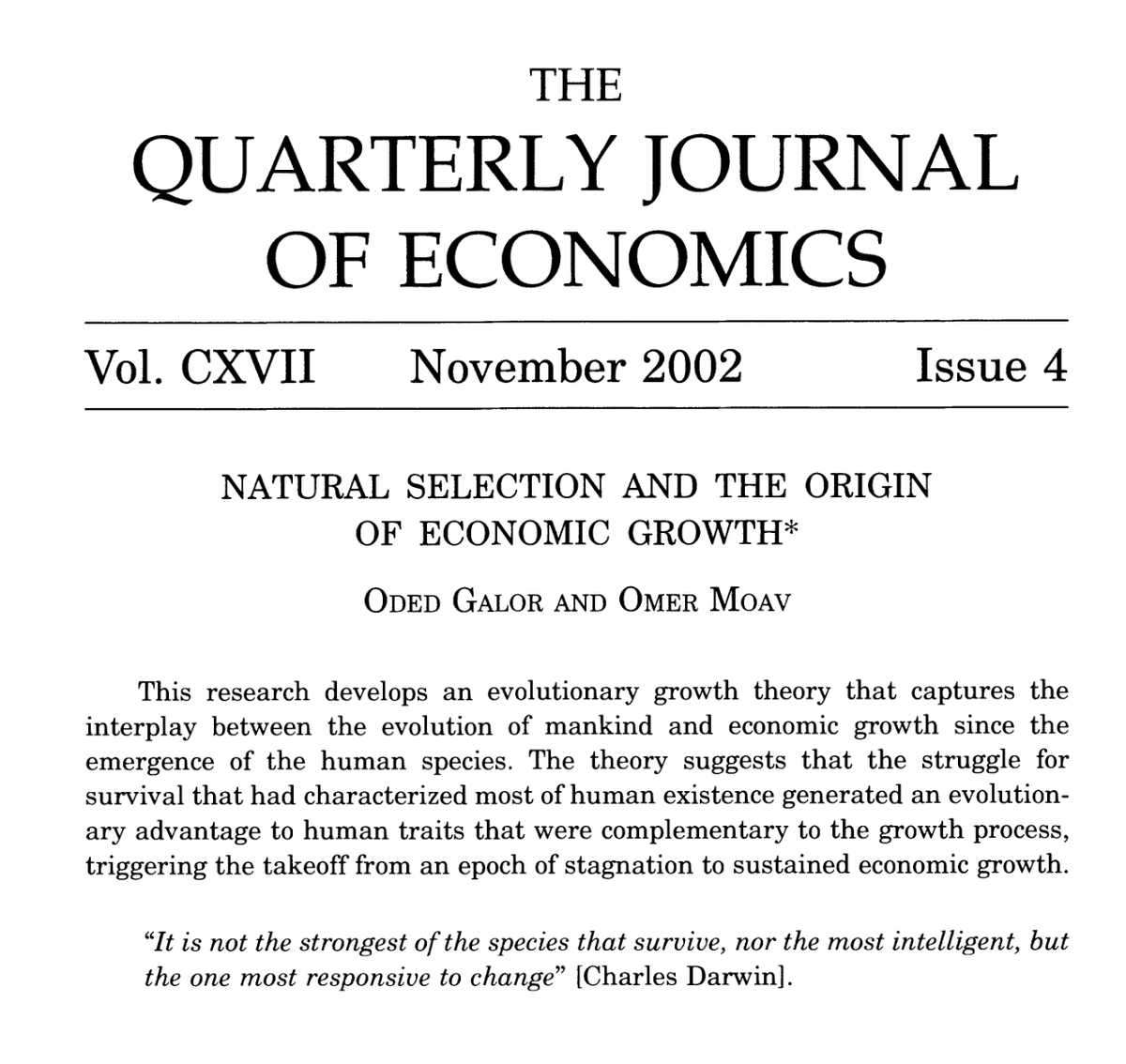
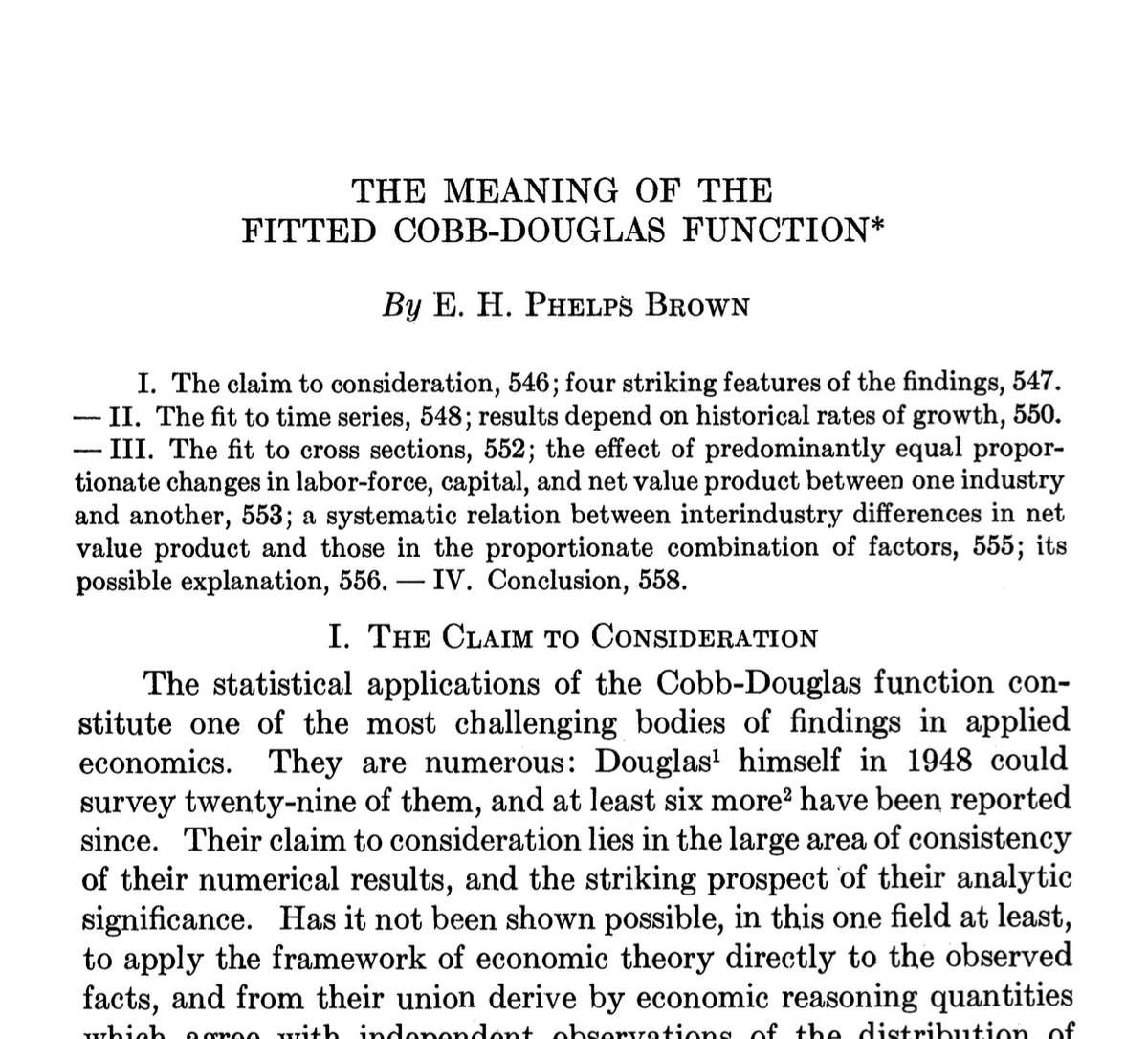
when your friend mentions in passing something that happened at your mutual friend's birthday party (you didn't know about it because you weren't invited)
https://t.co/6YXSskqqM2
Europe vs America: Supplemental
Once more with feeling: here’s a small test that strengthens the case that the productivity wedge since 1995 in the constant PPP series is a deflator asymmetry mirage and that the chained PPP series adjusts for along with Balassa-Samuelson:
1/
On the Krugman/DeLong/Aghion/Garicano/Bergeaud/et al debate on the central issue of pty US/EU.
Let me admit my total confusion (am I the only one?). There seems to be at least three relevant measurement dimensions: PPP prices versus national prices. Quality adjustments for each. Current versus constant prices. The discussions seem to mix them in various ways. And different concepts: productivity growth, standard of living, consumer surplus.
My plan is to sit down and understand it all. But I am not there.
I just finished teaching the first lecture of the course “Geoeconomics Uncovered: Theory Meets Evidence” at Oxford, so I decided to post the slide deck:
https://t.co/8lcVCInfi4
This was a 90-minute, big-picture lecture: what is geoeconomics, why does it matter, and what can economists do in this field?
It draws on several plenary talks I have given over the past year, so you may have seen some of these slides before. But I have many new followers, and some are clearer than before.
During the rest of the week, I will post more of these slide decks. The next one will be on the history of the field.
PS: Oxford is such a lovely place. Unfortunately, a country that gave us Newton, Darwin, and Turing cannot keep escalators running at Heathrow.
A guide for students of economics: Ten statements that demonstrate that someone does not understand modern economics or what an equilibrium is, and that you can safely ignore everything else they say.
1. “Equilibrium means the economy is stable or at rest.”
Many assume that an equilibrium is a peaceful state with no forces at play. Instead, an equilibrium is just an arrangement of actions and expectations over time that are mutually consistent. It can be locally unstable, explosive, or fragile. Nothing in the definition of equilibrium implies stability.
2. “Equilibrium implies optimality or social efficiency.”
Equilibrium is often conflated with efficiency, but equilibrium merely reflects decentralized consistency, not welfare maximization. Market power, externalities, incomplete markets, nominal rigidities, and frictions routinely produce inefficient equilibria. I often teach a first-year macro graduate course, and not a single one of the equilibria I define is efficient.
3. “Equilibrium is a unique outcome.”
Many often expect models to have one equilibrium. In reality, multiple equilibria arise naturally in dynamic, strategic, and incomplete-market environments. Models of coordination failures, self-fulfilling expectations, bubbles, overlapping generations, and liquidity traps all hinge on the existence of equilibrium multiplicity.
4. “Equilibrium requires perfect foresight or perfect information.”
Equilibrium does not assume agents know the future. In fact, equilibria are often stochastic. The definition of equilibrium only requires that beliefs are consistent with the (perceived) stochastic laws of motion implied by the model. Bayesian learning, noisy signals, ambiguity, and subjective uncertainty all fit well within an equilibrium framework, provided beliefs converge to an internally consistent (but possibly incorrect) distribution.
Bonus point: equilibria are compatible with agents having diverging beliefs that never converge to a single Dirac distribution.
5. “Real economies are rarely in equilibrium, so the concept is unrealistic.”
Equilibrium is not meant to describe the daily state of the world. It is a conceptual device used to understand the outcome of our models under the assumptions we make. Also, see point 1 above.
6. “Equilibrium requires agents to be fully rational in a psychological sense.”
Equilibrium only assumes internal consistency: agents optimize given preferences and constraints. It does not assume realism about human cognition. We can and do define equilibria in models with behavioral biases, bounded rationality, inattention, or rule-of-thumb behavior. We only need to ensure that the resulting actions and beliefs are mutually compatible.
7. “Equilibrium eliminates dynamics or learning.”
Equilibrium is sometimes misinterpreted as a static state in which nothing evolves. In fact, many equilibria are sequences of probability distributions over states driven by shocks, policy rules, and endogenous responses. Learning dynamics (Bayesian updating, adaptive rules, experience-based expectations) can occur within equilibrium if the evolution of beliefs is self-consistent.
8. “Equilibrium renders expectations unimportant.”
A common misconception is that equilibrium mechanically determines outcomes. In reality, expectations are often central: they determine investment, consumption, asset prices, and policy responses. Many equilibria differ only in their expectations. This is why communication, credibility, and forward guidance matter even in fully rational models.
9. “Equilibrium excludes policy intervention.”
Some interpret equilibrium as a laissez-faire concept. In fact, equilibrium analysis is the foundation of modern policy evaluation. Fiscal, monetary, and regulatory interventions work through equilibrium responses (prices, wages, interest rates, quantities) and must satisfy equilibrium conditions to be credible. Equilibrium is a tool for policy design, not a barrier to it.
10. “Equilibriums…”
Aequilibrium is a Latin neuter noun of the second declension, which forms a nominative plural in “a”. It is composed of aequus (equal; the same root as equality or equity) and libra (balance or scales or the name of several currencies over history).
A final thought: “equilibrium” is a term of art. Its meaning in economics differs from its use in the natural sciences or in everyday language. Terms of art are ubiquitous across academic disciplines, and the first act of intellectual diligence when one starts studying a discipline is to learn what they mean.
Last night I listened to David Reich’s interview with @dwarkesh_sp on his new Nature paper, “Ancient DNA reveals pervasive directional selection across West Eurasia.”
https://t.co/PE7auH87TW
Reich and his team present a method for detecting directional selection in ancient DNA time series, testing for consistent trends in allele frequency over time. They find that hundreds of alleles have been under strong directional selection, including alleles correlated with measures of cognitive performance.
I have followed David Reich’s work for over a decade now and cite him in my economic history courses all the time. Nothing has changed my view of ancient history as much as his research, and the research his methods have triggered.
His findings also bear directly on another line of work, “Natural Selection and the Origin of Economic Growth” by @GalorOded and @Omer_Moav at the Quarterly Journal of Economics, which proposes a similar mechanism. Reich’s results give a serious empirical boost to Galor and Moav's research agenda.
Reich returns several times in the interview to behavior related to what economists call the discount rate (without using such a term). The evidence suggests that humans began discounting the future less with the advent of agriculture, because directional selection favored patience.
I’ve long thought modern schooling serves this same function, training people to defer immediate rewards for long-term gains, and that such training is the most valuable trait one can have in daily life. Contrary to the Foucaults and Freires of the world, that schools are boring is a feature, not a bug. I don’t expect anyone at the schools of education to get this.
New QJE paper on France’s mandated profit-sharing: distributing excess profits to workers raises the labor share and reduces the profit share, with little effect on investment or productivity. Gains mainly go to lower-skilled workers; high-skilled pay unaffected.
Ein Gespenst geht um in Deutschland. Die Angst vor der #Deindustriealsierung und dem wirtschaftlichen Abstieg. Wie immer neigt die Debatte zu Alarmismus und starken Übertreibungen. Kaum aber Jemand hinterfragt, ob die #Industrie tatsächlich Deutschlands Zukunft sein kann. 🧵1/9
I write about papers, and collect them here. There are now well over 150 papers cataloged for you to learn about. I’m starting a new thread to keep it manageable. Remember, if you like my work, you’d love my blog. I publish 4-5 times a week.
https://t.co/ep27yo4acK
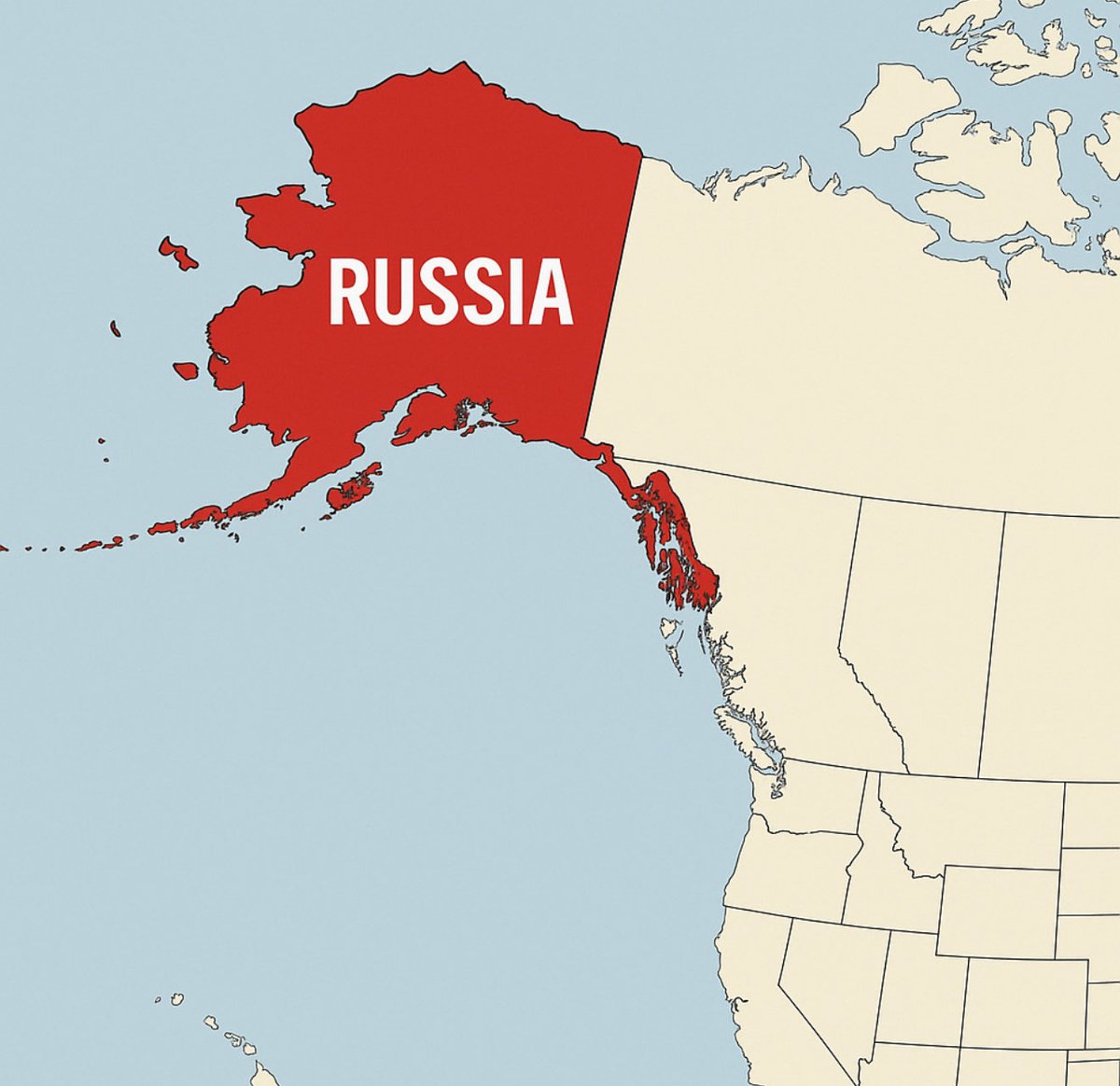
🇪🇺🇺🇸🇷🇺 EU Opens “Territorial Swap Season” as Von der Leyen Floats Trading Alaska for Crimea.
In a surprise statement that left diplomats choking on their coffee, Ursula von der Leyen reportedly announced that the EU is “open” to recognizing Alaska as Russian territory if it helps settle the whole Crimea thing once and for all. “Look, the Americans barely use the place except for reality TV and bears,” she allegedly said, shrugging as if she were trading Pokémon cards and not chunks of sovereign land.
According to sources, she concluded by noting that “this is how grownups negotiate,” before pointing out that if Trump can hand out Europe like party favors, she might as well join the fun.
The Kremlin was said to be “deeply intrigued,” mostly because they hadn’t even asked for Alaska yet, but appreciated the enthusiasm. Washington, on the other hand, responded with its usual composure.
Experts agree the whole episode highlights the new era of diplomatic innovation, where global leaders spontaneously auction off territories they don’t own in exchange for ones they also don’t own, all in the noble pursuit of “peace” or at least a quieter news cycle ❤️.
Why DSGE and NK Models Cannot Recover the Kalecki–Godley Identity
...they cannot reproduce the equivalence
Kalecki (profits)=Godley (financing)
This is why NK inflation theory collapses back into Kalecki when its assumptions fail.
Also economics:
"Let's estimate slavery's contribution to growth by pretending that time did not exist and 19th-century American capitalism had no financial system."
1/9
The problem with Import Substitution Industrialization (ISI) defenders? They cherry-pick their evidence. Let me explain using Brazil's case, which I know well.
Konservative Journalisten und/oder Politikwissenschaftler bringen das selbe Buch jedes Jahr so ungefähr 10-mal aufs neue heraus und fühlen sich dabei, als hätten sie nen Zettel an ne Kirche in Wittenberg gehämmert