Do you remember last crypto cycle when $100k would only buy 1 million #DigiByte $DGB ?
https://t.co/6OEkhtT3iN
Today 1 million DigiByte can be had for $6k
This is why I'm selling $200k of #Silver#DigiDollar is soon to launch in 2026
While most sell Hype, we've been busy
HNY
The Competitive Landscape
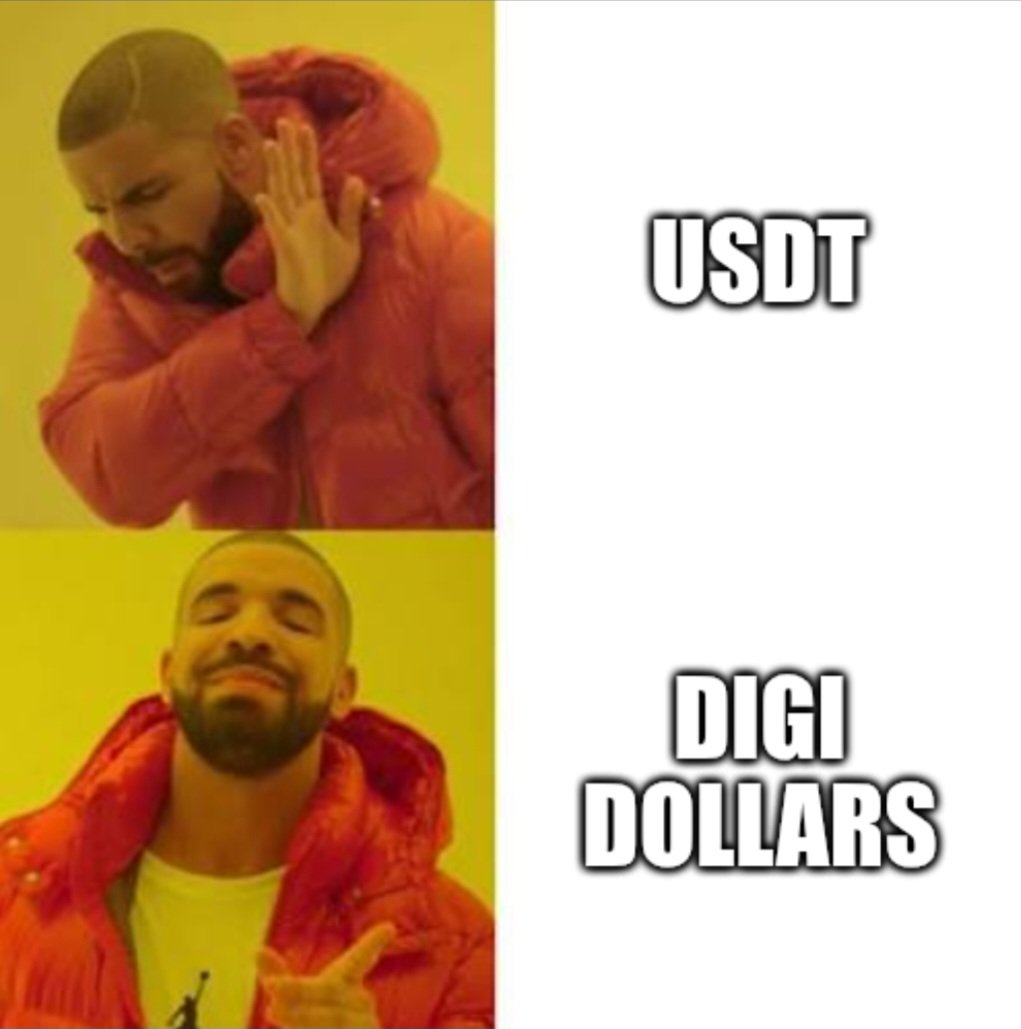
DigiDollar stands apart in the stablecoin landscape: fully decentralized with no company control, pure crypto collateral (DigiByte), you hold your own keys, no freeze risk, 15-second settlements, and $0.01 fees.
While USDT/USDC rely on banks and DAI uses governance mechanisms, DigiDollar delivers true decentralization with minimal regulatory exposure—showing what's possible when you prioritize user sovereignty over institutional convenience.
Test it out here: https://t.co/jlnQmpyMdm
Today I’m taking a short break.
After 2 months of building day after day, late nights, sometimes 12+ hours a day, pushing code, docs, tests, and architecture — it’s time to recharge.
Adamantine Wallet OS foundations are strong. Nothing is stopping.
Solo building a project of this scale just takes a lot of energy.
After the New Year, when the time is right, you’ll see more posts, more code, more files.
Wishing everyone a blessed, healthy, and inspired New Year 🎆
See you soon DigiByte fam 🫶🏻💙
@ESRL_OFFICIAL Also: 0.00022659 \div 256 \times p \approx 8.85117\times 10^{-7}\,p
In general, just multiply 8.85117\times 10^{-7} +by whatever prime you choose.
Include `<stdio.h>`, `<stdlib.h>`, and `<ctype.h>`.
Use a pointer to track position in the string; call `strtod(str, &endptr)`
repeatedly, advancing `str = endptr` each time it parses a number
(non-NULL endptr after digits/dot).