🚨| El equipo de Anthropic ha publicado cómo hacer prompts en Claude para sacarle el máximo partido.
24 minutos. Gratis. Directo de los que lo construyeron.
Lo he subtitulado al español.
🔖 Guárdalo, lo agradecerás.
Anthropic paga más de $750,000 al año por ingenieros que puedan construir arquitecturas de LLM desde cero. Stanford enseñó todo el tema en una conferencia de 1 hora y lo liberó gratis.
Guárdalo en favoritos y mira esto hoy antes de que lo borren.
Hello, Android devs. 2026 is yours. Crack Android Interviews.
Four pillars for Android developers when it comes to interviews:
1. Data Structures and Algorithms
2. Machine Coding Round
3. Android and Kotlin/Java concepts
4. System Design
This year, I conducted a live session on "Android Developer Interview Preparation for Product-based Companies" explaining how to prepare on all four fronts and get the best outcome.
Interacted with over 500 Android Developers. Guided, motivated, and inspired them to aim higher and achieve more.
Recording Link: https://t.co/xxlFvRcqXG
Document Link: https://t.co/CRX4DeY9o0
Many developers reached out to share the positive outcomes they’ve been achieving.
2026 Is Yours to Win.
#AndroidDev #Android #Interview
Stop paying $$$ for LLM Bootcamps. 🛑
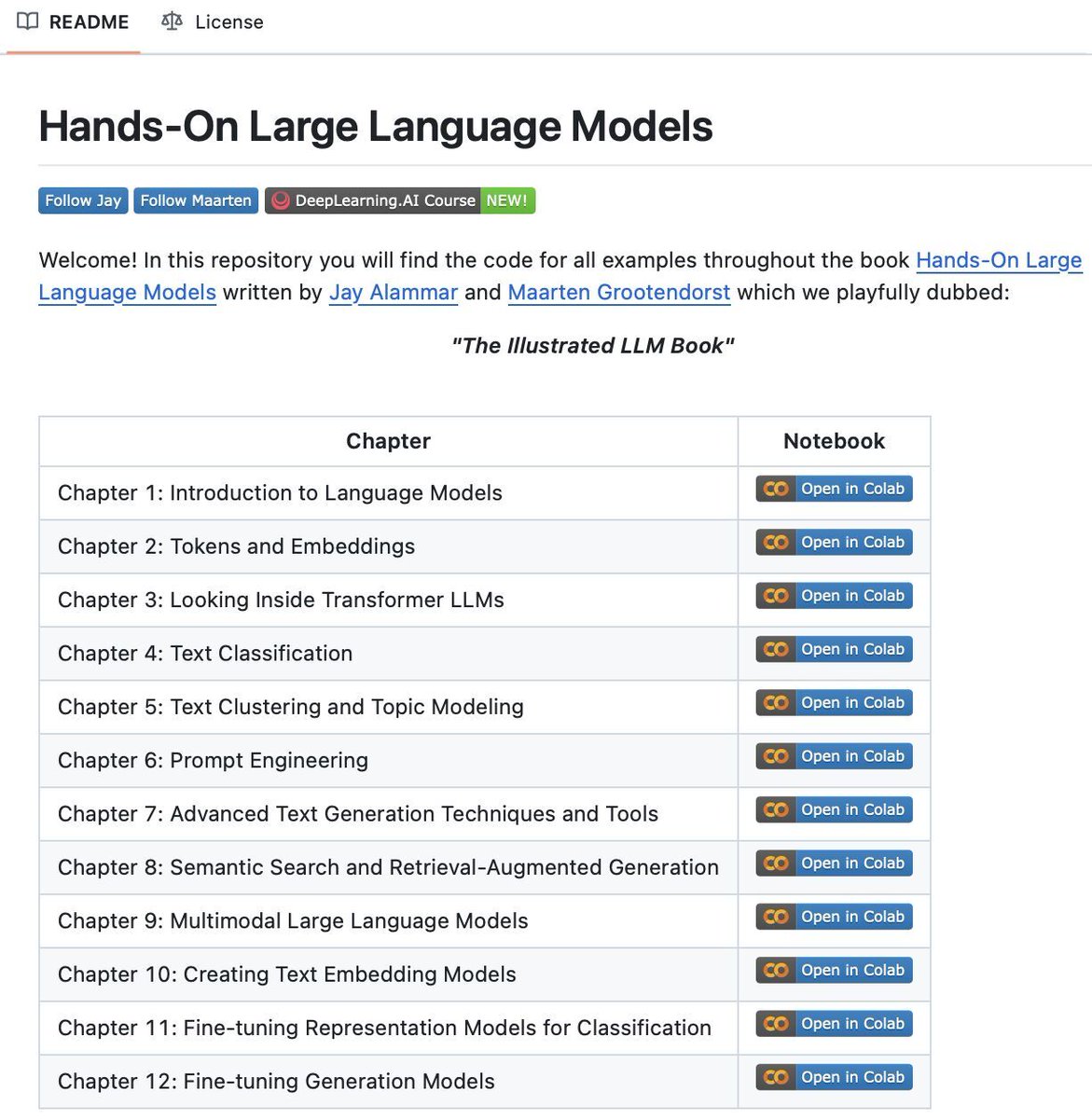
The official code for the O'Reilly book "Hands-On Large Language Models" is FREE on GitHub.
It covers the entire lifecycle of an LLM application.
Chapter 1: Introduction to Language Models
Chapter 2: Tokens and Embeddings
Chapter 3: Looking Inside Transformer LLMs
Chapter 4: Text Classification
Chapter 5: Text Clustering and Topic Modeling
Chapter 6: Prompt Engineering
Chapter 7: Advanced Text Generation Techniques and Tools
Chapter 8: Semantic Search and Retrieval-Augmented Generation
Chapter 9: Multimodal Large Language Models
Chapter 10: Creating Text Embedding Models
Chapter 11: Fine-tuning Representation Models for Classification
Chapter 12: Fine-tuning Generation Models
I will put the repo link in the comments.
Stanford just made a $200,000 AI degree free.
No application.
No tuition.
No “elite access”.
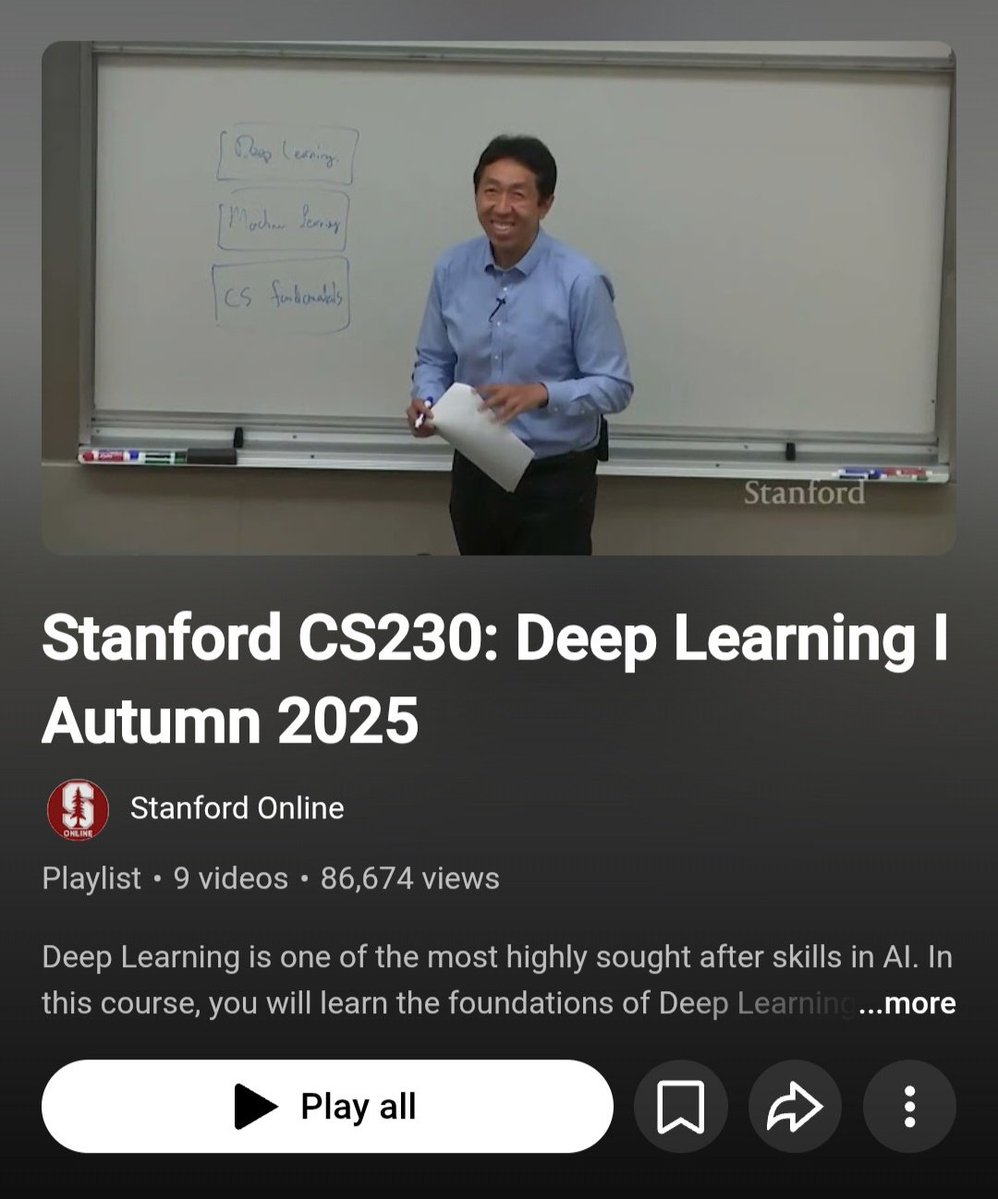
Stanford released its actual AI/ML curriculum on YouTube.
Not a PR-friendly intro.
Not “AI for the public”.
This is the real thing.
The same lectures shaping people working on frontier models.
What just became public:
Deep Learning (CS230)
→ https://t.co/DUtL9MO6Y7
Transformers & LLMs (CME295)
→ https://t.co/gN57biwLsE
Language Models from Scratch (CS336)
→ https://t.co/GnH11pPBdW
ML from Human Feedback (CS329H)
→ https://t.co/X9nxEX6PNg
Computer Vision (CS231N)
→ https://t.co/oBxKKWZP22
LLM Evaluation & Scaling
→ https://t.co/1tDpw9ArTq
The uncomfortable truth:
The degree isn’t the scarce asset anymore.
Execution speed is.
Top schools know this.
That’s why they’re publishing the playbook.
👉 Bookmark this.
Comment the first lecture you’ll actually watch.
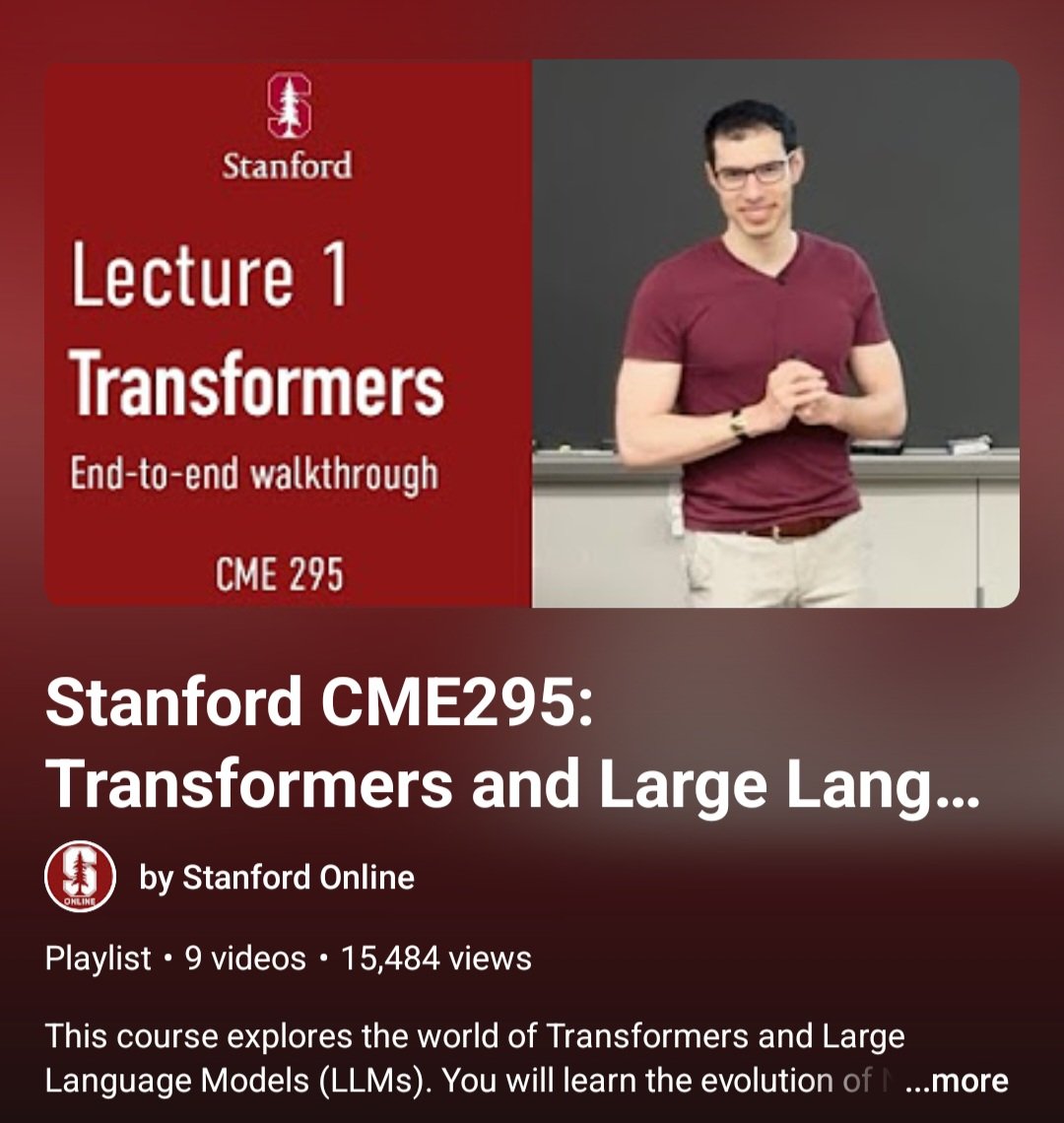
Stanford just dropped their full LLM course on YouTube.
9 lectures.
Completely Free.
Real curriculum-level depth.
CME 295: Transformers & Large Language Models
This isn’t:
• a hype tutorial
• a prompt-engineering hack
• a tech influencer hot take
It’s Stanford’s Autumn 2025 course.
They cover: Transformers from first principles
Tokenization, attention, positional embeddings
Decoding, MoE, scaling laws
LoRA, RLHF, fine-tuning
RAG, tool calling, evaluation
RoPE, quantization, optimization tricks
This is foundation-level AI knowledge.
The kind that actually gets you ahead.
If you’re serious about learning AI:
👉 bookmark this
👉 repost for later
👉 stop doomscrolling and build
Playlist link: https://t.co/6rEBdY9tIU
🚀 v1.101 of @code is here! Check out what’s new:
- Supporting all MCP spec capabilities
- Chat tool sets
- Copilot coding agent integration
- Source Control Graph improvements
…and so much more: https://t.co/A9p63tiyY2
🧶 Here are some of the highlights…
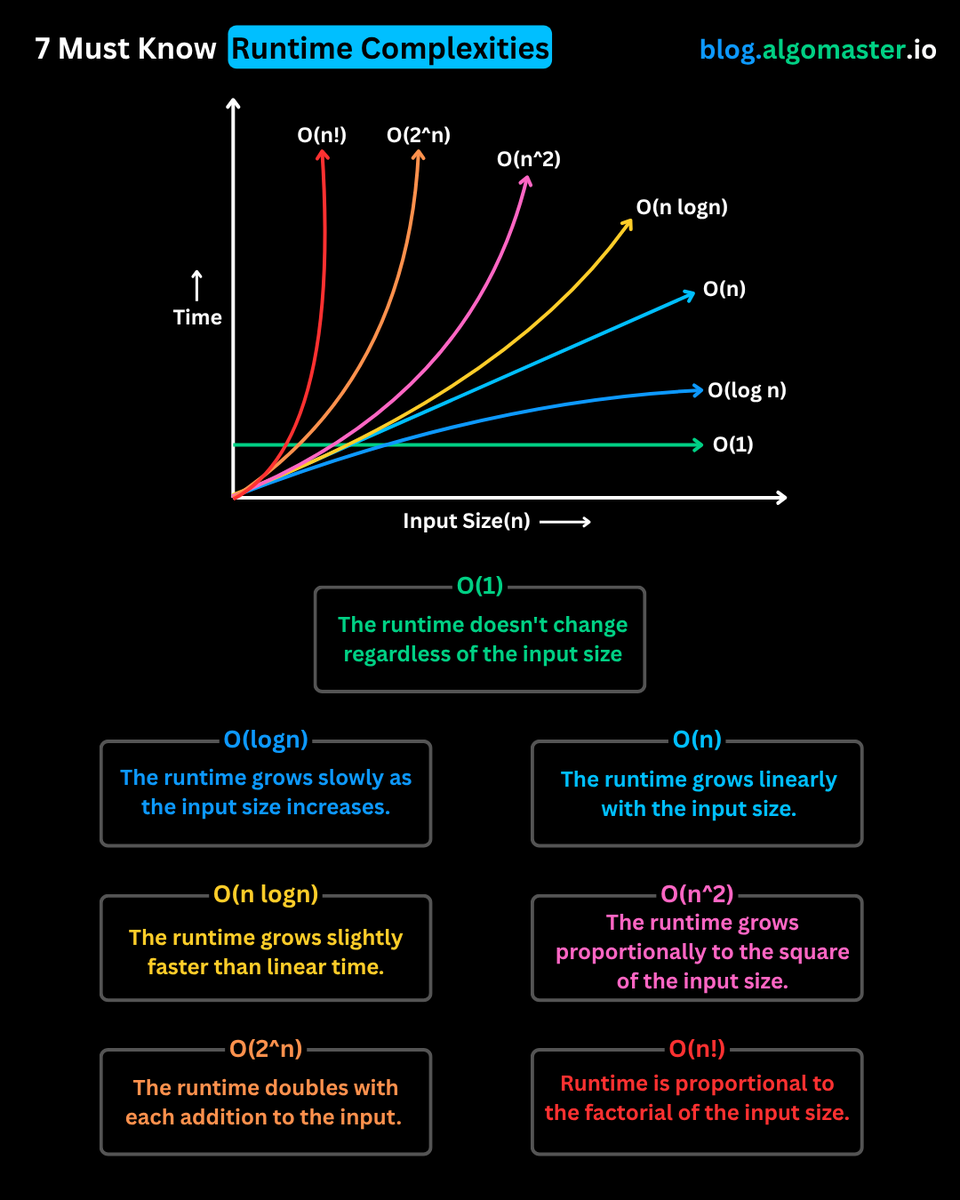
7 must-know runtime complexities for coding interviews:
1. 𝐎(1) - 𝐂𝐨𝐧𝐬𝐭𝐚𝐧𝐭 𝐭𝐢𝐦𝐞
- The runtime doesn't change regardless of the input size.
- Example: Accessing an element in an array by its index.
2. 𝐎(𝐥𝐨𝐠 𝐧) - 𝐋𝐨𝐠𝐚𝐫𝐢𝐭𝐡𝐦𝐢𝐜 𝐭𝐢𝐦𝐞
- The runtime grows slowly as the input size increases. Typically seen in algorithms that divide the problem in half with each step.
- Example: Binary search in a sorted array.
3. 𝐎(𝐧) - 𝐋𝐢𝐧𝐞𝐚𝐫 𝐭𝐢𝐦𝐞
- The runtime grows linearly with the input size.
- Example: Finding an element in an array by iterating through each element.
4. 𝐎(𝐧 𝐥𝐨𝐠 𝐧) - 𝐋𝐢𝐧𝐞𝐚𝐫𝐢𝐭𝐡𝐦𝐢𝐜 𝐭𝐢𝐦𝐞
- The runtime grows slightly faster than linear time. It involves a logarithmic number of operations for each element in the input.
- Example: Sorting an array using quick sort or merge sort.
5. 𝐎(𝐧^2) - 𝐐𝐮𝐚𝐝𝐫𝐚𝐭𝐢𝐜 𝐭𝐢𝐦𝐞
- The runtime grows proportionally to the square of the input size.
- Example: Bubble sort algorithm which compares and potentially swaps every pair of elements.
6. 𝐎(2^𝐧) - 𝐄𝐱𝐩𝐨𝐧𝐞𝐧𝐭𝐢𝐚𝐥 𝐭𝐢𝐦𝐞
- The runtime doubles with each addition to the input. These algorithms become impractical for larger input sizes.
- Example: Generating all subsets of a set.
7. 𝐎(𝐧!) - 𝐅𝐚𝐜𝐭𝐨𝐫𝐢𝐚𝐥 𝐭𝐢𝐦𝐞
- Runtime is proportional to the factorial of the input size.
- Example: Generating all permutations of a set.
♻️ Repost to help others in your network.
Design Pattern used in Glide (Image Loading Library)
• Builder Pattern: Glide . with(context) . load(url) . into(imageView)
• Factory Pattern: ModelLoaders and ResourceDecoders are created using this pattern.
• Strategy Pattern: DiskCacheStrategy . ALL, DiskCacheStrategy . NONE, etc.
• Singleton Pattern: A single instance of the Glide class is created and used throughout the application.
• Observer Pattern: Glide observes lifecycle changes using LifecycleListener.
You can learn many design patterns by looking at the source code of the open-source libraries you use regularly.
#OutcomeSchool #SoftwareEngineer #Tech #AndroidDev #Android #Kotlin
𝗪𝗵𝘆 𝗖#?
I've just released the new issue of my 𝗻𝗲𝘄𝘀𝗹𝗲𝘁𝘁𝗲𝗿 to more than 44,000 addresses.
Over the years, I’ve used many programming languages—C++, Java, Python, F#.
But C# is the one I keep coming back to.
It has evolved quietly and steadily, balancing performance, safety, and developer experience.
Many developers ask me why I still choose C# in 2025.
So I wrote a comprehensive article covering the language and ecosystem.
Here’s what’s inside:
🔹 𝗧𝗵𝗲 𝗲𝘃𝗼𝗹𝘂𝘁𝗶𝗼𝗻 𝗼𝗳 𝗖# 𝗳𝗿𝗼𝗺 𝘃𝗲𝗿𝘀𝗶𝗼𝗻 𝟭.𝟬 𝘁𝗼 𝟭𝟯.𝟬
🔹 𝗟𝗮𝗻𝗴𝘂𝗮𝗴𝗲 𝗳𝗲𝗮𝘁𝘂𝗿𝗲𝘀: 𝗮𝘀𝘆𝗻𝗰/𝗮𝘄𝗮𝗶𝘁, 𝗟𝗜𝗡𝗤, 𝗽𝗮𝘁𝘁𝗲𝗿𝗻 𝗺𝗮𝘁𝗰𝗵𝗶𝗻𝗴, 𝗿𝗲𝗰𝗼𝗿𝗱𝘀, 𝗮𝗻𝗱 𝗺𝗼𝗿𝗲
🔹 𝗧𝗵𝗲 .𝗡𝗘𝗧 𝗲𝗰𝗼𝘀𝘆𝘀𝘁𝗲𝗺: 𝗿𝘂𝗻𝘁𝗶𝗺𝗲𝘀, 𝗹𝗶𝗯𝗿𝗮𝗿𝗶𝗲𝘀, 𝗮𝗻𝗱 𝗰𝗿𝗼𝘀𝘀-𝗽𝗹𝗮𝘁𝗳𝗼𝗿𝗺 𝗰𝗮𝗽𝗮𝗯𝗶𝗹𝗶𝘁𝗶𝗲𝘀
🔹 𝗧𝗼𝗼𝗹𝗶𝗻𝗴: 𝗩𝗶𝘀𝘂𝗮𝗹 𝗦𝘁𝘂𝗱𝗶𝗼, 𝗥𝗶𝗱𝗲𝗿, .𝗡𝗘𝗧 𝗖𝗟𝗜
🔹 𝗖𝗼𝗺𝗽𝗮𝗿𝗶𝘀𝗼𝗻𝘀 𝘄𝗶𝘁𝗵 𝗝𝗮𝘃𝗮, 𝗣𝘆𝘁𝗵𝗼𝗻, 𝗙#, 𝗮𝗻𝗱 𝗧𝘆𝗽𝗲𝗦𝗰𝗿𝗶𝗽𝘁
🔹 𝗖𝗼𝗺𝗺𝘂𝗻𝗶𝘁𝘆, 𝗱𝗼𝗰𝘂𝗺𝗲𝗻𝘁𝗮𝘁𝗶𝗼𝗻, 𝗮𝗻𝗱 𝗳𝘂𝘁𝘂𝗿𝗲 𝗼𝘂𝘁𝗹𝗼𝗼𝗸
🔹 𝗕𝗼𝗻𝘂𝘀: 𝗮 𝗯𝗿𝗶𝗲𝗳 𝗵𝗶𝘀𝘁𝗼𝗿𝘆 𝗼𝗳 𝗖#
📌 Including an open-sourced 𝗰𝗼𝗺𝗽𝗹𝗲𝘁𝗲 𝗖# 𝗰𝗵𝗲𝗮𝘁 𝘀𝗵𝗲𝗲𝘁 for you inside.
If you care about language design and platform maturity or want to understand C# better, this one is for you.
👉 Check it out from the following link: https://t.co/xW2WRsxyiR.
__
🎁 This newsletter issue is brought to you by @UnoPlatform: https://t.co/AcyabxS4Qf.
#dotnet #csharp #programming