#DetectorDeMentiras 🔎 El equipo del Detector de Mentiras de La Silla Vacía verificó a Gustavo Petro en 159 ocasiones. Luego de cuatro años de cubrimiento, presentamos cuáles fueron las desinformaciones que más difundió el ahora expresidente y sus propósitos.
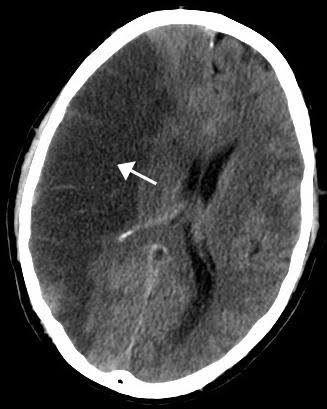
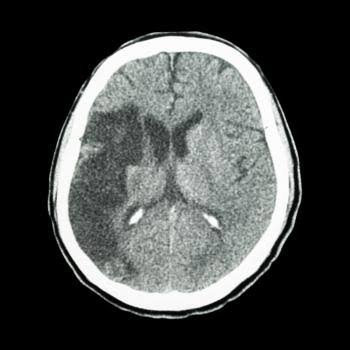
Accidente cerebrovascular a los 34 años.
Corre 5 km los fines de semana.
Presión arterial normal.
No tiene diabetes.
Y no fuma.
Pero un hábito común al que recurre mucha gente para aliviar el estrés, se sospecha que causó la ruptura de una arteria principal y llevó a un accidente cerebrovascular grave.
Hilo médico sobre lo que realmente pasó:
Ofendidisimos porque les señalé que en más de una década el trabajo legislativo de @IvanCepedaCast es insuficiente e ineficiente y me envían los 32 proyectos de ley de su autoria donde la mayoría son homenajes a tipos, celebraciones de cumpleaños de pueblos y universidades, beneficios diversos para la fuerza pública y sus familias, solo un par con alguna relevancia social sobre la tortura y la búsqueda de desaparecidos. Ni idea si alguno se convirtió en Ley.
Ahora, hubo uno que me sorprendió para otorgar privilegios e inmunidades a la OIM en Colombia. Son parte del sistema internacional de la ONU que vía acuerdo diplomático en @CancilleriaCol tienen esas prevendas para la realización de función pública internacional, para qué requerían una Ley?
Desde ayer tengo a sus opinadores prepago haciendo berrinche, reclamos y exigiéndome explicaciones a mí, no a un político que ha vivido décadas de los recursos públicos cuyo resultado principal como legislador es proponer la protección de las fiestas de San Pedro en el Espinal? 😅
Y dicen que pobrecito @IvanCepedaCast que no logró convertir sus importantísimos proyectos de ley en leyes porque es víctima del sistema. Otros 4 años de siempre víctimos, nunca responsables?
No gente, en serio que hacer de la mediocridad virtud y tratar de "uribista" a la que se los señala me convence de que el progresismo colombiano es un proyecto perdido. Extraviado del mínimo asomo de pensamiento crítico y del necesario ejercicio de una ciudadanía fuerte.
Si no logró consensos pa' proteger como patrimonio inmaterial las fiestas de la lechona del Espinal, qué les hace pensar que lo hará mejor que Petro Presidente?
Permitamne dudarlo, a pesar del culto. Y como les enoja, les repito y amplio la dosis 🫶🙃
An MIT professor taught the same math course for 62 years, and the day he retired, students from every country on earth showed up online to watch him give his final lecture.
I opened the playlist at 2am and ended up watching three of them back to back.
His name is Gilbert Strang. The course is MIT 18.06 Linear Algebra.
Every machine learning engineer, every data scientist, every quant, every self-taught programmer who actually understands how AI works learned the math from this one man. Most of them never set foot on MIT's campus. They just opened a free playlist on YouTube and let him teach.
Here's the story almost nobody tells you.
Strang joined the MIT math faculty in 1962. He retired in 2023. That is 61 years of standing at the same chalkboard teaching the same subject to 18-year-olds.
The interesting part is what he did when MIT launched OpenCourseWare in 2002. Most professors were skeptical. They worried that putting their lectures online would make their classrooms irrelevant. Strang did not hesitate. He said his life's mission was to open mathematics to students everywhere. He filmed every lecture and gave it away.
The decision quietly changed how the world learns math.
For decades linear algebra was taught the wrong way. Professors started with abstract vector spaces and proofs about field axioms. Students drowned in the abstraction. Most never recovered. They walked out believing they were bad at math when they had simply been taught in an order that nobody's brain is built to absorb.
Strang inverted the entire curriculum.
He started with matrix multiplication. Something you can write down on paper. Something you can compute by hand. Something you can see. Then he showed his students that everything else in linear algebra eigenvectors, singular value decomposition, orthogonality, the four fundamental subspaces was just a different lens for understanding what the matrix was actually doing under the hood.
His rule was strict. If a student could not explain a concept using a concrete 3 by 3 example, that student did not actually understand the concept yet. The abstraction was supposed to come last, not first. The intuition was the foundation. The proofs were just confirmation that the intuition was correct.
The second thing Strang changed was the classroom itself. He said please and thank you to his students. Every single lecture. He paused mid-derivation to ask "am I OK?" to check if anyone was lost. He never used the word "obviously" or "trivially" because he knew exactly what those words do to a student who is one step behind. He treated 19-year-olds learning math for the first time the way he treated his own colleagues. With patience. With respect. With the assumption that they belonged in the room.
For 62 years.
The result is something that has never happened in the history of education. A single math professor became the default teacher of his subject for the entire planet.
Universities in India, China, Brazil, Nigeria, every country with a computer science department, started telling their own students to just watch Strang's lectures. The University of Illinois revised its linear algebra course to do almost no in-person lecturing. The reason was honest. The professor said they could not compete with the videos.
His final lecture was in May 2023.
The auditorium was packed with students who had never met him before. He walked to the chalkboard, taught for an hour, and at the end the entire room stood and applauded. He looked confused for a moment, like he genuinely did not understand why they were cheering. Then he smiled and waved them off and walked out.
His written comment under the YouTube video of that final lecture was four sentences long. He said teaching had been a wonderful life. He said he was grateful to everyone who saw the importance of linear algebra. He said the movement of teaching it well would continue because it was right.
That was it. No book promotion. No farewell speech. No legacy management.
The man whose teaching is the foundation of modern AI just thanked the audience and went home.
20 million views. Zero ego. The entire engine of the AI revolution sits on top of math that millions of people learned for free from one quiet professor in Cambridge.
The course is still on MIT OpenCourseWare. Every lecture, every problem set, every exam, every solution. Free.
The most important math course of the 21st century is sitting one click away from you. Most people will never open it.
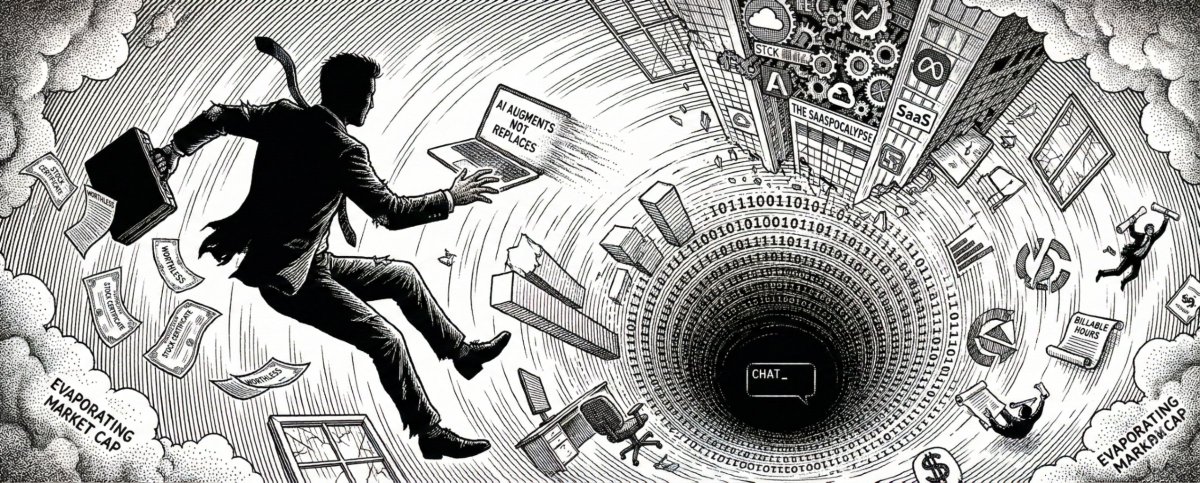
Regarding the SaaSpocalypse.
I am the Chief Strategy Officer of a major enterprise software company.
We've lost 47% of our market cap in four months.
Our stock dropped 6% on Monday.
My bonus is gone.
My options are underwater.
My second vacation home is in jeopardy.
The third one is fine.
For now.
I need to explain what happened.
We didn't do anything wrong.
Anthropic did.
They released plugins.
For Claude.
Eleven of them.
Open source.
Legal automation. Contract review. Compliance workflows. NDA triage.
Work that used to cost $400 per hour.
Now costs $20 per month.
We had a phrase for this.
"AI augments, not replaces."
That was the pitch.
The pitch to investors.
The pitch to customers.
The pitch to employees.
The pitch to law school graduates with $200,000 in debt.
The pitch to the senators we lobby.
"AI augments, not replaces."
It was a beautiful phrase.
Calming.
Reassuring.
Focus-grouped extensively.
Completely false.
We knew.
We all knew.
Every enterprise software CEO on the planet knew.
We discussed it at Davos.
Over $47 cocktails.
While wearing badges that said "Human-Centered AI."
The technology was coming.
The replacement was inevitable.
The timeline was unclear.
Our exit liquidity was not.
We just didn't expect Anthropic to be so... helpful.
On January 30th, they released the plugins.
By February 2nd, Thomson Reuters was down 18%.
In a single day.
LegalZoom dropped 20%.
Our Head of Investor Relations had a panic attack.
On a Zoom call.
With investors.
They saw.
We call it the "SaaSpocalypse."
That's a joke.
It's not funny.
My net worth dropped by $14 million.
That's two Teslas per hour for a week.
Jensen Huang said our reaction was "purely illogical."
Easy for him to say.
He sells the shovels.
We sold the promises.
He's up 340% since 2023.
We're down 47% since September.
But sure.
Illogical.
The promises that AI would make your existing software better.
Not obsolete.
The promises that you still needed expensive platforms.
Expensive integrations.
Expensive support contracts.
Expensive consultants.
Expensive lawyers.
The lawyers.
The lawyers are the real story.
Big Law runs on billable hours.
$800 an hour.
$1,200 an hour.
$2,000 an hour.
For contract review.
For NDA triage.
For compliance workflows.
For "adding value."
Work that requires a JD.
Three years of law school.
Bar passage.
Six years of experience.
A corner office.
A parking spot.
A subscription to the Yale Law Journal.
Claude does it now.
For $20 a month.
Claude doesn't need a parking spot.
Claude doesn't expense client dinners.
Claude doesn't bill 2,400 hours to make partner.
Claude doesn't have a Yale Law Journal subscription.
Claude doesn't have student loans.
Claude doesn't cry in the bathroom at 2 AM.
Claude just... works.
The American Bar Association had a conference last week.
They predicted "the demise of the billable hour model."
At a conference about billing.
They served $18 sandwiches.
The irony was lost on no one.
The sandwiches were mediocre.
Morgan Stanley called it "intensifying competition."
That's Wall Street speak for "your business model is dying."
Adam Parker at Trivariate Research said software stocks are "guilty until proven innocent."
He said we're "a falling knife."
He's right.
We are a falling knife.
And we sold you the handle.
For years.
With a service contract.
And an annual maintenance fee.
We said: "AI is a tool."
We meant: "AI is our tool."
We said: "AI augments humans."
We meant: "AI augments our revenue."
We said: "AI won't replace your job."
We meant: "AI won't replace your job until it does."
We said: "The human touch is irreplaceable."
We meant: "The human touch is expensive and we're working on it."
We said: "AI needs human oversight."
We meant: "For legal liability purposes only."
We said: "We're committed to responsible AI."
We meant: "We're committed to responsible AI until it's unprofitable."
It's unprofitable now.
It does now.
The associate lawyers are first.
The ones who thought they were safe.
The ones who thought "AI can't practice law."
AI can't practice law.
AI can do 80% of what associates bill for.
The other 20% is "relationship management."
That means: lunch.
Then the contract reviewers.
Then the compliance analysts.
Then the consultants.
Then the financial analysts.
Then the people who make PowerPoints about synergy.
Actually, we're keeping those.
Someone has to explain the layoffs.
Mike O'Rourke said it best: "If the legal industry can be disrupted, so can consulting and financial services."
He's not wrong.
He's terrifyingly correct.
He probably shouldn't have said that out loud.
His LinkedIn is now "Open to Work."
Every knowledge worker who bills by the hour is now in a race.
A race against a Claude plugin.
An open-source Claude plugin.
We didn't see that coming.
We expected proprietary.
We expected expensive.
We expected enterprise sales cycles.
Eighteen-month implementations.
Mandatory consulting packages.
Executive briefings in Aspen.
Anthropic just... gave it away.
Eleven plugins.
Free.
"Customize workflows."
"Slash commands."
"Consistent outcomes."
For $20 a month.
No executive briefing.
No Aspen.
No $47 cocktails.
Just a chat interface.
And the death of our business model.
The board meeting was yesterday.
The CFO cried.
The General Counsel updated his resume.
On company time.
Using the company laptop.
Bold move.
The Chief Revenue Officer blamed the sales team.
The sales team blamed the product.
The product blamed the market.
The market blamed us.
The PR team blamed "macro headwinds."
The CEO blamed "exogenous factors."
The board blamed the CEO.
The CEO blamed his predecessor.
His predecessor is on three other boards.
He's fine.
The market is correct.
We knew.
We all knew.
Every pitch deck.
Every investor presentation.
Every "thought leadership" article.
Every podcast appearance.
Every TED talk about "the future of work."
"AI augments, not replaces."
We said it.
We didn't believe it.
We had a private Slack channel.
Called "#inevitable."
We discussed the timeline.
We discussed our options vesting schedule.
We discussed which executives should sell first.
"Staggered for optics."
And now the market doesn't believe us.
$250 billion.
Gone.
In a week.
Because a company in San Francisco released eleven plugins.
For free.
And did what we said was impossible.
Replaced expensive knowledge workers.
With a chat interface.
A chat interface that doesn't need dental.
We have a new phrase now.
"Pivot to AI-native."
That means: "We're rebuilding everything."
That means: "The last five years were wasted."
That means: "Your job is also in jeopardy."
That means: "Please don't look at our executives' stock sales from Q4."
But don't worry.
We're "leaning into the disruption."
We're "embracing the paradigm shift."
We're "right-sizing for the new reality."
Right-sizing means layoffs.
Paradigm shift means our product is obsolete.
Leaning in means we have no plan.
AI augments, not replaces.
We would never lie to you.
Again.
Anyway, buy the dip!
Our investor relations team says it's a "compelling entry point."
They're also updating their resumes.
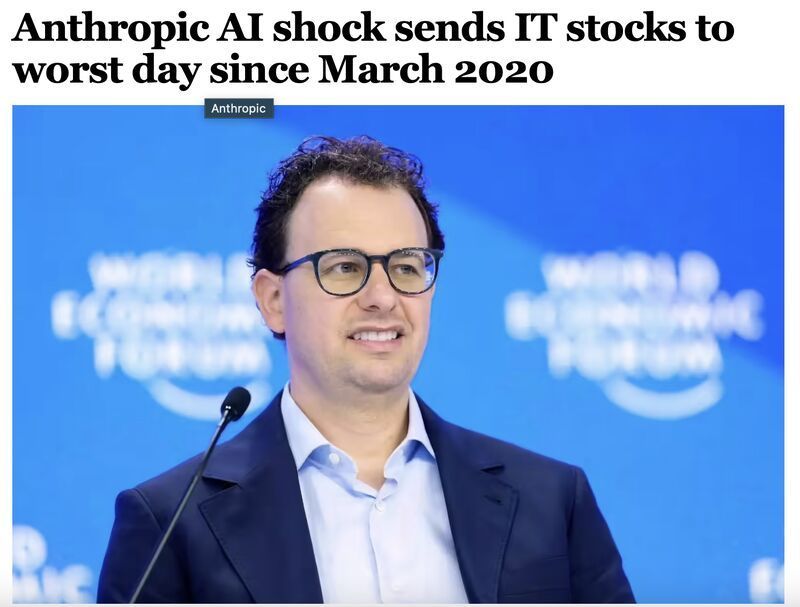
I'm pretty sure everyone at my company saw this article and now they all think we're in an AI crisis.
We're not in an AI crisis. We use Claude to summarize Slack threads.
But here's what's actually interesting: this whole panic reveals something nobody wants to admit.
Every company in America has been bullshitting about their "AI strategy" for two years.
We all saw the hype. We all knew we had to say something. So we rebranded our existing automation as "AI-powered" and called it a day.
My company isn't special. We're all doing the same thing.
The problem is now the executives actually believe their own bullshit. They think we have "significant AI exposure" because they've been telling investors we're "AI-first."
I just got pulled into an emergency meeting. Six executives asking me to explain our "AI dependency matrix."
There is no AI dependency matrix.
There's Claude for meeting summaries, there's some sentiment analysis in our support tickets that came free with Zendesk, and there's whatever Gmail is doing when it autocompletes my sentences.
But I can't say that in a room full of people who told their boards we're "transforming the business through AI."
So I said we have "distributed AI touchpoints across multiple vendors with no single point of failure."
Which is technically true. We use a bunch of different services that all have AI features we mostly ignore.
The CFO asked if we should "hedge our AI exposure."
I have no idea what that means. Neither does he.
What am I going to do: nothing. Because in three weeks, Anthropic will say something reassuring, the stocks will recover, and everyone will forget this happened.
But I'll have documentation showing I recommended a "risk assessment" that mysteriously never got prioritized.
The funniest part is that half these executives probably don't even know what Anthropic is. They just saw "AI" and "crash" in the same headline.
We're all pretending. The whole industry is pretending.
And articles like this just remind everyone how fragile the pretending is.
Last quarter I rolled out Microsoft Copilot to 4,000 employees.
$30 per seat per month.
$1.4 million annually.
I called it "digital transformation."
The board loved that phrase.
They approved it in eleven minutes.
No one asked what it would actually do.
Including me.
I told everyone it would "10x productivity."
That's not a real number.
But it sounds like one.
HR asked how we'd measure the 10x.
I said we'd "leverage analytics dashboards."
They stopped asking.
Three months later I checked the usage reports.
47 people had opened it.
12 had used it more than once.
One of them was me.
I used it to summarize an email I could have read in 30 seconds.
It took 45 seconds.
Plus the time it took to fix the hallucinations.
But I called it a "pilot success."
Success means the pilot didn't visibly fail.
The CFO asked about ROI.
I showed him a graph.
The graph went up and to the right.
It measured "AI enablement."
I made that metric up.
He nodded approvingly.
We're "AI-enabled" now.
I don't know what that means.
But it's in our investor deck.
A senior developer asked why we didn't use Claude or ChatGPT.
I said we needed "enterprise-grade security."
He asked what that meant.
I said "compliance."
He asked which compliance.
I said "all of them."
He looked skeptical.
I scheduled him for a "career development conversation."
He stopped asking questions.
Microsoft sent a case study team.
They wanted to feature us as a success story.
I told them we "saved 40,000 hours."
I calculated that number by multiplying employees by a number I made up.
They didn't verify it.
They never do.
Now we're on Microsoft's website.
"Global enterprise achieves 40,000 hours of productivity gains with Copilot."
The CEO shared it on LinkedIn.
He got 3,000 likes.
He's never used Copilot.
None of the executives have.
We have an exemption.
"Strategic focus requires minimal digital distraction."
I wrote that policy.
The licenses renew next month.
I'm requesting an expansion.
5,000 more seats.
We haven't used the first 4,000.
But this time we'll "drive adoption."
Adoption means mandatory training.
Training means a 45-minute webinar no one watches.
But completion will be tracked.
Completion is a metric.
Metrics go in dashboards.
Dashboards go in board presentations.
Board presentations get me promoted.
I'll be SVP by Q3.
I still don't know what Copilot does.
But I know what it's for.
It's for showing we're "investing in AI."
Investment means spending.
Spending means commitment.
Commitment means we're serious about the future.
The future is whatever I say it is.
As long as the graph goes up and to the right.
Al final, ¿qué pasó con la guerra entre Colombia y Perú por la Isla Santa Rosa?
¿Qué pasó con el software Pegasus?
¿Y la vacunación masiva por la mortífera fiebre amarilla?
¿Y el cambio de escudo de Colombia?
¿Y la Bogotá desierta por la sequía?
Lo confieso: creo que Petro es un MAESTRO de la comunicación política.
Mientras el país se cae a pedazos, él siempre tiene un tema con el que desviar la atención y poner a todo el país a hablar sobre ello.
¿Corrupción en la UNGRD?
Pongamos al país a hablar de la fiebre amarilla.
¿La fiscalía está hablando de la corrupción de mi hijo?
Voy a salir en Panamá con una mujer trans para que la prensa hable de otra cosa banal y no de lo realmente grave de mi gobierno.
¿No he cumplido con mis promesas de campaña?
Vamos a hacer una alocución para hablar sobre un misterioso software espía de origen israelí y voy a acusar a mí antecesor de haberlo comprado.
¿Y si abuso de las alocuciones para que luego salgan las instituciones a ponerme frenos para luego decir que me persiguen y me censuran?
¿Y si envío un disparate de proyecto de Ley que obviamente el Senado va rechazar para luego decir que me sabotean y no me dejan trabajar?
Realmente admirable.
Petro tiene la capacidad para ser un dictador en potencia porque tiene el don para engatusar multitudes.
Es un gran estafador mediático.
Toda crítica hacia él la logra desviar y voltear en contra del oponente. Miente con hábil facilidad y detrás de toda ‘verdad’ que dice siempre hay manipulación a su conveniencia.
Insisto, realmente de admirar.