The Toyota Land Cruiser was a disgrace. Yet, people buy them a lot in African countries with bad roads. I can't forget an incident 13 years ago, when a driver from my wife’s company took me to Togo in a Land Cruiser. He didn't see a speed bump on time and lost control briefly. We ended up in a ditch. We were extremely lucky that the car didn't flip over.
Those high cars are not necessarily safer. Speed is also deadly. The Mercedes ML and Bronco were impressive. The Wrangler surprised me greatly.
This is completely false.
The massive $30 billion Paris Club debt was never cancelled on a silver platter. To secure that debt relief deal in 2005, Nigeria was forcefully compelled to create the NEEDS programme and unconditionally adopt the core tenets of the Washington Consensus. This is the exact, structural reason why Nigeria completely failed to industrialize, why our manufacturing capacity was decimated, and why our critical social infrastructure, public healthcare, primary education, and electricity grids remain severely, catastrophically underfunded to this very day. 1/6
2/6
Ngozi Okonjo-Iweala was the Minister of Finance under the Obasanjo regime, and her economic team pulled every diplomatic lever, political string, and international connection in Washington and London to cancel the Paris Club debt in 2005. Traditionally, the Paris Club rigidly mandates that a debtor nation enter into an official, highly restrictive, and sovereign-stripping IMF loan program with strict, top-down conditionalities before any debt relief or write-off is ever granted.
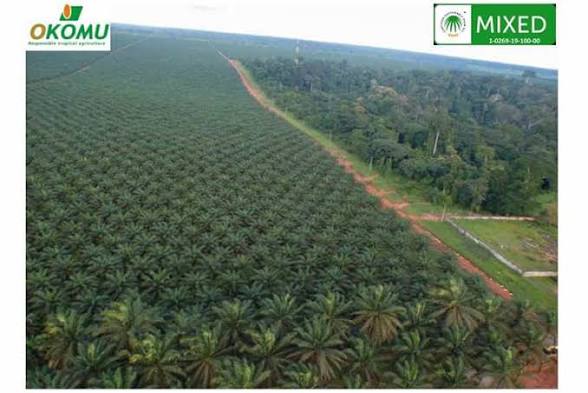
In 1975, Nigeria built Okomu Oil: a massive, state-funded agricultural manufacturing giant spanning over 15,000+ hectares of fertile land in Edo State. It was erected as a state-owned industrial powerhouse, fully equipped with modern power turbines, advanced palm oil processing mills, paved road networks, storage facilities, and fully built staff housing estates, meticulously designed to print money for the national treasury.
In the 1980s, the global crude oil market crashed, and the Nigerian military government under General Ibrahim Babangida panicked and ran straight to the World Bank and the IMF for emergency loans. The bailout was provided to Nigeria, but it came with devastating, non-negotiable Structural Adjustment Programmes (SAP) which strictly mandated Nigeria to aggressively privatize, dismantle, and sell off over 100 state-owned enterprises.
In 1990, Nigeria formally auctioned off Okomu Oil Palm to Western corporate oligarchs for pennies on the dollar. Today, Okomu Oil Palm Plc operates as a literal money-printing machine listed on the Nigerian Exchange (NGX), generating tens of billions of Naira in clear net profits every single year from Nigerian soil, Nigerian sunshine, and cheap Nigerian labor.
But the vast majority of those massive, astronomical dividend payouts are wired straight out of Nigeria into a corporate bank account in Luxembourg.
I sent one of my Iranian friends in the United States a news report about the Speaker of the Norwegian Parliament, Masud Gharahkhani. He occupies the highest elected office in Norway after the King in the country’s constitutional order. Born in Tehran, Iran, he arrived in Norway as a refugee with his family in 1987. What began as sharing an interesting story quickly became a conversation about civilisations, and one observation proved difficult to dismiss.
For all its conflicts, and for all its hypocrisies and prejudices, Western civilisation remains the most accommodating of outsiders. You may marshal elegant arguments or even write a thesis against that proposition, but it is difficult to identify another part of the world that has consistently entrusted so much political, economic and social power to immigrants and foreign-born citizens. The evidence is visible in parliaments, city halls, universities, boardrooms and courts across the Western world.
Meanwhile, some of us are still trapped in societies where even a fellow citizen can be denied opportunities in the very town he was born and has lived all his life simply because his parents came from another region, or because he belongs to the wrong ethnic group or professes the wrong faith. That remains the primitive rung on which many societies outside the West are still stranded.
The fact that two of the world’s most influential cities, New York and London, have elected Muslim mayors is telling. It becomes even more striking when one considers the growing number of immigrants and foreign-born citizens who occupy sensitive public offices across Europe and North America. My Iranian friend is himself an illustration of that openness. He moved to the United States for postgraduate studies and has since risen to a senior position in a leading organisation. Whenever we discuss America, his dominant sentiment, despite his disapproval of the politics of certain American leaders, is gratitude for the opportunities it afforded him.
This openness is also one reason liberal democracies in the West have proved incredibly resilient. Despite the rise of populists, authoritarians and the far right, their greatest opponents are often their own citizens. The culture of relentless self-criticism, the independence of institutions, a free press, competitive elections and courts willing to check executive power have enabled these societies to correct themselves repeatedly. That does not mean the West is free of racism, Islamophobia, xenophobia, inequality, colonial legacies or political polarisation. It means that, despite these flaws, it has built institutions capable of challenging prejudice rather than permanently surrendering to it—and that’s a lesson for us. That capacity for self-correction may well be its greatest civilisational strength.
Botswana is in the middle of nowhere. It is so dry and arid that they practically worship rain even naming their currency after it. They won a lottery ticket with diamonds and Seretse Khama and did an astonishing amount of good with it (relative to the clown shows all around them).
The diamond show is now over and they now need to pick themselves up again from a very good position. What’s the story here?
The thing is, El-Rufai knew tTinubu is incompetent, wicked, & should never be close to the seat of power, but because El-Rufai was expecting something from Tinubu, he lied about many public figures, dragged the northern elders forum, & did many things.
I will never forget El-Rufa’i’s utterances pre 2023 elections.
Zero pity for him!
Reminds me of the Nigerian poet Niyi Osundare's poem "Eating Tomorrow's Yams" where there is only one yam left in a village (which they should cut up into seedlings and plant) and the prodigal suggests eating the yam saying: "Tomorrow will take care of itself; How can we know the next day if we die of hunger today?"
The diaspora is not treating investment like charity. It is literally replacing the state. That $100 billion is not going to consumption out of a lack of financial vision. It is keeping families alive because African governments have abdicated every responsibility they were supposed to carry. School fees, hospital bills, housing, food: the diaspora is subsidising what governance failed to provide, mostly while barely surviving themselves in expensive cities abroad.
This is so untrue and not backed by a single fact. The people packaging, selling, managing the idiots ruining Nigeria are not illiterate. The people who washed Buhari of all his sins and declared him to be better than an early morning blowjob were professionals: doctors, journalists, writers, lawyers, academics and even scientists.
Religious bigotry is curated and spread by very educated people, some with PhDs. Dangerous ethnic bigotry is spread by journalists, lawyers and academics. When Bayo Onanuga wrote nasty xenophobic things about Igbos during the last elections, declaring that Igbos have no business in Lagos politics was he illiterate? Is someone like FFK, illiterate? Sheikh Gumi (whatever you think of him) is a medical doctor with a PhD.
The opposite is what is true. A small elite minority forces the rest of the country into the hellhole that it is in and uses poverty, religion and ethnicity as bait to draw the illiterate masses into their schemes. Uneducated people are not the problem. They are simply used by the often very educated people who consciously create and benefit from the problem. It is not illiterate people emptying state coffers and sending their children abroad in luxury. It is not illiterate people making sure there is no infrastructure. It is not illiterate people designing mechanisms to rig elections, from INEC to the streets. It is not illiterate people who make corrupt judges uphold stolen elections in court.
It is so funny when the average city dweller in Lagos or Abuja arrogantly thinks they are more politically educated than the guy selling oranges or kolanuts in a small town in Kano or Bauchi. Many of these so called illiterates participate more fully in the democratic process than most people in cities. They know where their ward is, they know who their local councillor is, they know their local chiefs and district heads, a thing many people, even those arguing here do not know. That guy with a transistor radio in Sokoto knows more about local politics than you will ever know.
In terms of political consciousness or even ethics, there is not a single advantage the literate Nigerian has over the illiterate Nigerian. Literate and illiterate Nigerians alike participate in the anyhowness that defines Nigerian society.
American: So there are terrorists causing problems in your country, right?
Nigerian: Yes.
American: That's terrible. Is the government at least doing something about it?
Nigerian: Well, our president addressed the issue.
American: Oh. What did he say?
Nigerian: He spoke about the law of lawf in the holy book
American: ...The law of love?
Nigerian: I guess
American: Okay. Did you send the military after them?
Nigerian: Hmm... at times.
American: What do you mean "at times"?
Nigerian: Sometimes we've heard the military went after them. In some cases, the terrorists ended up killing military personnel.
American: Wait. They killed your soldiers?
Nigerian: Yes.
American: Okay, so then your government retaliated and finished them off, right?
Nigerian: Mm... nah.
American: What do you mean "nah"?
Nigerian: Well, our president also gave an example from the Bible about the prodigal son on how we should accept them with love.
American: Hold on. The prodigal son?
Nigerian: Yes.
American: I'm confused. So you're telling me terrorists killed military personnel, and the response was a Bible lesson?
Nigerian: Something like that.
American: So you guys aren't doing anything?
Nigerian: No, no. We're doing something.
American: Okay. What are you doing?
Nigerian: We're rehabilitating the ones we catch.
American: You're... rehabilitating them?
Nigerian: Yes.
American: Not prosecuting them?
Nigerian: Not according to our president, no.
American: WTF WTF WTF
Nigerian: I never even tell you anything, you don dey cry
DID YOU KNOW??
The intersection of the FIFA World Cup and beer has twice forced entirely sovereign nations to rewrite, bend, or completely reverse their laws at the absolute last minute!
Football and beer have a multi-billion-dollar relationship, primarily driven by FIFA’s long-standing sponsorship deals. But when the tournament travels to countries with rigid laws regarding alcohol, a massive geopolitical game of chicken unfolds between global corporate interests and national governance. Walk with me 👇🏾👇🏾😂
1. The 2014 "Budweiser Bill" in Brazil:
For nearly a decade, Brazil had a strict federal law that completely banned the sale of alcohol inside all football stadiums. The law was originally enacted in 2003 as a highly successful safety measure to curb rampant, violent fan riots and hooliganism.
However, when Brazil won the bid to host the 2014 World Cup, FIFA arrived with a massive caveat. Because the beer conglomerate Anheuser-Busch InBev (owners of Budweiser) paid roughly $75 million per tournament cycle for exclusive stadium pouring rights, FIFA aggressively lobbied the Brazilian government. FIFA's General Secretary at the time notoriously stated to the press: "Alcoholic drinks are part of the FIFA World Cup, so we're going to have them. Excuse me if I sound a bit arrogant but that's something we won't negotiate."
Faced with the threat of having the tournament stripped away, the Brazilian government capitulated. In 2012, President Dilma Rousseff signed a highly controversial, temporary federal piece of legislation officially dubbed the "Budweiser Bill." This law forced Brazil to actively suspend its own public safety statutes for the duration of the tournament just so beer could be sold on the concourses.
2. The 2022 Qatar U-Turn- "Well, This Is Awkward":
Eight years later, the exact opposite power dynamic unfolded when the World Cup went to Qatar, a conservative, Muslim-majority nation where public consumption of alcohol is strictly illegal.
For years leading up to the 2022 tournament, Qatar and FIFA assured sponsors that alcohol policies would be relaxed, allowing designated Budweiser tents to operate directly outside the stadium perimeters. Millions of cans of beer were shipped into the country and distributed to the venues.
Then, just 48 hours before the opening match, the Qatari royal family pulled the plug. In an unprecedented move that completely blindsided FIFA, Qatar banned all alcoholic beer sales within the perimeter of the eight World Cup stadiums. Budweiser’s official corporate social media account posted a legendary four-word reaction: "Well, this is awkward..." before deleting it minutes later.
With millions of dollars of physical inventory suddenly locked in Qatari warehouses and unable to be sold to fans, Budweiser had a massive logistical nightmare on its hands.
Instead of filing an immediate, hostile lawsuit against FIFA, the company turned the disaster into one of the most famous marketing pivots in sports history: the #BringHomeTheBud campaign.
Budweiser photographed the towering, thousands of stacked pallets of unsold beer inside their Doha warehouses and announced on social media that they would not let it go to waste. Instead, the entire inventory would be awarded for free to the country that won the tournament.
When Lionel Messi led Argentina to victory in the dramatic final against France, Budweiser successfully shipped the massive container loads of surplus World Cup beer directly to Buenos Aires, Rosario, and Córdoba, transforming a corporate disaster into giant, free public fan festivals across the winning nation.
Mehn, beer is a force, no? 🌚😂
Hopefully you've learnt something new today?
Cheers 🥂 😅
The Medic Who Writes™🌚
A bilateral state visit between two sovereign nations is categorically different from a former colonial power summoning the heads of an entire continent to a single meeting to conduct what amounts to a collective audience. Trump visiting China is two states conducting diplomacy as equals. Macron convening his rebranded France-Africa summit is one European nation gathering 30+ African countries into a room as though the continent were a single client to be managed.
You never see France convening all Arab heads of state to announce what France has decided is good for the Arab world. You never see a France-Latin America summit where Macron summons every South American president simultaneously to receive his 20 billion euros investment pledges and his vision for their continent.
China does not convene all of Europe. The United States does not gather every Asian head of state into one room for a US-Asia summit. These formats, France-Africa, US-Africa, Russia-Africa, Israel-Africa, exist exclusively in relation to Africa. Only Africa gets summoned. Only Africa gets managed collectively.
So no, it is not that Pan-Africanists cannot say anything about Trump in China. It is that we are not sufficiently intellectually impaired to fail to distinguish between a bilateral state visit and a colonial power staging a continental audience.
Macron, cut the crap!!!
Africa attracted 97 billion dollars in foreign direct investment last year alone according to UNCTAD, without a summit and without you.
Your “23 billion euros”, spread over an unspecified number of years, are mostly private sector pledges the French state will take diplomatic credit for without financing. And of those 23 billion, 10.5 billion are from African businesses themselves.
Since you want to talk about investment, here is the context you deliberately omitted. Your French companies have been extracting wealth on this continent for decades and make annual returns that dwarf these your 27 billion euros. TotalEnergies alone produces 28% of its global output from Africa. Orange operates across 18 African countries with over 120 million customers. Bolloré at its peak controlled 18 of West Africa's 22 major ports, with 80% of its profits derived from Africa. Orano has been mining uranium in Niger for decades at prices below OECD market rates, leaving behind 20 million tonnes of radioactive waste and uranium concentrations in local drinking water 500 times above safe thresholds. France's development loans from the Agence Française de Développement came with contractual conditions requiring freight to use Bolloré railways, insurance through AXA, and consulting through French firms. The money went from France to Africa and immediately circled back as corporate profit.
Let's have a clear look at Africa's market size and economy. Telecommunications generates 180 billion dollars annually, mining oil and gas generations over 900 billion annually. Financial services, construction, manufacturing, tourism, retail and energy collectively add hundreds of billions more, bringing Africa's total nominal GDP to approximately 2.83 trillion dollars. And then there is the creative industry. Africa's creative economy generates between 6 and 10 billion dollars in directly measurable annual revenue today. This industry was built without a single French summit, without a single French pledge, and without your presence in Nairobi.
The idea that 27 billion dollars over an unspecified period, of which 10.5 billion are Africa companies’ money you are announcing as an achievement, constitutes something worth celebrating tells us everything about how you see this continent. You genuinely believe we will applaud you for this. You really summoned 30 heads of states over some so called 27 billion euros “investment pledge” over multiple years. You see, that is the particular variety of condescension that caused your military to be expelled from Niger, Mali and Burkina Faso.
And since we are being factual: the CFA franc, created on December 25, 1945, has required fourteen of our nations to deposit a portion of their foreign exchange reserves in the French Treasury for eighty years. Kindly return our reserves if you so care about our economic growth. Return the gold. Return the uranium profits extracted from Niger at below-market rates while leaving radioactive contamination in the water. Return the port revenues confiscated by Bollore. Return the decades of oil profits extracted by Total through preferential agreements with the corrupt leaders your government installed and continue to protect.
When you have returned all of that, then come back with your 23 billion euros and we will discuss whether it qualifies as a contribution. Until then, please shut up !
Quienes consideran que ondear la bandera de un Estado es “incitar al odio”, o han perdido el juicio o han sido cegados por su propia ignominia.
Lamine solo ha expresado la solidaridad por Palestina que sentimos millones de españoles. Otro motivo más para estar orgullosos de él.
Why do you think poverty and insecurity have persisted at this scale in Northern Nigeria? Almost every social problem you identify in Arewa today can be traced, in one way or another, to the collapse of education. Education is the reason most of us, just like our parents, are where we are today, and it remains the most transformative gift anyone can give another person.
Even the quality of our choices would change if we were sufficiently educated, from child spacing to electoral decisions. You are ashamed of becoming a bandit because you are educated, and you possess the skills to resist poverty because you are educated as well. A society that neglects education should not be surprised when poverty deepens, opportunities shrink, and insecurity finds fertile ground. That, tragically, has been the story of our region since 1960.
Whoever replaces Starmer will fail.
Just as the Conservatives failed.
You can’t build a country on low growth, low productivity, high tax, high welfare, high inflation and heavy regulations.
It’s basic math - you materially make the lives of the majority worse.
Reform, Greens, whoever else wants the gig - you will face the same.
Until someone defeats the managerial state, nothing will improve and we’ll have more PMs than Tottenham has managers.
There is a major point I differ about on economy, surprisingly both with supporters of this government, and its opposition, Waziri Atiku Abubakar and Peter Obi.
It is about necessity of Subsidies.
As long as Nigerians don't earn as much as they should do, they need subsidies to get by.
There is a basic precept about Nigerian leaders based on Nigeria's political economy taught to me by my Uncle. And it goes thus.
"Rather than us (Political leaders) not having enough money to loot, it is the people who will go hungry".
Former President Shehu Shagari's government went on a contract spree from 1979.
According to Yusuf Bala Usman, They quickly dropped Nigeria's external reserves from $5.5bn to $1.6bn.
Shagari's government spent money on things like "Green Revolution" and River Basin Development Authorities with little to show for it on ground.
Despite their Green Revolution, Food imports rose sharply, from 18.8million to 1.86billion.
When Chief Obafemi Awolowo wrote to Shagari, warning about looming economic collapse, Shagari's government through Richard Akinjide described him as a Prophet of Doom.
By 1982, when economic realities became clearer due to Oil price shocks, Shagari's government that had the Rice Scandal, started preaching to Nigerians that didn't benefit from its contract bazaars about Austerity Measures.
His government started asking Nigerians to "sacrifice".
Babangida in 1985 first introduced a debate on taking IMF Loans. After the debate, the answer was "NO" which Nigerians celebrated.
IBB then went ahead to implement SAP, virtually all the IMF Conditionalities. Devaluation of currency and removal of subsidies being among.
People were urged to accept and make sacrifices.
Half of the entire companies in Nigeria shut down, the rest ground to a halt, except breweries, cigarettes and soft-drinks.
This happened even when alternative economic options were proposed by Chief Allison Ayida, Sam Aluko, Green Onyekaba.
The Tinubu government claims it cannot fund oil subsidies, it then claims its gains have been given to Governors who now have more funds to play with.
Yet, it doesn't significantly increase minimum wage, to allow workers overtake inflation.
People are then gaslit, that subsidies are bad. And that it's an achievement for them it was removed.
Under Tinubu, The same government have consistently maintained that government debts have grown.
Despite option of PPP, being there, it has gone ahead accruing debts over public infrastructure even when a glaring option for PPP is there.
Let the financier build it, toll it for say 25-30 years and it returns to government.
The government gets infrastructure without a huge dent in finances.
The same government that instantly cancelled subsidies, quickly raised finances for Lagos-Calabar Road! It was going to go ahead through loans.
It is also going to finance the Sokoto-Badagry Road through loans.
Tin can Island/Apapa Ports handed over to same Contractor is also to be financed through loans.
Yet, Nigerians are being told to take "baby steps of pain" in enduring these crushing economic realities, while contractors, consultants smile to the banks.
The pattern is the same. When economic crisis emerges, the cost of adjustments is shifted onto the masses, while the political leaders insulate themselves and their backers.
Count your teeth with your tongue, and ask yourself why leaders are sporting a Patek Phillipe watch and telling you to hate subsides, that actually put money inside your pockets.
Paying 1500 per litre is unsustainable.
If Tinubu/Atiku/Obi continue to claim subsidy removal is the right decision.
Remember the earlier, political economy theory.
"Rather than us (Political leaders) not having enough money to loot, it is the people who will go hungry".
The nation that arranged the poisoning of Toussaint Louverture of St Domingue ( Haïti) for demanding the end of slavery and the liberation of his people in 1803; that assassinated Ruben Um Nyobe, the Cameroonian independence leader hunted down and killed in 1958 by French forces before independence was even formally granted, that had Felix Moumie of Cameroon, poisoned in Geneva by his intelligence in 1960, that orchestrated the assassination of Sylvanus Olympio of Togo by soldiers of his colonial army in 1963, that armed and protected the man who murdered Thomas Sankara in 1987 and sheltered him for decades, that supported the destabilisation that led to the overthrow and death of Modibo Keita of Mali, that printed millions of fake currency to destroy the Guinean Franc after 8 failed assassination attempts at Sekou Toure because he stood his grounds and demanded independence, that stood behind the forces that removed and destroyed Patrice Lumumba, coordinating with Belgium and the CIA to ensure Congo’s most visionary independence leader did not survive his own government, that massacred at least 100,000 Malagasy people, 250,000 Cameroonians, 1.2 million Algerians between 1955 and 1962 simply because they demanded their independence.
The president of that nation, less than half a century after committing such atrocities stood before a room full of African heads of state in 2026 and declared itself the true Pan-Africanist. And not one of them stood up. Not one said: you cannot use that word: not here, not with that history on this continent. Not a single one had the dignity to say what any person with an elementary knowledge of what Pan-Africanism means and what France has done to those who practiced it would have said immediately and without hesitation.
It is the equivalent of a Nazi leader standing before a Jewish assembly and announcing that Germany is the true defender of the Jewish people. There are words that carry such historical mass that no political convenience, no diplomatic ambition, no funding arrangement justifies allowing them to be stolen and worn by those who spent generations trying to destroy what those words represent; Pan-Africanism is one of those words. And it was surrendered in that room without a fight, by men who were supposed to be there representing us.
France is not even a formidable power anymore. It cannot impose its will on its own European neighbourhood. Its economy is strained, its global influence is null, its African military presence has been expelled. It intimidates no one who has chosen not to be intimidated. And yet these boneless, prideless, senseless humans we call Africa leaders sat and applauded this humiliation ritual.
What breaks me is knowing that every generation, without fail, produces its quota of leaders who will trade the dignity of their people for a photograph with a western head of state, for a seat at a table that was never set for them. They dress it up as pragmatism and call it diplomacy. But it is the oldest and most contemptible transaction in the postcolonial playbook: the surrender of collective dignity for personal visibility.
And these are days, I will not pretend otherwise, where I genuinely wonder if we will ever be free. Not because the struggle is not real or the people are not capable, but because freedom requires leaders at the decisive moment, and every decisive moment seems to find us represented by spineless, glory-hunting, photograph-chasing men who would sell the graves of their own predecessors for a handshake with those that tried to erase their people. Every generation inherits the fight for freedom but also produces the cowards who auction it.
Insane story. A school district in Long Island covered up a watermelon painting on the personalized parking spot of a high school senior after complaints from pro-Israel parents.
The student sued, alleging 1st amendment violation. The judge found that the student had a case and urged the school to settle. An initial agreement of $100k + apology was reached. Then the school reneged on the apology and paid an extra $25k instead - all to avoid admitting that expressions the Palestinian identity are not hate speech.