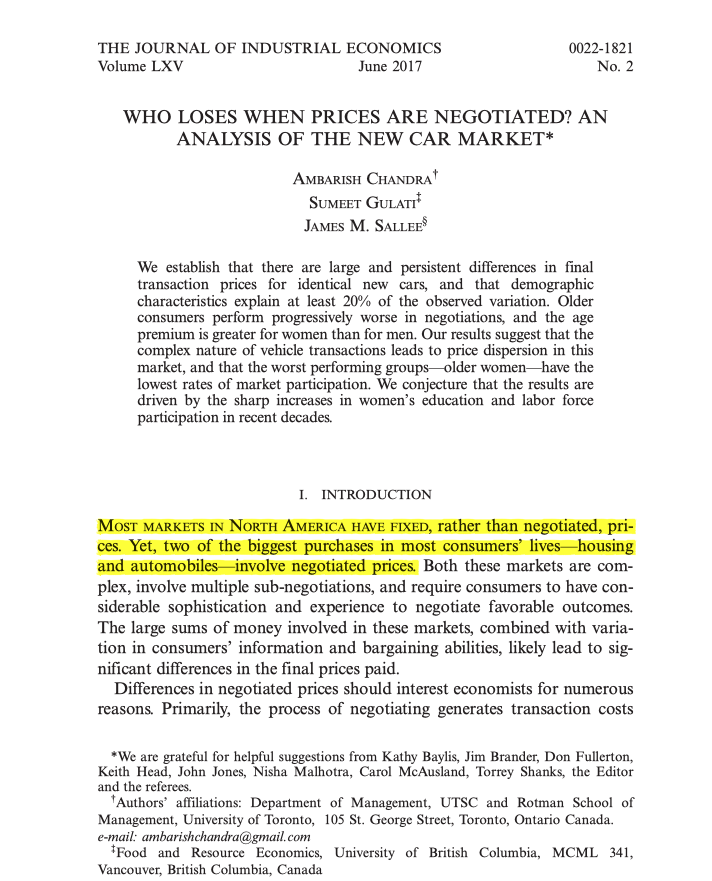
You can read all about who loses when prices are negotiated in @AChandra_TO@sgulati and @Jim_Sallee.
I loved reading this paper! Wish the dataset was available.
Negotiating might just be the highest Return on Investment activity you can do - yet most people don't negotiate.
1. 59% - 80% of car buyers 'hate' negotiating.
2. But those who negotiate well save $1,200 on the same car!
How can you get yourself to negotiate?
Realize you're always asking on behalf of / for people who depend on you. Who benefits from your negotiation?
Your kids, spouse, parents, friends, team members?
Contrast the negotiation pain with their pleasure from more time, money and freedom.
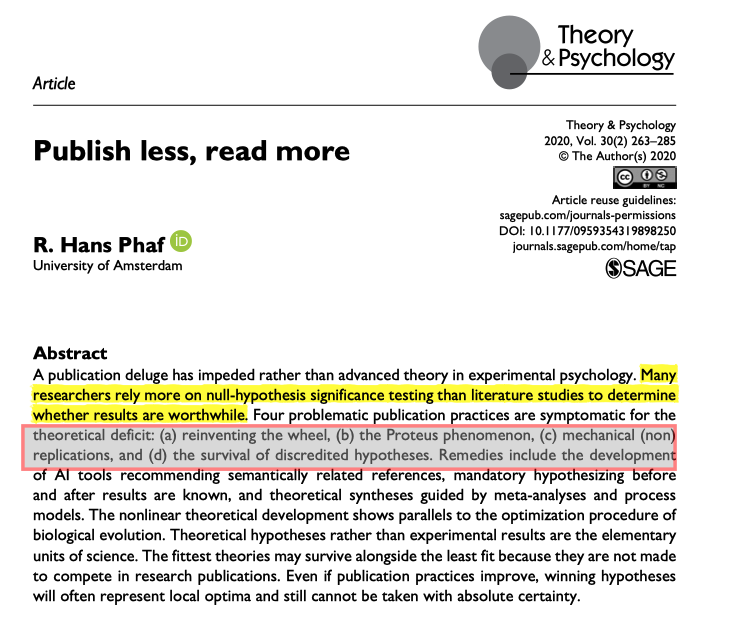
(Phaf, 2020): "Many researchers rely more on null-hypothesis significance testing than literature studies to determine whether results are worthwhile. Four problematic publication practices are symptomatic for the theoretical deficit: (a) reinventing the wheel, (b) the Proteus
To raise better kids, say no.
"It turns out that saying no pays off far beyond avoiding raising spoiled kids. When we always yield to our children’s wants, we rob them of the opportunity to find solutions."
Great piece by @ScottSonenshein https://t.co/fjQ2ximur8
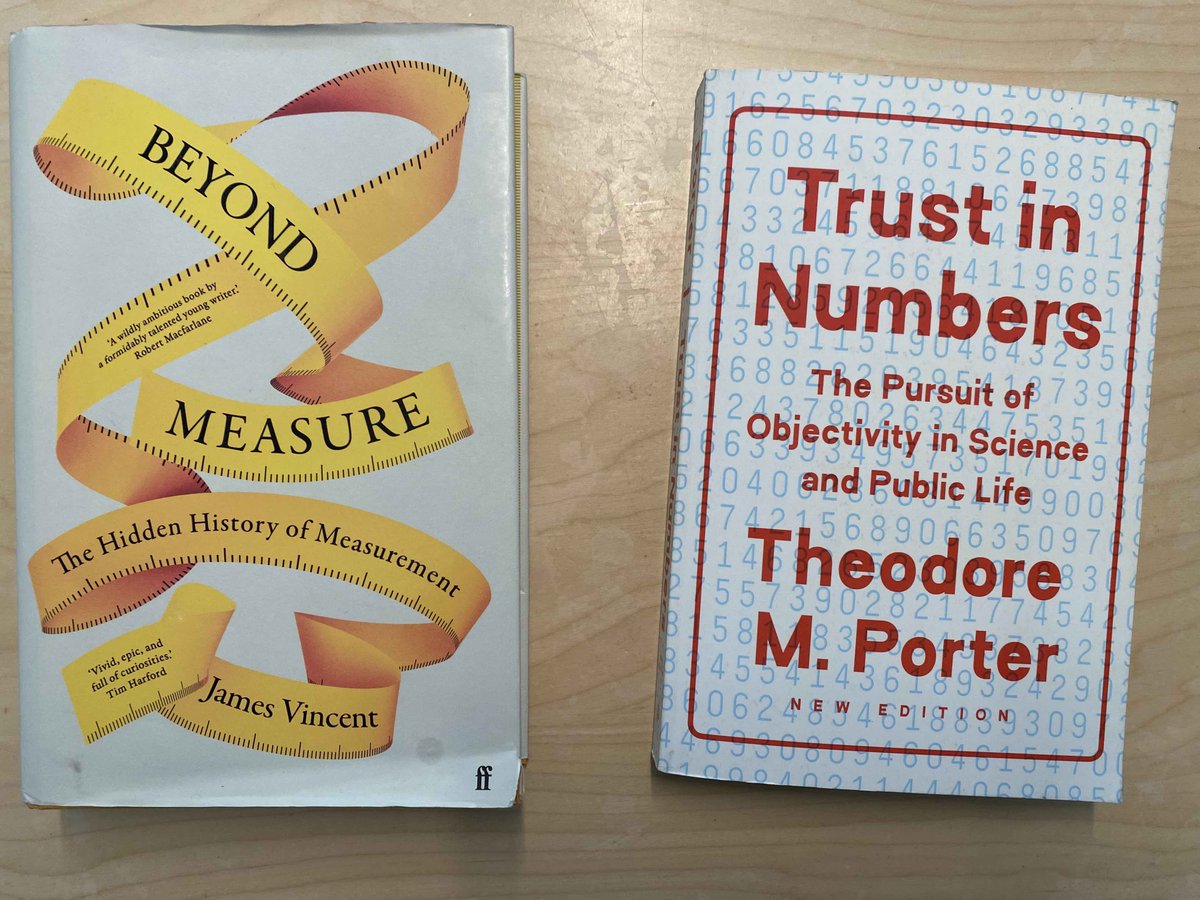
We collect data and analyze it to have some 'hard numbers' to help us make better decisions.
We tend to "trust the numbers" more than we do simple intuitions, and quick decisions.
Careful analysis helps, but we must beware unintended consequences.
On our trust in numbers:
Academics care about citations, publications, and journal lists.
We count and quantify to track and measure.
What do these metrics mean in the end?
Meaning is eventually created through conversation, discourse, and qualitative reasoning.
Much-needed paper with practical advice to build psychological theory.
Follow the 5 simple steps of theory construction methodology.
@BorsboomDenny@rogierK@BrianHaig
Why You Should Learn to Say ‘No’ More Often
"When we dole out an easy yes instead of a difficult no we tend to overcommit our time, energy and finances."
@thewildwong shares 5 simple ways to practice saying no:
5. Your no probably sounds less aggressive than you think
Research (Ames & Wazlawek, 2014 ) @Wazlawek found that negotiators who seemed appropriately aggressive to their counterparts mistakenly thought they were too aggressive.
Your 'no' is likely to be fine, if said with tact