A broke Italian gambler in 1560 wrote a short manual on how to win at dice. Nobody in finance read it for four hundred years.
The nine-trillion-dollar insurance industry runs on his equation.
His name was Girolamo Cardano. The book was called Liber de Ludo Aleae. He scribbled it in Milan to settle a card debt. Every dollar of premium ever collected on Earth is a footnote to that scribble.
Nobody connected the dots until 1996. A ninety-year-old man in New York wrote a book called Against the Gods and traced every modern risk model back to Cardano's manual. Wall Street called him the historian of risk.
His name was Peter Bernstein. In 2008 a small production company filmed him for thirteen minutes. He walked through the entire five-hundred-year arc. Cardano to Pascal to Fermat to Black-Scholes.
Then he stopped and said the industry had built glass towers on the back of an idea a broke gambler scribbled to shave the house edge.
He died the following summer. Age ninety.
There are only four ways to make money. Labor. Capital. Arbitrage. Insurance. Insurance is the oldest and the least visible. Every actuary on Earth still prices catastrophe risk with Cardano's framework.
The video is thirteen minutes long. Free on YouTube. Twenty-nine thousand people have watched it.
Remember those horrific pictures of Jews liberated from Auschwitz?
This isn't one.
This is a Palestinian man released after 26 months of Israeli "administrative detention." No charge. No trial. No legal rights.
"Never again" sounds noble. It just turns out it was never meant to apply to everyone.
The Israeli government currently holds roughly 3,500 Palestinians under this system, and has issued more than 100,000 such detention orders since 1967.
October 7th wasn't the start of this. It was a reaction to it.
Why don't we hear anything about this?
IN PRAISE OF FRANCESCA ALBANESE
There is a question that visits me in the small hours, when sleep will not come and the mind turns over old stones. The question is this: “What would I have done in the 1930s, on the morning after Kristallnacht?"
Not what I say I would have done. Not what I hope I would have done. But what would I actually have done—when the trains began to run, when the neighbours grew quiet, when the cost of decency became the loss of everything?
Most of us, I think, would have done little. Not from malice. From fear. From the soft, creeping conviction that someone else will speak, that the situation is complex, that we must be 'reasonable'. Lest we forget, the ordinary is the extraordinary's alibi. And how we have clung to that alibi! How we still cling to it!
And then, every once in a terrible while, someone appears who does not cling. Someone who steps forward when others step back. Someone who speaks the name of the thing when everyone else is busy naming something else.
Francesca Albanese is that someone.
She stands before the world—alone, unarmed, armed only with law and language and a rare courage—and she says what the centrists will not say, what the foreign ministries will not say, what the editorial boards will not say. She says: "This is a genocide. And we are watching it happen."
Do not tell me that is hyperbole. Do not tell me the term is contested. She has not used it lightly. She has used it as a physician arrives scientifically at a diagnosis—not to wound, but to warn. Not to inflame, but to name.
And for that, they have come for her. Oh, how they have come for her. Smears. Investigations. Vicious editorials. Frozen bank accounts. Dispossession of the only apartment she had ever owned. The machinery of the respectable turned to crush her. Because the respectable cannot abide what she represents: a mirror held up to their complicity.
Let us, once again, travel back to the 1930s. Back to the few who stood up when the trains began to run laden with Jewish people.
There was Aristides de Sousa Mendes, a Portuguese consul in Bordeaux. He defied his own government. He signed thousands of visas, by hand, for hours, until his fingers bled. He saved more lives than Schindler. And he died penniless, disgraced, erased.
There was a German officer in Warsaw named Wilm Hosenfeld. He hid a Jewish pianist in the rubble. He did not save thousands. He saved one. But that one—Władysław Szpilman—carried the memory. And memory is "the only haven from which we cannot be expelled."
There was Raoul Wallenberg. There were the villagers of Le Chambon. There were the anonymous, the quiet, the furious few who said: “Not on my watch.”
Francesca Albanese is their heir. Not because she carries a gun. Not because she hides refugees in her basement. But because she does something equally dangerous in a world that has perfected the art of not seeing. She sees. And she speaks.
She does not speak as a diplomat. Thank Goodness she doesn't! Diplomats have given us the language of "there are arguments on both sides" and "restraint" and "proportionality." Diplomatic language is the perfumed grave of moral clarity. No, she speaks as a jurist. As a human being. As a woman who has looked into the abyss and refused to call it a "complex geopolitical landscape".
Edna O'Brien once described a character who "had the recklessness of those who have already lost everything worth losing." Francesca Albanese has not lost everything. She has her dignity, her office, her voice, her family. But she has calculated the cost of speaking truth to power. And she has decided that that cost is infinitely less than the cost of silence.
What is that cost? Let us name it. She has been called antisemitic—she, who stands on the ground of international law forged in the ashes of Auschwitz and the fires of Nuremberg. She has been called a conspiracy theorist—she, who cites every source, every footnote, every UN resolution. She has been called naive—she, who understands better than most the machinery of realpolitik.
These accusations are not arguments. They are the spittle of the threatened. Because Francesca Albanese threatens something very precious to the powerful: the right to commit atrocity without being named.
Friends, the 1930s did not arrive with jackboots and pogroms on day one. They arrived in small increments. With "reasonable" restrictions. With "proportional" measures. With the silence of the respectable.
We tell ourselves that we would have been different. That we would have been Sousa Mendes. That we would have been Wallenberg. But most of us, I fear, would have been the neighbours who later said, "I didn't know."
Francesca Albanese knows. And she refuses to pretend otherwise.
So let us praise her. Not with statues or awards she does not seek. But with something harder: with our own refusal to look away. With our own voices, raised in places that are safe for us but dangerous for her. With our own bodies, if it comes to that.
A brave woman, who was injured while demonstrating outside a US nuclear military base in 1982, the infamous Greenham Common, had told me that "the heart is a hunter for what it cannot have." But I say the heart is a hunter for what it will not lose. And what we will not lose is the memory of those who stood up when standing up cost everything.
Francesca Albanese is standing up now. In our time. In our name. Under our indifferent sky.
Let us stand with her.
Not tomorrow. Not when it is safe. Now.
[Extract from a speech in Athens on Sunday 3rd May 2026]
Charlie Chaplin was told by many that The Great Dictator (1940) would be a financial disaster and a political risk. He ignored them, spending $1.5M of his own money to fund the film because he felt parodying the rise of fascism was a moral necessity.
https://t.co/G2KHSvvfE2
All these people telling you who to vote for
Have forgotten a simple Aussie rule,
It's deeply ingrained into our soul,
Nobodies tells me what to do!
You say push,
The I will pull
You say do the dishes,
I'll watch football.
Piss off.
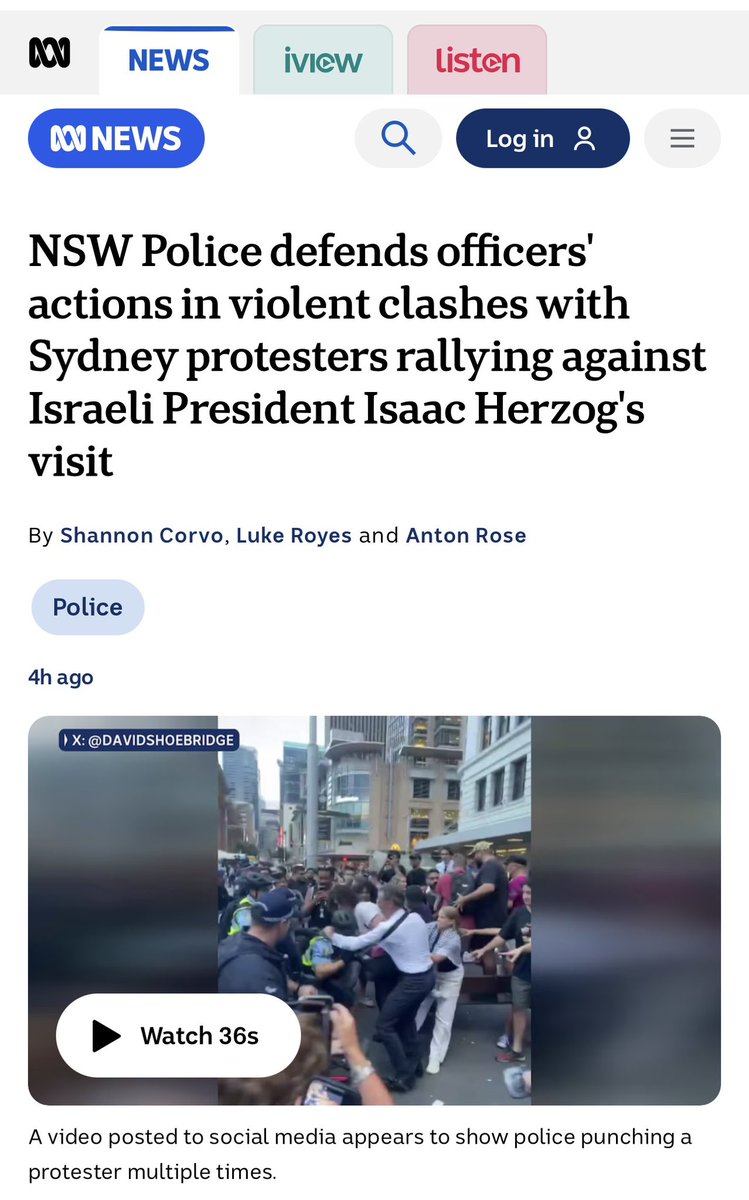
Violence causes more violence.
All Australia needed, and needs to do, is to say that we will not support crimes against humanity, at any time, by anyone.
No exceptions.
Since we have not done so, not only has violence arrived on our shores, but is now increasingly being used against Australians.
No one should be visiting Australia to promote or justify crimes against humanity.
Or their inhumanity will quickly become ours.
A process that is, sadly, well underway.
The English Cricket team visited an orphanage in Adelaide today.
"It was heartbreaking to see their sad little faces with no hope", said James, aged 6.
I came back today. I thought I had known despair before, but what I saw today is beyond despair.
It is not grief, nor horror, nor pain. It is something colder, a stillness where even God seems to have withdrawn His hand.
The sky was impossibly blue. The kind of blue that mocks you, that makes you wonder whether beauty itself is a crime.
I walked through streets that no longer exist, streets that were my childhood.
They are now a wilderness of stone, wire, and dust.
A man stood on a heap, a neighbor, I think.
He pointed and said, “It’s here.”
I asked him how far.
He looked down.
And I understood: my house was beneath his feet.
I lifted my phone, as if the machine could recognize what I could not. The screen glowed; there was nothing to see. The earth had swallowed the distances. Even the smell of home was gone. It was as if the thread connecting me to life itself had been cut.
I dug with my hands. The dust burned. My palms bled.
My mother had told me: “Search for anything we can save.” And so I obeyed her like a son obeys the last voice that still believes there is meaning in obedience.
From a house that once cost my father one hundred and twenty thousand dollars, a lifetime of labor, of hope, of decency, I found two things:
a knife, and a pillow.
Two relics of civilization. One for necessity, one for illusion.
That is what remains of man.
I sat in the ruins, the blue of my shirt turned gray with ash, and I thought:
this is the end not of a city, but of meaning itself.
I thought of my parents, their hands, their faith in honest work.
How will they bear this? How will any man bear seeing his father’s roof turned into dust by a stranger’s hands, hands that will never know the names of those they destroyed?
But what tears me apart more than ruin is silence. No one speaks to us.
No one tells us where to go, who will rebuild, or who is responsible.
The politicians talk of victories, the generals of strategy, the world of peace and progress.
But none of them live here among the ashes. None of them stand where I stand, sifting through their own dead.
And those who claim to represent us, where are they? Where is the money they collected in our name, the promises they made before the cameras, the slogans they wrote while we buried our children?
Who among them will come to this ruin and say: Forgive us, we failed you?
Not one.
They sit in offices with clean shirts, counting our corpses as figures on paper. They say “reconstruction,” “aid,” “negotiations,” as though the vocabulary of power could fill the emptiness of a mother’s bed.
I tell you the truth: there is no crime greater than indifference.
The murderer at least acknowledges the victim.
But those who look away, they kill the soul itself.
I brushed the dust from my shirt, though I knew it was useless.
I wanted to see if there was still color left in the world.
There wasn’t.
The blue had become the color of mourning.
I looked at my hands. They were shaking, not from fear, but from the unbearable realization that we have become expendable to the world.
Our suffering is entertainment, our death a policy, our endurance a statistic.
I wept then, openly, shamelessly.
I, who once believed in the dignity of suffering, now see that dignity itself has been annihilated.
There is nothing noble in being forgotten.
If you are reading this, do not admire the style or the language.
Lower your head, and weep.
Because this dust, this silence, this cry, is what remains of us.
The blood-drenched Butcher Netanyahu is due to address the UN General Assembly at 11 pm tonight our time. I really do hope that the Australian delegation walks out on him, with the rest of the civilised world. @SenatorWong RT if you agree.
The Govt’s shocker deportation bill is a direct attack on the right to due process, a shameful insight into the deterrence & punishment at the heart of Aust’s asylum seeker policy, as well as contempt for the courts. Aus should be better than this #auspol#politas
“When I entered Gaza the Israeli military had a rule: I was only allowed to bring in three kilos of food. As I was weighing out protein bars, trying to get under the limit, I said to my husband: ‘How sinister is this?’ I’m a humanitarian aid worker. Why would there even be a limit on food? I’ve worked in many places with extreme hunger, but what’s so jarring in this context is how cruel it is, how deliberate. I was in Gaza for two months; there’s no way to describe the horror of what’s happening. And I say this as a pediatric ICU doctor who sees children die as part of my work. Among our own staff we have doctors and nurses who are trying to treat patients while hungry, exhausted. They’re living in tents. Some of them have lost fifteen, twenty members of their families. In the hospital there are kids maimed by airstrikes: missing arms, missing legs, third degree burns. Often there’s not enough pain medication. But the children are not screaming about the pain, they’re screaming: ‘I’m hungry! I’m hungry!” I hate to only focus on the kids, because nobody should be starving. But the kids, it just haunts you in a different way. When my two months were finished, I didn’t want to leave. It’s a feeling I haven’t experienced in nearly twenty years of humanitarian assignments. But I felt ashamed. Ashamed to leave my Palestinian colleagues, who were some of the most beautiful and compassionate people that I’ve ever met. I was ashamed as an American, as a human being, that we’ve been unable to stop something that is so clearly a genocide. I remember when our bus pulled out of the buffer zone. Out the window on one side I could see Rafah, which was nothing but rubble. On the other side was lush, green Israel. When we exited the gate, the first thing I saw was a group of Israeli soldiers, sitting at a table, eating lunch. I’ve never felt so nauseous seeing a table full of food.”
-------------------------------------------------------
Aqsa Durrani is a pediatric doctor and board member of Doctors Without Borders USA, with nearly twenty years of experience in humanitarian projects. During our interview Aqsa repeatedly expressed a desire to center the voices of her Palestinian colleagues. To this end I’ve spent the past week collecting stories from the Palestinian staff of Doctors Without Borders in Gaza. I will be sharing these stories over the next several days. I’m so grateful for the time that these people gave me; they were sleepless, hungry, traumatized, and often working 24-hour shifts. Because of the unreliable internet connection their images are sometimes grainy. Their words, however, will be crystal clear.
New Labor MP for Menzies Gabriel Ng in maiden speech condemns Pauline Hanson, says when he was growing up “instances of evert racism were rare” until Hanson’s racist speech claiming “Australia was being swamped by Asians” - “dredging up tired old colonial fears of yellow peril”


![yanisvaroufakis's tweet photo. IN PRAISE OF FRANCESCA ALBANESE
There is a question that visits me in the small hours, when sleep will not come and the mind turns over old stones. The question is this: “What would I have done in the 1930s, on the morning after Kristallnacht?"
Not what I say I would have done. Not what I hope I would have done. But what would I actually have done—when the trains began to run, when the neighbours grew quiet, when the cost of decency became the loss of everything?
Most of us, I think, would have done little. Not from malice. From fear. From the soft, creeping conviction that someone else will speak, that the situation is complex, that we must be 'reasonable'. Lest we forget, the ordinary is the extraordinary's alibi. And how we have clung to that alibi! How we still cling to it!
And then, every once in a terrible while, someone appears who does not cling. Someone who steps forward when others step back. Someone who speaks the name of the thing when everyone else is busy naming something else.
Francesca Albanese is that someone.
She stands before the world—alone, unarmed, armed only with law and language and a rare courage—and she says what the centrists will not say, what the foreign ministries will not say, what the editorial boards will not say. She says: "This is a genocide. And we are watching it happen."
Do not tell me that is hyperbole. Do not tell me the term is contested. She has not used it lightly. She has used it as a physician arrives scientifically at a diagnosis—not to wound, but to warn. Not to inflame, but to name.
And for that, they have come for her. Oh, how they have come for her. Smears. Investigations. Vicious editorials. Frozen bank accounts. Dispossession of the only apartment she had ever owned. The machinery of the respectable turned to crush her. Because the respectable cannot abide what she represents: a mirror held up to their complicity.
Let us, once again, travel back to the 1930s. Back to the few who stood up when the trains began to run laden with Jewish people.
There was Aristides de Sousa Mendes, a Portuguese consul in Bordeaux. He defied his own government. He signed thousands of visas, by hand, for hours, until his fingers bled. He saved more lives than Schindler. And he died penniless, disgraced, erased.
There was a German officer in Warsaw named Wilm Hosenfeld. He hid a Jewish pianist in the rubble. He did not save thousands. He saved one. But that one—Władysław Szpilman—carried the memory. And memory is "the only haven from which we cannot be expelled."
There was Raoul Wallenberg. There were the villagers of Le Chambon. There were the anonymous, the quiet, the furious few who said: “Not on my watch.”
Francesca Albanese is their heir. Not because she carries a gun. Not because she hides refugees in her basement. But because she does something equally dangerous in a world that has perfected the art of not seeing. She sees. And she speaks.
She does not speak as a diplomat. Thank Goodness she doesn't! Diplomats have given us the language of "there are arguments on both sides" and "restraint" and "proportionality." Diplomatic language is the perfumed grave of moral clarity. No, she speaks as a jurist. As a human being. As a woman who has looked into the abyss and refused to call it a "complex geopolitical landscape".
Edna O'Brien once described a character who "had the recklessness of those who have already lost everything worth losing." Francesca Albanese has not lost everything. She has her dignity, her office, her voice, her family. But she has calculated the cost of speaking truth to power. And she has decided that that cost is infinitely less than the cost of silence.
What is that cost? Let us name it. She has been called antisemitic—she, who stands on the ground of international law forged in the ashes of Auschwitz and the fires of Nuremberg. She has been called a conspiracy theorist—she, who cites every source, every footnote, every UN resolution. She has been called naive—she, who understands better than most the machinery of realpolitik.
These accusations are not arguments. They are the spittle of the threatened. Because Francesca Albanese threatens something very precious to the powerful: the right to commit atrocity without being named.
Friends, the 1930s did not arrive with jackboots and pogroms on day one. They arrived in small increments. With "reasonable" restrictions. With "proportional" measures. With the silence of the respectable.
We tell ourselves that we would have been different. That we would have been Sousa Mendes. That we would have been Wallenberg. But most of us, I fear, would have been the neighbours who later said, "I didn't know."
Francesca Albanese knows. And she refuses to pretend otherwise.
So let us praise her. Not with statues or awards she does not seek. But with something harder: with our own refusal to look away. With our own voices, raised in places that are safe for us but dangerous for her. With our own bodies, if it comes to that.
A brave woman, who was injured while demonstrating outside a US nuclear military base in 1982, the infamous Greenham Common, had told me that "the heart is a hunter for what it cannot have." But I say the heart is a hunter for what it will not lose. And what we will not lose is the memory of those who stood up when standing up cost everything.
Francesca Albanese is standing up now. In our time. In our name. Under our indifferent sky.
Let us stand with her.
Not tomorrow. Not when it is safe. Now.
[Extract from a speech in Athens on Sunday 3rd May 2026]](https://pbs.twimg.com/media/HHsnlr9WIAEr4Cw.jpg)