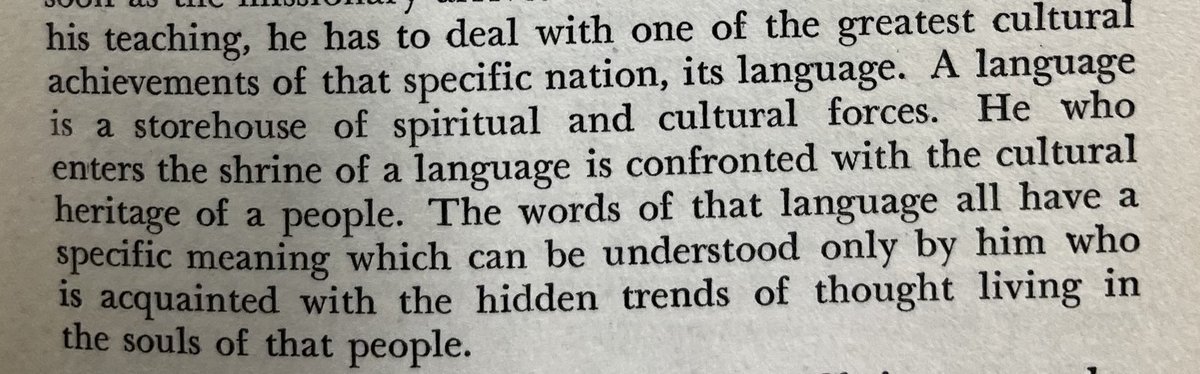
Màiri is a Mission Strengthener for Nations, a ministry intended to show that ethnic and linguistic diversity is a blessing to be celebrated.
If you’d like to hear more, come along to our annual conference on Saturday 24th February at Charlotte Chapel.
https://t.co/05cHsnJ0vc
For at least two decades, a standard narrative about worldwide Christianity has been affirmed: the church’s center of gravity has shifted southward and eastward as churches in the West contract and their counterparts in Asia, Africa, and Latin America expand.
Though this story is becoming old news, we’re still trying to figure out what it means—especially in the realm of evangelical theology and biblical studies. Today, most theological books and commentaries are written primarily by and for North American Christians, who represent a little more than 10 percent of the global Christian population. Much of this work is excellent and blesses the whole church.
Even so, evangelical writers from the Majority World—where evangelical Christianity was almost nonexistent only decades ago—are increasingly producing theological resources that offer original and important perspectives on Scripture, theology, and Christian living.
In the West, some Christians might wonder, Why does this matter? After all, theology is always local in the sense that we’re all tasked with living faithfully in our families, local churches, and communities. So while demographers and historians might have fascinating things to say about the global shift in the church’s composition, Christian leaders in Omaha (or Quito or Jos or Penang) must still primarily concern themselves with feeding and shepherding the flocks in front of them, not with the theology of far-flung Christian counterparts. Thus the “So what?” question is entirely natural.
Yet I’d suggest the rise of evangelical theologies from Asia, Africa, and Latin America is good news for the whole body of Christ. Here are three suggestions for how readers in the West could best respond.
1. Engage these works out of theological conviction rather than politeness or political correctness.
Don’t get me wrong. In our current climate, we need more, not less, civility and diplomacy. But fundamentally, our interest in the theological work emerging from distant parts of the church should be grounded in our belief that God has created a global body and welcomed each of us into a people from every tribe, tongue, and nation.
We ought to engage such works because of our biblical convictions about diversity. The primary text dealing with cultural diversity in the Old Testament is the story of Babel in Genesis 11. There, linguistic diversity is a painful reality forced on humanity, resulting in splintering that eventually culminates in ethnic tension and even war.
But at Pentecost, Babel is reversed in a surprising way: linguistic and cultural diversity is not abolished but redeemed. Rather than being given a new, singular language, culture, or land, the church is tasked with a global mission (Judea, Samaria, the ends of the earth) and empowered with an intentionally multicultural identity.
This identity has always presented challenges for the church. But Christians have good reason to do the hard work of honoring the diversity of our global family. To disconnect ourselves from them is to cut ourselves off from the rest of God’s household, the great multitude into which we’ve been called (Rev. 7:9). If the church is to grow “to the measure of the stature of the fullness of Christ” (Eph. 4:13), we need the whole body working together to grasp and proclaim the good news and its implications for the church today.
2. Don’t regard theological works as ‘cultural’ theologies relevant only for their contexts.
This temptation is understandable, as it’s driven in part by the way resources from Majority World leaders are presented and marketed to global readers.
For example, the Asia Bible Commentary series is so titled because the publisher wants readers to know it collects reflections on and applications of Old and New Testament texts from a distinctively Asian perspective. But the NIV Application Commentary—a series that targets North American readers and is equally focused on contextualized application of biblical texts—includes no such “cultural” label. This distinction unintentionally sends the message that North American theological books are standard issue, while African, Asian, and Latin American authors are merely writing niche products.
Aside from this challenge, evangelicals have often embraced a vision of theology as an essentially “acultural” enterprise. This approach comes from an honorable intention. We instinctively know that cultures can become idols, quietly distorting our interpretations of Scripture and replacing the voice of God with our own. But this problem can’t be fixed by running from culture or trying to eliminate it from our theology. Besides being futile, it’s not the divine design. God chooses to reveal himself in and through cultural realities, rather than finding a way around them.
Instead, we can learn our cultural blind spots by interacting with the whole body of Christ. The solution is more, not less, engagement with culture (our own as well as others’).
3. Read these works with an open mind and realistic expectations.
I hope more and more readers will start engaging the resources coming from the growing parts of the church in Asia, Africa, and Latin America. As Andrew Walls has highlighted, whenever the gospel crosses cultural boundaries, the church tends to learn new or forgotten aspects of the faith. So we should look at the remarkable expansion of the church in our present age with confidence and hope.
But we can also make the mistake of expecting too much from our interactions with the global church. First, we can demand too much of the authors we’re reading, expecting to find in them a revolutionary reframing of the faith. This is usually a recipe for disappointment. Even in the most productive eras of church history, theological renewal tends to be incremental rather than revolutionary, as we slowly grasp the gospel better.
Similarly, we can expect too much of ourselves, forgetting we’re finite creatures who can only engage well with a limited number of cultural contexts at one time. So rather than trying to be truly “global” in our theological reflection, we should aim to stretch ourselves beyond our cultural comfort zones while also being realistic about our limits.
When we take these steps, incremental as they may be, our horizons are broadened, our perspectives are refined, and our grasp of the gospel is deepened.
("How to Engage Theology from the Majority World" by Stephen T. Pardue)
Major congratulations/gefeliciteerd/félicitations/Glückwunsch to my polyglot incoming PhD student @ma_macpherson, who has been awarded funding for her PhD @uoedivinity! I am very excited about working with Màiri on J.H. Bavinck and language(s).
@DrJamesEglinton@thbaketal@SpeakinFluently The joy of discovering that this landed on my birthday this year! (Which took place pretty much 50/50 in English/Spanish 🏴🇵🇪 )
The latest edition of our international theological journal, Foundations, is now available. Featuring a number of articles which focus on the vital area of mission.
View it online or download it as a PDF: https://t.co/Cqwl98vquH
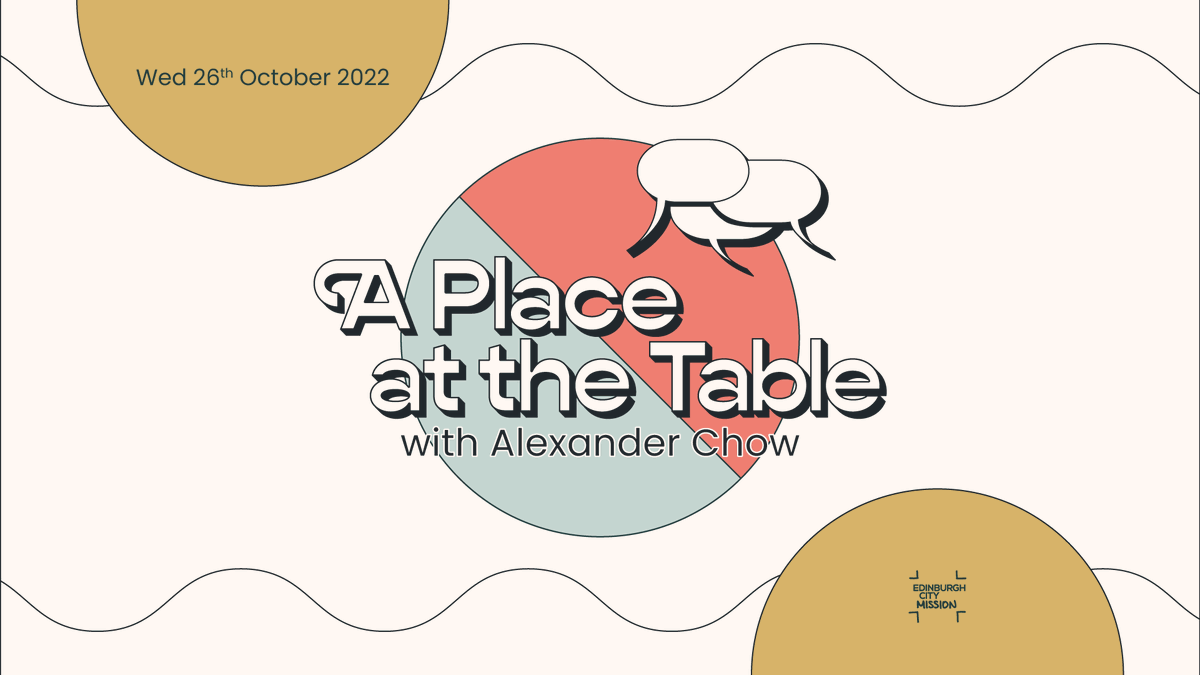
In just under 4 weeks on October 26th, we’re live with our latest A Place at the Table guest Alexander Chow, a Senior Lecturer in Theology and World Christianity at the Uni of Edinburgh.
More info to follow! Book your free place - https://t.co/XO1ybuLUQ2
Màiri and our future APATT guest @AxolileQ have gathered some key resources for further reading around topics of the global church, racism and reconciliation.
Have a read in preparation for August's interview! 📖
https://t.co/vC1Wm7WLmM
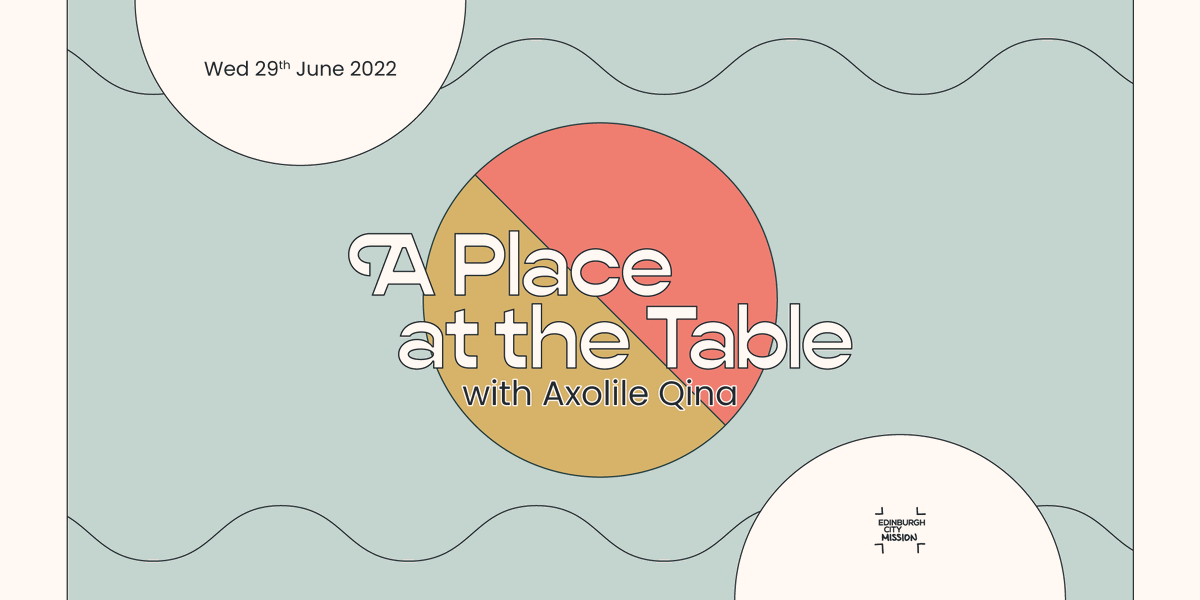
On the 29th we're live from King's Church with our latest guest Axolile Qina, a South African PhD candidate in Edinburgh.
Join in-person or via our YouTube livestream. A light lunch will be provided!
Book your free place - https://t.co/mXtyogBYOs
Meet Màiri! ✨
She'll be taking the lead on Acts 2:11, organising A Place at the Table and developing "Nations" in seeking to unify the diverse church across Edinburgh. We are delighted to have her joining the team as our Mission Strengthener for Nations!
#inourcityforourcity