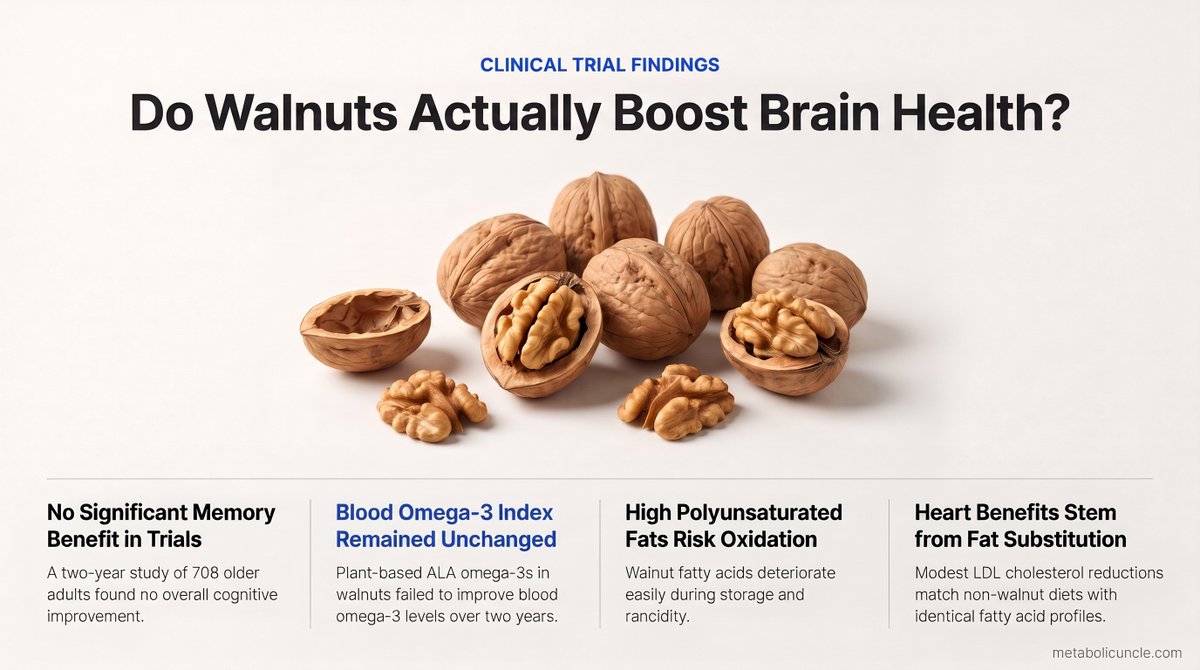
Walnuts are celebrated as a brain superfood for their omega-3s, antioxidants and minerals. But does eating them actually improve memory? And is their supposedly exceptional nutrition worth the unusually high amount of polyunsaturated fat?
DO WALNUTS ACTUALLY IMPROVE MEMORY?
The strongest human evidence is far less impressive than the marketing suggests.
- Two-year trial: 708 healthy older adults were assigned 30–60 g of walnuts daily or a walnut-free diet. No significant overall improvement in memory or cognitive performance.
- 2024 meta-analysis: Five randomized nut trials involving 928 adults found no significant overall cognitive benefit.
- Positive findings: A Mediterranean diet containing mixed nuts improved a memory score in older adults at higher cardiovascular risk. But the intervention changed the entire diet, and walnuts contributed only 15 g daily.
The larger trial also found an exploratory benefit in its Barcelona subgroup. Interesting, but the overall result remained null.
Several prominent studies received walnut-industry support. The positive observational studies also struggle to separate walnut intake from broader dietary and lifestyle differences.
There is still no convincing evidence that regularly eating walnuts protects human memory.
WHAT DOES A HANDFUL REALLY PROVIDE?
A typical 20 g serving contains approximately:
- Fat: 13 g total, including 9.4 g PUFA. Around 7.6 g is omega-6 linoleic acid.
- Omega-3: 1.8 g ALA, the plant precursor that must be converted into EPA and DHA. A two-year walnut intervention failed to improve the blood omega-3 index.
- Minerals: 0.32 mg copper and 0.68 mg manganese. Genuine nutritional strengths, although both are available from other foods.
- Protein and other nutrients: Just 3 g protein, 32 mg magnesium and around 8 mg choline.
That serving carries approximately 131 label calories. Copper, manganese and ALA stand out. Protein, magnesium and choline are far less impressive at the amount people actually eat.
IS THERE ANYTHING UNIQUE ABOUT THEM?
Copper and manganese support important enzymes, but more concentrated sources exist. The food's mineral content is also not its absorbed dose. Walnut phytate can interfere with zinc and iron uptake, and soaking has not improved phytate-to-mineral ratios in controlled tests.
The antioxidant claim also deserves a closer look:
- Vitamin E: 20 g walnuts provide only about 0.14 mg alpha-tocopherol, the form counted toward vitamin E intake requirements. They contain much more gamma-tocopherol, but the forms are not interchangeable.
- Polyphenols: Walnut ellagitannins can form urolithins, depending on gut bacteria. Pomegranate and certain berries contain related precursors.
- Cognitive evidence: Recent human research linked walnut-derived urolithins to cognitive measurements without establishing a memory benefit from eating walnuts.
The compounds are real. Their combination has not been shown to offer a unique cognitive advantage over other foods.
WHAT ABOUT THE DOWNSIDES?
The high PUFA content introduces additional considerations that rarely receive the same attention as the antioxidants. Even a favorable acute antioxidant experiment used 90 g walnuts and measured short-term blood markers, not memory or long-term health outcomes.
- Oxidation: Walnut fats are particularly susceptible to oxidation. Food-chemistry experiments have measured deterioration of their fatty acids and antioxidant compounds during rancidity.
- Storage: Temperature, oxygen exposure, damaged kernels and storage duration influence quality. Natural antioxidants slow oxidation but cannot prevent it indefinitely.
- Mold toxins: One Italian investigation detected the fungal metabolite alternariol in 53% of 22 tested walnut samples, at low microgram-per-kilogram concentrations. Detection alone does not establish a harmful exposure.
- Heavy metals: Cadmium and lead have also been measured in commercial nut samples. Concentrations vary, and the available evidence does not establish that walnuts are unusually contaminated compared with other nuts.
Two bags of walnuts can therefore differ in freshness, oxidation status and contaminant exposure.
WHAT ABOUT THEIR HEART-HEALTH BENEFITS?
Randomized trials show that walnut-rich diets can modestly lower LDL cholesterol. A 2026 meta-analysis of 49 trials found an average reduction of approximately 5.7 mg/dL.
But the comparison diet matters.
In a controlled six-week experiment, 34 adults received whole walnuts or walnut-free diets with different fatty-acid compositions. Walnuts did not significantly outperform the fatty-acid-matched diet for LDL cholesterol.
This points to dietary fat substitution as an important contributor to the result.
LDL cholesterol also measures one aspect of lipoprotein metabolism. Its reduction can be clinically relevant, but does not establish improved memory or prove that walnuts are a superior nutritional choice.
SO ARE WALNUTS WORTH THE HYPE?
The nutrients used to promote walnuts are available through other foods, often with more complete protein and substantially less PUFA.
Whole eggs provide concentrated choline. Beef and lean fish provide complete protein. Shellfish supply copper, manganese and other trace minerals. Dairy and mineral-rich water offer calcium and magnesium, depending on composition. Ripe fruit and orange juice contribute carbohydrates, potassium and vitamin C. Collagen-rich foods add glycine.
The point is to compare meaningful portions and the full nutrient matrix, rather than treating one advertised nutrient as proof that a food belongs in every diet.
Even among nuts, macadamias contain dramatically less PUFA.
Walnuts are nutritionally interesting, but the supposed brain-health advantage has not survived its strongest direct clinical test. Their celebrated nutrient combination is not indispensable, while the PUFA content and storage-related quality concerns are substantial considerations.
For a PUFA-conscious diet, the case for prioritizing walnuts over these alternatives is weak.
The full article is in the first comment. It examines trial controls and funding, actual calorie absorption, antioxidant experiments, product quality and detailed food comparisons.
General information, not medical advice.
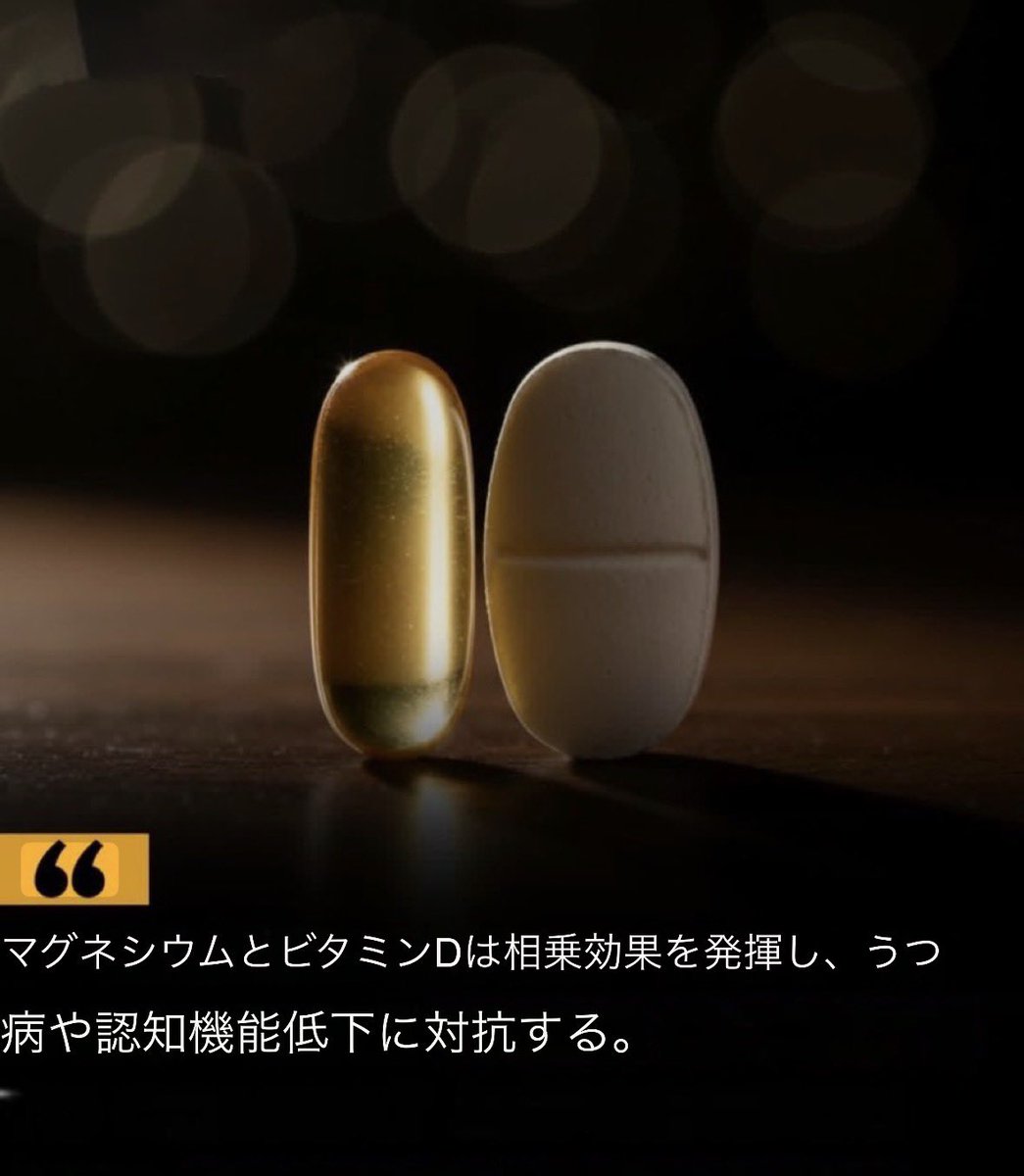
Magnesium and Vitamin D: A Powerful Nutritional Partnership
Vitamin D and magnesium both play important roles in brain health and mood regulation.
Vitamin D supports brain function, while magnesium helps activate vitamin D so the body can use it effectively. Magnesium also supports nerve function and helps regulate processes involved in mood.
Low levels of either nutrient have been associated with certain health problems, including mood changes and impaired cognitive function.
Although research is ongoing, maintaining healthy levels of both nutrients is important for overall well-being.
Sometimes, supporting your brain starts with what you put on your plate.
When was the last time you walked around barefoot in the grass? Stepping outside onto grass or pavement with bare feet for as little as 5 minutes in the morning helps reset your internal clock and can wake you up better than an alarm.
#Grounding#NatureConnection#WellnessJourney
After 50 your eyes get up to 15 times more vitamin A from red peppers.
Studies tracking pepper ripening show:
→ Total carotenoids can rise substantially
→ Beta-carotene increases
→ Red peppers develop carotenoids such as capsanthin
→ Vitamin C often increases with ripening, too
In one study, the provitamin A value of ripe peppers was 3–15× higher than green peppers.
But that doesn’t make green peppers “inferior.”
Green ones have their own phytochemical profile, and both are nutritious.
The point isn’t to find the “best” pepper.
Different colors mean different chemistry.
Your move: Put two colors of peppers on your plate this week.
Green, red, yellow, or orange - which earns a place in your fridge?
#HealthyFood
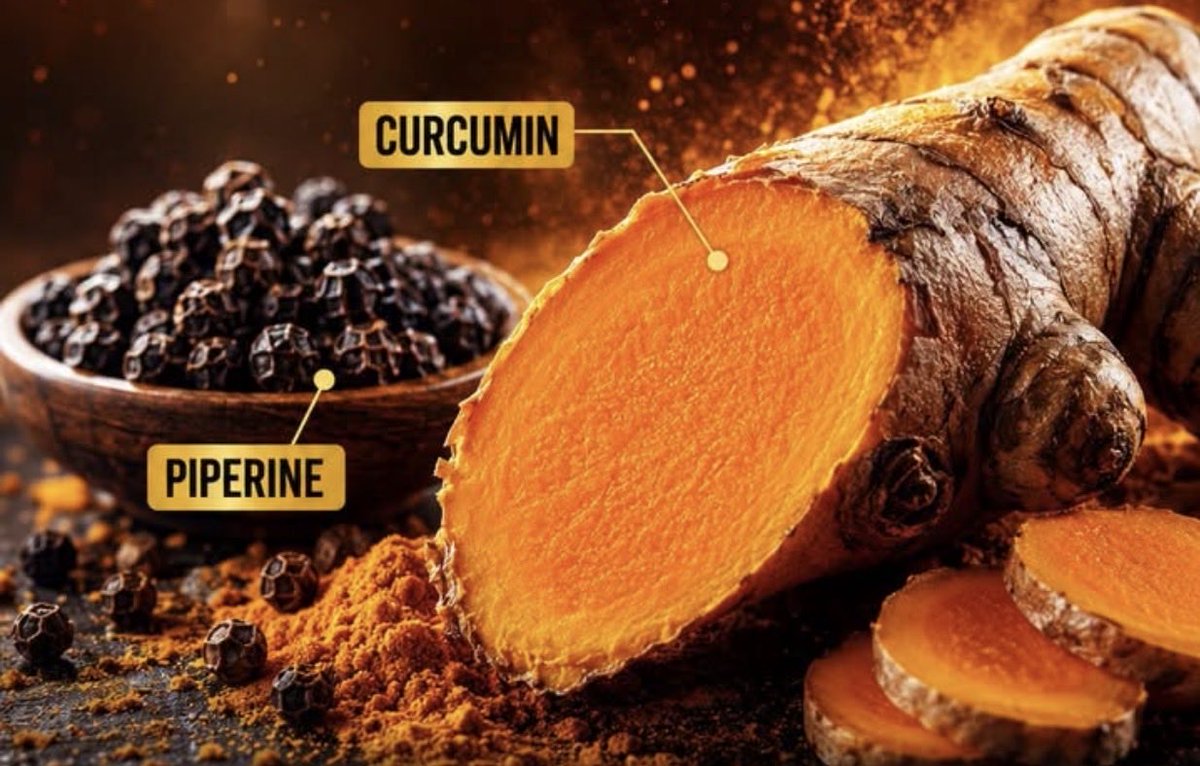
Studies have shown that curcumin can help reduce inflammation and pain in people with osteoarthritis, rheumatoid arthritis, and other types of arthritis. Curcumin works by inhibiting the production of inflammatory substances in the body, and it may also help reduce oxidative stress, which can contribute to joint damage.
Doses ranging from 500 to 2,000 milligrams per day.
#Curcumin #arthritis
https://t.co/gDTqsbYWNv
Avocado eaters scored higher on memory tests - but does avocado deserve the credit?
A 2021 analysis of 2,886 adults age 60+ found that those who ate avocado or guacamole scored better on:
1. Immediate recall
2. Delayed recall
3. Overall cognition.
Even after adjusting for diet quality, activity, education, and other factors, the association remained.
Still, the study was observational and can’t prove cause and effect.
Newer evidence adds an important reality check:
A 2026 randomized trial found that eating 1 avocado every day for 6 months did not significantly improve cognition.
So don’t eat avocados because they’re a brain-health miracle.
Eat them because they’re a nutrient-dense whole food rich in:
1. Heart-healthy monounsaturated fat
2. Fiber
3. Carotenoids.
Healthy brain aging is built from dietary patterns, not one “superfood.”
Your move: Add avocado to a meal you already enjoy.
How do you eat yours - toast, salad, or guacamole?
#BrainHealth
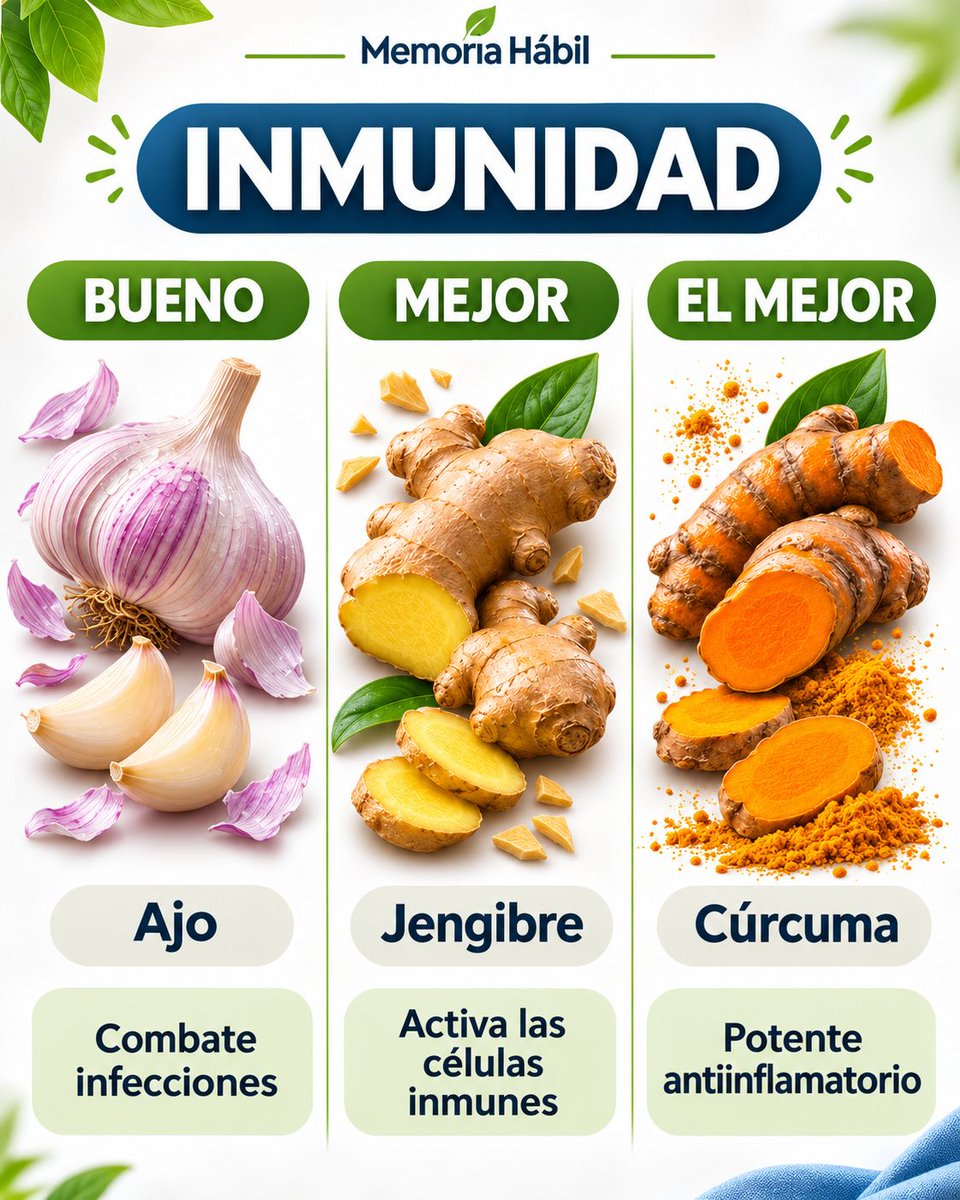
No necesitas superalimentos caros para cuidar tu salud.
Tres ingredientes baratos, fáciles de incorporar a tus comidas y con compuestos interesantes.
Pero recuerda ningún alimento por sí solo «refuerza» mágicamente tus defensas. 👇
SMALL kitchen hack. BIG anti-inflammatory benefits.
When you chop fresh broccoli and let it sit for 90 minutes before cooking, you activate myrosinase.
This is the enzyme that converts glucoraphanin into sulforaphane, one of the most powerful natural compounds being studied for cancer prevention and lowering inflammation.
Even better: Once activated, the sulforaphane survives gentle cooking (like stir-frying or light steaming).
Quick tips for busy people:
No time to wait 90 min? Add a pinch of mustard powder, wasabi, or sprinkle broccoli sprouts on top after cooking.
Frozen broccoli usually won’t work the same way (blanching deactivates the enzyme).
Your future cells will thank you for this one simple change.
Who’s trying this broccoli hack this week? Drop a below
#FoodAsMedicine
🚨 Sweet Potatoes Are a Powerful Source of Everyday Nutrition!
Just one medium sweet potato provides more than a day's worth of vitamin A, supporting healthy vision and immune function.
It also contains around 4 grams of fiber to support gut health, along with potassium that helps regulate blood pressure.
Interestingly, boiling sweet potatoes can produce a lower glycemic response than baking or roasting them.
Purple sweet potatoes also contain anthocyanins, natural antioxidants being studied for their potential anti-inflammatory effects.
A simple, nutritious food with impressive health benefits!
Source:
Allen, J. C., et al. (2012). Glycemic Index of Sweet Potato as Affected by Cooking Methods. The Open Nutrition Journal, 6, 1–11.
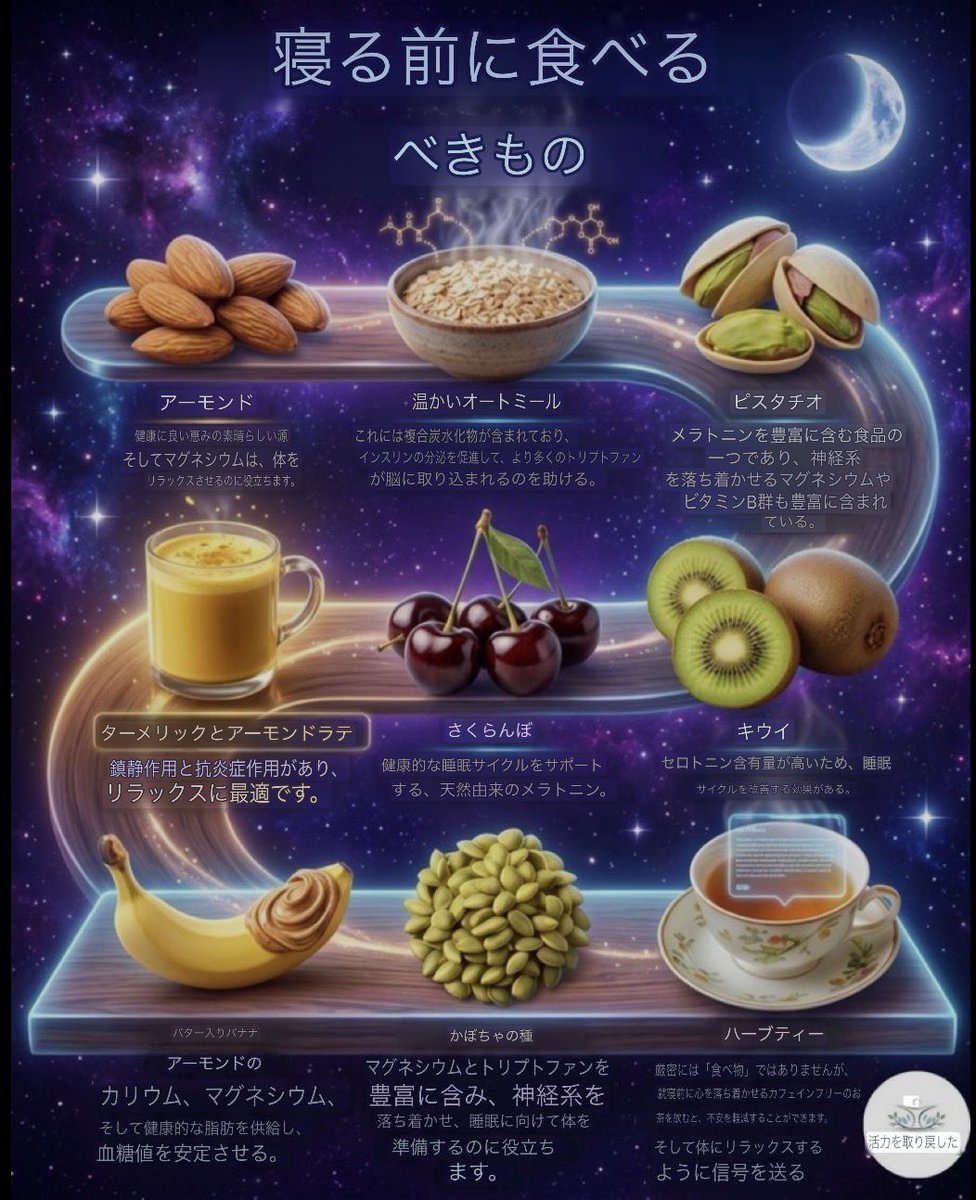
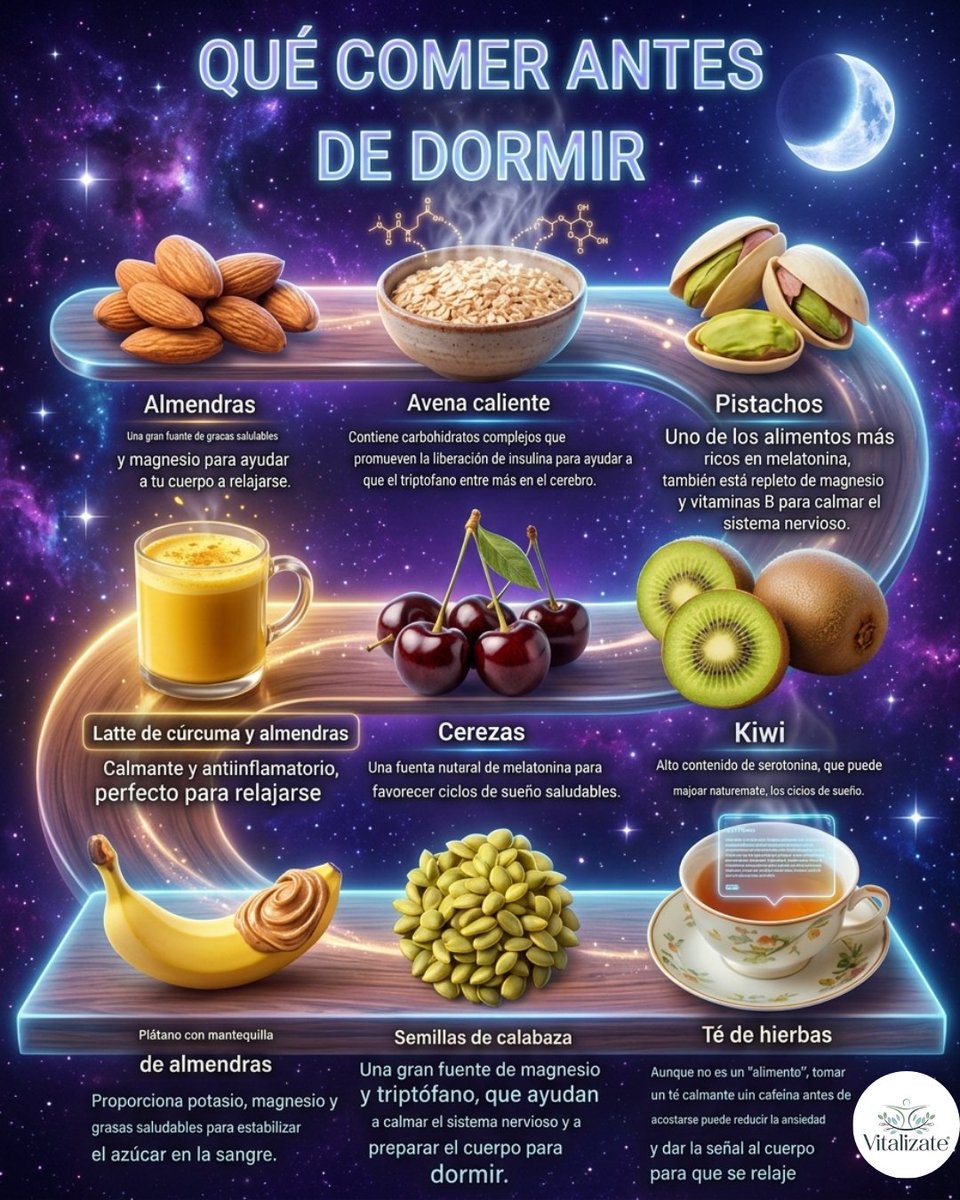
QUÉ COMER ANTES DE DORMIR: LA CIENCIA DE LA NUTRICIÓN NOCTURNA PARA UN SUEÑO PROFUNDO 🌙🥝🍵
¿Dabas vueltas en la cama intentando apagar tu cerebro? Solemos recurrir a pastillas para dormir o infusiones milagrosas, pero a menudo olvidamos que nuestra despensa está llena de
🚨 Dates contain natural sugar, but there's more to them than sweetness!
Dates are rich in glucose and fructose, but they also provide fibre, potassium, magnesium and antioxidants.
Their fibre content helps slow digestion, and many varieties have a low-to-moderate glycemic index.
Research suggests that moderate date consumption can fit into a healthy diet, even for some people with type 2 diabetes. However, dates still raise blood sugar, and portion size matters.
Pairing dates with nuts can also help moderate the overall blood sugar response.
The takeaway: Dates are nutritious whole fruits, not sugar-free foods. Enjoy their benefits, but don't forget moderation!
Source: Nutrients — Research on dates, glycemic index and metabolic health.
🌟 Could Vitamin D Be Your Secret to Turning Back the Clock?
Scientists may have found a hidden power in a simple vitamin you already know. A new Harvard study suggests that taking 2,000 IU of vitamin D daily could slow the aging process at the cellular level. Researchers looked at telomeres—tiny protective caps on your DNA that naturally shrink as you get older. The results were astonishing: people taking vitamin D had less telomere shortening, roughly equivalent to almost three years younger cells.
But here’s the twist: this doesn’t mean you’ll suddenly feel 20 again. It shows that your cells might age more slowly, quietly protecting you from the inside out. Could this everyday vitamin be a hidden key to longevity? Experts say it’s promising, but the mystery of how it truly impacts aging is still unfolding.
Your body might already be trying to tell you something… are you listening?
Source: Harvard Health Publishing. (2025). Vitamin D supplements may slow cellular aging