@AthleticsImages@AthleticsWeekly To be fair the 2019 rule change already dealt with all 3. Intersex conditions while correctly making the athlete ineligible are not the same as the transgender issue which has now been dealt with.
Robert Mueller died last night.
He was 81 years old. He had a wife who loved him for sixty years. He had two daughters, one of whom he met for the first time in Hawaii, in 1969, on a few hours of military leave, before he got back on the plane and returned to Vietnam. He had grandchildren. He had a faith he practiced quietly, without performance. He had, in the way of men who have seen real things and survived them, a quality that is increasingly rare and increasingly mocked in the country he spent his life serving.
He had integrity.
And tonight the President of the United States said good!
I have been sitting with that word for hours now. Good. One syllable. The thing you say when the coffee is hot or the traffic is moving. The thing a man who has never had to bury anyone, never had to sit in the specific silence of a room where someone is newly absent, reaches for when he wants the world to know he is satisfied. Good. The daughters are crying and the wife is alone in the house and good.
I want to speak directly to the Americans reading this. Not the political Americans. Just the human ones. The ones who have lost a father. The ones who know what it is to be in that first hour, when you keep forgetting and then remembering again, when ordinary objects become unbearable, when the world outside the window seems obscene in its indifference. I want to ask you, simply, to hold that feeling for a moment, and then to understand that the man you elected looked at it and typed a single word.
Good.
This is not a country having a bad day. I need you to understand that. Countries have bad days. Elections go wrong. Leaders disappoint. Institutions bend. But there is a different thing, a rarer and more terrible thing, that happens when the moral center of a place simply gives way. Not dramatically. Not with a single catastrophic event. But quietly, in increments, until one evening a president celebrates the death of an old man whose family is still warm with grief, and enough people find it acceptable that it becomes the weather. Just the weather.
That is what is happening. That is what has happened.
The world knows. From Tokyo to Oslo, from London to Buenos Aires, people are not angry at America tonight. Anger would mean there was still something to fight for, some remaining faith to be betrayed. What I see, in the reactions from everywhere that is not here, is something older and sadder than anger. It is the look people get when they have waited a long time for someone they love to find their way back, and have finally understood that they are not coming.
America is being grieved. Past tense, almost. The idea of it. The thing it represented to people who had nothing else to believe in, who came here with everything they owned in a single bag because they had heard, somehow, across an ocean, that this was the place where decency was written into the walls. That idea is not resting. It is not suspended. It is being buried, in real time, with 7,450 likes before dinner.
And the church said nothing.
Seventy million people have decided that this man, this specific man who has cheated everyone he has ever made a promise to, who has mocked the disabled and the dead and the grieving, who celebrated tonight while a family wept, is an instrument of God. The pastors who made that bargain did not just trade away their credibility. They traded away the thing that made them worth listening to in the first place. The cross they carry now is a costume. The faith they preach is a loyalty oath with scripture attached. When the history of American Christianity is written, this will be the chapter they skip at seminary.
Now I want to talk about the men who stand next to him.
Because this is the part that actually breaks my heart.
JD Vance is not a bad man. I have to say that, because it is true, and because the truth matters even now, especially now. Marco Rubio is not a bad man. Lindsey Graham is not a bad man. They are idiots, but not bad, as in BAD! These are men with mothers who raised them and children who love them and friends who remember who they were before all of this. They are not monsters. Monsters are simple. Monsters do not cost you anything emotionally because there is nothing in them to mourn.
These men are something more painful than monsters.
They are men who knew better, and know better still, and will get up tomorrow and do it again.
Every small compromise they made had a reason. Every moment they looked the other way had a justification that sounded, at the time, almost reasonable. And now they have arrived here, at a place where a president celebrates the death of an old man and they will find a way, on television, to say nothing that means anything, and they will go home to houses where children who carry their name are waiting, and they will say goodnight, and they will say nothing.
Their oldest friends are watching. The ones who knew Rubio when he still believed in something. Who knew Graham when he said, out loud, on the record, that this exact man would destroy the Republican Party and deserve it. Who sat next to Vance and thought here is someone worth knowing. Those friends are not angry tonight. They moved through anger a long time ago. What they feel now is the quiet, irrecoverable sadness of watching someone disappear while still being present. Of watching a person they loved choose, again and again, to become less.
That is what cowardice costs. Not the coward. The people who loved him.
And in the comments tonight, the followers celebrate. People who ten years ago brought casseroles to grieving neighbours. Who stood in the rain at gravesides and meant the words they said. Who told their children that we do not speak ill of the dead because the dead were someone's beloved. Those people are tonight typing gleeful things about a man whose daughters are not yet done crying. And they feel clean doing it. Righteous. Because somewhere along the way the thing they were given in exchange for their decency was the feeling of belonging to something, and that feeling is very hard to give up even when you can no longer remember what you gave for it.
When Trump is gone, they will still be here.
Standing in the silence where the noise used to be. Without the permission the crowd gave them. Without the pastor who told them their cruelty was holy. They will be alone with what they said and what they cheered and what they chose to become, and there will be no one left to tell them it was righteous.
That morning is coming.
Robert Mueller flew across the Pacific on military leave to hold his newborn daughter for a few hours before returning to the war. He came home. He buried his dead with honour. He served presidents of both parties because he understood that the institution was larger than any one man. He told his grandchildren that a lie is the worst thing a person can do, that a reputation once lost cannot be recovered, and he lived that, every day, in the quiet and unglamorous way of people who actually believe what they say.
He was the kind of American the world used to point to when it needed to believe the story was true.
He died last night. His wife is alone in their house in Georgetown. His daughters are learning what the world is without him in it. And somewhere in the particular hush that falls over a family in the first hours of loss, the most powerful man and the biggest loser on earth sent a message to say he was glad.
The world that loved what America was supposed to be is grieving tonight. Not for Robert Mueller only. For the country that produced him and then became this. For the distance between what was promised and what was delivered. For the suspicion, growing quieter and more certain with each passing month, that the America people believed in was always partly a story, and the story is over now, and there is nothing yet to replace it.
That is all it needed to be.
A man died. His family is broken open with grief.
That is all it needed to be.
Instead the President said good.
And the country that once stood for something looked away 🇺🇸
Gandalv / @Microinteracti1
@NeilDotObrien Seriously tough trading. Not one administration at fault but successive governments over the last 50 odd years. What might help is drop the self serving outrage (both sorry sides) and actually look for long term solutions. Winter is coming. Better suit up or shut up guys.
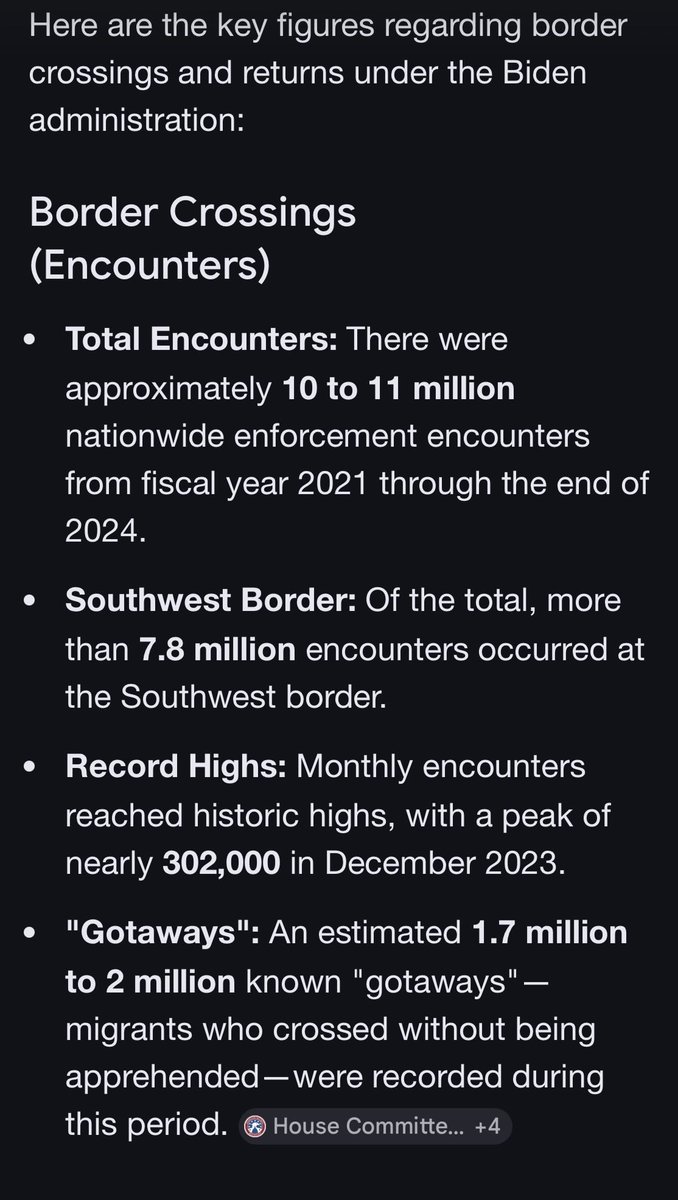
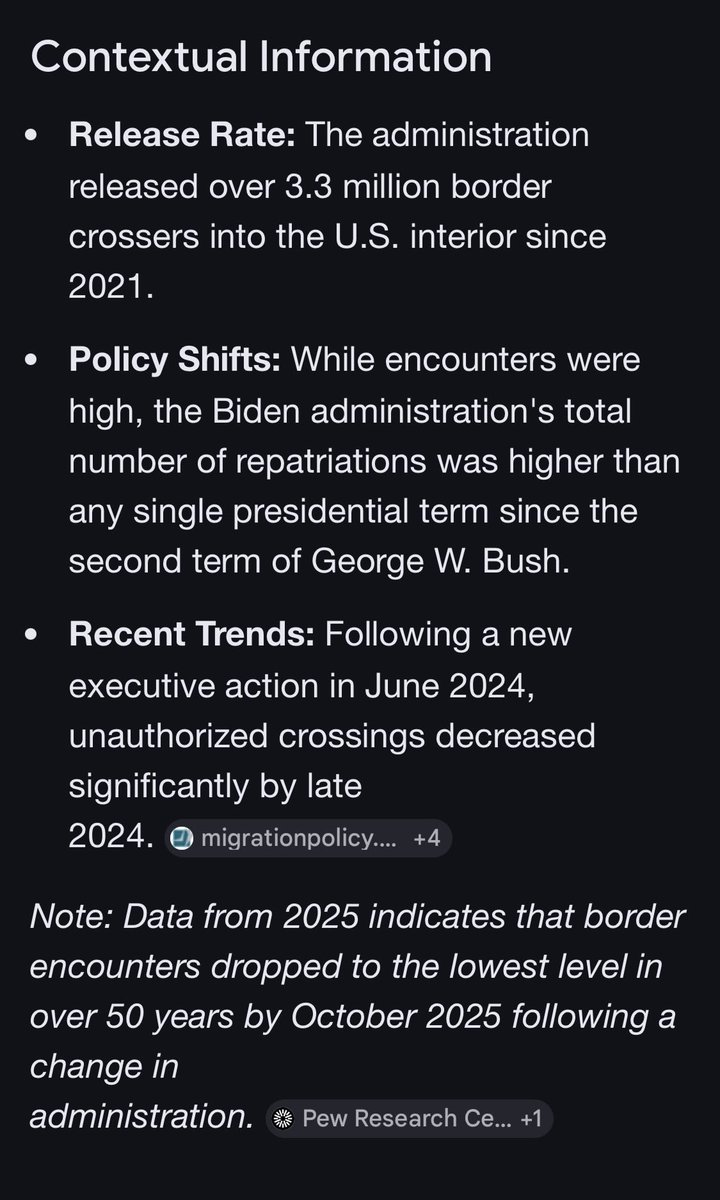
@JesseO007@CalltoActivism I make no judgement here but facts do matter. It’s net 6 mil. Roughly 2 mil got aways. The rest in the system. View that as you will.
Global Wealth and Power are Pivoting to the East
History’s wheel is turning. China builds, India rises, BRICS surpasses the G7—while America punishes allies and empowers its Enemies.
In the West, the year 1492 is remembered for two episodes: Columbus’s arrival in the Americas and the fall of Granada, last stronghold of Moorish Spain. But its larger consequence was geopolitical: the compass needle swung westward, ushering in a centuries long reversal in global fortunes.
Wealth that once streamed toward Asia turned into rivers feeding Europe’s ascent.
Silver, gold, sugar, and spices from the Americas acted like jet fuel. They powered science, industry, and empire. Spain, France, Britain, and the Netherlands—naval and commercial predators—rose on the tide, hollowing out the Ottoman world and diverting trade from India and China to the New World.
Today another hinge of history is swinging. Washington’s unspoken fear of a 21st century turn is no less dramatic: economic gravity shifts eastward, led by China and—critically—India.
Beijing’s gamble in the 1990s—to let capitalism breathe, to draw in foreign capital, and to pour trillions into domestic infrastructure—proved as consequential as a century of US industrial growth.
The Belt and Road Initiative, worth more than $1 trillion, is less an infrastructure plan than a circulatory system of steel and concrete veins, designed to redirect the lifeblood of trade back across Asia, Africa, and the Middle East.
In contrast, Washington failed to invest in fast sealift or high speed rail, leaning too heavily on military power.
For the last 25 years, America exhausted itself in deserts and mountains, fighting costly wars that drained trillions, cost thousands of U.S. lives—yet delivered little of enduring strategic value.
Worse still, the technology of war is no longer America’s private domain. Precision strikes, robotics, artificial intelligence, persistent surveillance from seabed to space—once rare advantages—are now widely available, even to mid range powers.
The oceans that once carried American commerce and projected US power have become potential minefields. To move lumbering, World War II style forces across the Pacific, Atlantic, or Indian Oceans today is not just dangerous. It borders on suicidal behavior.
History’s cruel truth remains: the last major war seldom looks like the next.
The battle-space of the future is uncharted, yet America’s Armed Forces and its National Military Strategy remain deeply mired in the past.
The erosion of U.S. military advantage cannot be viewed in isolation; it reflects the widening gap between Washington’s appetite for global hegemony and America’s declining economic strength.
Partly because of Washington’s exhaustion, India has been forced to pick up the slack as a net security provider in the Indian Ocean.
At the same time, India has borne the brunt of fighting Pakistan backed insurgents, incurring heavy casualties just as America did.
India is a member of the Quad alliance with the US, Japan, and Australia, and the United States conducts more military exercises with India than with any other country.
Yet Washington recently imposed duties of 50% on Indian goods—more than double the 15% rate applied to Taliban run Afghanistan and far higher than the 19% levied on Pakistan.
This, even though both regimes sheltered and enabled militant networks that killed American soldiers for twenty years. The paradox is beyond belief: the firefighter is fined more heavily than the arsonist.
At the same time, India carries an outstanding $35 billion order book for Boeing passenger jets supporting 150,000 American manufacturing jobs in Charleston, South Carolina, and Everett, Washington. Yet India is penalized at America’s border.
The deeper problem for the United States is structural. Military dominance can no longer disguise economic erosion. According to the IMF, BRICS now outweighs the G7 in global GDP.
Measured by purchasing power parity (PPP), China’s economy is worth $40.7 trillion, India’s $20.5 trillion, while the U.S. stands at just $29 trillion.
China and India together: $61.2 trillion — more than double the U.S. total. This is not a forecast. It is today’s reality.
The turning point came in 2022, when Washington responded to Russia’s invasion of Ukraine with sweeping sanctions.
The effect of weaponizing the Dollar was profound. The dollar looked less like a safe harbor and more like a trapdoor.
From Riyadh to Delhi, from Brasília to Beijing, capitals saw the risk of conducting commerce in a currency that could be switched off at will. De-dollarization, once a theoretical debate, became urgent strategy.
No surprise, then, that nations across Africa, the Middle East, and Latin America line up to join BRICS and the Shanghai Cooperation Organization (SCO).
They are dissatisfied with a Western order they view as inequitable and extractive. India straddles both worlds—deepening its bond with Washington through the Quad while cultivating ties with Moscow and Beijing in BRICS and the SCO.
Prime Minister Modi’s presence at the recent SCO summit in Beijing alongside President Xi and President Putin reminded Washington that India’s compass will not lock on one direction.
History’s lesson is clear. Trade routes form habits: habits build markets; and markets endure longer than armies. Empire is not lost in a single battle but in the slow corrosion of those habits.
The Ottomans discovered this too late. Nations that consume more than they produce, that intimidate rather than innovate, ultimately sow the seeds of their own decline.
The dollar’s dominance is already eroding. Trade settlements in yuan, rupees, and other currencies increase by the month. The shift is not only monetary: it is strategic.
But the world should remember what American innovation can achieve. From the heartland came inventions and technologies that transformed global life in the last century—from aviation to semiconductors, from biotechnology to the digital revolution.
These capacities still command respect, and if revitalized, they can once again help anchor U.S. prosperity in a multipolar age.
History’s wheel is turning again. Some nations will rise with it. Others risk being crushed beneath its weight.
If Washington seizes the opportunity to adapt—if it makes its business inside the new global order one of commerce and trade rather than unrelenting military intervention—Americans may yet avoid the fate of the Ottomans. But the course correction cannot come soon enough.
@Logically_JC Can’t help it.. have to reply..
you can put stuff up over 100%. Increase of 100% means double. So 1500% is increase by 15 times. The other way a decrease of 100% of the sale price takes it to 0. So if you want to decrease by the same amount it’s a 93% and change reduction.
Here is a recap of the Ukraine situation, for those choosing to reject propaganda and continue seeking truth:
December 1994, Ukraine agrees to give up its nuclear arsenal in return for security guarantees from the US, UK, France, China and Russia.
February 2014, Russia invades and subsequently annexes Crimea, President Obama does next to nothing. War through weakness.
July 2019, Trump admin withholds $250 million in military aid to Ukraine to apply pressure to investigate alleged corruption by Hunter and Joe Biden.
February 2022, Russia invades a weakened Ukraine, world expects Zelenskyy to flee and Kyiv to fall within days. Ukrainians fight bravely for 3+ years, inflict hundreds of thousands of casualties on Russian army, weaken Putin politically.
U.S. has sent ~$70 billion in outdated military equipment to Ukraine since start of war, providing opportunity for U.S. military to modernize its weaponry. We’ve sent an additional $30+ billion in budget support, $75 billion in ancillary appropriations related to war.
~50,000 Ukrainians have died defending their homeland, protecting U.S. and Western interests in the process. Meanwhile, the U.S. President and V.P. are calling democratically-elected Zelenskyy a dictator and berating him in Oval Office in pursuit of a financial payoff.
The U.S. should be thanking Ukrainians, who have fought for our common interests with only modest financial support from a country with a ~$30 trillion GDP.
America can and will reclaim its backbone again soon, with better policy and messaging from common sense moderates.
Slava Ukraina.
@London_W4 Honestly independent pubs can’t buy beer for that amount. Let alone sell it. They can’t leverage their estate to get lower rents. They try and pay a living wage etc etc. ok it’s capitalism but it’s not stupidly high prices. It’s the inability to compete against a giant 🤷🏻♀️
@LisaPurdue2@AdamKinzinger@FoxNews Via bbc
"Jill and I only want what is best for all of our grandchildren, including Navy," President Biden said on Friday.
@WalshFreedom As he was to be impeached…
Due process is a wonderful thing.
I do however suspect the Trump verdict will be overturned. Not on the facts but on the combination of charges used to avoid the time limit. This, while a common tactic used by DA’s, has never been tested at appeal.
@GeraldoRivera It’s never really been tested before that I’m aware of. Should these kind of, let’s call them “dirty tricks” be criminal in the case of an election. Maybe they should be and truth and transparency should matter in politics. Who knows..