The NHL Alumni Association is devastated to share that Claude Lemieux has passed away at the age of 60.
Born in Buckingham, Quebec, Claude was selected by the Montreal Canadiens in the second round of the 1983 NHL Entry Draft and would make his NHL debut just a few months later on October 13, 1983 and scored his first career NHL goal on December 4, 1983.
Claude split time between the Canadiens organization and the QMJHL from 1983 to 1985, capturing the President’s Cup with the Verdun Junior Canadiens in 1985 as QMJHL playoff champions, while earning the Guy Lafleur Trophy as Playoff MVP.
The very next season, Claude recorded 10 goals and 16 points in 20 playoff games as he and the Montreal Canadiens won the Stanley Cup. Claude remained with the Canadiens for an additional four seasons before joining the New Jersey Devils ahead of the 1990-91 season.
In 1994-95, his fifth and final season with New Jersey, Claude led the Devils to their first Stanley Cup championship, registering 13 goals in 20 playoff games, taking home the Conn Smythe Trophy as Playoff MVP. As a member of the Colorado Avalanche in 1995-96, Claude was once again an integral part of team history as the Avalanche hoisted Lord Stanley’s Cup for the very first time in 1996.
Claude played 297 regular-season games in an Avalanche uniform before rejoining the New Jersey Devils in November of 1999, and for a fourth and final time, would be crowned a Stanley Cup champion on June 10, 2000. Claude later played for the Phoenix Coyotes and Dallas Stars before making a comeback with the San Jose Sharks during the 2008-09 season.
Internationally, Claude represented Canada on several occasions, including capturing a gold medal at the 1985 World Junior Hockey Championships and winning the 1987 Canada Cup.
He was loved by his wife and four children, and on behalf of the Lemieux family, we kindly ask that everyone respect their privacy during this difficult time.
Memorial service details to follow.
Connecting enterprise DCs, cloud networks, and AI fabric data centers and/or neoclouds isn't a connectivity problem, it's a boundary problem.
Most architects aren't designing one network; they are designing three or more. Every network in that stack was designed with completely different assumptions about what a network is for.
Your enterprise DC was built for reliability. Traffic comes to it. Failures are predictable.
Your cloud was built for flexibility. Workloads move. Nothing is permanent.
Your AI fabric was built for lossless throughput. One dropped packet stalls the entire GPU cluster. Latency isn't something to be tolerated, it can't be ignored.
These aren't variations on the same network. When you try to connect them (and you need to connect them), three design philosophies are colliding in a no-man's-land where only the barest integrations exist.
Most hybrid architectures get the individual networks right and completely underestimate the boundaries between them, making data experience a second-class life as it traverses networks it wasn't built to live with.
I put together a video walking through where these boundaries break and what architects need to be thinking about. Would love to know if you are seeing this as well, and what we are doing to solve it.
NOTE: I don't offer a solution to the problem in this video, I want to see if this is something people are seeing as well, and collect some opinions.
https://t.co/M9H2v4pVnX
🤔 Tell me something is clickbait without telling me. Oh, US markets are closed tomorrow (Memorial Day). Futures might trade lightly though! 🤷♂️ Way to bottle current events + pressures into another "Everything dumps tomorrow on a day markets aren't open" narrative.
🚨 WARNING: TOMORROW WILL BE THE WORST DAY OF 2026!!
→ The new Fed chair has confirmed rate HIKES.
→ China, Japan, and Turkey are nonstop dumping US Treasuries.
→ US-Iran peace deal is 24 hours away from COLLAPSING.
When markets open on Monday, this won't be “just a dip.”
Stocks will dump.
Bonds will dump.
Bitcoin will dump even harder.
Smart money already sees what’s happening.
They are not “buying the dip.”
They are moving into cash, reducing exposure, and preparing for the biggest risk-off event of the year.
And now add a real trade war on top of that:
China is actively rejecting U.S. Nvidia chips.
That is not just a tech headline.
Because once semiconductors become geopolitical weapons, global supply chains stop functioning normally.
Capital freezes.
Confidence evaporates.
And global growth expectations reset lower instantly.
Meanwhile:
→ Japanese bond yields are surging
→ Foreign nations are dumping U.S. Treasuries
→ Global bonds are being dumped aggressively
→ Oil markets are becoming unstable
→ The dollar is losing stability
→ Liquidity is tightening worldwide
This is no longer one isolated problem.
This is systemic pressure building across MULTIPLE fronts simultaneously.
After MONTHS of negotiations, the U.S. and Iran failed to reach a peace deal.
And when diplomacy fails, markets stop pricing “hope.”
They price WAR.
And once markets begin pricing the possibility of direct U.S.-Iran escalation, energy markets become impossible to stabilize.
Oil does not rise slowly.
It goes vertical.
Shipping routes become vulnerable.
Supply chains break down.
Inflation spikes again globally.
Which means central banks will keep interest rates higher for longer.
And that creates the exact environment markets cannot survive in:
→ Slowing growth
→ Sticky inflation
→ Tight liquidity
→ Rising geopolitical risk
→ And collapsing investor confidence
Now connect the dots.
When geopolitical stress collides with a fragile financial system, reactions do not stay contained.
They COLLAPSE.
Capital does not rotate calmly.
It stampedes toward safety all at once.
And risk assets?
They do not “dip.”
They DUMP HARD.
This is exactly how chain reactions begin.
Because once markets start pricing prolonged instability instead of temporary fear, the entire system changes.
Watch oil.
Watch bonds.
Watch semiconductors.
Watch interest rates.
Because once this accelerates, there will be no time left to react.
I’ve spent years tracking macro and systemic market reactions like this.
When the next move becomes clear, I’ll share it here publicly.
Follow and turn notifications on.
Because by the time it reaches the headlines, it’s already too late.
After the first cohort of Build Intelligent Networks with AI, one thing became really clear: the people are hungry for AI knowledge and hands on skills. They are showing ready to learn. They want to know how to make agents actually hold up inside a real network.
So @MacroEngineered and I rebuilt the workshop around exactly that.
Build Intelligent Networks with AI — Cohort 2
Hosted by Packt. 4 hours, live, hands-on.
This one goes deeper into the engineering side of agentic AI for networking:
– Moving from raw MCP tools to structured, composable skills
– Spec-driven development as a discipline for controlling agent behavior (not a prompt trick)
– Designing agentic loops that know when they're stuck and hand back control safely
– A deep dive into OpenClaw and NetClaw as production-ready frameworks for network agent workflows
Will takes the first half on skills and spec-driven development. I take the second half on agentic loops and a hands-on deployment of OpenClaw / NetClaw against a real topology.
It's aimed at engineers who've already built or used an MCP server and are ready to push past demos into something operationally safe.
Link:
https://t.co/ocZmiYbhEQ
Use code JOHN40 for a discount. Hope to see you there.
After the first cohort of Build Intelligent Networks with AI, one thing became really clear: the people are hungry for AI knowledge and hands on skills. They are showing ready to learn. They want to know how to make agents actually hold up inside a real network.
So @MacroEngineered and I rebuilt the workshop around exactly that.
Build Intelligent Networks with AI — Cohort 2
Hosted by @PacktPublishing. 4 hours, live, hands-on.
This one goes deeper into the engineering side of agentic AI for networking:
– Moving from raw MCP tools to structured, composable skills
– Spec-driven development as a discipline for controlling agent behavior (not a prompt trick)
– Designing agentic loops that know when they're stuck and hand back control safely
– A deep dive into OpenClaw and NetClaw as production-ready frameworks for network agent workflows
Will takes the first half on skills and spec-driven development. I take the second half on agentic loops and a hands-on deployment of OpenClaw / NetClaw against a real topology.
It's aimed at engineers who've already built or used an MCP server and are ready to push past demos into something operationally safe.
Link:
https://t.co/vUvvxdUUb8
Use code JOHN40 for a discount. Hope to see you there.
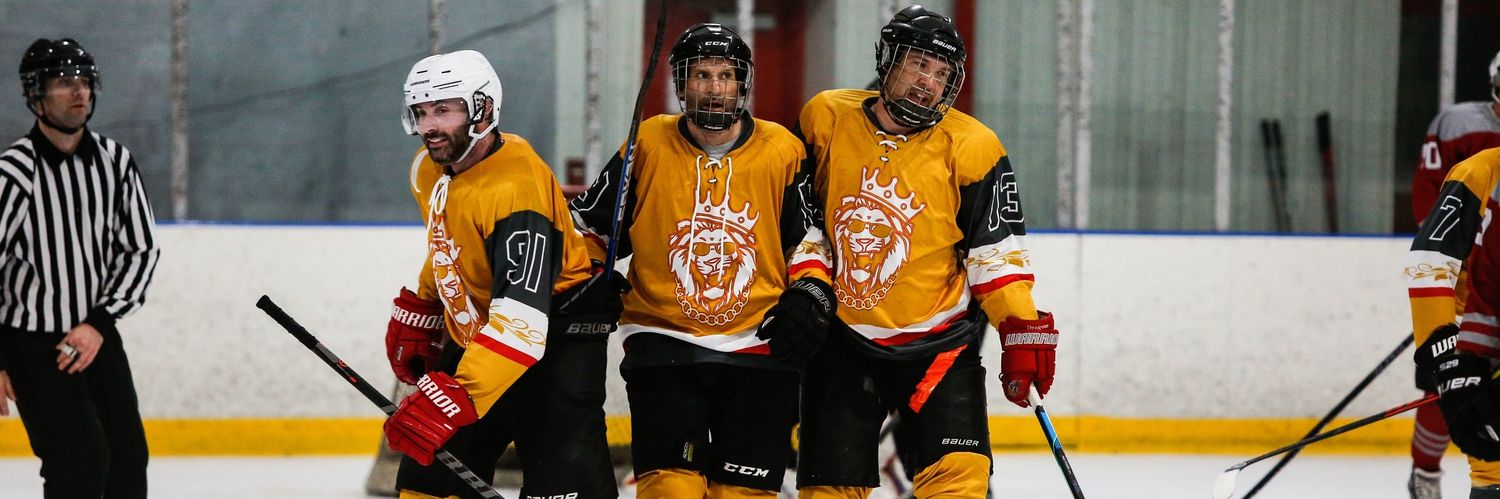
What a joke @NHL - I don't even cheer for the Golden Nights but this is outrageous. 100% side with team + coach here. The hot take entitled media can go eat worms.
#NHL#NHLPlayoffs#VegasBorn
🏆 We won the Hackathon for MCP & AI Agents 2026!
The @Itential Hackathon Team is incredibly proud to share that our kagent_vision project took home first place in the MCP & AI Agents Starter Track at MCP_HACK//26.
Knowing that our submission was reviewed by a panel like Kelsey Hightower, Chris Aniszczyk (CTO, CNCF), Alan Blount (Google ADK), Nathan Taber (NVIDIA DGX Cloud), Carlos Santana (AWS), Keith Mattix II (Microsoft), my good friend @SebbyCorp , Lin Sun, Christian Posta, Dmytro Rashko, and Michael Levan — and being recognized by them — is humbling in the best way. This is a panel that has, quite literally, written the books on cloud-native and agentic AI.
What made this win special was the how: this wasn't a one-person sprint. The Itential Hackathon Team collaborated tightly across engineering, product, and design to get kagent_vision across the line — late-night debugging sessions, whiteboard architecture battles, and the kind of "let's just try it" energy that only the best teams have. Every commit had a fingerprint on it.
🔓 And the best part — kagent_vision is fully open source.
It's a kagent Agent with Vision: capture photos, transform them with Nano Banana, animate them with Veo3 — and yes, it supports ASL. You can clone it, run it, break it, extend it. The whole point of MCP is composability, and we want builders to take this and run with it.
👉 Repo: https://t.co/GUxlKssIwb
👉 Hackathon: https://t.co/ACqyCKia74
Huge thanks to https://t.co/SwtLL2jWyR and the entire MCP_HACK//26 organizing crew for putting on a world-class event, and to the global MCP community for being one of the most exciting places to build right now.
And a huge thanks to Jessica Newland @AutomateIP Ankit Bhansali @MacroEngineered@KristenHRachels Holly Holcomb Jesse Ford Peter Sprygada for being part of the hackathon team !
As a team we have agreed to donate 100% of the $1000 prize to the Atlanta Humane Society. Ultimately the Vision Agent prize will go to helping the dogs and cats of Atlanta. For this, I am even more proud.
#MCP #AIAgents #OpenSource #Hackathon #Itential #CloudNative #AgenticAI #kagent
https://t.co/rlRGbpgcBj
Alkira built the network for multi-cloud. Now it becomes the network for the AI era.
Amir and Atif Khan helped define SD-WAN at Viptela, acquired by Cisco in 2017. At @alkiranet, they saw the same problem one layer up: enterprises moving across clouds without a modern network to connect it all.
We co-led the Series A when Alkira was just that idea. What they built was a platform that unifies the multi-cloud network and can be deployed in under an hour.
Today, @alkiranet agreed to be acquired by @lumentechco to provide the network foundation for the AI era.
As AI workloads move from experiment to core infrastructure, the network becomes the critical path.
Congratulations to Amir, Atif, and the entire @alkiranet team.
https://t.co/rlO1S8OMo7
Jensen is one the smartest and most far seeing folks the world.
"If an AI scientist warns people that AI is going to permeate across radiology and radiologists are going to get wiped out, it might seem helpful but it's hurtful. If we convince everybody not to be radiologists and we now need radiologists, that actually is hurtful to society.
"It is hurtful to convince all the young college graduates not to study software engineering because we are going to need more software engineers than ever.
That's hurtful."
"Scaring people with nonsensical things, which are not going to happen, that this is an existential threat, there's a 20% chance that is is existential, that's ridiculous.
"That it's going to wipe out 50% of college level jobs.
"That is it going to completely destroy democracy.
"These kinds of comments are not helpful. They are made by...CEOS. And you become a CEO, maybe you adopt a God complex and somehow you know everything."
Brutal.
And right.
Ghostty is leaving GitHub. I'm GitHub user 1299, joined Feb 2008. I've visited GitHub almost every single day for over 18 years. It's never been a question for me where I'd put my projects: always GitHub. I'm super sad to say this, but its time to go. https://t.co/DQDemHdytV
@github I feel like service degradation is a weekly occurrence these days. I feel like this coincides with the rapid / unprecedented demand on infra to power AI-flavored things ~late 2025 -> 2026. Can we bring back regular 'ol reliable #GitHub that just works most of the time?
#Infrastructure #AI #Help
Most MCP servers are an API spec with a wrapper + auto-generated tools pointed at an agent without context to use them well.
@MacroEngineered joined the Platform Engineering Podcast to discuss what responsible AI adoption looks like across industries 👉 https://t.co/uIh5DyrmGI