Phenomenal clarity of thoughts from Dr.Satyanarayana Chava from Laurus Labs from IDMA pharma Leadership Conclave 2026 , this is what differentiates him as a quality leader
https://t.co/4oB8NhKyjt
The real cost of India's data boom isn't wasted time.
It's the quiet erosion of our ability to wait.
Cheap mobile data has given millions of young Indians unlimited entertainment in their pockets. Every notification, every reel and every swipe offers an instant reward. The brain adapts. Over time, it begins to expect that every worthwhile experience should arrive immediately.
That is where the real damage begins.
Books ask you to stay with one idea for hours. Newspapers ask you to understand context instead of headlines. Learning a skill demands months of practice. Building a business takes years. Investing requires patience. None of these activities deliver dopamine every few seconds.
Scrolling does.
India reached the smartphone age long before it reached widespread prosperity. We imported the world's most addictive digital products while we were still trying to build human capital. The result is a strange mismatch. We have first-world levels of digital stimulation, but we are still a country that desperately needs first-generation learners, skilled workers, entrepreneurs, scientists and readers.
The opportunity cost is enormous.
Every hour spent mindlessly scrolling is an hour not spent building knowledge that compounds for decades.
Reading is different. A book slows the mind down. It strengthens attention, curiosity and independent thinking. Newspapers teach you to connect events instead of reacting to isolated headlines. Productive learning develops skills that increase your earning power for life.
These are all compound investments.
Social media mostly compounds for the platform.
A nation does not become rich because it consumes the world's most data. It becomes rich because its people accumulate knowledge, skills and productive habits.
Perhaps we are measuring the wrong statistic.
Instead of celebrating data consumption per person, we should ask a different question.
How many books does the average young Indian read every year? How much uninterrupted time do they spend learning something difficult?
Those numbers will tell us far more about India's future than gigabytes ever will.
When an emerging country spending pattern turns more towards subsidies instead of capital expenditure then that country loses competitiveness at global level. The only way to get back that competitiveness is through productivity gains (difficult) or currency depreciation.
When global oil prices rise then the country which is dependent on oil imports has choice of passing it to the consumer which will definitely lead to slowdown in economic growth in short term but will also lead to energy demand destruction.
If they don’t pass on the price increase then Current Account deficit rises and it comes out via pressure on currency.
India unfortunately is seeing a combination of more revenue expenditure and did not pass on the energy prices for a good 60 days .. hence it is and will come out via pressure on INR vs USD.
Data centers are breaking the electric grid. Meet the $6 billion startup and its visionary CEO solving the problem - Fast Company https://t.co/tcW6pmtfyc
Some of my friends sold Neuland in 2022 and switched to Alkyl Amine.
Selling at lows to switch into something at highs is always a risky frame. Every country has a unique set of problems. There’s no blue sky anywhere, anymore.
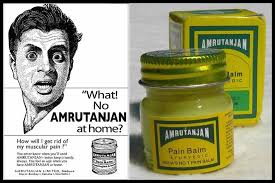
Before the world knew the power of Big Pharma, a journalist in a tiny lab in Bombay created a substance so potent it triggered a trade war with London. It was a yellow grease that did not just soothe headaches but funded a movement, bypassed British blockades, & became 1 of the few Indian products to make the Empire's own medicine look like scented water.
Unlike other brands started by chemists, Amrutanjan was founded by Kasinadhuni/Kasinathuni Nageswara Rao, a man who was primarily a journalist & a freedom fighter. In the late 1800s, the pain balm market in India was a British monopoly. If your head throbbed, you bought imported ointments. Rao saw this as a tax on pain. He retreated into a lab & perfected a formula that was significantly more potent than anything coming out of London.
The British tried to push their own balms like Vicks/early menthol rubs as sophisticated & odorless. They attempted to smear Amrutanjan as primitive because of its overpowering scent. Rao leaned into the scent. He realized that in a country where literacy was low, a brand could not just be a name, it had to be an experience.
He distributed free samples at music concerts (Sabhas) & religious festivals. By the time the British tried to patent the market for pain relief, the entire Indian public had already associated the smell of camphor & menthol with trust. The British balms felt alien & weak compared to the sensory explosion of the yellow tin.
The smell of Amrutanjan... that piercing, camphor-heavy aroma became the literal scent of the freedom struggle. If you walked into a room & it smelled of Amrutanjan, it was a silent signal: A patriot is present. It was a scent the British police could not arrest, yet it was everywhere.
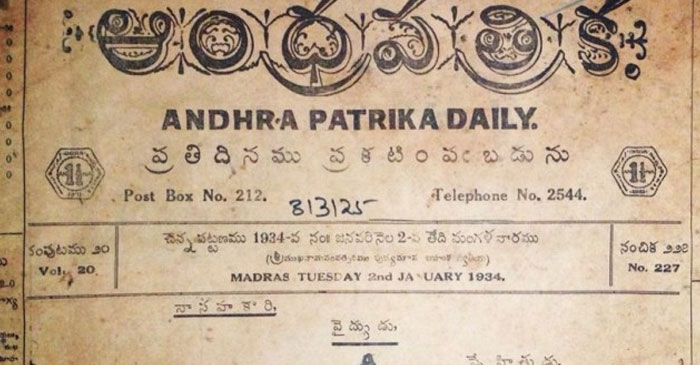
The British had a Patent Medicine Tax that made imported drugs expensive. However, by classifying Amrutanjan as an Ayurvedic Proprietary Medicine, Rao managed to navigate a complex legal gray area. He essentially used the British legal system against itself. By proving his ingredients were ancient yet his manufacturing was modern, he avoided the crippling taxes that applied to purely Western drugs, while maintaining a price point (initially 10 annas) that made British imports look like daylight robbery Rao fought back not just in the market, but in the press. He used the profits from the balm to fund Andhra Patrika, 1 of the most influential anti-British newspapers.
The British were literally paying for their own downfall. Every time a British officer’s wife bought a jar of Amrutanjan for a migraine (because it worked better than the London balms), she was inadvertently funding the printing of revolutionary literature that called for the end of the Raj.
By the 1930s, this Indian yellow grease was being exported to Indian diaspora & locals in South Africa & Ceylon. It became a global symbol of Eastern Wisdom defeating Western Chemistry. It was 1 of those few occasions, an Indian OTC (Over the Counter) product achieved cult status internationally w/o a single pound of British investment.
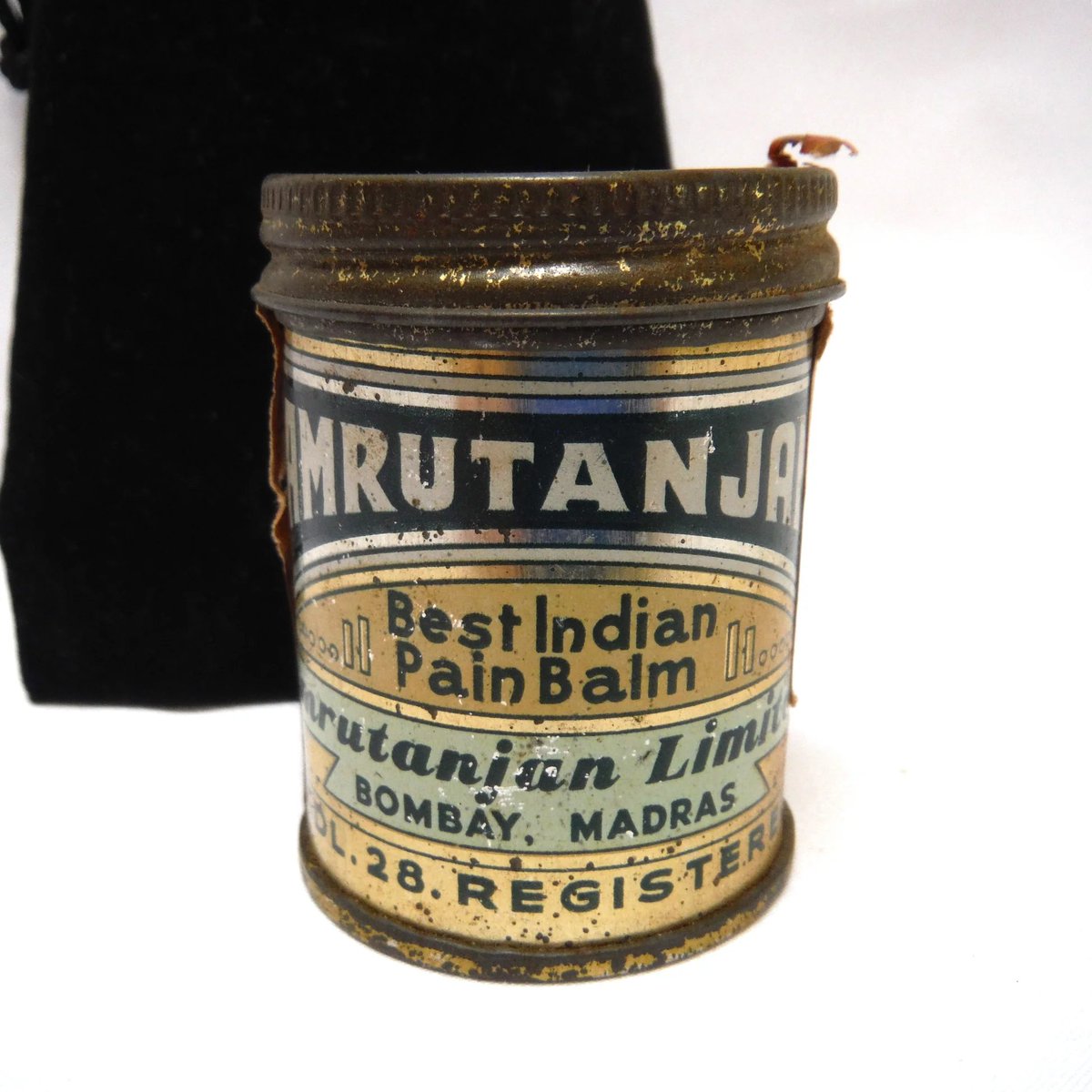
In fact, the yellow tin became so iconic that it did not need a label in the villages. The color & the smell were the brand. It was a biological Swadeshi. While others were fighting with words, Rao was fighting with molecular relief.
You Won't Be Able To Afford Gold
Grateful to everyone for helping our ET Money podcast cross 100K views. Thank you for the support, here are five key takeaways that matter most:
1. Gold is no longer a retail story anymore - the next leg to $8,000–$9,000 will likely be driven by central banks, not households.
2. Global shift toward gold-backed systems - Gold vault buildouts on the OBOR corridor strengthen our view of future gold-based net settlement mechanisms.
3. China’s surplus has limited options - with $1T+ in surplus, gold stands out over US Treasuries as a strategic reserve asset.
4. Oil, not war, drives markets - $80–85 oil could become the new normal, reshaping inflation, policy, and global supply chains.
5. Nominal GDP is the real lever - in an indebted world, higher inflation + growth is the only way governments manage debt, directly impacting valuations.
Short-term noise is inevitable, but structurally the world is shifting, towards hard assets, reindustrialisation, and a different macro regime.
Watch the full video here: https://t.co/TEuCYsgTzn
Socialism fails because economic calculation remains impossible without market prices. No amount of good intentions changes this mathematical reality.
When Ludwig von Mises published his calculation problem in 1920, he explained why central planners cannot rationally allocate resources. Without private property and voluntary exchange, you get no genuine prices. Without prices, you cannot determine costs. Without costs, every economic decision becomes a blind guess. The Soviet Union proved this theorem for 70 years, burning through mountains of capital while millions starved.
Venezuela offers the latest textbook case. Chávez nationalized over 1,000 companies between 2002-2012, from oil to toilet paper production. The government printed money to fund social programs while price controls created shortages. By 2018, inflation hit 1,000,000% annually. Citizens fled by the millions. The same country with the world's largest oil reserves cannot keep the lights on.
Cuba tells the same story across six decades. Castro seized private property, banned markets, and promised prosperity through central planning. Result: doctors driving taxis because tourism pays better than medicine. Average monthly salary: $30. Meanwhile, the ruling class lives in luxury while ordinary Cubans risk their lives on rafts to escape socialism's paradise.
The pattern repeats everywhere socialism takes root. Cambodia, East Germany, Yugoslavia, Zimbabwe. Each experiment begins with promises of equality and ends with poverty, repression, and collapse. Free market economists predicted these outcomes because economic laws operate regardless of political wishes.
You cannot suspend the laws of supply and demand any more than you can suspend gravity by voting.