The catastrophic flooding predating KP, GB & AJK is obviously triggered by global #climatechange, which is fuelled by rising emissions and warming, but equally so by local institutional indifference to building real resilience for communities and society. The mega monsoon of 2025 has already claimed over 300 lives—most in KP—triggering landslides that wiped out villages, hampering rescue efforts with helicopter crashes, mass displacements.
Why is this happening?
• Forests everywhere are a shield against excess flooding, both in reducing bare-ground heating as well as for blunting climate shock and slowing water cascades. Deforestation in Pakistan is driven by illegal logging, wildfires, and the conversion of forest land for agriculture, commercial development, and mushrooming housing schemes. How much timber is lost to mafias in KP and the north ? Pakistan has the highest deforestation rate in South Asia and only retains 5 % forest 🌳 cover.
In the last 33 years, Pakistan’s forest cover has alarmingly shrunk by 18%, falling from 3.78 million hectares in 1992 to a mere 3.09 million hectares in 2025. This devastating loss is most acute in Khyber Pakhtunkhwa’s districts like Swat, Chitral, Dir, Kohistan, and Shangla, where the illegal timber mafia relentlessly exploits ancient pine and deodar forests despite government bans imposed since 2002 and 2017. Large swathes of the "Million Tree Tsunami" disappeared in a sea of local graft, with saplings struggling to survive rapacious officials, flooding, neglect and poor audits. Locals report that 30 to 40% of Swat’s forests have already been destroyed, with the potential for up to 70% loss if this continues unchecked. The timber mafias operate with impunity where they "sanitise" local timber as coming in from Afghanistan. Each year, Pakistan loses approximately 27,000 hectares of forest, a critical natural defense that once protected communities from floods, heatwaves, and droughts.
• Systemic failures on early warning have worsened the impact: Pakistan received $188 million from the World Bank for modernizing weather forecasting and establishing a disaster response system. Yet, unlike Bangladesh and Nepal, Pakistan failed to implement this vital infrastructure and by 2022 when the loan grant was saved from reversion at PMD it had to be repurposed for emergency cash transfers via the Benazir Income Support Programme for saving lives. Climate finance remains a source of inaction even in places where the commitment is available.
• Unchecked urban development on riverbeds and green areas has destroyed natural shields for disaster reduction. From the Margallahs to KP, this march of "development" continues to cut through parks, green zones and what used to be protected areas. Graft and greed have led to land use rules being changed overnight, while permissions for building on floodplains, natural storm drains and channels for water flow have added to the devastation of areas and communities that could have been protected.
• Melting glaciers, intensified floods, erratic rainfall now imperil Pakistan’s economy, food security, and very survival. Adaptation plans for national action & provinces remain paper documents referenced to elicit donor funding, or to activate delayed inputs. Plastic pollution continues to block drains and storm water exits in a country where there is no public literacy on pollution, and the role played by non biodegradable plastics in aiding monsoon flooding. Disaster management remains reactive and deployed in crisis, while today it faces overstretch at all points when faced with ferocity of extreme weather.
To avoid deeper catastrophe, Pakistan must urgently seek more climate financing but build credibility too. It must locally embrace afforestation, resilient infrastructure, planning processes that actually mainstream climate action as policy not theory, reduce river & drain pollution, build empowered EPAs, support renewable energy. #ClimateActionNow
We pay too much attention to the most confident voices—and too little attention to the most thoughtful ones.
Certainty is not a sign of credibility. Speaking assertively is not a substitute for thinking deeply.
It's better to learn from complex thinkers than smooth talkers.
Heavy flooding has affected 30 million people in Pakistan to date, destroying & damaging 1/3 of the country.
A recent German Watch Report of the Long-term Global Climate Risk Index 2020 rates Pakistan the 8th most affected country due to adverse impacts of climate change.
Glad to share with you my recent contribution to the October 2021 edition of #TIMReview "Using Web Text Analytics to Categorize the Business Focus of Innovative Digital Health Companies. Read here to find out more: https://t.co/IwAeC1DL2z
#TIMReview#webanalytics#dataanalysis
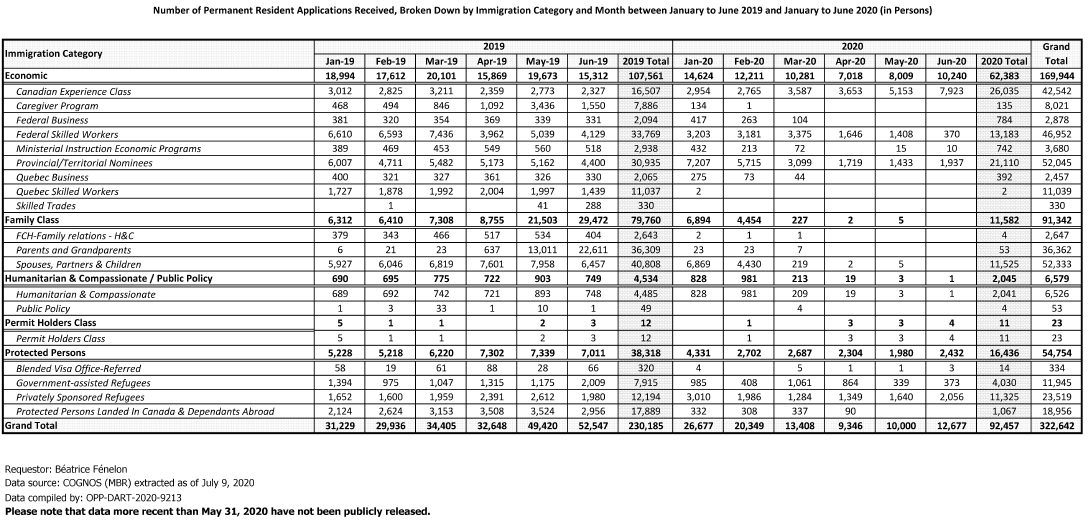
Number of Permanent Resident Applications Received, By Immigration Category and Month From Jan-June 2019 and Jan-June 2020.
Of course, for the months where these statistics suggest that no applications were received it really means no received applications were opened.
Join us for another #CRFC session on “Cryptocurrency In Canada - Moving from an unregulated to a regulated industry with Torstein Braaten, Head of Regulatory Affairs & Chief Compliance Officer at @bitbuy on Oct 8th @ 1 PM - 1:30 PM EST. Registration Link: https://t.co/SoCQ4ZEfaD
Join us in our upcoming #CRFC on Thu, Oct 7th at 1 PM EST with speaker Susan Allemang, Director, Policy & Regulatory Affairs at @IFBcanada, for her talk entitled "Stepping into the GR pond - Use your purpose to create meaning & impact".
Register Here:
https://t.co/NsGQzB6zy3



![TTRRMK's tweet photo. Program delivery update: International Experience Canada [R205(b)] (exemption code C21) – #IEC #YoungProfessional #UpdatedInstructions - https://t.co/xYGfjVlN58 https://t.co/BYUdLgRSQQ https://t.co/eZVd2JFgLY](https://pbs.twimg.com/media/FUKqMQAX0AAp7ch.jpg)