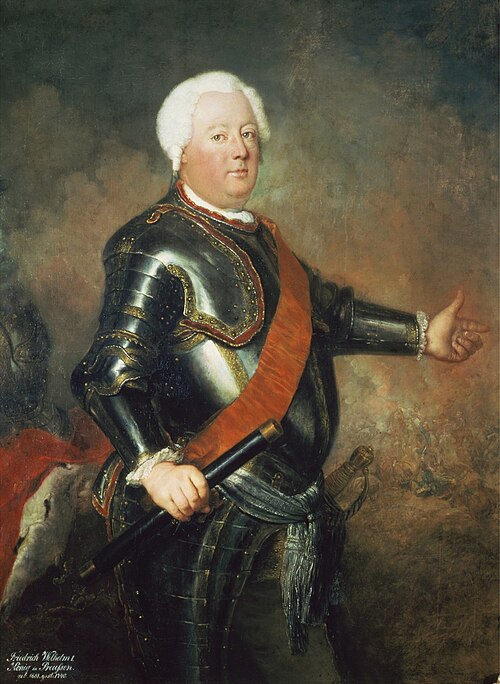
Frederick William I of Prussia (1688-1740) is known as "The Soldier King". He had a special regiment of especially tall men. When he was ill or depressed, Frederick William would have hundreds of them marching through his bedroom to cheer him up
https://t.co/goDPpIiPYb
Peter the Great and the Tragic Fate of Tsarevich Alexei
In 1718, one of the darkest moments of the reign of Peter the Great unfolded when his eldest son and heir, Tsarevich Alexei Petrovich, was arrested and imprisoned in the Peter and Paul Fortress. Their relationship had been damaged for years, as Alexei opposed many of his father’s sweeping reforms and preferred a more traditional Russia rather than Peter’s vision of a modern European power.
The conflict began when Alexei left Russia, fleeing his father’s pressure and seeking refuge abroad. He traveled to Europe and lived under the protection of allies of the Habsburg Monarchy, hoping to escape his father’s demands and avoid being forced into a role he did not want. However, Peter’s agents eventually tracked him down, and Alexei was persuaded to return to Russia after being promised forgiveness if he abandoned any claims against his father.
Once back in Russia, Alexei was arrested and accused of plotting against the throne. Under interrogation, he confessed to opposing his father’s rule, and Peter’s government convicted him of treason. In 1718, Alexei died while imprisoned in the Peter and Paul Fortress, with many historians believing he was tortured and executed on orders connected to his father’s government, though the exact circumstances remain debated.
The death of Alexei became one of the most shocking episodes of the Romanov dynasty. Peter the Great transformed Russia into a major European power, but his determination to control the future of his empire came at a terrible personal cost. The tragedy of Alexei remains a reminder of the ruthless measures Peter was willing to take to protect his reforms and his vision for Russia.
#HistoryFacts #History #HistoryWillRemember #PeterTheGreat #TsarevichAlexei #RussianHistory #RomanovDynasty
Italian Foreign Minister Antonio Tajani:
“The serious and offensive words of President Trump towards Prime Minister Giorgia Meloni offend all of Italy. For this reason, I have decided to cancel my visit to the United States scheduled for the next 21 and 22 June.”
Life of a Prince-Bishop of Liège wasn't all roses and sunshine. Louis of Bourbon was installed there in 1456, by his uncle Philip the Good. Had to flee several times as the population did not accept him and was brutally killed by a man nicknamed 'the wild boar of the Ardennes'
Charlemagne’s Discarded Heir: The Tragic Story of Pepin the Hunchback
Long before the rise of Charlemagne's famous successor, Pepin the Hunchback was expected by many to inherit the Frankish throne. Born around 768–769 to Charlemagne and his first partner, Himiltrude, Pepin was the emperor's eldest son. However, his position became increasingly uncertain after Charlemagne married other wives and fathered additional sons. Sources suggest that Pepin's physical deformity and questions surrounding his mother's status contributed to his gradual exclusion from the line of succession.
The turning point may have come in 781 when Charlemagne's younger son Carloman was renamed "Pepin" by Pope Adrian I and made King of Italy. Many historians interpret this act as a symbolic replacement of the elder Pepin. While the original Pepin remained at court for years, important military commands and political responsibilities increasingly went to his half-brothers, particularly Charles the Younger and Pepin of Italy.
In 792, frustrated nobles and Pepin himself became involved in a conspiracy to overthrow Charlemagne. The plot was discovered before it could succeed. While many conspirators faced execution, Charlemagne spared his son. Pepin was sent to the monastery of Prüm, where he spent the rest of his life in obscurity until his death in 811. Though largely forgotten today, Pepin the Hunchback remains one of medieval history's most fascinating "what if" figures—a firstborn prince who might have ruled the Carolingian Empire but instead became Charlemagne's discarded heir.
#HistoryFacts #HistoricMoment #History #HistoryWillRemember #HistoricDay #DarkAges #MiddleAges #Medieval #MedievalHistory #Charlemagne #PepinTheHunchback #GermanHistory #CarolingianEmpire #FrankishKingdom #FrenchHistory #ItalianHistory
WHAT IRAN GOT:
•$300 billion
•Removed sanctions
•Control of Strait of Hormuz
•Maintains missile program
•No destruction of nuclear program
WHAT THE U.S. GOT
•Higher gas prices
•Billions spent
•No major objectives achieved
•Americans dead
We got fleeced.
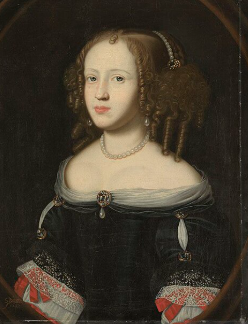
Maria Elisabeth of Schleswig-Holstein-Gottorp (6 June 1634 – 17 June 1665) had 8 children. She died in childbirth. Her death plunged her widower Louis of Hesse into deep mourning. He wrote some poems in memory of his wife.
Obwohl er in U-Haft sitzt, soll es Marius Borg Høiby ermöglicht worden sein, seine frisch operierte Mutter zu sehen, Kronprinzessin Mette-Marit. https://t.co/nf0jYudIDz
"Crown Princess Mette-Marit has undergone a successful lung transplant at Oslo University Hospital Rikshospitalet in Oslo. The Crown Prince and the Crown Princess express their sincere gratitude for the many warm and kind messages they have received."