This year’s prize in economic sciences uses microfoundations to deliver macro insights.
Traditional Keynesian models built upon statistical and historical relationships between macroeconomic variables. The New Keynesian models are based on microfoundations, decisions that are made by individuals and businesses.
The 2026 Sveriges Riksbank Prize in Economic Sciences in Memory of Alfred Nobel has been awarded to Robert E. Hall and Michael Woodford “for microeconomic foundations of macroeconomic stabilisation.”
#NobelPrize
@CesarChavezP29 Dear Cesar:could you please share with me this fatanstic essay via email [email protected]? We can not access substack from mainland https://t.co/FzAgMI8ZqK students and I like this idea very much!
@pzoch5 congratulations!Dear professor Zoch could you please share with me your teaching materials on sufficient statistics approach in financial macroeconomics for PhD? my email is [email protected],thanks a lot!
📦 Can industrial policy work? Yes—the East Asian experience shows it can (at least partially).
But its success rests on a key condition: labor control.
🇯🇵🇰🇷🇹🇼 Japan, South Korea, and Taiwan industrialized rapidly under authoritarian or semi-authoritarian regimes. Wages and labor rights were systematically repressed to favor capital accumulation and export competitiveness.
This was especially stark in South Korea during the 1980s–1990s, when unions clashed with the state and business. (If you’ve watched Squid Game, it’s in the backstory of Seong Gi-hun.)
⚠️ Authoritarianism wasn’t incidental—it was functional.
Not all authoritarian regimes succeed with industrial policy, but successful cases relied on the ability to suppress real wages and labor rights.
🇦🇷 This is why Latin America’s Big Push programs failed: their political base—urban working-class voters (e.g., Peronistas)—couldn’t sustain the wage repression required. The strategy collapsed under its own contradiction.
💥 You can’t push industrialization with cheap labor and depend politically on those who demand higher wages. The internal logic breaks. Latin America’s populism was a road to nowhere.
As far as I can tell, there are no examples of country-wide industrial policy success where real wages (and consumption) were not kept relatively low.
🇨🇳 China is not so different today.
🧾 Consumption as a share of GDP remains exceptionally low—even compared to countries at similar stages of development.
That wouldn’t be the case if China were a democracy. High savings and low consumption are features, not bugs, of its growth model.
🤔 That’s why I’m puzzled when advocates defend industrial policy from a progressive position that favors high wages and democratic institutions. You can’t have your cake and eat it too.
📚 This point isn’t new: @pseudoerasmus has made it for years. And long before him, it was central to Marx, Gerschenkron, and Dobb—and deeply embedded in the logic of socialist Big Push programs, from Stalin to Mao.
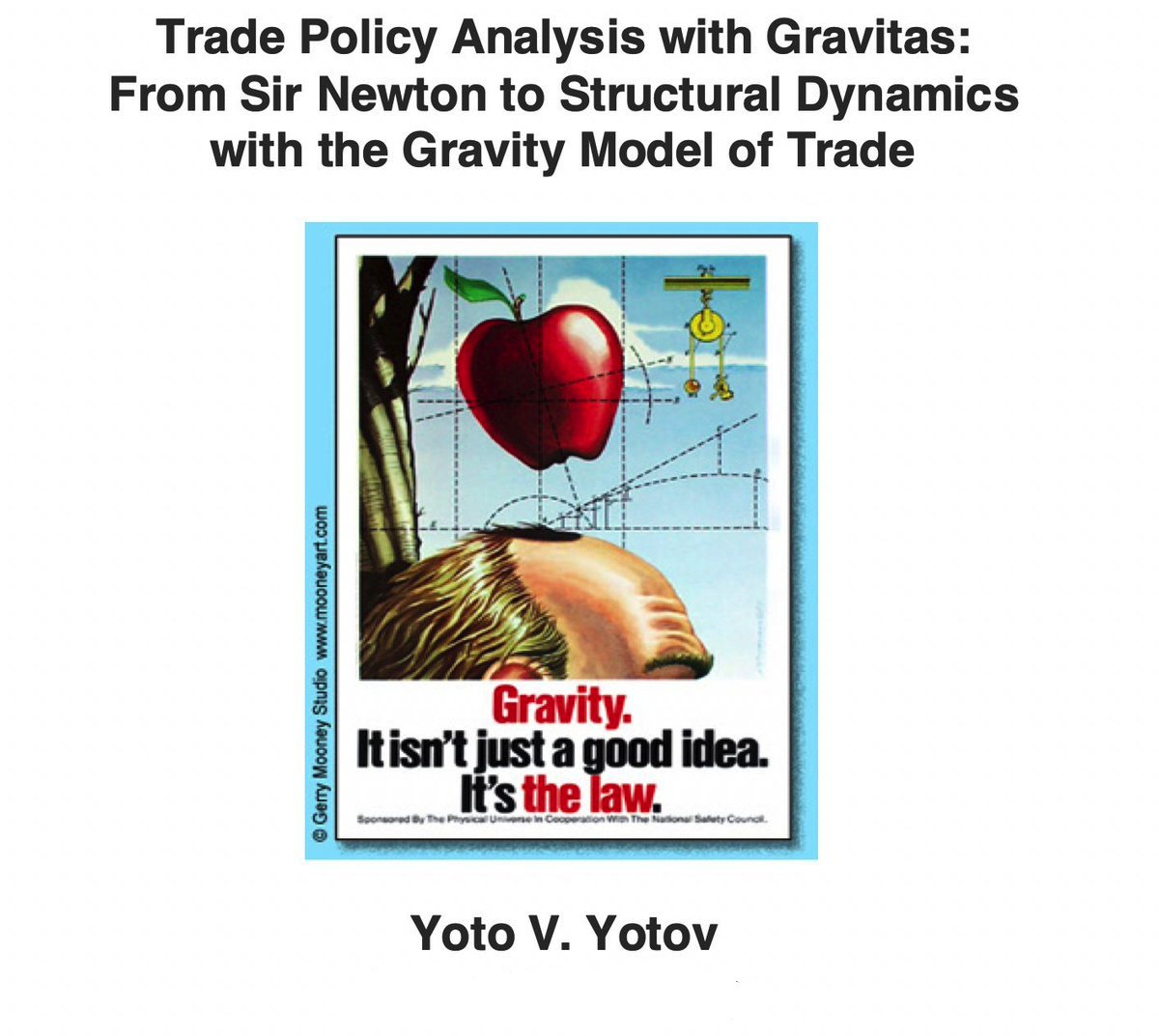
🚨NEW COURSE🚨 Want to learn how to quantify the partial and general equilibrium effects of trade and other policies (e.g., tariffs, sanctions)? If so, consider taking my course on trade policy analysis with structural gravity. For more information visit: https://t.co/JepE3NmSAv
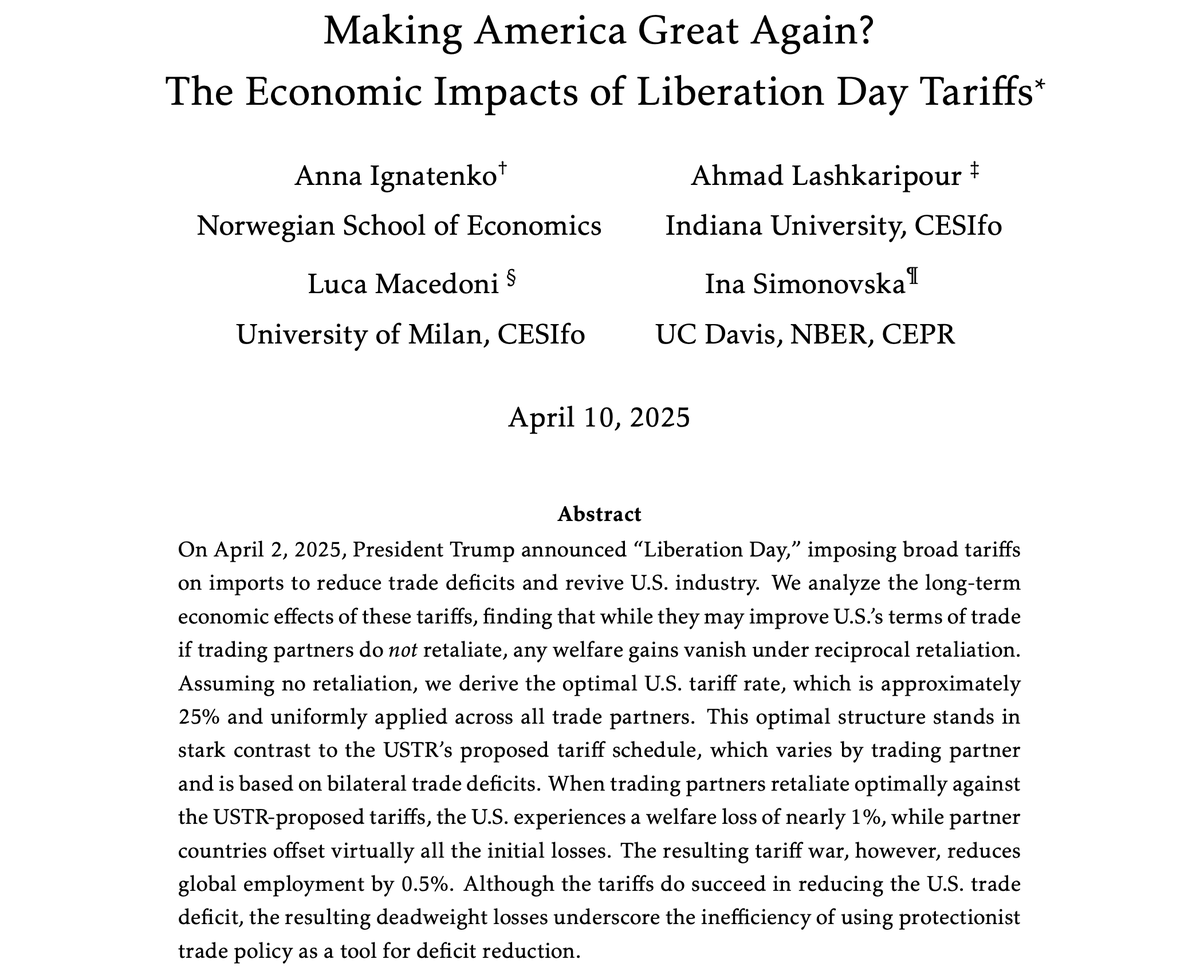
🚨We just released a paper examining the long-terms economic impacts of "Liberation Day" tariffs.
In summary: while these tariffs may help reduce the trade deficit, they will impose significant costs on the U.S. economy after retaliation by trade partners.