@CitizenHel75723@CourageousRo Thank God you are not one of the 230 million! What insight!!!! You would have beaten even the great Buddha if you were born earlier!! Yeah! Right!
@InquisitiveInd6@CourageousRo Yes . Exactly!!! And he has been democratically elected 3 times! 3 times! I mean, the people of this country are so so so so stupid!!
Yeah! Right!
ठीक 15 साल पहले, जब...
कपिल सिबल देश के शिक्षा मंत्री थे और विनीत जोशी सीबीएसई के चेयरमैन. तब ऑल इंडिया इंजीनियरिंग परीक्षा सीबीएसई लेती थी. परीक्षा के दिन सूरज निकलने से पहले प्रश्न पत्र कानपुर और लखनऊ में खुले बाजार में 6-6 लाख रुपए में बिकने लगे.
ले लो, ले लो!
देश भर में स्टूडेंट्स परीक्षा देने के लिए बैठ चुके थे. मायावती जी की पुलिस चौकस थी. उसने पकड़ लिया. दिल्ली में सिबल और सीबीएसई को फैक्स से वह पेपर भेजा गया. लेकिन किसी पर कार्रवाई नहीं हुई. नए पेपर भेजकर दोबारा परीक्षा करा दी गई. बात आई-गई हो गई.
ऐसी ढील के कारण समस्या गंभीर होती चली गई.
अब कई पेपर लीक करता है तो न सिर्फ गिरफ्तार होता है, बल्कि जमानत भी नहीं होती. अब पीएम और शिक्षा मंत्री खुद एक्शन लेते हैं. जनता भी पहले से ज्यादा जागरूक है. अफसरों के तबादले होते हैं. फास्ट ट्रेक कोर्ट गठित होता है. नए कानून बनाने पर विचार होता है.
इतना सा फर्क है.
2011 में किसी ने पूछा भी नहीं कि कोई इस्तीफा होगा या नहीं, जांच रिपोर्ट कहां है. अब तो सोशल मीडिया का दौर है. जिस बात का जितना हल्ला होना है, होगा. और ये देश के लिए अच्छा ही है कि जनता अलर्ट है और सरकार बात सुनती है.
ये 2011 की खबर है.
@BrijLal_IPS@TamannaInamdar@KapilSibal
April 2010
Naxals killed 76 Jawans in Dantewada, Chhattisgarh. Then Home Minister P. Chidambaram offered to resign.
BJP was in Opposition, but asked Chidambaram not to Resign.
Do you know why?
BJP said if Chidambaram quits, Maoists will hail it as their victory. Also, home minister "cannot be seen as retreating".
"We expect him to face the situation boldly. We cannot see the country standing defeated by Maoists"
"Chidambaram should make aspirational statements to boost the morale of the security forces. The BJP will support all the endeavours of the government in its battle to finish the Leftist rebels."
The Congress is remarkably predictable.
When they win, EVMs are reliable. When they lose, EVMs are hacked.
When a judgment goes their way, the judiciary is independent. When it doesn’t, the judiciary is compromised.
When the media attacks the Government, it’s fearless journalism. When it questions the Congress, it’s “Godi media.”
And now the latest.
When Sonam Wangchuk was attacking the Government, he was a hero. The moment he called for Parliament to function and demanded serious systemic reforms, he became “compromised.”
For the Congress, principles never matter. Only political convenience does.
Don’t know about Rang De Basanti, but let me tell you what some of us millennials actually grew up watching.
I was in primary school during the 1993 Mumbai bombings -- too young to even understand what terrorism meant. But I distinctly remember my mom repeatedly warning me not to pick up anything lying around while playing outside because, you know, it could be a bomb.
That was childhood.
Then came the seemingly endless procession of attacks: the 1993 Mumbai blasts, Red Fort in 2000, Parliament in 2001, the Mumbai bus bombings and Akshardham in 2002, three separate blasts within eight months in Mumbai in 2003, the 2005 Delhi blasts, the 2007 Hyderabad bombings, and the 2008 Bangalore and Ahmedabad blasts.
In July 2006, I was supposed to be on one of the trains that was bombed near Mahim. I stayed back at the office because of a meeting. A completely mundane change of plans is probably the reason I’m alive to type this instead of being a name on a list of the dead.
I remember that evening far better than I remember any stupid movie. Our office went into lockdown. Phones were jammed. People were crying and frantically trying to reach their families. Nobody knew what was happening, whether there were more bombs, or whether someone they loved was lying dead inside a mangled train compartment.
Two years later came 26/11.
I had the misfortune of watching uncensored footage of the aftermath. One clip showed bodies being piled and stacked inside a makeshift room at CST while someone wheeled in another load on a bloodied wheelbarrow, with blood dripping onto the floor. The sanitised footage shown on television didn't come remotely close to what actually happened inside that station.
So yes, us millennials lived through an era where we went to work knowing that the crime of simply boarding the wrong train, getting on the wrong bus, eating at the wrong restaurant, or standing on the wrong street at the wrong fucking moment could get you blown to pieces or riddled with bullets.
Some of us literally went to work wondering, somewhere at the back of our minds, whether this would be the commute we wouldn't come home from.
So please, spare us millennials this sanctimonious horseshit about Rang De Basanti and what some Bollywood movie supposedly should have taught us about how to vote.
We stand with students and want every genuine concern about our examination system to be raised and addressed in Parliament.
We are committed to root-and-branch reforms to build a transparent, technology-driven and accountable examination system.
The Opposition must let Parliament function so these reforms can move forward.
So listen up, people.
Between now and 2029, expect one agitation after another. One protest will end; another will begin. The objective is relentless pressure.
Who knows one attempt might even succeed… or it might not.
Either way, the effort will be persistent and unceasing.
That said, our own legitimate demands for reform and I stress legitimate: in education, the judiciary, and the police must not stop but pursued with equal determination.
Having said that, what worries me most are those who lose heart at the first sign of resistance.
Those who immediately begin writing long, mournful obituaries about how everything is lost, how all hope has vanished, and how, despite being “supporters,” they now have no choice but to vote for someone else.
If that’s your solution, spare us the death wish.
No one ever said changing the trajectory of a country that had grown accustomed to complacency - a sleepy dog content with a bone and a pat on the head - would be easy.
And then, to make matters even more inconvenient for the world, a billion people decided to stand up and identify themselves openly as Hindu in a world where only Christians and Muslims seemed entitled to wear their faith publicly.
Jews, meanwhile, have had more than enough bigotry to contend with from both sides.
As for Buddhists, they were allotted a tiny, token space because, well, Richard Gere made them fashionable for a while.
Even that enthusiasm appeared to cool once it became clear that championing the Dalai Lama also meant irritating China.
But Hindus did not retreat. We stood up to be counted.
The irony is delicious for a nation once mocked for its “Hindu rate of growth” now stands among the world’s fastest-growing major economies.
So understand what this is.
It is a marathon, not a sprint. Strap in. Stay the course.
Your children and one day theirs, will judge whether this generation had the resolve to finish what it started.
#ProtestFatigue
Rahul Gandhi has nowhere to hide.
After the Pharmacy recruitment scam in AAP-ruled Punjab, fresh allegations of recruitment irregularities have now rocked Congress-ruled Karnataka.
Candidates have alleged large-scale malpractice in the recruitment of 400 Veterinary Officers by the KPSC, demanded cancellation of the entire process, and even claimed that posts were allegedly being sold for as much as ₹80 lakh through middlemen.
So, a simple question:
What has Arvind Kejriwal done about the Pharmacy recruitment scam in Punjab? And what does Rahul Gandhi have to say about the serious allegations surrounding the KPSC recruitment process in Karnataka?
Their outrage seems highly selective. When recruitment scams surface in states governed by the I.N.D.I alliance, there is only silence. Students and aspirants deserve accountability everywhere, not political convenience.
ಕಾಂಗ್ರೆಸ್ ಸರ್ಕಾರದಲ್ಲಿ ಬೆಂಗಳೂರಿಗೊಂದು ಕಾನೂನು? ಶಿವಾಜಿನಗರಕ್ಕೆ ಇನ್ನೊಂದು ಕಾನೂನಾ?
ಶಿವಾಜಿನಗರದಲ್ಲಿ ಫುಟ್ಪಾತ್ ಅತಿಕ್ರಮಣ ತೆರವುಗೊಳಿಸಲು ಹೋದ ಇಂಜಿನಿಯರ್ ಹಾಗೂ ಅಧಿಕಾರಿಗಳ ಮೇಲೆ ಕಿಡಿಗೇಡಿಗಳು ಮೃಗೀಯವಾಗಿ ಹಲ್ಲೆ ಮಾಡಿದ್ದಾರೆ. ಮಾನ್ಯ @krishnabgowda ಅವರೇ, ಸರ್ಕಾರಿ ಕರ್ತವ್ಯ ನಿರತ ಅಧಿಕಾರಿಗಳ ರಕ್ತ ಹರಿದರೂ ಇನ್ನೂ ಸೂಕ್ತ ಕ್ರಮ ಕೈಗೊಳ್ಳುತ್ತಿಲ್ಲವೇಕೆ..? ಬಿಡದಿಯಲ್ಲಿ ತಮ್ಮ ನೆಲ ಉಳಿಸಿಕೊಳ್ಳಲು ಧರಣಿ ನಡೆಸುತ್ತಿರುವ ಅಮಾಯಕ ರೈತರ ಮೇಲೆ ಎಫ್ಐಆರ್ ಹಾಕಿ ಜೈಲಿಗಟ್ಟುವ ಕಾಂಗ್ರೆಸಿನ ಶೂರತನ, ಶಿವಾಜಿನಗರದಲ್ಲಿ ಅಧಿಕಾರಿಗಳ ಮೇಲೆ ಕೈಮಾಡಿದ ಪುಂಡರ ಮುಂದೆ ಎಲ್ಲಿ ಹೋಯಿತು?
ಗೃಹ ಸಚಿವ @PriyankKharge ಅವರೇ, ಸ್ವಲ್ಪ ಸಮಯ ಮಾಡಿಕೊಂಡು ರಾಜ್ಯದ ಕಾನೂನು ಸುವ್ಯವಸ್ಥೆಯ ಕಡೆಗೂ ಕಣ್ಣು ಹಾಯಿಸಿ. ನಿಮ್ಮ ಸರ್ಕಾರದ ತುಷ್ಟೀಕರಣ ರಾಜಕಾರಣದ ಅಡಿಯಲ್ಲಿ ಜನಸಾಮಾನ್ಯರು, ಅಧಿಕಾರಿಗಳು ಸಿಲುಕಿ ಬಲಿಯಾಗುವಂತೆ ಮಾಡಬೇಡಿ.
We will soon be hearing about the painful and gut-wrenching conversation Arfa Khanum Sherwani had with that Iranian man:
“Are… are you really from India?” he asked, his voice trembling.
“Yes,” Arfa replied.
The man gasped, clutched his chest and fought back tears.
“How much longer are Muslims going to be oppressed in Modi’s India? How much longer will the brave Umar Khalid and Sharjeel Imam remain imprisoned for exercising their freedom of expression? How are you, as a Muslim woman journalist, even surviving this unbearable Hindutva oppression?”
Then, with tears streaming down his face, he switched to broken Hindi-Urdu:
“Har roz BJP-RSS wale aapko ek naya zakhm dete hain… kaise seh rahi ho, behen?”
The crowd fell silent. Strangers embraced. Someone began applauding. A crow shed a tear.
Then he made the most dignified and honourable comment a man could ever make to a woman:
“Sister… please fix your headscarf. Your hairline is showing.”
#ThatIranianMan
By @rupamurthy1
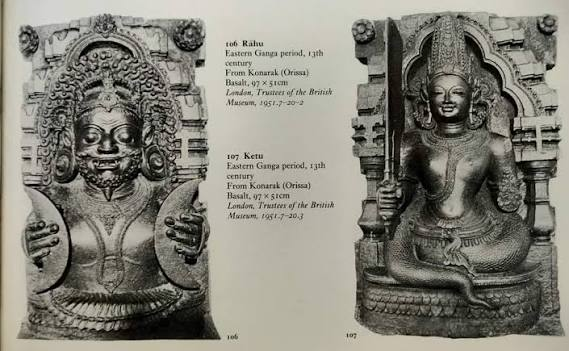
All thx to Prof. @natarajang Ji for bringing the Rahu & Ketu discussion forward through a DM. 🙏
In Vedic astronomy (Jyotisha Vedanga), Rahu & Ketu are explicitly called Chaya Grahas (Shadow Planets)/Upagrahas. Ancient Indian astronomers knew perfectly well that there were no physical, rocky mass-bearing bodies floating out there matching those names.
Aryabhata, in his 499 CE treatise Aryabhatiya, formalized the mathematical physics of eclipses, rendering the old demons into pure geometry. Rahu & Ketu are the Lunar Nodes, the 2 abstract mathematical points in space where the Moon's orbital plane intersects the Earth's orbital plane (the ecliptic).
Because the Moon's orbit is tilted at roughly 5.1° relative to the Earth's path around the Sun, the 2 planes only cross at 2 precise nodes 180 degrees apart:
Rahu - The Ascending Node (where the Moon crosses from South to North).
Ketu - The Descending Node (where the Moon crosses from North to South).
We cannot see these nodes with a telescope/a mirror because they have zero mass. They are invisible coordinates. The only way to find them is through retrograde predictive mathematics.
By tracking the exact speed of the Sun’s projection & the Moon’s projection on their grid & calculating the exact moments when the paths converged to cause an eclipse, Indian mathematicians tracked the invisible trajectory of these points.
They calculated that these 2 invisible points move backward (retrograde) through the zodiac, completing 1 full revolution every 18.6 yrs.
SIR mandates that the BLO should visit each house of their Polling Station and hand over the Enumeration Form in duplicate to each voter in the house.
However in Chamrajpete Assembly No 168, the SIR is being held in Community Halls and Parks where the Congress Party BLA-2 are distributing and performing the Sovereign role of Election Commission.
When I informed the RO, she was helpless stating that BLOs are not being relieved from Education and Health Departments.
Will @ECISVEEP take note and direct karnataka state ECI to take cognisance?
The govt shifted the country's baseline fuel to E20, but left the actual vehicle owners entirely in the dark. Since the Ministry should have circulated a clear, honest blueprint to prevent panic & confusion, let me do their job for them :))
E20 & Flex-Fuel Consumer FAQ:
Q1: Is my current car/bike compatible with E20 fuel?
Vehicles built AFTER April 2023: Yes. Your engine, fuel lines & gaskets are fully E20-compliant.
Vehicles built BEFORE April 2023: Materially Vulnerable. These engines were optimized for a maximum of 10% ethanol (E10). While the car will run on E20, the higher solvent properties of ethanol can accelerate the degradation of legacy rubber hoses, plastic seals & older aluminum fuel lines over time.
Nuance: Many manufacturers (e.g., Honda since 2009 models, Skoda post-2020 BS6) confirm their older vehicles are materially compatible with E20 & will not void warranties. Some pre-2023 cars may experience accelerated wear on rubber/plastic parts over time due to ethanol's solvent properties, but it is not an immediate failure for most. Long-term risks (corrosion, degradation) exist for legacy components.
Q2: Why exactly does my vehicle’s mileage drop with blended fuel?
This is a fixed law of thermodynamics, not a mechanical malfunction. Pure gasoline has a high energy density (~44 MJ/kg). Pure ethanol contains roughly 35% less thermal energy per unit volume (~27 MJ/kg).
Because the fuel blend has less net energy density, our engine must burn a higher volume of fuel to produce the exact same mechanical power. Expect a 3% to 10% drop in mileage on standard engines running E20.
Q3: Is there a way to upgrade my older vehicle for E20?
Yes. The automotive industry is addressing the compatibility gap for pre-2023 vehicles. Maruti Suzuki & some aftermarket suppliers have developed/are rolling out E20 retrofit/upgrade kits. These kits primarily replace vulnerable components like fuel lines, rubber seals, gaskets & certain hoses with ethanol-resistant materials.
Typically covers Maruti models up to 10-15 yrs old. Estimated cost: ₹4-6K for the kit (depending on the model) + labour charges at a service centre. Total cost is usually < ₹10K.
Q4: What is the difference b/w 1G & 2G Ethanol, & what are we using?
1G (First-Generation): Made directly from food crops & cash crops (sugarcane molasses, maize, & surplus rice). Currently, over 99% of the ethanol in India is 1G.
2G (Second-Generation): Made from agricultural waste & non-food biomass (like paddy straw/stubble).
Why it matters: 1G strains water resources. 2G is superior because it turns waste into fuel w/o impacting food security, but it is currently highly expensive & complex to scale commercially.
Q5: Is ethanol-blended petrol actually "better" for my car or the country?
For your car: It acts as a high-octane oxygenate. It helps the fuel burn more cleanly & uniformly, which reduces engine knocking & lowers toxic tailpipe emissions like CO.
For the country: It is a massive economic hedge. India imports ~85-90% of its crude oil. Blending saves billions in FX reserves & channels those payments back into the domestic agricultural economy.
Q6: Will using E20 fuel void my motor insurance policy?
No. The Ministry of Petroleum & Natural Gas & the govt have explicitly clarified that all motor insurance policies remain 100% valid. Insurers cannot reject standard accident/damage claims based on the % of ethanol flowing through your engine.
Q7: Minister Nitin Gadkari recently approved E85 & E100 regulations. Can I use these in my current car?
Absolutely not. The govt officially finalized the regulatory framework for E85 (85% ethanol) & E100 (100% pure ethanol).
These fuels are strictly designed for a new class of vehicles called Flex-Fuel Vehicles (FFVs). Mass-market manufacturers like Maruti Suzuki (with the WagonR FFV prototype), Toyota, MG, Hyundai & Hero MotoCorp are launching these vehicles specifically to handle high-concentration ethanol. Pumping E85/E100 into a regular, non-flex-fuel petrol car will cause immediate engine & fuel system failure.
Q8: What is "Phase Separation" & how do I prevent it?
Ethanol is hygroscopic, meaning it acts like a sponge for atmospheric moisture. If your vehicle sits completely idle for weeks, the ethanol will pull water into the tank. If the moisture level crosses 0.5%, the water & ethanol will separate from the petrol & settle as a sludge at the bottom of your tank.
Prevention: If you plan to leave your vehicle unused for an extended period, keep the tank as full as possible/ensure you top it up with fresh fuel regularly to keep the mixture stable.
Q9: Can a petrol pump deliberately manipulate the E20 blend? How do I check it on the spot?
You cannot use a standard Density Meter (lactometer equivalent) to catch extra ethanol. Because the density of petrol (~740 kg/m^3) & ethanol (~789 kg/m^3) are relatively close, an extra 10% of hidden ethanol gets easily masked within the daily allowable temperature-density variance chart. A density test only catches water/heavy kerosene adulteration.
To catch exact ethanol percentages, you must exploit ethanol’s chemical property of hygroscopy (its intense attraction to water). You can buy a cheap, graduated testing cylinder (often sold as an Ethogage).
How to execute the test: Pour exactly 10 ml of water into a 100 ml graduated cylinder. Fill the rest of the cylinder with the pump's petrol up to the 100 ml mark (giving you 90 ml of fuel). Shake it vigorously for 1 minute & let it settle for 3 minutes.
How to read the data: Because ethanol completely abandons petrol to bind with water, the fluid layer at the bottom will expand: If it is perfect E20 Petrol: The bottom line will rise exactly to 28 ml (10ml water + 18ml extracted ethanol). If the pump is cheating (Over-blending), the bottom line will shoot way past 28 ml. If it hits 35 ml, they are dumping illegal quantities of ethanol into your tank.
I have no affiliation with any political party. My only allegiance is to Bharat. Thank you. 🙏🙏
FREEDOM # 001
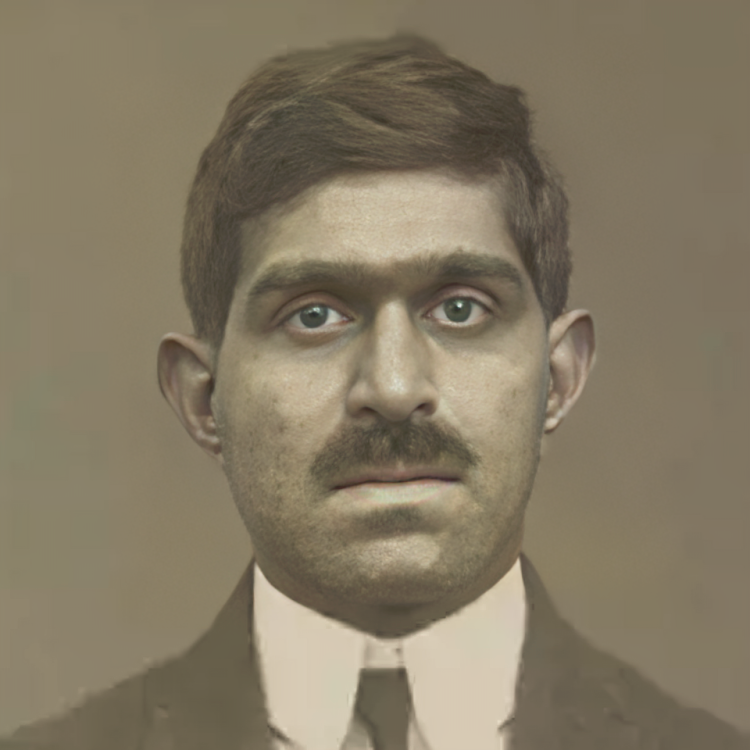
In 1915, British intelligence sent a secret service to Zurich with orders to kill him. He never fired a gun in his life. Yet he was one of the most dangerous men in Europe.
His name was Virendranath Chattopadhyay aka Chatto. History remembers his sister better — Sarojini Naidu, the poet who'd one day govern a free province. Europe remembered him differently. Feared him. Chased him across three countries and never quite caught him.
He arrived in London in 1902, meant for the Indian Civil Service. He failed the entrance exam and found something else instead — a house on Cromwell Avenue where Indian students gathered under Shyamji Krishna Varma, reading sedition over tea, dreaming of a country none of them could return to. By 1907 he was writing for their journal. By 1909 one of their own had shot dead a British official on English soil, and the hunt began.
He fled to Paris. Even there, the ground wasn't stable. In 1910 he pulled his own sister Mrinalini into a smuggling scheme — rifles hidden inside furniture crates, bound for India. British agents intercepted his letters before a single crate shipped, and his father's house in Hyderabad was raided.
The pressure kept landing on the family, not just on him. When police once cornered his father demanding a letter from Chatto, Aghorenath calmly let them search and found nothing — then told them, "My son Viren will bring them independence." Yet when Sarojini, pushed by officials close to the Nizam's court, publicly disowned her brother in a letter, an outraged Aghorenath barred his own daughter from the house. He'd defend his son to the police, but not forgive a daughter for turning on him in print.
Then, in 1914, the world handed Chatto an opening no revolutionary could have dreamed up. Britain went to war with Germany, and he walked straight into Berlin.
He built something there. The Indian Independence Committee — exiles, students, defectors — backed openly by the German Foreign Office. For a few electric years, Chatto ran what was effectively a shadow government-in-exile, striking deals with the Kaiser's men, plotting an armed rising back home timed to Britain's weakest hour. He reached further still — Irish republicans, Egyptian nationalists, anyone the British Empire had made an enemy. He sent missions toward Constantinople. He dreamed of Indian prisoners of war turning their coats and marching home through Persia and Afghanistan to fight the men who'd captured them.
By late 1915 the British had had enough of chasing. In Zurich that year, on his way to a secret meeting with the exiled Raja Mahendra Pratap, Chatto was stalked by a British agent named Donald Gullick, sent specifically to kill him. He survived — barely, the way he survived everything — and the near-miss was strange enough that Somerset Maugham later turned it into fiction, a thinly disguised episode in his Ashenden stories.
By 1917 the German gamble was dying with the war. Chatto moved to Stockholm, still hunting for backers, then spent a decade shuttling through Berlin — where in 1927, on a colleague's advice, he formally joined the German Communist Party, throwing in his lot with a cause bigger than any one empire.
Then he went further east, toward a revolution young enough to still need him.
Moscow. He arrived with the American journalist Agnes Smedley beside him, and for eight years they built a life amid Comintern congresses and back-room politics. He met Lenin. He had, for the first time since Oxford, something like standing.
It should have been the safest place on earth for a revolutionary.
It wasn't. Chatto's sympathies drifted toward Trotsky, and in Stalin's Soviet Union that drift was a death warrant with no appeal. On 15th July 1937 they arrested him. His name sat on a list of 184 others, signed by Stalin himself. On 2nd September, he was executed by firing squad. His own family didn't even know — his brother-in-law wrote to Jawaharlal Nehru in July 1938 asking him to find out what had happened. Nehru wrote back agreeing to try. Chatto had already been dead for ten months.
The empire that hunted him across London, Paris, Berlin, and Zurich for three decades never laid a finger on him. It took a paranoid dictator, turning on his own allies, to finish what the British Raj couldn't — and by the time anyone close to power thought to ask after him, it was already too late to matter.
His sister's stories survived. So did many others' close to the power center. But his story vanished from Indian memory. The fullest account left is Nirode K. Barooah's biography, *Chatto: The Life and Times of an Indian Anti-Imperialist in Europe.*
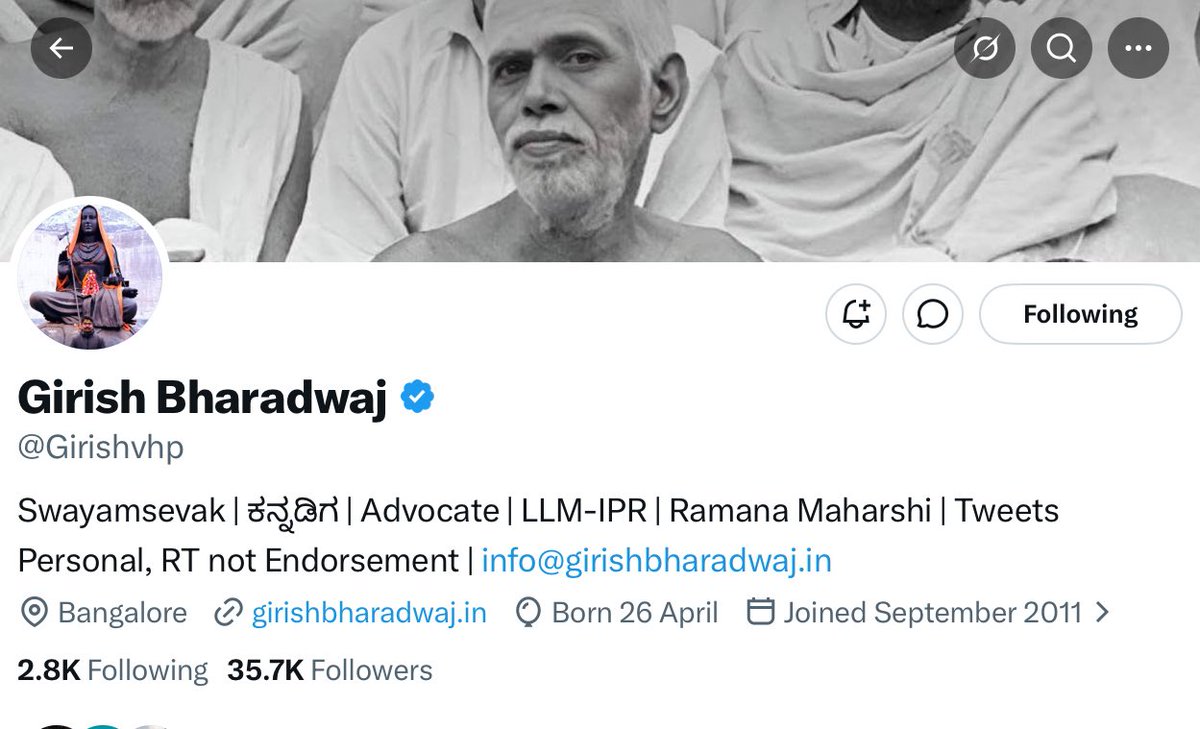
Meet Girish Bharadwaj
The real opposition leader of Karnataka
Clowns like Karnataka BJP President Vijayendra and LoP R. Ashoka only post on social media against the Karnataka government’s decisions
But this lawyer has challenged most of the anti-Hindu decisions taken by the Karnataka government in the High Court.
Keep going. You are doing a great job @Girishvhp