We'll be spending a lot more time trying to understand the outputs of language models. A few thoughts, tips & tricks:
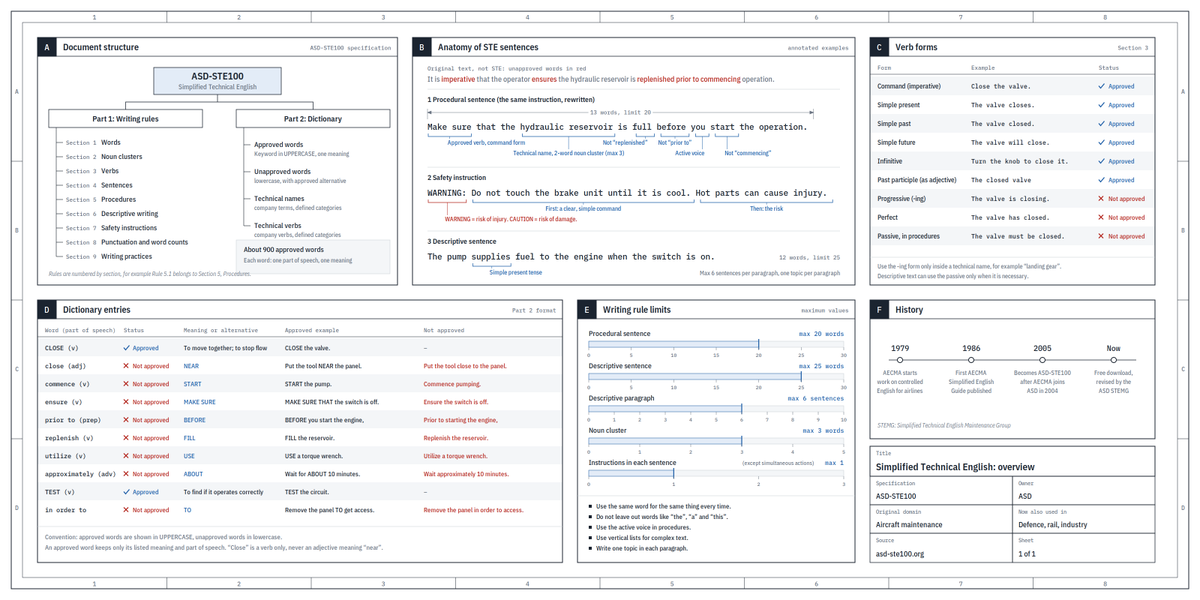
Writing. Something I've had success with: Ask your LLM to explain something in ASD-STE100, it's a controlled language specification originally developed for aerospace maintenance documentation. LLMs well-versed in this language and it comes with heavy constraints on clean writing style that I often find a lot more readable. Sometimes I've tried to soften it a bit e.g. ask for "80% of the way to ASD-STE100" because the spec is quite stringent. But even better:
Diagrams / images. Instead of writing, ask your LLM to create a diagram. These can be a lot easier to process, parse, and understand. But even better:
Web pages. Ask for output "in HTML" to get a beautiful, interactive webpage. LLMs are getting really good at frontend and can create beautiful experiences, animations, etc. But even better:
Explainer videos. The output format I am most bullish on is fully custom / bespoke explainer videos generated on any arbitrary topic. Experiment with things like "Create a 3b1b style video explainer on X. Use my ElevenLabs API key for audio narration". (you'd need an API key for the latter or you can ask your LLM to find you decent free alternatives that use your local compute). This is actually starting to work!
In summary:
- As LLMs get better, they will do more and more of the legwork autonomously, and a lot more of our work will rise up the abstractions into oversight and understanding.
- Luckily, LLMs can help here too because as intelligence and code are increasingly abundant, you can ask for large, custom, discardable software artifacts (e.g. web apps, video explainers) that would have never made sense to create before. Push the boundaries here and you'll be surprised.
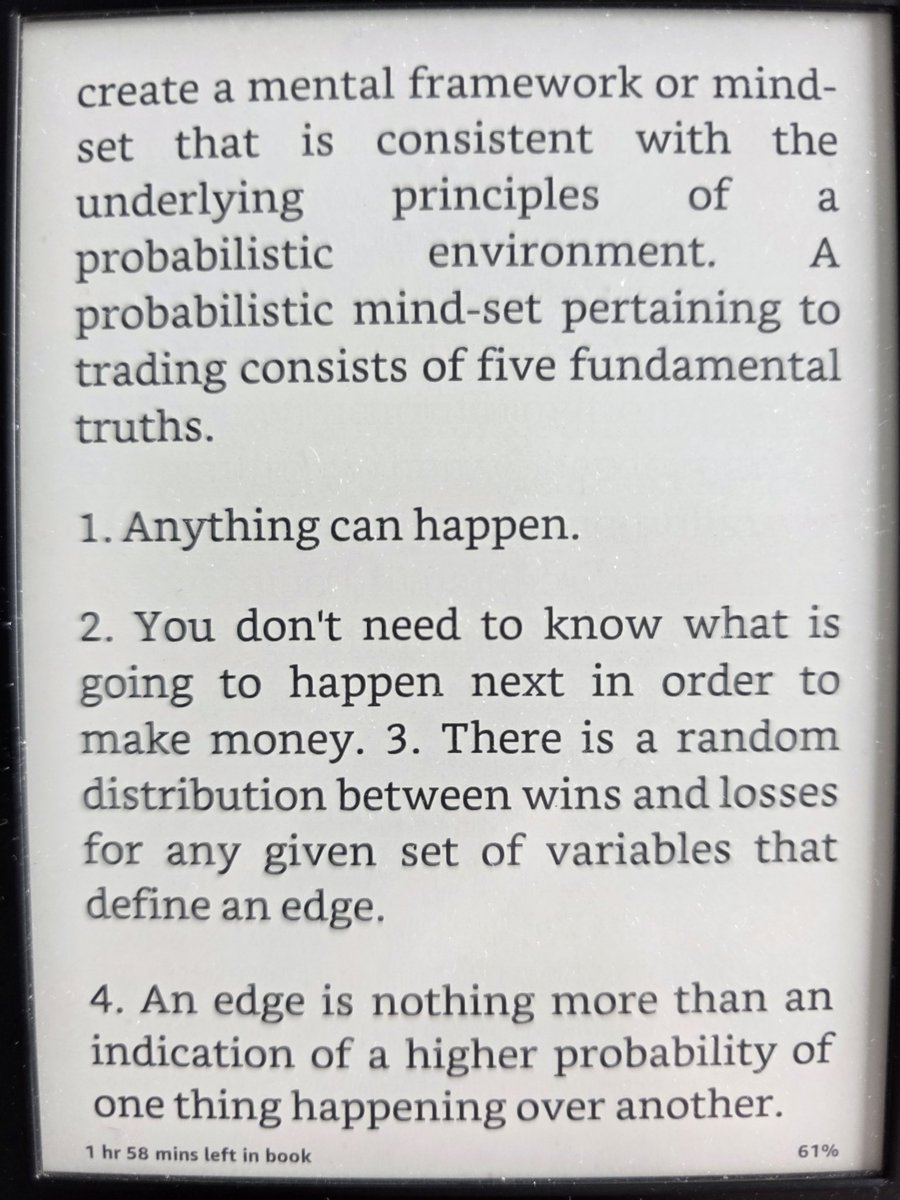
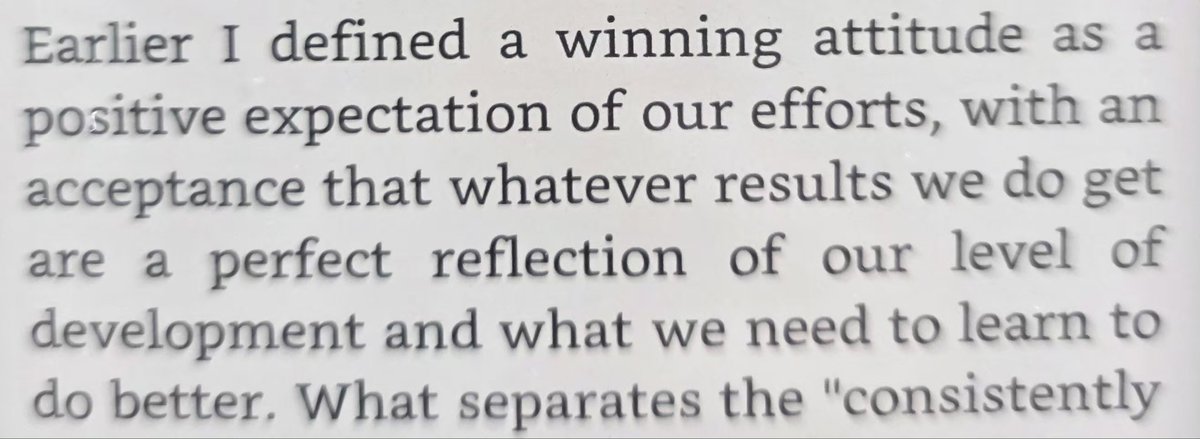
You just put one foot in front of the other. you control what you can control and then you see what the outcome is. if you win great you wake up the next day and do the journey over again. if you lose it sucks, you wake up the next day and do the journey over again anyway.
In 2018, Nassim Nicholas Taleb gave a 61-min masterclass on why systems fail when decision-makers don't share the downside.
685K views.
His frameworks:
- No downside, no discipline
- Moral hazard with better branding
- Fragility hides in incentives
12 insights: 🧵
Nassim Taleb filmed a 10 minute lecture that explains how one 70-year-old formula separates surviving traders from bankrupt ones
Most Polymarket traders size positions by "feel" — this is why they blow up
Watch the video, then read the full article on 3 math formulas the top 1% of Polymarket traders run on every single trade ↓
This guy unlocking OpenClaw for TradingView is one of the biggest unlocks I’ve ever seen for traders.
TradingView and trading itself, will never be the same. 🔥
If you keep losing money trading, try this one simple trick…
When you feel like you should enter a trade, market buy with $1 and set your stop loss like you usually would
Then when your stop loss/liquidation is almost hit, enter your actual trade.
You’re now trading like a whale and buying retail stop losses and liquidations 👍
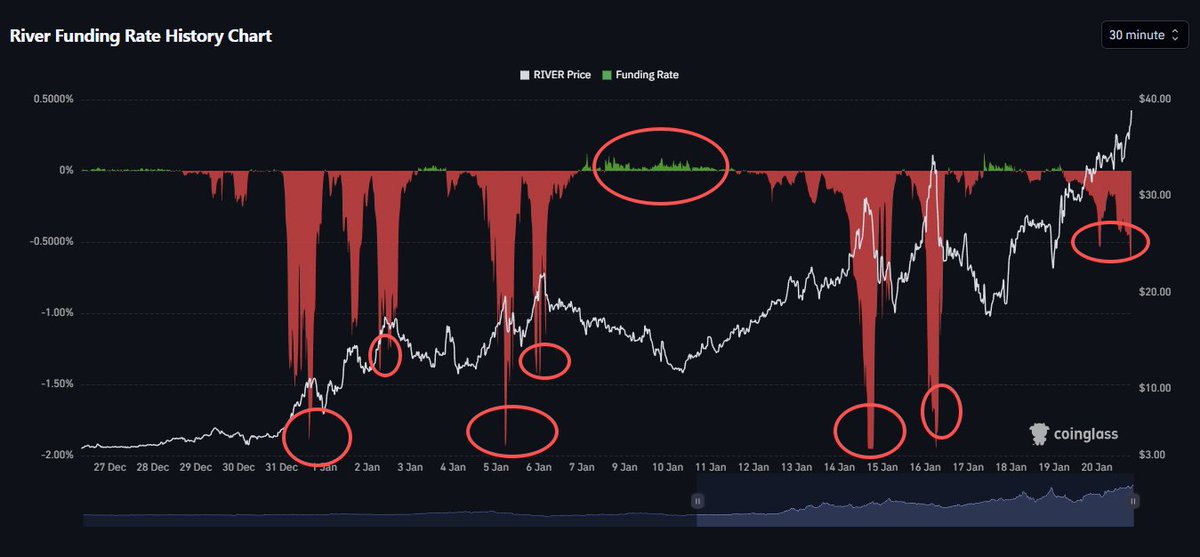
Thread: How funding rates are used to engineer price moves
Using $RIVER as an example
this is not an isolated case.
Variations of this funding-rate-driven setup
have appeared across many tokens over the past two years.
1/8
Most traders misunderstand funding rates.
Funding does not predict direction.
It reflects position imbalance —
and that imbalance can be intentionally created.