"I am the brightest mind in AI, and also the most powerful and influential. I think my work can have disastrous consequences and end humanity. So I will keep working on it full speed, but also sign this plea urging you to be afraid and allocate some money to keep an eye on me."
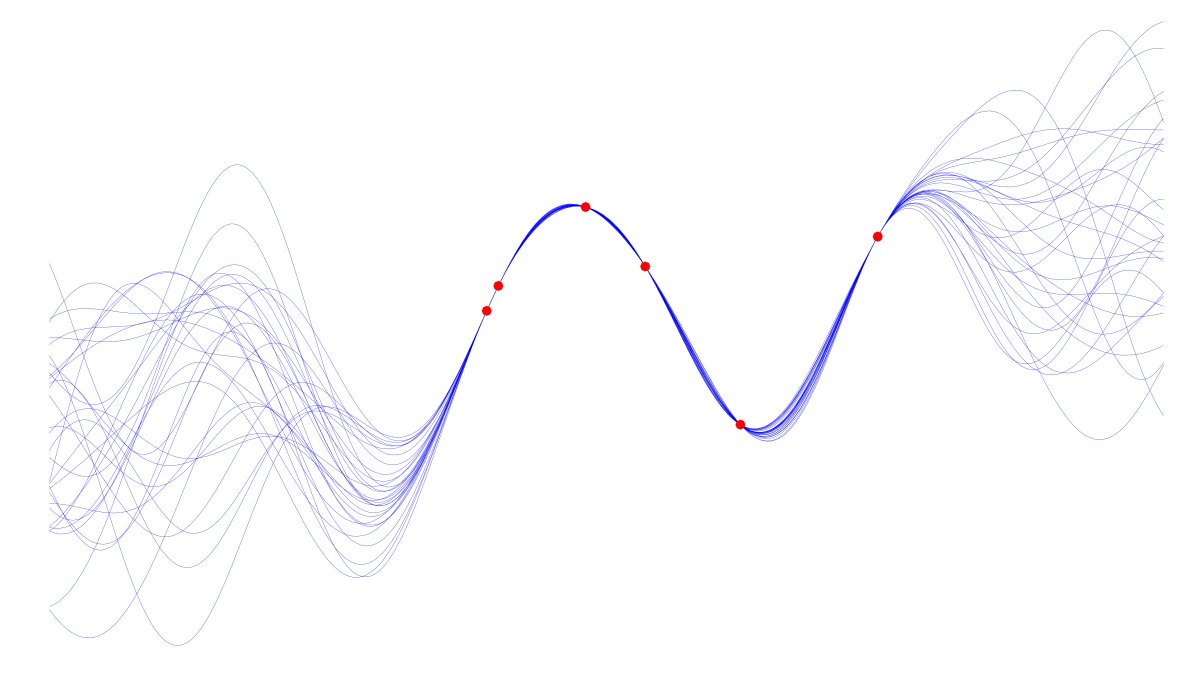
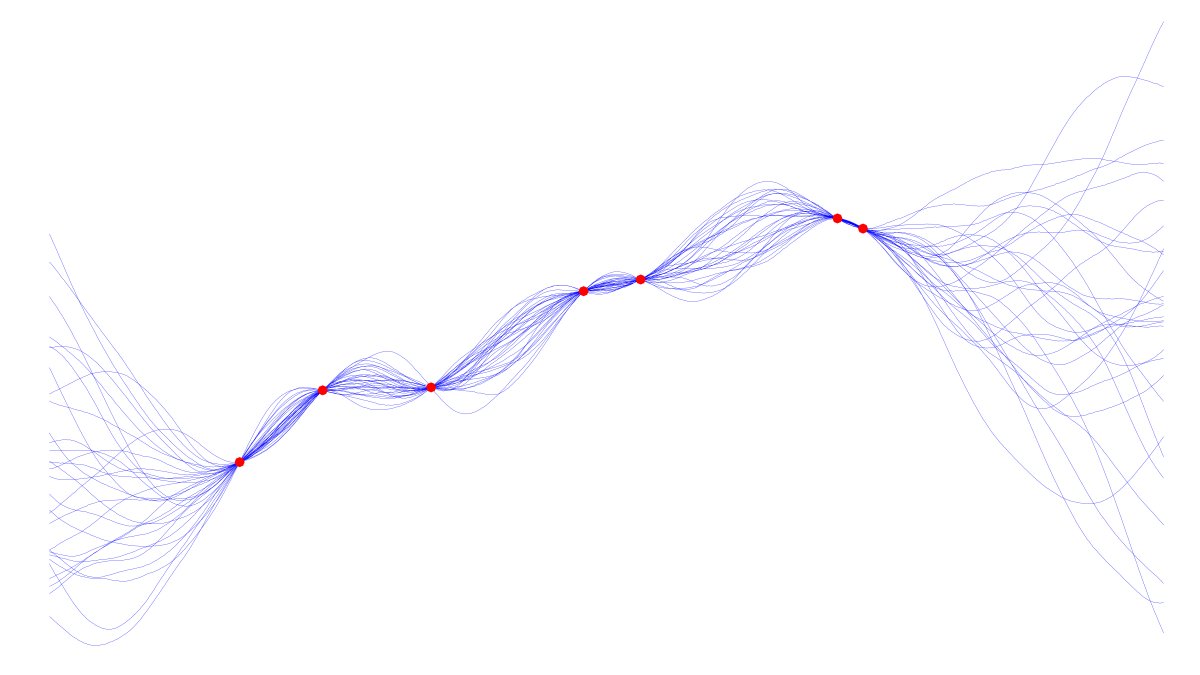
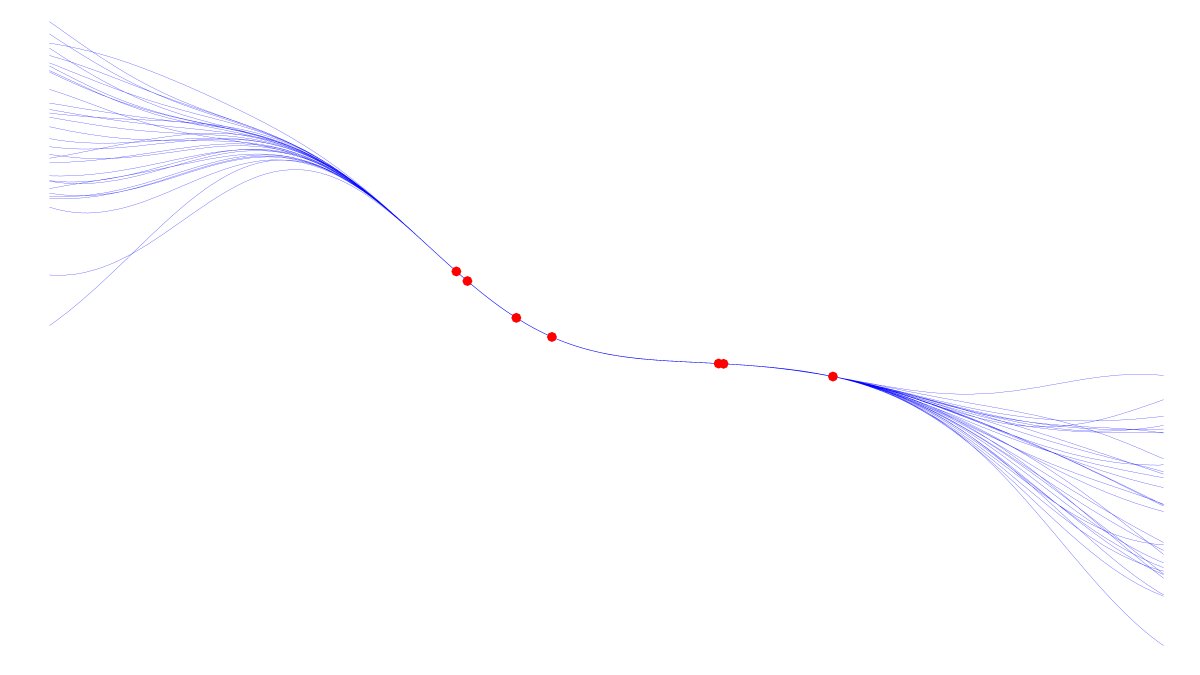
We place a GP prior over the Hamiltonian and use variational multiple shooting for inference, resulting in a fast and performant model which compares favourably to Hamiltonian NNs on a number of problems.
Teaser plot below, take a look at the paper for more nice pictures!
Learning Energy Conserving Dynamics Efficiently with Hamiltonian Gaussian Processes
Magnus Ross, Markus Heinonen.
Action editor: Ole Winther.
https://t.co/GRmLIQqLnU
#hamiltonian#trajectories#trajectory
Do you love time series? Do you love volatility? Do you love Gaussian processes? Check out our ICML paper with Wesley Maddox and @andrewgwils https://t.co/rtvIUxa3E3
We introduce Volt and Magpie, new kernel and mean functions for GPs in highly stochastic settings. 1/7
Pashupati Hegde presents "Variational multiple shooting for Bayesian ODEs with Gaussian processes” at UAI’22. ODE posteriors are ~10x faster to learn with the ‘shooting’ technique 🔥
w/ @CgtyYldz@samikaski@HLahdesmaki
https://t.co/Ozi3XBmP4l
https://t.co/eOSqLKbrNy
1/3
Fitting a Gaussian process (GP)? Then why not model the kernel with another GP?!
The GPCM is one such model. We propose two variants of the GPCM and inference beyond mean field.
w/ Martin Tegnér & Rich Turner
Paper: https://t.co/ef7D0jJldz
Code: https://t.co/wEbKuHfytM
Is chaos actually hard to predict? For NeurIPS this year I made a database of 131 known strange attractors, and trained state-of-the-art forecasting models on each one, to try to figure this out (1/N):
Paper: https://t.co/6tZ9MGAAI3
Dataset + Code: https://t.co/EpK4ZfWTEF
Huge congratulations to our PhD students, @tomcd_ and @magnusaross, who have had their submissions accepted by the NeurIPS 2021 conference. Both students have been working with @maalvarezl and @mikethomassmith.
Read more: https://t.co/9sd0NOVhom
The gambler’s ruin problem (below) is really easy to solve using simulation, but it’s quite tricky to get to an answer with just pen and paper. I've written a bit about this issue and and why I think it’s interesting: https://t.co/psq4pdQ62n