Me: here is a stable OOB read/write vulnerability.
: duplicate of CVE-2026-XXXX.
Me: I reported CVE-2026-XXXX too. These are different bugs: different root causes and different vulnerability classes (UAF vs OOB r/w). I don’t think this is a duplicate.
: this ticket was closed because it was not reproducible on the latest branch used in our products.
Me: I can reliably reproduce it on the latest public iOS 26.5 beta. I also provided a video PoC.
: thank you for the additional info.
A few weeks later: we reproduced the issue and are planning to address it in Summer 2026... ¯\_(ツ)_/¯
Qualcomm mishandled my last report at first, but in the end they acknowledged the issue and paid the bounty. I reported a FastRPC UAF. Qualcomm said that they know about it but due to some internal tooling problems, the fix didn't reach all release branches for over a year.
Another AMDGPU bug I reported last year has been fixed: CVE-2025-54517 (CVSS 8.5).
One ioctl -> kernel compromise on AMD Instinct / Radeon PRO virtualization stacks.
May 2026 security bulletin:
https://t.co/tm8qf5fgC7
Apple fixed two vulnerabilities I reported affecting Safari/WebKit: CVE-2026-28953 and CVE-2026-28901. Sometimes mitigations can create new attack surfaces.
https://t.co/CHFAZQ3yLe
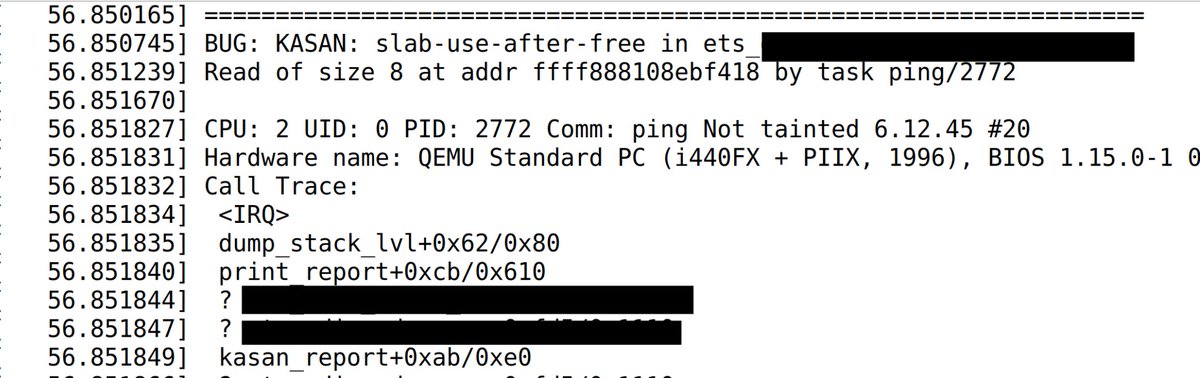
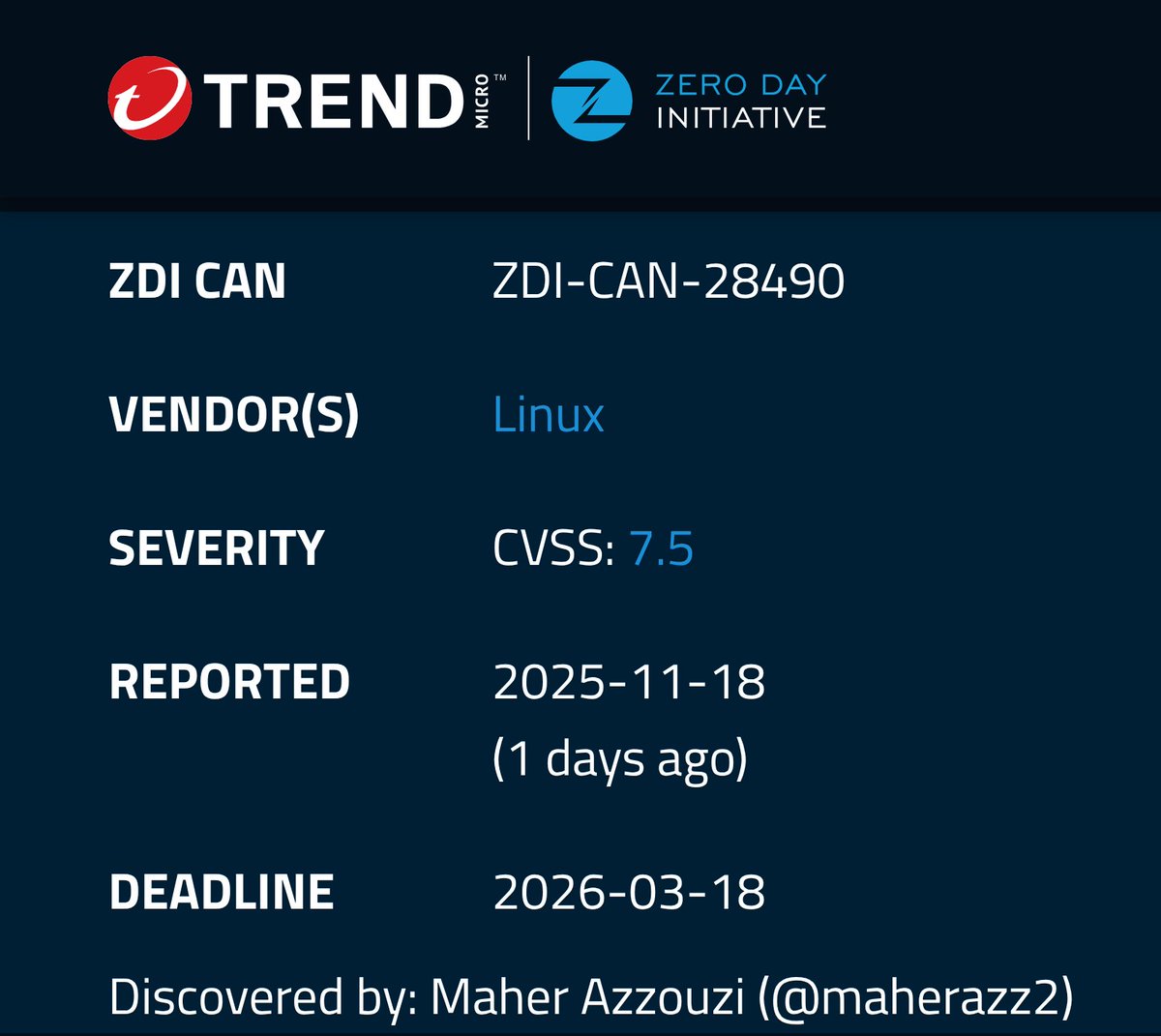
Reported ZDI-CAN-28490 (CVSS 7.5). A Linux kernel bug in the ETS qdisc within the packet scheduler subsystem.
A logic flaw + race can leave a freed qdisc on an internal list, letting an unprivileged user trigger a UAF and gain kernel-level privilege escalation.
AMD August 2025 Security Bulletins (AMD-SB-6018 and AMD-SB-5007) feature my discovery CVE-2024-36342, a heap overflow in the @AMD GPU driver, rated with the highest severity in AMD-SB-5007 and listed among the most severe vulnerabilities in AMD-SB-6018.
https://t.co/gVGxevtwkZ
@a13xp0p0v@PwnieAwards Thank you so much for clarifying! Just curious — was this always reliable for you, or did the interrupt sometimes miss the window? And when you say gradually increasing the timeout, was it in nanosecond-level steps?