Guess if I used AI to write this post. (Answer found on the bottom of the post.)
We've been hard at work at @MaigrateAI over the past six months creating custom AI agents.
What does that even mean?
Say you have people in your business (dozens and dozens even) doing manual work. And while you love supporting these fine folks, you'd rather have them doing work that an agent can't do (like building an actual relationship with a client or a team member).
OK, but what does THAT even mean?
Say you're hiring hundreds of people every year in your homecare business. After all, you need health aids (sorry to all the robots out there) to take care of your patients.
This translates into your back office screening thousands of resumes (you hope efficiently), timely reaching out to those thousands of people to either learn more, pass on them, or schedule an interview.
Then, you have to make sure your recruiter's calendar lines up with the applicant's, conduct the interview, send the offer letter, collect a dozen or so new employee documents (who enjoys chasing?), onboard, train and retain that employee.
But what if there was a better way? What if a company didn't have to spend hundreds of thousands of dollars on employees to handle all that - and the new solution was even better than the current?
Introducing Maggie, AI that runs your hiring.
SEE: https://t.co/UwU64fZrST
Agents can be created for all sorts of tasks in every industry, but how do you do that at scale, securely and ensure there is internal adoption?
Welcome to Maigrate.
(No AI used to write this. Should I have used AI?)
Built this to attempt to ascertain how legit an AI agent is.
We see so many, but which are quick and cheap to build and which take time and money to build? 🏰
https://t.co/Z6LlWTG7yP
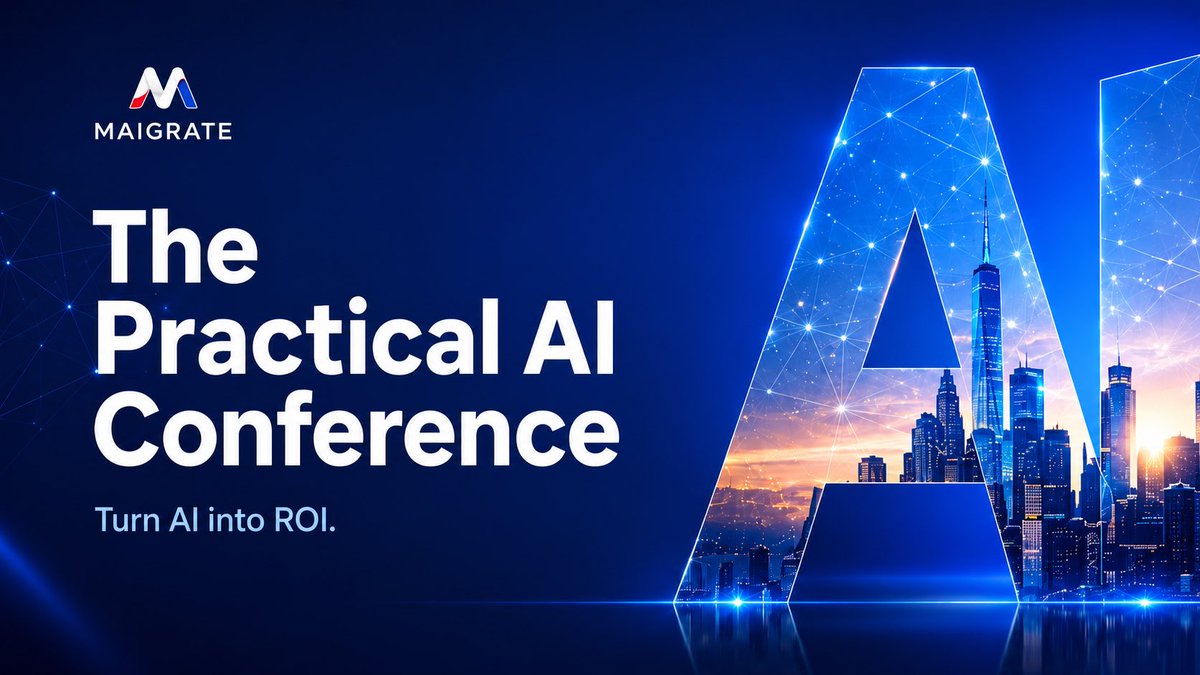
The first ever Practical AI conference was electric. ⚡
Over 500 attendees from more than 250 businesses came to NY to find out what’s real (and what’s not) in AI right now.
Building custom agents. Getting employees to actually adopt it. Which tools are worth paying for. Where all of this is headed.
At Maigrate, we build secure specialized AI agents and get teams to use them successfully.
It’s exciting to see that the world of tomorrow is today.
What a day at the inaugural Practical AI Conference in New York.
Over 500 AI enthusiasts and builders came together to learn what the present and future hold for their businesses, careers and lives in a world of AI.
14 different sessions (all recorded, stay tuned) and thousands of conversations.
Shout out to the Maigrate team for producing a magical event. 💪
Let’s grow!
Our keynote sessions are set!
The Practical AI Conference’s keynotes: @benedictevans and @heyfeifer.
Not to mention other brilliant minds and some serious companies in the space.
🎟️: https://t.co/nF7WYw2P1C
🧰 What do each of these Claude tools do?
Let’s explain what each does and why each is helpful.
Chats: Your regular back-and-forth conversations with Claude. Ask questions, get writing help, work through a problem, draft an email. This is the bread and butter. Value: a smart assistant that answers instantly and remembers the thread you’re in.
Projects: A folder where you keep related chats and files together so Claude has shared context across all of them. Drop in your reference documents, instructions, or past work, and every conversation inside that project knows about them. Value: you stop re-explaining yourself. Good for ongoing work like one client, one book, one business area.
Artifacts: When Claude makes something you’ll actually use outside the chat (a document, a spreadsheet, a working app, a webpage), it shows up as an Artifact you can view, edit, and save on its own. Value: you get a finished thing you can keep and reuse, not just text buried in a conversation.
Code: This is Claude Code, a tool for building and fixing software. You hand it a coding task and it writes, tests, and edits real code for you. Value: mostly for developers, though it also lets non-coders get small tools and scripts built without hiring anyone.
Dispatch: The newest tool. It turns your phone into a remote control for your desktop. You send Claude a task from your phone and it does the work on your computer while you’re away. A regular phone chat is limited to the cloud, but with Dispatch, Claude can reach your local files, your installed apps, and your connected services. Value: you assign work from anywhere and come back to it finished. One catch worth knowing: your computer has to stay on and the Claude desktop app open, because the work runs locally, not in the cloud.
To recap: Chats for talking, Projects for organizing, Artifacts for the things you keep, Code for building software, Dispatch for putting Claude to work on your computer while you’re out.
⚡️Put AI to practical use! Join our event in NY on July 28th: https://t.co/tzRhARb9l9
Maggie to the rescue!
Did you know many companies process thousands of applications every month and convert just a few percent of them into hired workers?
Recruiters spend their day on application review, outreach, scheduling, document chasing, and onboarding paperwork. Top candidates can sign with competitors in 48 hours while your team may still be reviewing resumes.
Maigrate replaces every step of that work with autonomous AI agents across all nine stages of the recruiting lifecycle, from the first job posting to long-term retention. The funnel runs on its own, 24 hours a day, seven days a week, and gets smarter with every applicant it touches.
We've been testing this in the ABA space (autism therapy), which is always on the hunt for certified technicians to work with great kiddos.
The agent's name is Maggie and she's crushing it.
We built a day for people who are serious about learning AI.
650 people & tracks for every level.
July 28 in Staten Island. https://t.co/IuPthltgzQ
We are doing it. 📣
The Practical AI Conference
🗓️ Tuesday, July 28, 2026
📍 Staten Island
Cancel all your meetings.
Tickets now available.
⛓️💥: https://t.co/liHP3Iub8h
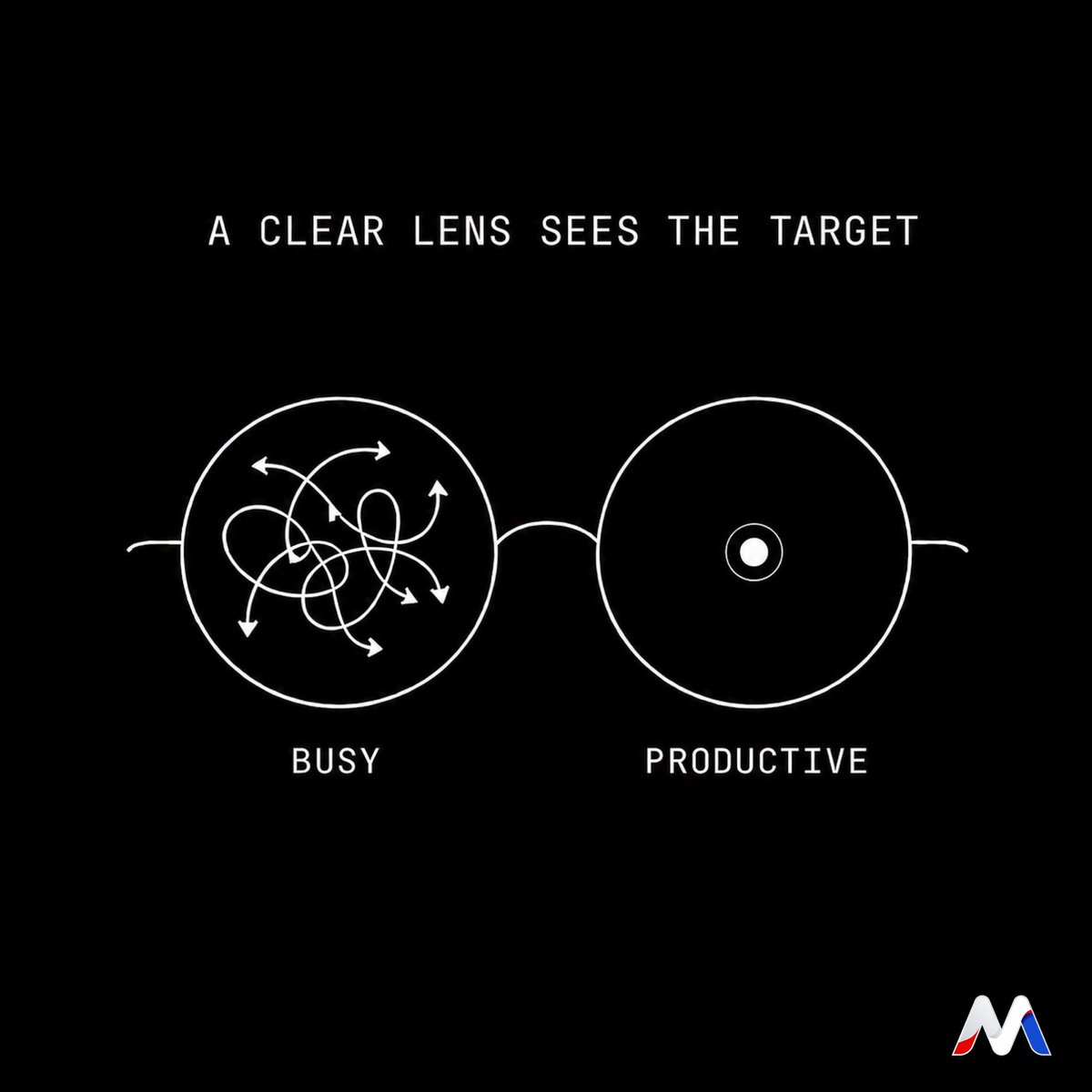
You can spend an entire workday chatting with AI and produce nothing.
Why?
You're confusing busy work with productive work. It's so easy to think going back and forth with your favorite chatbot is time well spent.
Think of AI as a talented coworker. You could talk to the person in the next cubicle all day, but at some point someone asks what came out of it. Same with AI. Going in without knowing what you want is just a conversation. Going in with a specific job is the work.
So before you open the tool, finish this sentence: by the end of this I will have ______.
Fully autonomous AI sounds great in a pitch deck.
In the real world, the best AI systems keep a human in the loop. Someone who reviews, overrides and catches the edge case the model missed.
The goal isn't to remove people from the process.
It's to remove the parts of the process that waste their time.
Your company probably pays for 15 different software tools right now.
Half of them don't talk to each other. A quarter of them nobody uses. And someone on your team has become the unofficial 'make it all work together' person.
That's a mess-stack.
Here’s what we’re building:
• One AI hub
• Built around your workflows
• Everything connected
That's where AI needs to be.
A nurse applies to your job posting at 1:37am.
At 1:38am, your team has qualified her based on her resume (and other markers) and she receives a warm message asking if she’d like to have an initial conversation.
At 1:39am she's talking to a lovely interviewer, where she answers pre-set screening questions.
By 9am when your recruiter walks in, seven such sequences happened overnight. Five applicants were accurately disqualified (three didn’t even show up to the AI interview 😉, which means no wasted time on your team’s part), while two candidates are ready to meet your human recruiter for a second conversation.
Now compare that to what actually happens today. The nurse applies at 1:37am. Nobody responds until 9:14am. By then she already got an offer letter from your competition.
This is just part of what Maigrate is building inside your very own AI hub.