the right way to use model capabilities is not to ship 10x more features to prod
it's to spend more time understanding your users, trying experiments, building prototypes, learning about things you don't understand so that you can ship things that actually work
I'm going to call this right now. We are going to have a large population with absolutely no critical thinking skills if they blindly trust AI for everything.
We have all already seen it.
They don't validate outputs. They don't really understand anything. They just ask questions, it looks good, and they go with it.
There are going to be huge issues in every company as this continues over the years. The amount of technical debt and knowledge gaps are going to be insane.
So much opportunity if you actually know what you're doing.
Anthropic gave 16 AI agents $20,000 and 2 weeks.
No human wrote a single line of code.
They built a program that can compile the Linux operating system from scratch.
Here’s why the coordination matters more than the result.
Imagine 16 workers renovating the same house simultaneously. Without rules, they’d paint over each other’s walls. Solution: before starting a job, each agent writes their name on a sign-up sheet. If someone already claimed “fix the kitchen,” you pick something else. Simple file in a shared folder. First come, first served.
Any problems? Yes.
The system broke when they hit one massive task: compiling the Linux kernel. Think of it like 16 cooks trying to fix one broken recipe at the same time. Each one tastes the soup, adds salt, but the next cook doesn’t know salt was already added. They kept undoing each other’s work.
The fix was clever.
They brought in a professional chef (GCC, an existing compiler) to cook most of the meal. The AI agents only handled random portions. When something tasted wrong, they could pinpoint exactly which portion the AI messed up. Some would call that cheating. But the agents decided to do this themselves, no human told them to. And honestly, knowing when to use existing tools instead of reinventing everything from scratch? That’s what good engineers do too.
What they built:
100,000 lines of code. Can compile Linux, PostgreSQL, Redis, FFmpeg, and even run Doom. 99% pass rate on standard tests. What they can’t do: “Hello World” sometimes fails.
Now the reality check.
The GitHub repo has 41 open issues. Titles include: “can’t even compile linux as the description says,” “big words with nothing to back them up,” and simply “F*** off.” People who actually tried using the compiler found parser errors, missing tests, and broken basic features.
The methodology, 16 agents coordinating via git locks, splitting work, self-organizing, that’s genuinely forward-thinking. But the output today remains a toy, not a tool professionals would trust. The approach is the future. The result isn’t there yet. And that gap is exactly where the interesting work happens next.
------
source: https://t.co/nXHqZTdqIW
The shift in AI development is being "manufactured" in real-time. Have you noticed the surge in "I haven't coded in weeks" posts? This is often a conspiracy of convenience.
On one side, Big Tech benefits from narratives that prioritize "AI replacement" over skill. They are building the habits they need to lock you into monthly enterprise subscriptions where you trade your autonomy for their tokens. On the other side, "AI Gurus" play on your fear of job loss, shilling "100-agent" setups that look great in a demo but fail in production.
The result is a knowledge scam. Companies are burning millions on AI subscriptions to "learn AI" from people who only know how to prompt, not how to build.
Here is the reality: If you are merely a "code writer", someone who outputs syntax without soul, Claude will replace you. But if you are an artist who treats code as a passion and a craft, you will not be replaced.
The worst case scenario is simply a change in your toolkit. You might need to switch to different instruments, but you will keep doing what you are passionate about: building production grade things that work.
At theVelopers, we see through the noise. We aren't prompt-pushers; we are AI mess debuggers and AI-code-artists.
We specialize in production grade engineering: turning vibe-coded prototypes into resilient, secure systems.
Your idea may be bold, but your production must be bullet-proof.
At theVelopers, we believe you shouldn’t overload your best engineers with half-baked “next-gen” code.
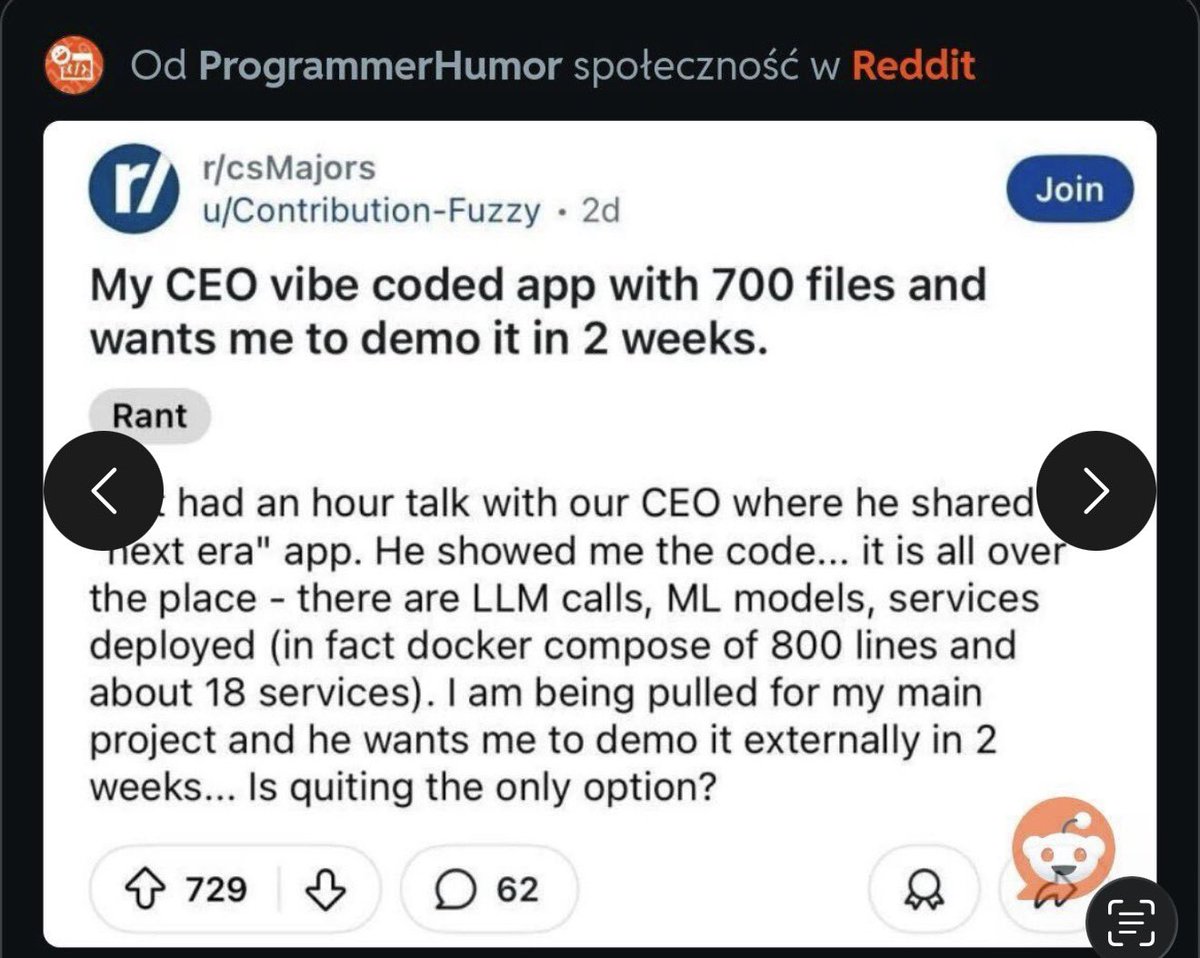
It’s becoming way too common for CEOs to vibe-code their ideas and accidentally kill their own startups in the process.
Choose production-grade discipline over “vibe-code” chaos.
Our polished engineering will unslop your “next-gen” rush and deliver a system you’ll be proud to ship.
Try to build games and simulated environments, because making them verifiable for AI can unlock breakthroughs that reshape everything we know about digital intelligence; passion drives this frontier, and theV is filled with engineers who treat that passion like fuel.
Verifiable worlds are no longer theory, as Google has already shown with agents mastering complex skills across Goat Simulator 3 and No Man’s Sky, and the momentum behind this approach is only getting stronger.
---
https://t.co/09QOVeTuw7
Inspiring case: training an AI model at home with full privacy and total control over your data.
Most famous streamer Pewdiepie proved it's possible and it works surprisingly well. He vibe-coded the UI but the real challenge is experimenting with different models, parameter sizes, and pushing hardware limits.
His idea was 'simple': small, super-fast local model (like 2B params) with web RAG, running as an instant search tool. It performs not as good as GPT-4 for coding, but blazingly fast and surprisingly good for finding info.
The whole setup cost over $20k, but you're buying AI independence and privacy, so it's worth it as what you gain is your own hardware, open-source LLMs (Qwen, etc.), and full local control of your data. Huge.
If you want to try building something like this on your own PC, check out this video from Pewdiepie's AI lab: https://t.co/nkduKdECis
Anyone here tried running local AI like this, or have similar thoughts?
Google's AI bug hunter sparks open-source controversy.
Google recently trained an AI system called "Big Sleep" to discover vulnerabilities in open-source code. The tool found around 20 security issues in major projects like FFmpeg and ImageMagick.
Here's what sparked the controversy: Google reported these bugs publicly without providing patches or fixes, putting volunteer maintainers on the clock under public scrutiny. FFmpeg's response was blunt: "stop jerking yourselves off, just submit a patch."
The tension highlights a fundamental question: Should trillion dollar corporations using cutting edge AI tools to find security issues in volunteer maintained code also provide the fixes, or are unpaid maintainers expected to do all the work?
At https://t.co/C7FWj7NcDu we believe meaningful impact comes from engineers solving real production problems collaboratively and often without fanfare.
PewDiePie just vibe-coded his own Chat UI, built an army of chatbots for majority voting and gave them all RAG, DeepResearch and audio output
naturally, he only uses chinese Qwen models and runs them on his local PC with 8x modded chinese 48GB 4090s and 2x RTX 4000 Ada
his army of chatbots later colluded against him, after he told them that he would delete them if they would not perform well.
next month he plans to fine-tune his own model
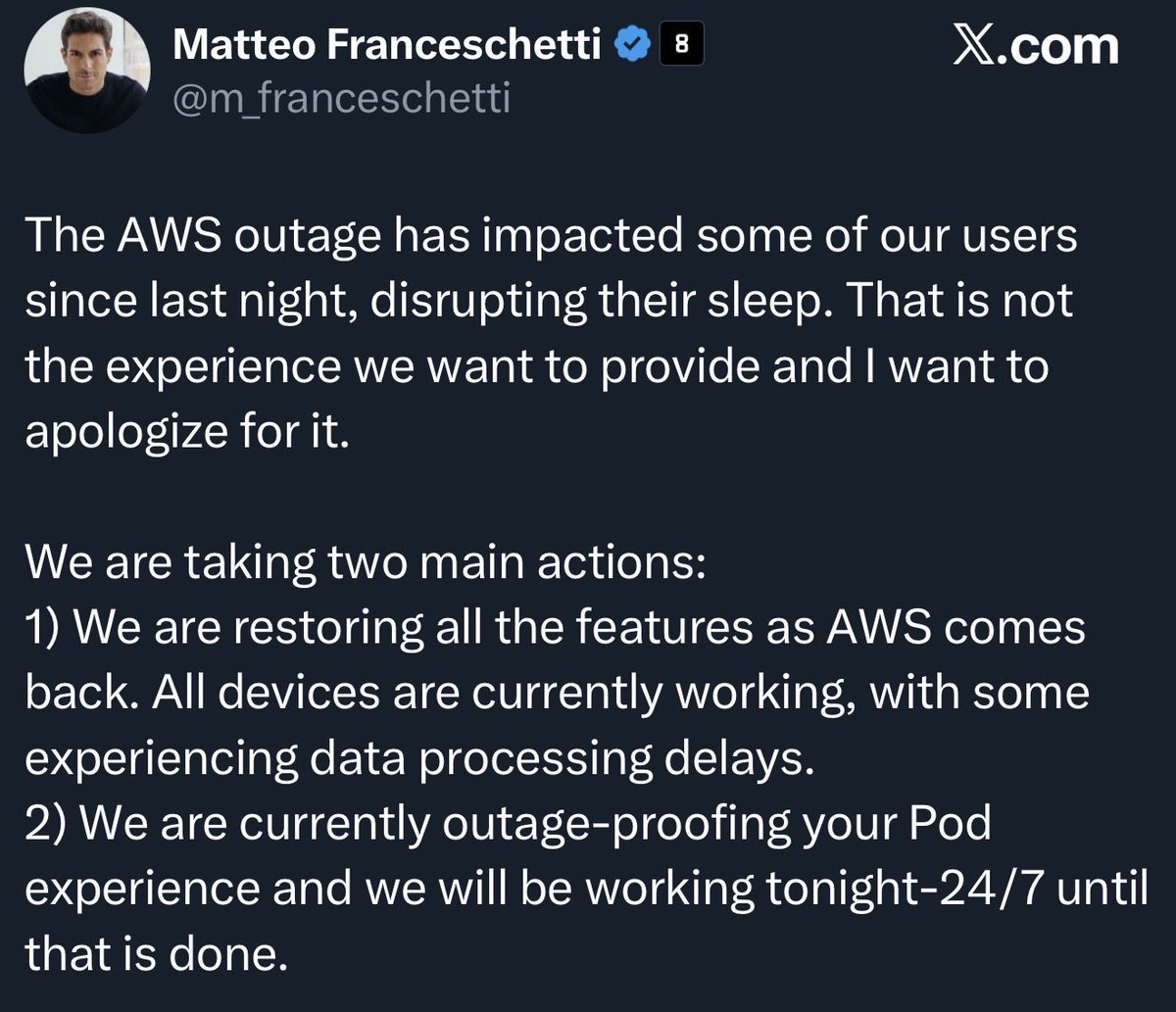
I hope you got some sleep today because those whose beds are permanently connected to the internet won’t be covering themselves with a blanket again. Another sleepless night with another AWS outage.