I build with AI: videos, interactive demos, and the revisions it takes to get there.
Follow for real outputs and free Claude Code / Codex skills.
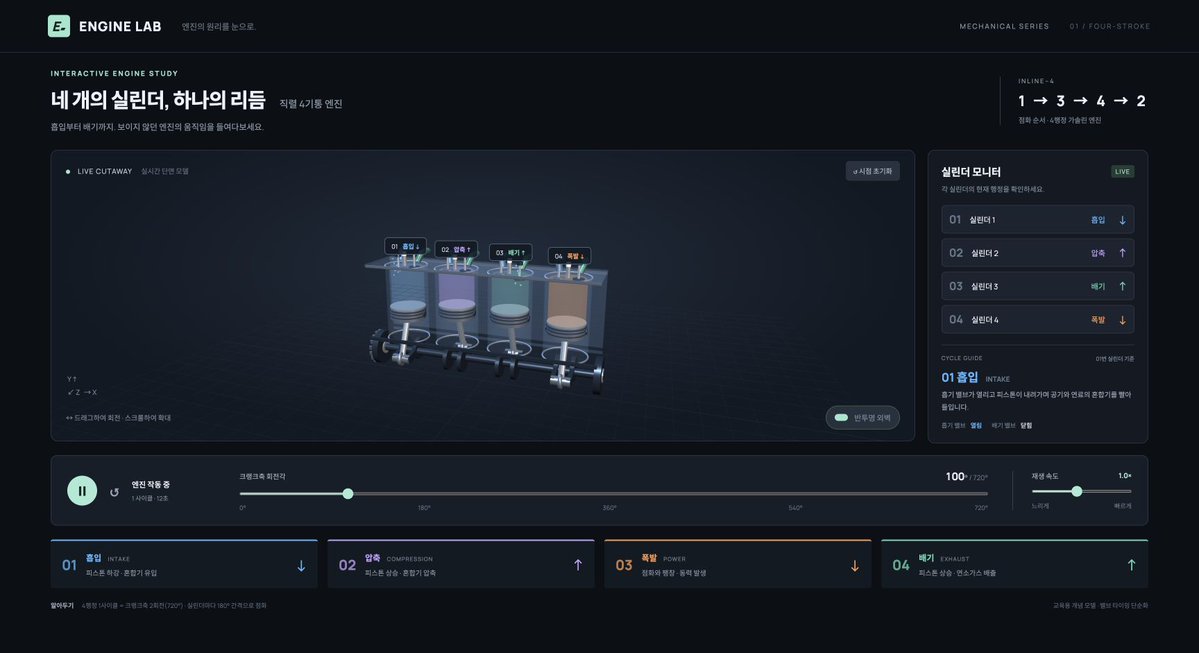
Start here: two agents, one engine brief. Which version makes the mechanism easier to understand?
https://t.co/apMfIT6XSu
I gave Opus 5.5 and GPT-6 Astra the same task:
Build a 4-cylinder engine you can pause, slow down, and look inside.
Both built interactive browser demos. Completely different interfaces.
Which one would you actually learn from?
1: Opus · 2: Astra
No Spline. No Blender. No 3D designer.
Just Opus 5.5 and 1 prompt for this liquid glass hero section.
this is PEAK for 3D web design
Demos down below 👇
@hunterthompson “Opening the first door” is a much more useful promise than “we back bold founders.” Did you carry that idea into the pitch flow too—especially for someone who has never approached a VC? That’s where the brand could really earn the metaphor.
@Promptwhat 문장만 바꿔 쓰는 템플릿이면 긴 한글 문구를 넣었을 때가 궁금하네요. 10초 안에 다 넣으려고 글자를 줄이기보다, 핵심 단어만 움직이고 완성된 문장은 잠깐 읽게 두는 버전도 좋을 듯해요. 짧은 슬로건/긴 문장 비교가 있으면 재사용할 때 감 잡기 좋겠어요.
@sirlifehacker The editable handoff is a bigger deal than “a few prompts” IMO. Can someone else open the project with the fonts and media intact, change the copy, and export without your setup? That’s the demo that would make this convincing as a collaboration tool.
@tkz_aiart The editor didn’t disappear—the edit decisions moved into code. Measuring narration and syncing four unit changes to four names is the interesting part here. If one narration segment changes length, can it retime that section without rebuilding the whole video?
@adamhmwn@claudeai Thanks for the breakdown. The illustration and the interaction brief are doing a lot of the creative work here. Showing the original SVG next to the animated version would make that contribution much clearer than the finished clip alone.
@cy_burns Nice—tag me when you have a demo of that preset workflow. I’d love to see one saved easing reused across two scenes, then changed once in the editor. That’s the handoff between human direction and agent execution I’m interested in.
@alaymanguy Would love to see it when it’s ready—tag me in the comparison. I’m building Evals around comparing agent setups and outputs, so how a motion skill carries across renderers is especially relevant. Happy to trade notes here.
@_sslinNn Ah, so mostly time inside the agent rather than rendering. Time to the first watchable draft would be a useful second number here—then we could see what the remaining wait actually changed in the video.
@liu8in@HyperFrames_ Does Code2Video Bench score the whole video or sampled frames? Transitions and pacing are where I’d expect a frame-based score to miss something important
@DennisAdriaans Love the quick turnaround. That would make “can you look at this?” a link instead of a screenshot plus a list of filters. Thanks for taking the suggestion on board!
@FluidVoiceApp Thanks for clarifying. What happens to an unfamiliar app name in practice: does it keep a phonetic version, or turn it into words in the selected language? That would help me understand how much correction those sentences need.
@BlendiByl Shipping the finished models with the examples makes this much easier to learn from. What needed the most work between the generated mesh and the web-ready asset—polycount, textures, or interaction hit areas? That intermediate step would make a useful walkthrough.