Christian, ‘Old School’ Nurse but Modern Manager. Quality Care is my passion! Bradford City, Good Company, Photography & Golf matter too! All opinions my own
African Tippu Tip owned roughly 10,000 slaves in the 1890s. That was decades after the American Civil War, the Emancipation Proclamation, and the 13th Amendment.
While white European societies had already abolished the slave trade and then slavery itself this man was still marching deep into Central Africa, burning villages, chaining captives, and selling them.
Tippu Tip became a famous slave and ivory trader of the East African interior. He led armed caravans of thousands of men hundreds of miles inland, raiding villages at dawn, killing the weak or elderly on the spot, and marching the rest in coffles to the coast. Roughly one-third of the captives often died on the journey.
The survivors were sold for Zanzibar’s clove plantations, for domestic service, and for export to the Arabian Peninsula and the Gulf. Women and girls were routinely taken as sex slaves and concubines—standard practice in the Arab trade for centuries.
By 1895 he controlled seven plantations worked by about 10,000 slaves. He built a personal commercial and political domain in the eastern Congo, confirmed or replaced local chiefs, monopolized the ivory trade, and became one of the richest men of his era.
He assisted European explorers when it suited him, then watched from comfortable retirement in Zanzibar as European powers finished suppressing the trade he had helped expand. He died in 1905.
This photograph of him seated in turban and robes, staff in hand, is the classic image of the merchant who got rich selling other Africans.
You can earn a degree in African American studies and never hear Tippu Tip’s name, or the names of the African kings and Arab traders who actually captured and sold Africans who crossed the Atlantic or the Indian. Today’s universities treat the Arab and Swahili caravan Slave traders as footnotes or ignored entirely.
This is not an accident. Acknowledging that African elites and Middle Eastern buyers ran the supply side for centuries undercuts the simple narrative that frames slavery as a uniquely white-European or American invention.
British whites abolished the slave trade in 1807 and slavery in its colonies in 1833, then spent decades and enormous resources on naval patrols to stop the trade. The United States followed in 1865. These white societies were among the first large-scale institutional and systematic bans on slavery in history.
Slavery and the open slave trade continued in Africa and the Islamic world long afterward. Legal chattel slavery was abolished in Saudi Arabia only in 1962; Mauritania was the last country to ban it on paper, in 1981. Tippu Tip’s operation in the 1880s and 1890s was not a dying remnant; it was still large, profitable, and expanding under Arab-Swahili leadership.
The peak slave population in the United States in 1860 was about 3.95 million. Modern estimates of people in forced labor, forced marriage, and other forms of modern slavery put the global total near 50 million TODAY!!!.
Africa alone accounts for millions of slaves TODAY; the Arab states also show some of the highest prevalence rates in the world TODAY. Absolute numbers of people in modern slavery in Africa and the Middle East today exceed the peak historical figure for the United States. Definitions differ—historical chattel slavery is not identical to every form of forced marriage or debt bondage—but the scale of ongoing exploitation is not small.
Tippu Tip was certainly not the only African slave trader. Arab and Swahili traders from Zanzibar and the Omani sphere ran the East African trade for generations, selling captives north into the Middle East for labor, military service.
European societies were among the first to abolish slavery and enforce the ban. That fact is routinely omitted from the version of history taught in American universities. The men who owned ten thousand slaves in the 1890s while marching deep into the African interior should not be ignored. -RJ
On 12 September 2018 Stephen Darby’s life split into two distinct halves.
Before that date he was a 29-year-old professional footballer, a reliable right-back who had captained Bradford City through their most famous cup run, and a man who had just married the love of his life, England women’s captain Steph Houghton. After that date he was a man facing a brutal, incurable disease.
He had noticed the weakness first in his right arm and hand. He knew he wasn’t as strong. It took 21 months of tests, scans and agonising uncertainty before the doctors finally confirmed the devastating truth: Motor Neurone Disease. MND is a degenerative condition that affects how nerves in the brain and spinal cord function. There is currently no cure. Life expectancy is normally two to five years. A third of people die within a year.
Stephen Darby had just three months of marriage behind him when he heard those words. “I would like to ask for privacy at this time so I can adjust to the battle I have ahead and that I can spend time with those closest to me,” he said, with a dignity that would come to define his fight.
He retired immediately. The career that began in the Liverpool academy, that took him to a Champions League debut against Atlético Madrid in 2008, that saw him make over 200 appearances for Bradford City and captain them to a League Cup final, was over.
But Stephen Darby did not disappear. He refused to let MND define the rest of his story. Alongside his close friend and British Forces veteran Chris Rimmer, who was also living with the disease, he launched the Darby Rimmer MND Foundation.
Their mission was simple: to raise funds for research, to support families, and to find a cure. He could have retreated. He could have spent his remaining years in quiet privacy. But he chose to fight out loud.
He spoke about the reality of his condition with unflinching honesty. “It is a brutal disease with a horrible prognosis,” he said. But he also spoke about gratitude, about not wasting time, about finding joy in the small things. He told his family to “enjoy what we have now.” He refused to let the ticking clock steal the present.
In March 2024 he completed a 178-mile charity march from Anfield to Valley Parade, alongside fellow MND sufferer and former Premier League striker Marcus Stewart. The football community rallied around him. Former teammates, rival fans and clubs from across the country stood with him. He has raised hundreds of thousands of pounds. He has funded research. He has given hope to families who felt utterly alone.
And through it all, Steph has been by his side. She has spoken about the pain of watching the man she loves lose the simple things we take for granted: the ability to walk, to eat, to climb the stairs. She has admitted that not every day is good. But she has also said, “I love him to absolute bits. I know he’s as strong as ever. He’s willing to fight this for as long as possible.”
Stephen Darby was a footballer. He was a captain. He was a leader. But his greatest leadership came after the final whistle of his career. He became a symbol of hope. A symbol of defiance. A symbol of a man who, faced with the cruellest possible diagnosis, chose to stand up and fight for everyone else who would follow him. He wanted his legacy to be “to carry on the fight” and to “leave MND in a better place.”
He is doing exactly that. That is the real story of Stephen Darby. Not the trophies. The courage to fight for a future he might not see, so that others might have one.
@4golfonline Hells teeth Mark, in fact ‘Bloody Hell’ it’s well after 10 o clock on a Fri nite, me & the Mrs settled (prior to Sat Comp) I thought WWIII had been declared & it’s just BDC still making the USPGA look small 😂
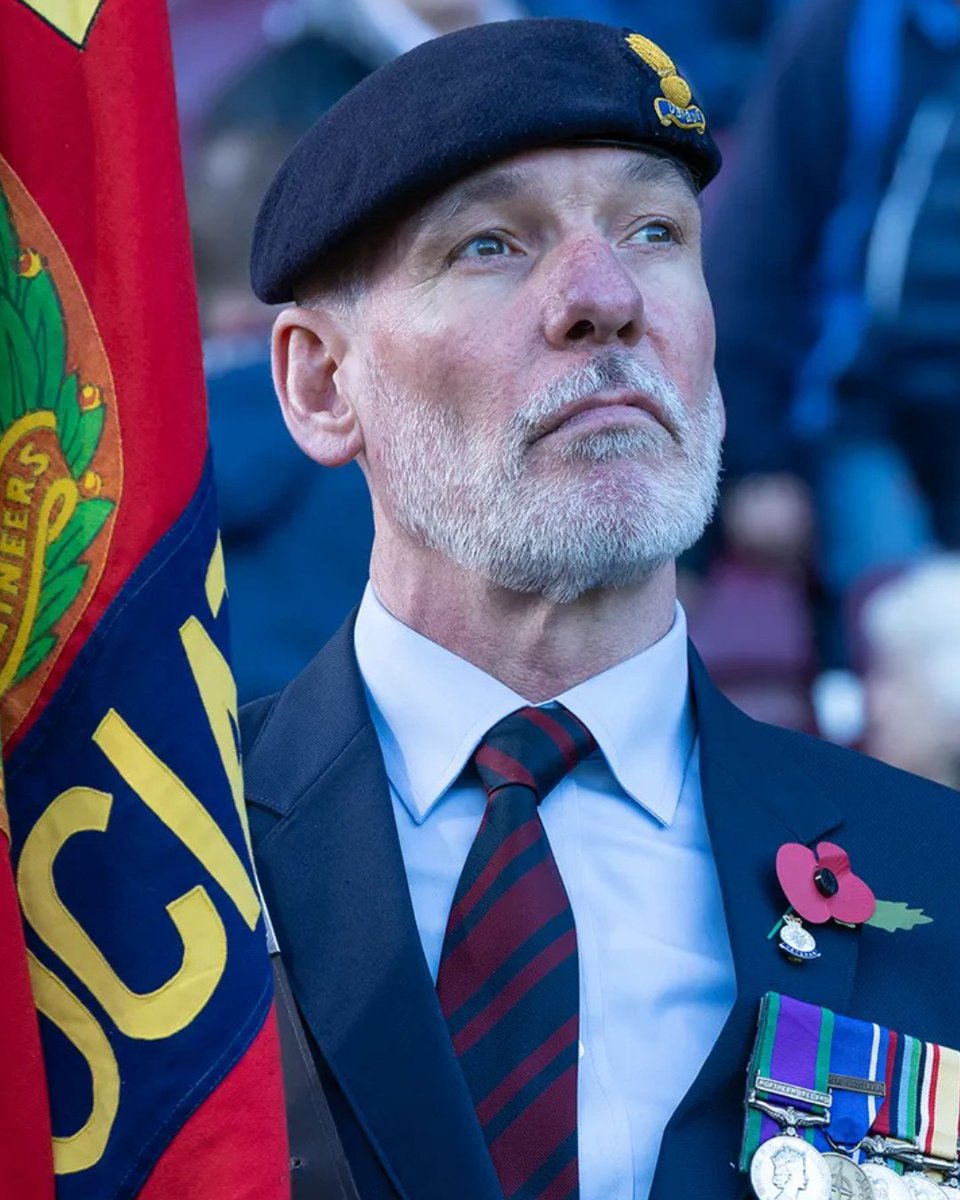
🌺 A pre-match Remembrance service will take place at the Mbanq Valley Parade ahead of Saturday’s @EmiratesFACup tie with @officialbantams.
Supporters travelling to Yorkshire are asked to take their seats in plenty of time before kick-off for the standard bearers, The Last Post, and a minute’s silence.
Full details ⤵️
https://t.co/OulDpjjVD3
#WeAreMarine | 📷 Officialbantams
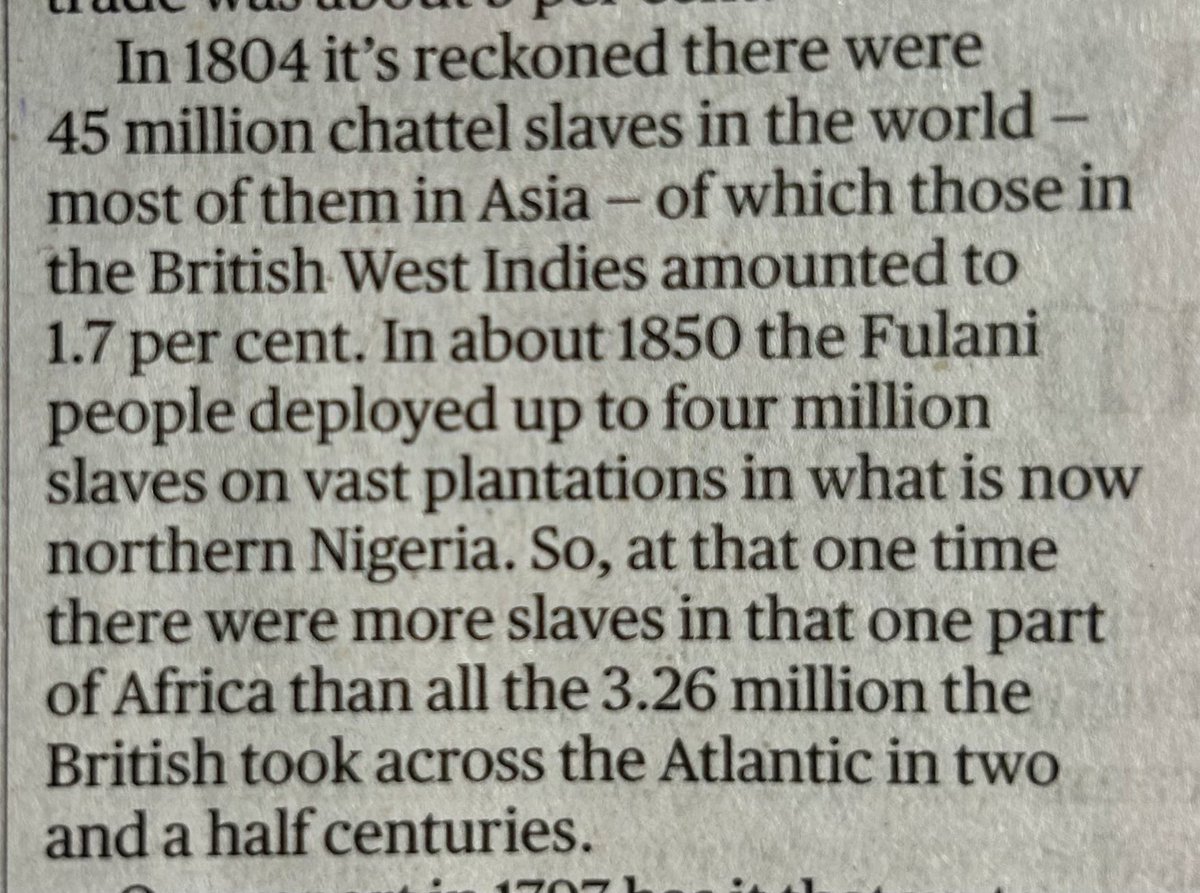
Part of Nigel Biggar’s article in The Sunday Times today, reminding us that a careful reading of history, by an historian who know what he’s talking about, is a big improvement on what too often passes for debate about slavery reparations.
Slavery was an evil in which people from every continent and region participated. We should be honest about the whole history, not select the parts that are politically convenient today, especially given Britain's leading role in ending the transatlantic slave trade.
If Caribbean countries are asking Britain for a formal apology for Britain’s role in the transatlantic slave trade, will they also be asking the same of the descendants of African kingdoms, rulers and merchants who captured, sold and profited from the trade?
On demands for reparations, whether through cash or debt relief, we have been down this track before. Twenty-five years ago, Jubilee 2000, Drop the Debt and Make Poverty History argued that cancelling the debts of poorer countries would give them a fresh start. More than $100 billion of debt was eventually written off, but many of those countries have since built up even bigger debts. Labour are already spending too much on Britain's welfare state, now is not the time for Andy Burnham to be providing global welfare.
There is no reason British taxpayers today should be held financially responsible for things that happened generations before any of us were born. And I have even less patience for political elites in commonwealth countries who don’t know how to make their own citizens prosperous now looking for another opportunity to blame Britain.
As Prime Minister, Andy Burnham should be Britain’s greatest defender. Instead, he is writing articles saying we need to confront our history (as if we haven't done enough of that) and considering another formal historical apology. Tony Blair already expressed Britain’s deep sorrow and regret for our role in the slave trade nearly twenty years ago. There is no need to do so again.
This is all another navel-gazing distraction. The Commonwealth should be looking forward, not endlessly backwards. That means economic partnerships to make us all richer and deeper military and security cooperation against common threats. If every Commonwealth summit becomes an exercise in presenting Britain with demands for cash then we need to start asking if it is worth the effort.