@prakdadlani Precisely I closed my previous venture. In your case it was 3rd party, in my case it was the person himself was asking (10% toh koi bhi deta he…usse acha kya de sakte ho).
Being first time founder, I never thought it would be the case in private business as well.
@Kazanjy@Kazanjy thank you.
Your post really insightful.
Btw, how to get the customer to demo, i mean initial we have to talk about “ what our product does”
Why Reliance Cancelled Plans to Produce Lithium-Ion Battery in India
1. Hithium is a tiny Chinese battery maker (1/200th in size of RIL)
2. This tiny firm refused to license its tech to India's most powerful group.
India’s Critical Import Dependence for Strategic Technologies:
Reliance Wants to Move from Fossil Fuels to Clean Tech, But Without Risk or Effort
a. Reliance (RIL) earns nearly $10 billion in annual net profits as a group. But due to a protectionist domestic market, it has no culture of investing in innovation and no motivation to compete globally.
b. RIL has not invested in R&D capabilities for cutting-edge lithium battery production or other clean technologies that are the future of the world.
c. It has no patents, design knowledge, product formulations, or manufacturing process knowhow to create next-generation competitive cell technology in-house.
d. A small, private company like Hithium (established in 2019) has been spending hundreds of millions of dollars every year in R&D to develop repeatable, high-yield processes that cannot be easily copied by others without deep expertise or investment.
e. It takes years of experimentation, trial production, pilot plants, safety labs, specialized R&D teams, advanced equipment, iterative optimization, and high failure rates to develop such technologies at scale.
f. RIL and other Indian companies are not interested as they have easier ways to dominate a protected domestic market. So, India remains heavily technology-dependent on the rest of the world.
g. Due to decades of R&D neglect by the Indian industry and faulty policies of successive administrations, India does not have the ecosystem required to innovate, build, scale production, and compete globally in even the most basic technologies.
h. In absence of a tech industry or ecosystem, India does not have the required elite pool of talent – research teams, battery scientists, process engineers, quality & reliability engineers, and equipment and automation specialists.
i. India does not have massively integrated supply chains like China, starting with advanced mining and refining capabilities (for critical battery raw materials), production of chemical precursors (cathode/anode), specialized manufacturing equipment, and R&D and testing infrastructure.
What is Required to Build a Vertically Integrated Materials-to-Cell Supply Chain for Lithium Battery and Other Cutting-edge Technologies in India
1. Long-horizon, patient capital in R&D.
2. Culture of innovation & failure-tolerance.
3. Celebrating technological wins instead of financial market wins (with globally incompetent promoters who are on the Forbes rich list due to a protectionist economy and an overvalued stock market.)
@arabicatrader
In 2015, Elon Musk explained exactly how he predicts the future.
His frameworks:
• First principles
• Capital sequencing
• Critical path focus
• Usefulness optimization
10 foundational lessons from his Stanford talk:
1. First principles thinking is your superpower
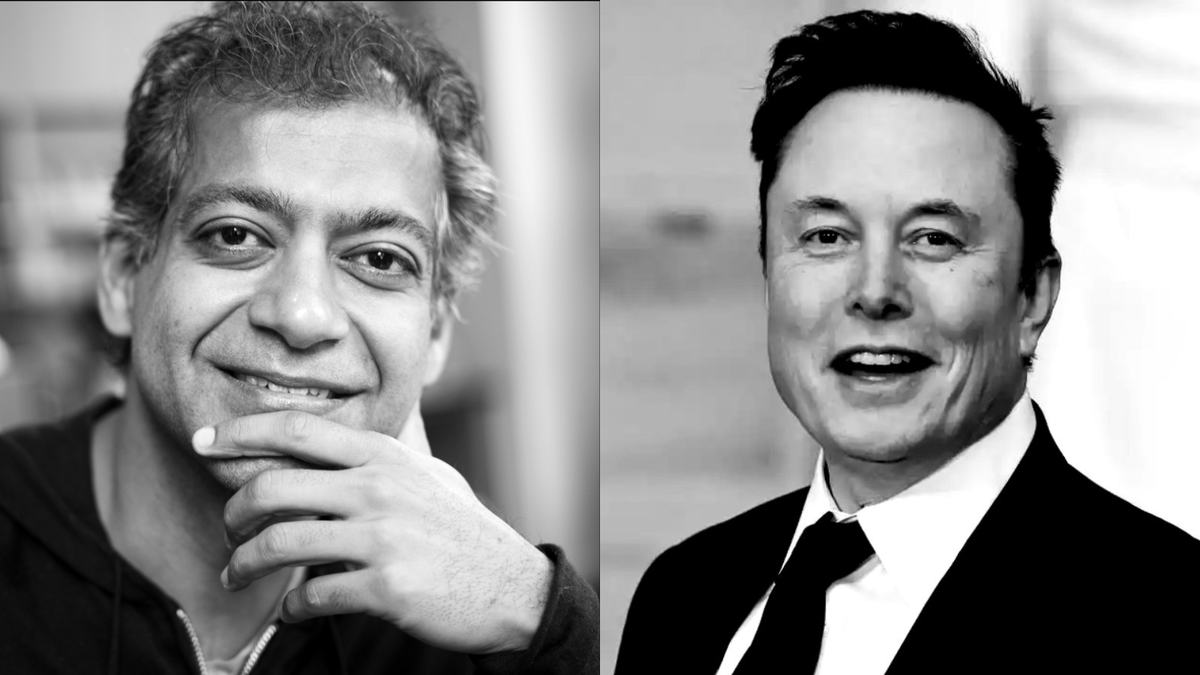
Naval Ravikant on Elon Musk: “The great entrepreneurs are willing to start over”
Naval argues that pride is the enemy of learning:
“When I look at my friends and colleagues, the ones who are still stuck in the past and have grown the least are the ones who were the proudest because they feel they already had the answers and don’t want to correct themselves publicly… Pride prevents you from saying, ‘I’m wrong.’”
The problem with pride, Naval explains, is that it prevents you from saying “I’m wrong.”
“When you don’t admit that you were wrong, you get stuck in it and you get trapped in a local maxima, as opposed to going back down and climbing up the mountain again… The great artists always have this ability to start over — whether it’s Paul Simon, Madonna, or U2.”
And Naval argues that the best entrepreneurs are always willing to start over too:
“I’m always struck by the Elon Musk story where he did PayPal… And he said something along the lines of: ‘I made $200 million from the sale of PayPal. I put $100 million into SpaceX, $80 million into Tesla, $20 million into Solar City, and I had to borrow money for rent.’ This guy is a perennial risk taker. He’s always willing to start over. He doesn’t have any pride about being seen as successful or being seen as a failure. He’s willing to put it all on the line to back himself again. But the key thing is he’s always willing to start over… It’s a willingness to look like a fool and a willingness to start over.”
He continues:
“A lot of people just don’t have that. They become successful or rich or famous and that’s it. They’re stuck. They don’t want to go back to zero, but creating anything great requires going from zero to one, and that means you go back to zero. And that’s a really painful and hard thing to do.”
Video source: @ChrisWillx (2025)
The Truth of Coloured Sugary Soft Drinks sold in India. Our kids don't deserve this. Actually no Human deserves this.
This video needs to go Viral...
#FI
Most founders accidentally train their customers never to pay them.
@MadhavanSF (the "pricing guru" of Silicon Valley - having worked with LinkedIn, Uber, and 30+ unicorns) calls it the 20/80 Pricing Trap
• 20% of your features drive 80% of the willingness to pay
• Founders give that 20% away for free to gain distribution
• You are left trying to monetize the remaining 80% of features - the ones users don't actually value.
The result? You build a charity, not a business.
In this week's episode of The Library of Minds, we discuss the science of monetization and deconstruct how to architect ‘Profitable Growth’ - the core framework from his new book, Scaling Innovation.
03:33 - Netflix vs Blockbuster: The Pricing Decision That Changed Tech
08:06 - Why Most Startups Get Pricing Wrong
11:39 - Freemium vs Paid: When Free Destroys Value
15:38 - Pricing Models Matter More Than Price
16:28 - The AI Pricing Framework: Autonomy vs Attribution
21:49 - The Biggest Pricing Mistake Ever
25:05 - Why Steve Jobs Was a Pricing Genius
26:44 - Behavioral Pricing: How Founders 10× Deals Without Changing Product
31:02 - Data vs Conviction: How Great Founders Make Pricing Decisions
Start your startup.. (No idea, no problem)
-2~4 People
-50% Tech
-1 Years worth of cash in the bank to live
-Everyone has to quit their Jobs
-Get buy in from all team members
-Find problems that needs a solution once a day or once a week
-Browse thru IdeaBrowser to get started.
The most valuable skill in the world:
Decision-making.
I studied how Naval, Elon, and billionaires make decisions.
Here's how you make better decisions than 99% of people: