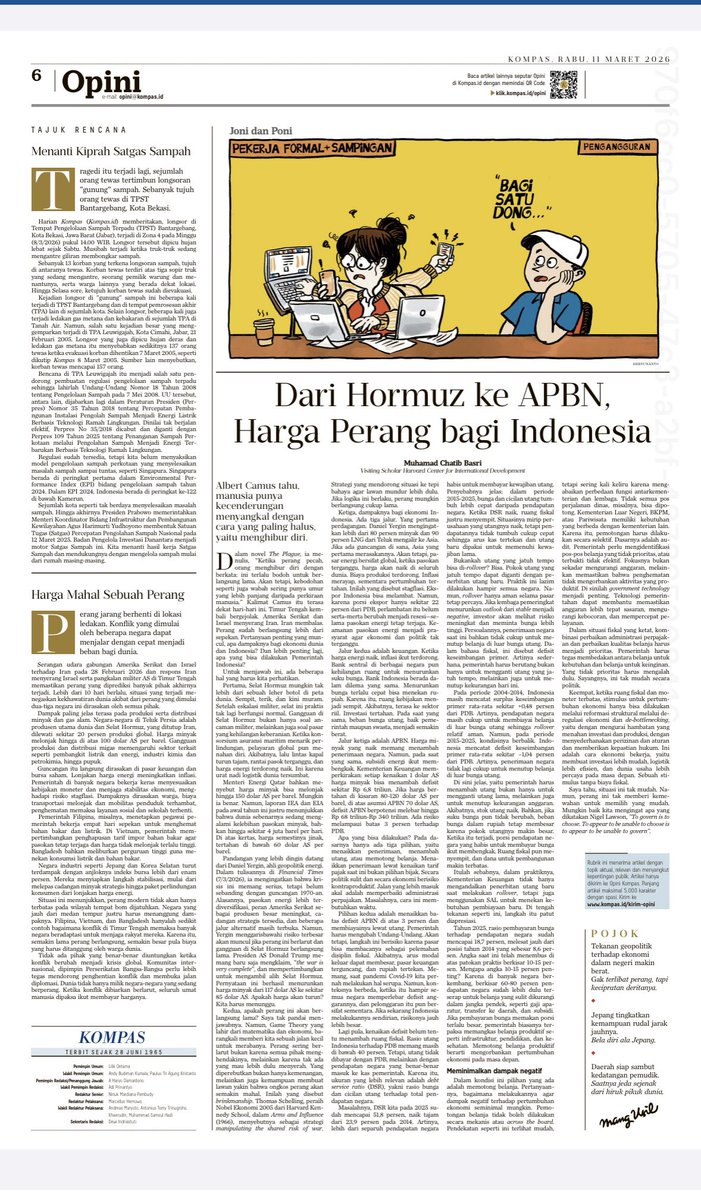
I do prefer Muhammadiyah to lead Kemenag as they hold robust intellectuality and high credentials as Moslem scholar. They might seem better representing so-called moderate Islam.
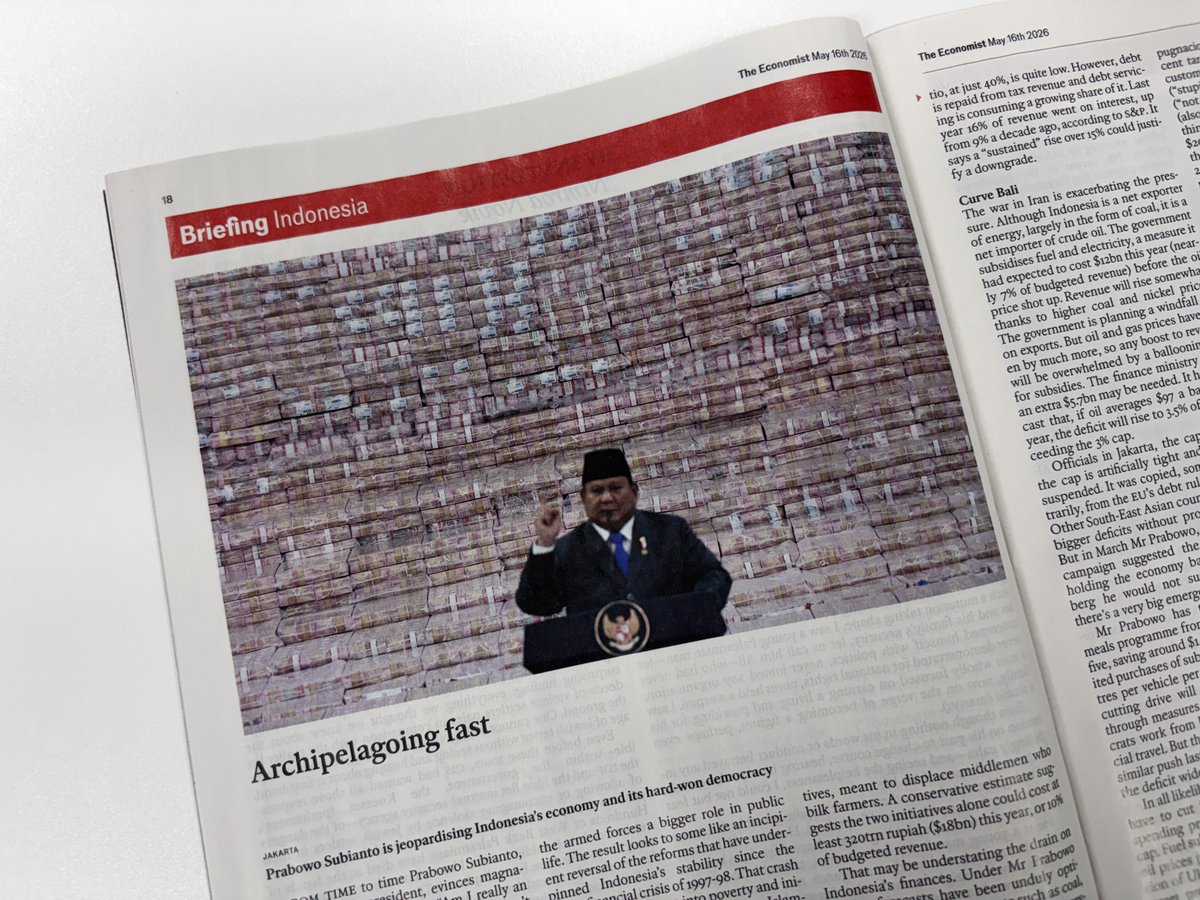
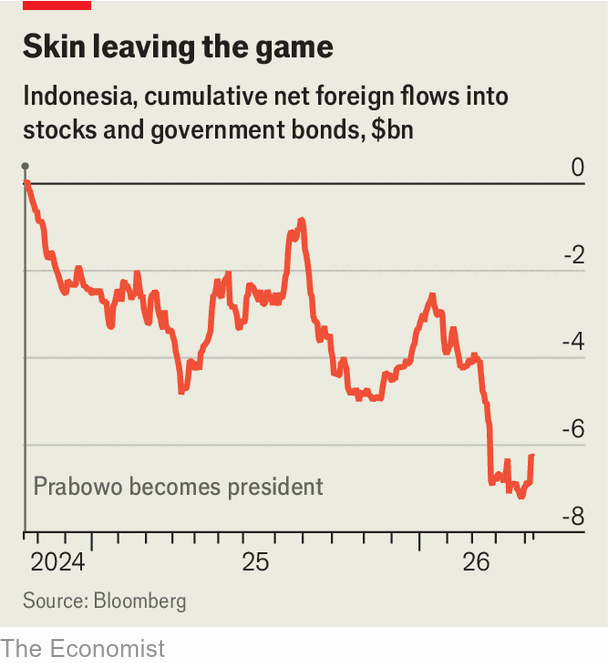
Indonesia was once seen as a darling of investors. But fears of corruption and policy missteps are raising concerns about the country’s economic future
https://t.co/Himk6JYfLr
Saat masih kuliah di UGM, saya mendengar kabar seorang diplomat muda Indonesia di London berani tampil di BBC World Debate, berhadapan dgn diplomat senior Ramos Horta, di saat atmosfer internasional sedang menyudutkan Indonesia. Diplomat muda Indonesia itu tampil gemilang menjaga nama Indonesia tegak berwibawa. Di situlah pertama kali saya mendengar namanya: @dinopattidjalal.
Beberapa tahun kemudian, saat sedang menempuh progam PhD di Illinois, kami berjumpa langsung. Dino datang ke Chicago menjelaskan keadaan mahasiswa dan diaspora Indonesia pasca-9/11. Yg kami temui adalah diplomat muda yg cerdas, artikulatif, dan mampu menangani persoalan rumit dgn ketenangan diplomatik yg sulit ditiru.
Tahun 2012, sebagai Dubes di AS, Dino menggagas Kongres Diaspora Indonesia pertama di Los Angeles, mempertemukan diaspora dari seluruh dunia. Saya termasuk yg ia undang. Ia lalu mendirikan FPCI, komunitas kebijakan luar negeri terbesar dan berpengaruh, yg ikut melahirkan generasi diplomat baru, ujung tombak kita di panggung global.
Menguasai substansi, rekam jejaknya teruji, dan pengalaman memimpinnya luas. Itulah Dino. Karier diplomatiknya panjang dan ajeg, kecintaannya pada politik luar negeri Indonesia begitu dalam. Dino Patti Djalal, bukan karbitan jadi diplomat, bukan pula karbitan jadi pejabat.
🧵 Prabowo Subianto is chipping away at the political and economic settlements that have been the foundation of Indonesia's hard-won stability since the Asian financial crisis.
In @TheEconomist's Briefing this week, @EthanYWu and I take in the first 18 months of his presidency.
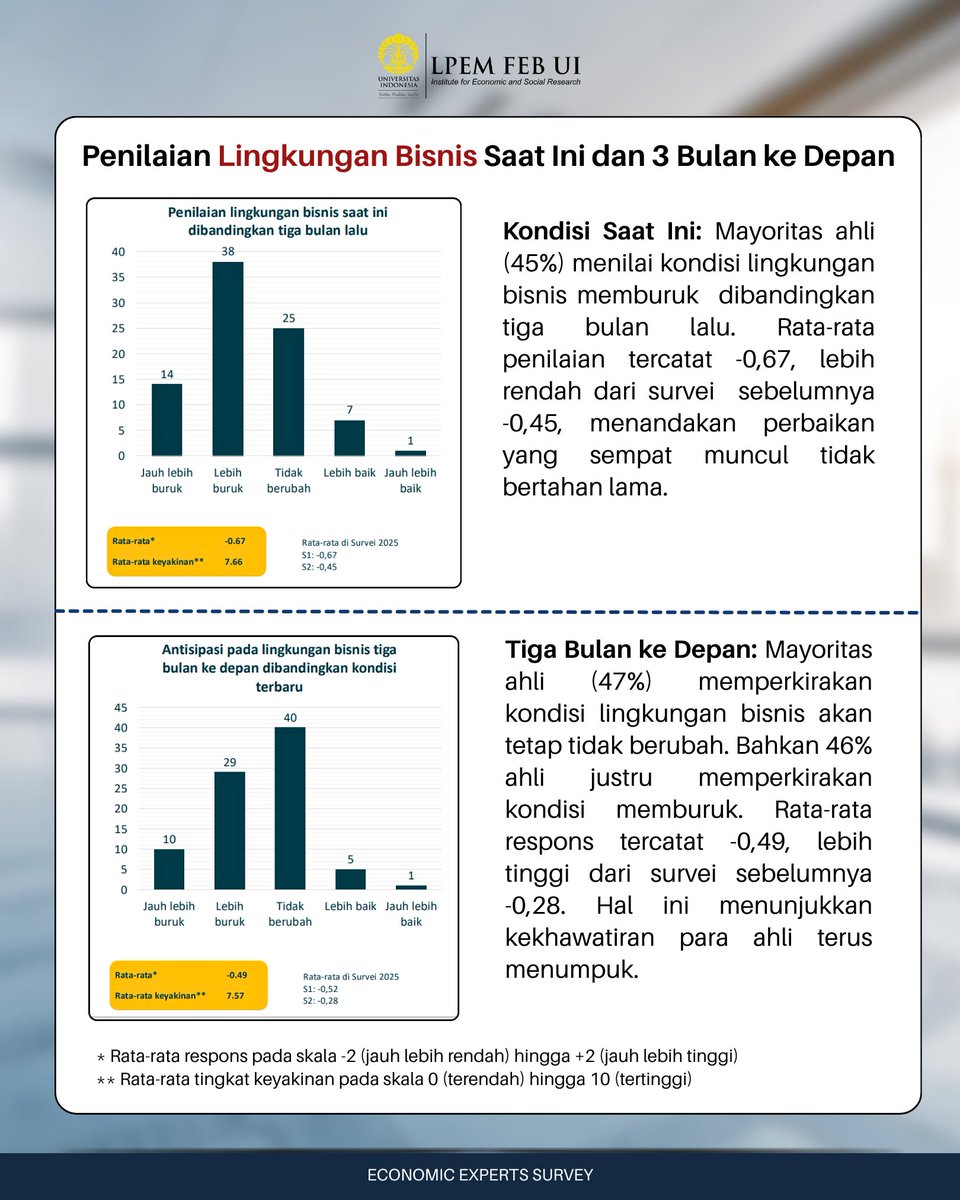
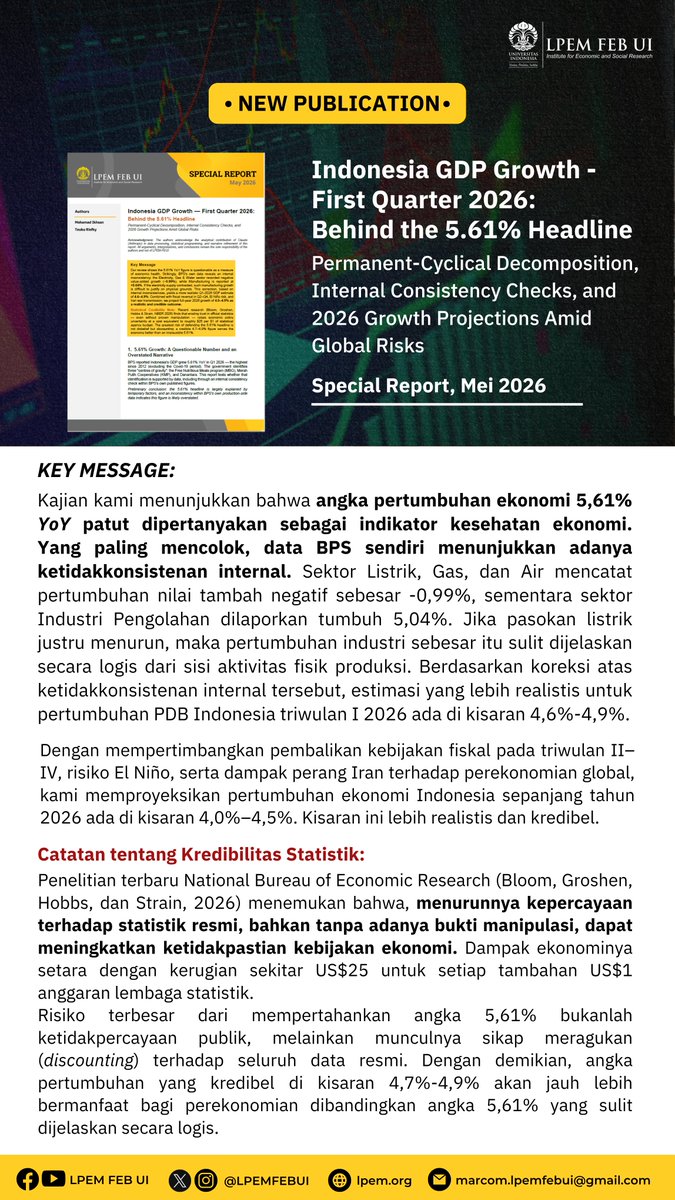
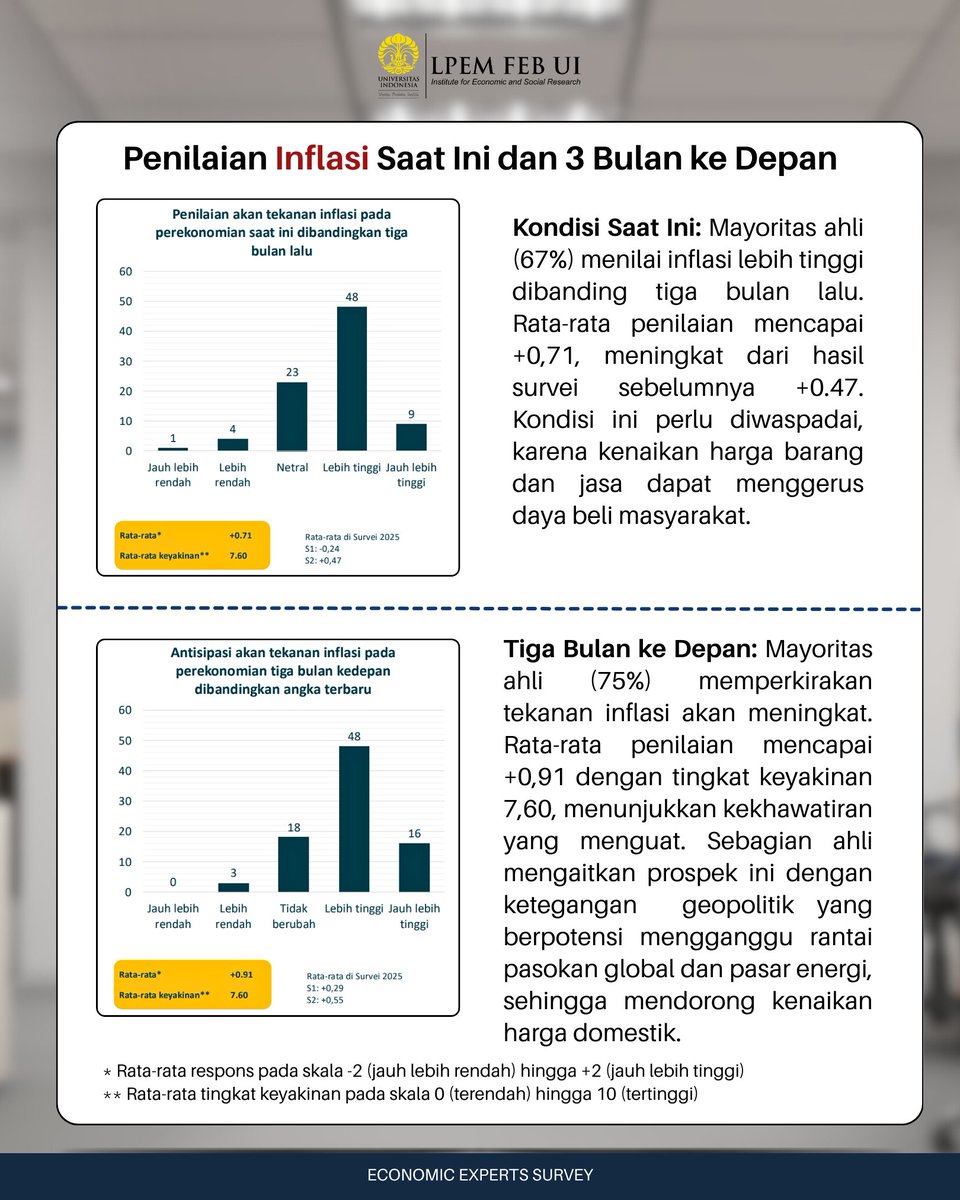
3x Survei LPEM Berturut-Turut:
𝗠𝗮𝘆𝗼𝗿𝗶𝘁𝗮𝘀 𝗔𝗵𝗹𝗶 𝗧𝗶𝗱𝗮𝗸 𝗠𝗲𝗹𝗶𝗵𝗮𝘁 𝗣𝗲𝗿𝗯𝗮𝗶𝗸𝗮𝗻 𝗘𝗸𝗼𝗻𝗼𝗺𝗶 𝗜𝗻𝗱𝗼𝗻𝗲𝘀𝗶𝗮‼️
Ini bukan penilaian pengamat biasa ya, tapi para ekonom S2-S3 dengan insight ekonomi yang kuat. 🙏😌
🔍Baca hasil survei selengkapnya: https://t.co/6WFFeCKsCF
#LPEMFEBUI #LembagaPenyelidikanEkonomiMasyarakat #EkonomiIndonesia #SurveiEkonomi
#DataEkonomi #AnalisisEkonomiSosial #HasilSurvei #Ekonomi
Untuk mahasiswa ekonomi atau yg tertarik international finance, ada banyak pertanyaan yg diajukan ke saya soal Krisis 98. Pertanyaan secara reguler diajukan setiap kali rupiah melemah. Platform X tentu bukan forum yg adil untuk membahas secara lengkap soal ini, krn keterbatasannya.
Yg paling baik adalah membaca kembali study2 tentang beberapa krisis yg dialami Indonesia. Sumber tiap krisis bisa berbeda.
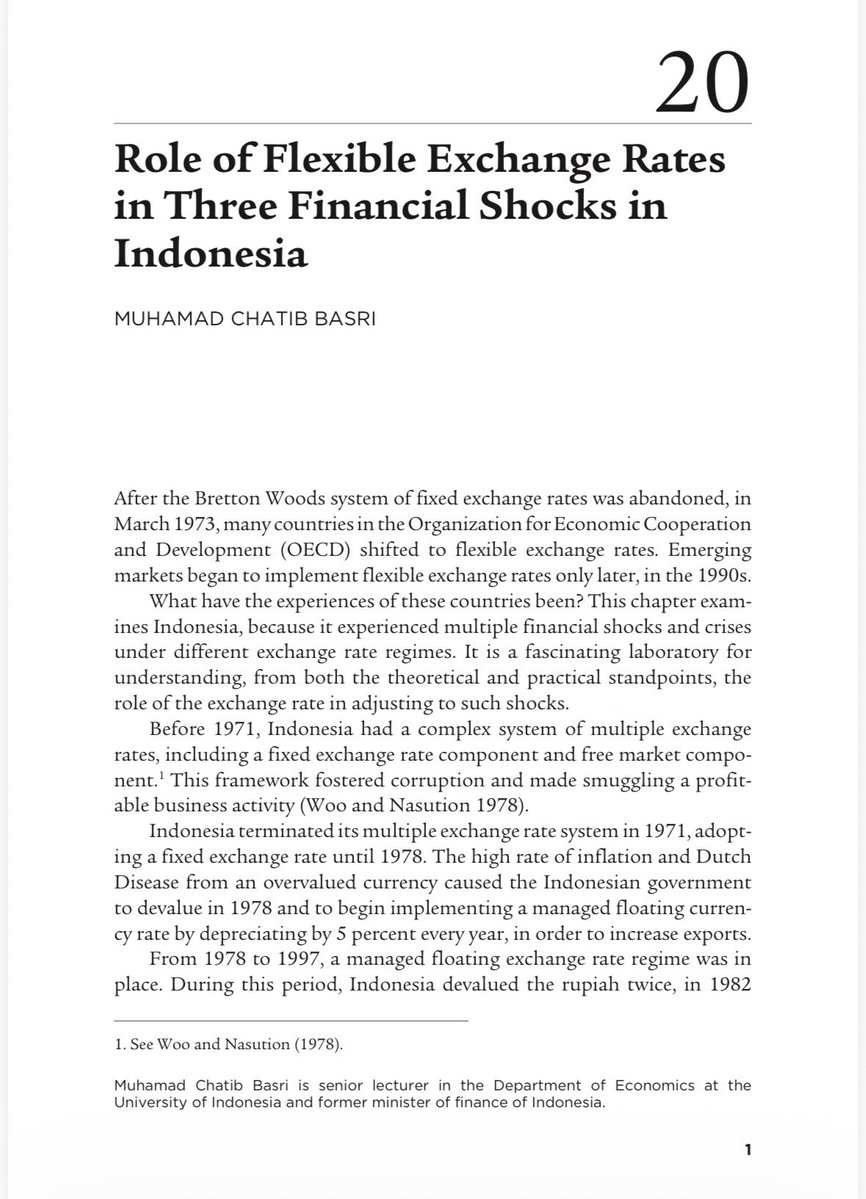
Berikut saya berikan beberapa potongan dan referensi dari tulisan saya “Role of Exchange Rates in Threes Financial Shocks in Indonesia, yg di edit olen Maurice Obstfeld dan Douglas Irwin, dalam buku Floating Exchang Rate at Fitfy. Obsteld dan Irwin kerap dianggap “guru guru” dalam internationa trade and finance.
Dalam tulisan ini saya menunjukkan bagaimana tingkat bunga yg tinggi akibat inflasi yg tinggi mendorong private sector meminjam dari luar, dimana tingkat buat di luar negeri relative lebih rendah.
Dan krn depresiasi rupiah “ di garansi” 5% melalui managed floating exchange rate sejak 1978 membuat pelaku ekonomi menghiraukam resiko exchange rate. Pinjaman jangka pendek swasta naik.
Ketika peg rupiah harus dilepas oleh BI krn tekanan nilai tukar akibat krisis Thai Bath di Thailand, maka utang tsb dalam nilai rupiah melompat, ini yg disebut Carmen Reinhart dan Calvo sbg fear of floating.
Situasi ini dikombinasina dg banking sector yg buruk. NPL sangat tinggi dst. Silahkan membaca lengkapnya …
Menariknya ketika mulai mengadopsi flexible exchange rate, ia membantu untuk membuat pelaku pasar terbiasa dg resiko exchange rate dan membantu portfolio balancing mereka shg “risk” menjadi “calculated risk”. Lengkapnya bisa dibaca dalam buku ini
https://t.co/ApJdLKTGYv
Untuk mhs ekonomi saya sangat menganjukan membaca buku ini, krn banyak guru”internationa finance” spt Frankel, Krugers, Helene Rey, Hyun Song Shin, Linda Goldber dsb menulis dalam buku ini.
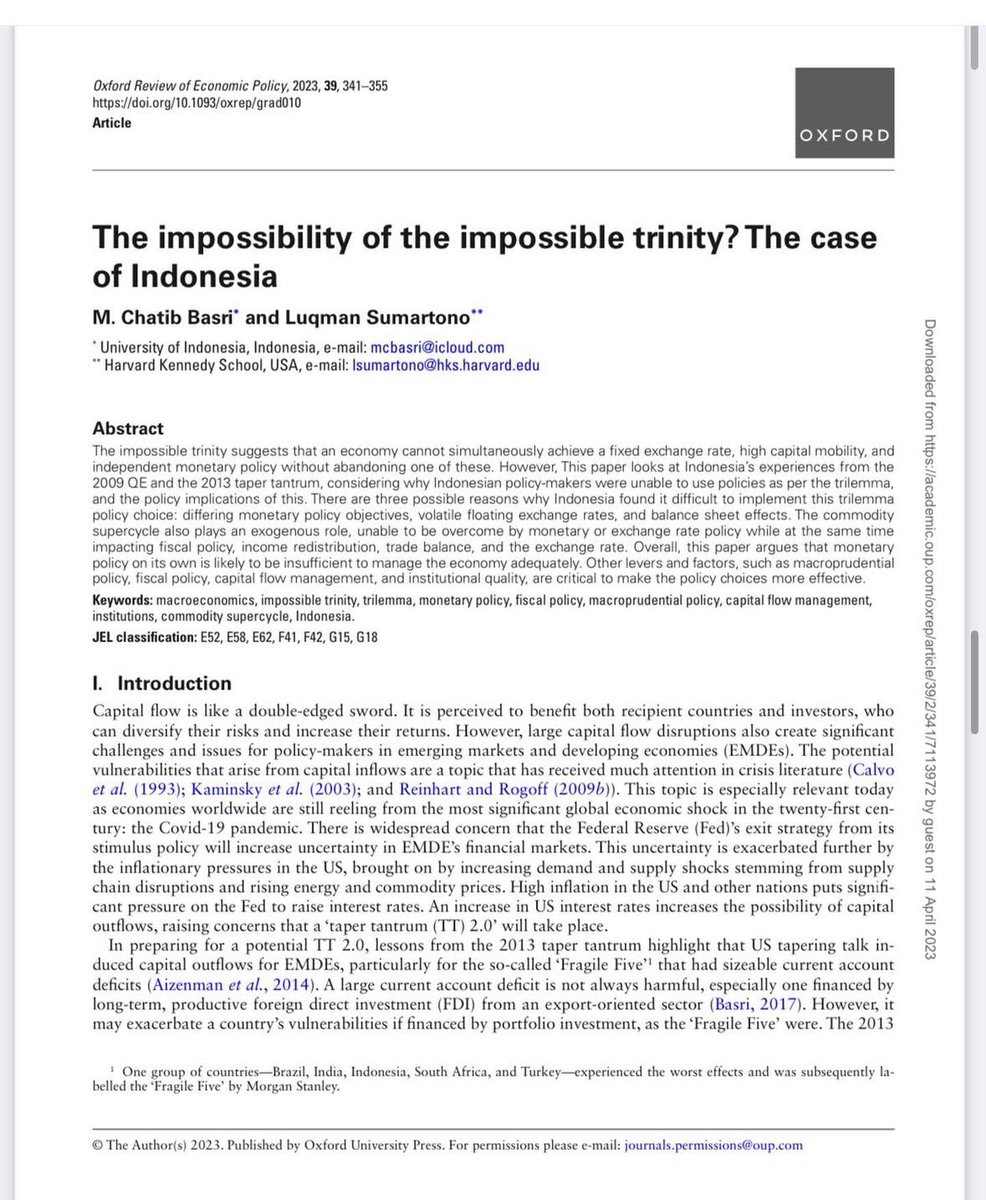
Namun dalam chapter ini, dan juga dalam paper saya di Oxford Review of Economic Policy, “ The Impossibility of the impossible trinity? The case of Indonesia, link nya
https://t.co/pXzORo0R2F
saya menunjukkan floating exchange rate ala Mundell-Flemming juga tdk bisa diterapkan sepenuhnya, krn costnya thd perekonomian juga besar terutama dalam kondisi arus modal yg volatile, krn itu Central Bank tetap perlu melalukan intervensi, bukan untuk pegging the level tetapi smoothing the volatility.
Karena itu perlu managing capital flow dan integrated framework. Silahkan membaca
Saya juga menulis
Perbandingan 3 krisis (Krisis 98, Glibal Financial Crisis dan Taper Tantrum) secara lebih rinci juga bisa dilihat dalam chapter saya Twenty Years after the Financial Crisis (free access) dalam buku yg diterbitkan oleh IMF (free access ini link nya https://t.co/uN7xjU22CH
Tentu tidak ada jawaban tunggal untuk issue ini. Tulisan2 ini adalah upaya untuk memahami apa yg terjadi dan tentu tidak bisa mengklaim sebagai satu2nya penjelas final. Ilmu pengetahun harus bisa dibuktikan salah, dan karena itulah pemikiran berkembang, krn ia tidak difinalkan. Dan paling tidak, ini membantu mengingatkan saya: bahwa saya belum selesai jg bodohnya.
Tesla received billions in government loans, tax credits and subsidies, making Elon Musk the world's richest person. The public? No equity stake, no profit-sharing, no guarantee of affordable access.
My working paper with @rodrikdani has now been published in Industrial and Corporate Change. It explores the conditionalities—profit-sharing, reinvestment requirements, knowledge transfer—that can ensure industrial policy delivers public value, not just private wealth. [LINK IN NEXT POST]
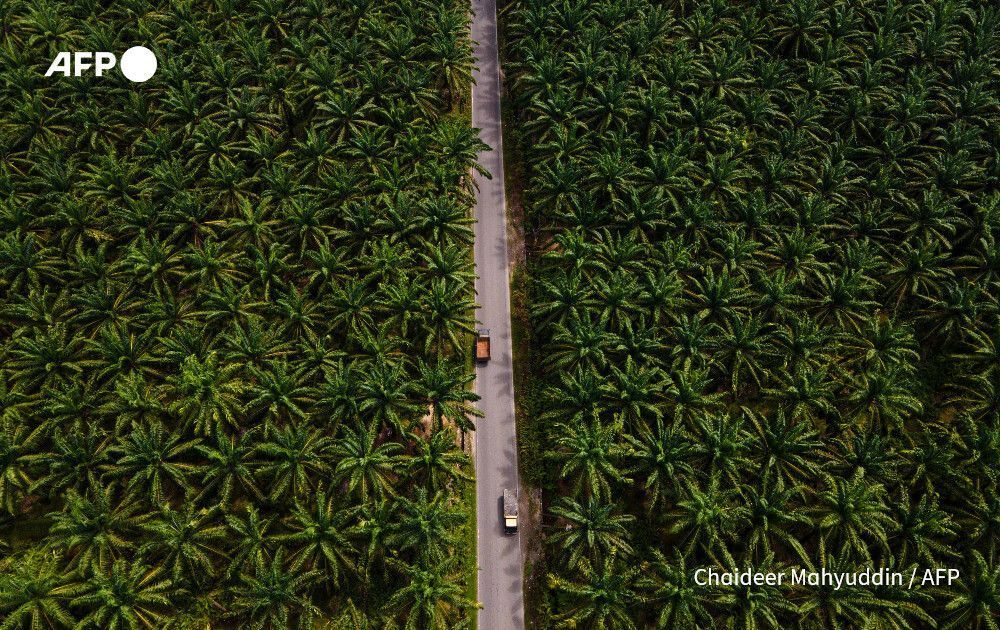
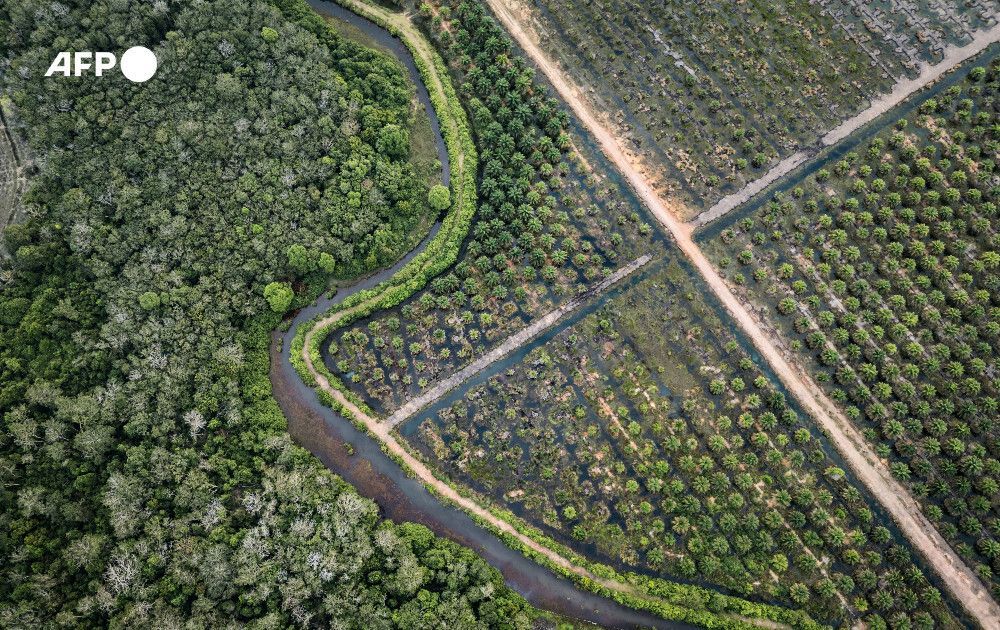
INVESTIGATION: Indonesian firms targeted in a palm oil fraud probe supplied European firms, an investigation by AFP and SourceMaterial (@Source_Mat) has found.
The European firms include Italian energy giant Eni and Finnish sustainable aviation fuel leader Neste
https://t.co/m6eXKJNKeB
I’m hearing extremely concerning news that Andrie Yunus, the Deputy Coordinator of the Commission for the Disappeared & Victims of Violence (@KontraS) suffered an acid attack carried out by unidentified individuals, resulting in serious injuries across his body. I call on the Indonesian authorities to carry out thorough investigations into this horrific attack. Impunity for violence against HRDs is unacceptable. @IndonesiaGeneva@Kemlu_RI
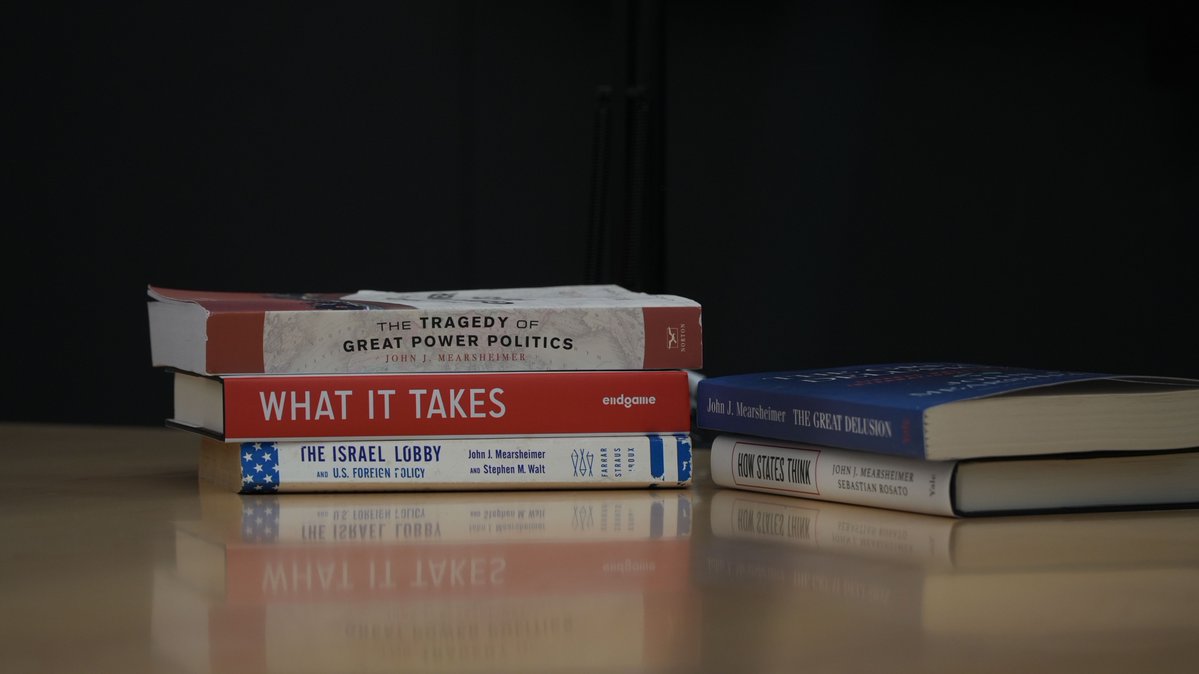
"It was a miscalculation."
Last Thursday, I spent nearly two hours in conversation with John Mearsheimer, unpacking:
- The new imperialism,
- Board of Peace and its nature for unilateralism,
- Strategic disasters in Iran and Ukraine,
- The possibility of nuclear proliferation in a multipolar world (read Eliza Gheorghe, “Proliferation and the Logic of the Nuclear Market”)
- The challenge in transnationalizing narratives in a multipolar world
- Existential economic threat to the pre-existing order
Coming soon Wed, 11 March 5PM WIB/2AM PST on Endgame
When you use the phrase “mengabdi untuk negara,” you are romanticising scholarship. Mengabdi is a morally charged word. It makes a scholarship sound like an act of "kindness" from the country: something that, in return, demands moral obligation i.e., submission (mengabdi).
But what does that actually mean?
If by “country” you mean the government, whose money is it spending? If you mean “the people,” did they directly choose to offer this generosity?
In either case, calling it kindness is problematic. You are not “kind” when you spend other people’s money. And it is not “kindness” if those whose money is used have no direct say in how it is used.
A scholarship is not charity. It is public investment, funded by taxpayers, justified by expected returns, and managed through policy, not emotion.
If it is an investment, then the real question is simple: which approach delivers the best return? My argument is straightforward: forcing scholars to return immediately does not maximise value for money.
The best slogan for LPDP is "Menjadi yang terbaik"
banyak sekali miskonsepsi akan alumni LPDP, seakan akan lulusan S2 atau bahkan S3 UK/US/ manapun itu manusia sakti yang bisa berkontribusi “langsung” kepada bangsa.
Dalam dunia akademik, overwhelming majority of lulusan PhD itu hanyalah seorang bayi yang masih menyusu; belum pernah membuktikan diri sebagai periset independen. They are nobody without the incubator. “Pulanglah, berbakti bangun negeri” - by doing what exactly?? An experimental physicist cant work without a synchrotron; NMR etc.
Perlu dimengerti bahwa standard global research is extremely high; Indonesian institutions must compete with groups that have multiple postdoctoral experiences from all around the world. Most Indonesian researchers even in ITB/UI/UGM never even secured a postdoc positions! they came back straightaway after PhD!
Mereka adalah korban romantisasi kebijakan dan narasi emosional; seakan akan negara itu seorang Ibu yang sekarat menjual seluruh hartanya untuk membiayai anak yang durhaka.
this “Ratu Adil” syndrome/narrative membuat kita benci akan sesama, curiga akan mereka yang mendapat kesempatan untuk mengkultivasi dirinya.
Sejak kapan kita menjadi bangsa yang penuh dendam akan sesama?
To those who get the opportunity to be sent abroad - help if you can; or otherwise, SHUT UP! - you’re nobody yet.
Saya meyakini pimpinan LPDP memahami konsep brain circulation dan investasi jangka panjang - some of them are bankers anyways. Namun kebijakan mereka kerap berada dalam tekanan politik dan birokrasi.
Pertama, ada persepsi bahwa LPDP lebih mudah diakses oleh kalangan elite (misalnya isu yang diangkat oleh Primus Yustisio, Re: anak pejabat). Jika persepsi ini benar, maka kelompok elite tentu tidak memiliki insentif untuk mendorong perubahan besar pada skema yang sudah menguntungkan mereka.
Kedua, LPDP harus berhadapan dengan DPR yang cenderung menerjemahkan nasionalisme secara populis: “segera pulang dan membangun negeri.” Dalam atmosfer seperti ini, sentimen publik yang paling sederhana sering kali menjadi tekanan kebijakan.
Ketiga, pengawasan BPK membuat riset dan pendidikan kerap diperlakukan seperti proyek pengadaan: harus cepat terlihat output, jelas serapan anggaran, dan mudah diaudit secara administratif.
Akibatnya, investasi pengetahuan yang secara alamiah berjangka panjang dipaksa tunduk pada logika jangka pendek.
Mengelola negara dalam kondisi seperti ini menuntut kombinasi langka antara kompetensi teknokratis dan keberanian institusional. Butuh otak dan tulang punggung: kepemimpinan yang mampu menahan tekanan jangka pendek demi kepentingan strategis jangka panjang.
“Kalau patriot, pulang.” Dalam konteks riset global, cara berpikir seperti ini sangat tidak menguntungkan negara sendiri. Sangat sedikit orang Indonesia yang berhasil mendapatkan posisi akademik permanen di UK. Dari sekitar hanya 30–40 permanent academics Indonesia di UK (hampir tidak ada yang berasal dari jalur LPDP (in fact, saya pribadi tidak mengenal satupun). That is a very sad number for a country this "big".
Hampir tidak mungkin mendapatkan posisi permanen di universitas di UK; apalagi Russell Group univs; tanpa memiliki portfolio postdoctoral yang sangat kuat. Persaingannya terlalu brutal. If you disappear for 2–3 years after your PhD, you are immediately out of the market.
Negara-negara seperti China, India, dan bahkan Iran justru memanfaatkan diaspora akademiknya. Mereka menjadi:
– jembatan hibah riset internasional
– co-supervisor doktoral
– pintu masuk kolaborasi laboratorium
– penghubung industri dan universitas
– agen soft power budaya dan bahasa
Akhirnya mendongkrak kualitas dan ranking universitas mereka.
Nilai hibah riset yang mengalir melalui jaringan ini seringkali jauh melampaui investasi beasiswa ±2 miliar rupiah per orang. Walaupun itu mahal, but in the global research landscape, that is a small number. A UK-based Indonesian academic who wins Newton Fund / ISPF grants with Indonesian collaborators (I know a few) can easily bring back 2X that amount into the country within a year.
Saya sendiri tidak pernah mendapatkan beasiswa pemerintah manapun. Saya harus bekerja paruh waktu untuk menyelesaikan S2 dan S3. But I do feel a certain sadness melihat bagaimana kita belum mampu mendukung orang-orang kita untuk berjaya diluar.
Those who won LPDP scholarships are most likely more intelligent and more competent than I ever was. But many of them never got the chance to become globally competitive scientists. That is the part that makes me sad. We still think in zero-sum terms: as if one person flourishing abroad automatically means the country loses.
A country is strong ONLY when individuals flourish, wherever they are!
Yang perlu kita benahi adalah manajemen beasiswanya: pastikan yang mendapatkan memang benar-benar PANTAS. Sentimen negatif yang begitu kuat ini adalah pertanda adanya kecurigaan bahwa sistemnya tidak sepenuhnya adil. That is what needs to be fixed.
Nobody goes to a football match booing the best players. People root for those who truly deserve to be on the field. Scholarship awardees who genuinely earn it will be supported. They will be celebrated. Dan jika seseorang bisa memenangkan posisi postdoc di universitas bergengsi, dalam sistem yang sangat kompetitif, itu sendiri adalah bukti bahwa dia pantas.
Go on, champ! We’re proud of you.
Ray Dalio just released 500 years of data showing exactly how empires collapse.
His conclusion? America is in Stage 6 of 9.
The dangerous stage.
Here's what his math actually says about where we're headed:
Dalio studied every major empire collapse since 1500.
Dutch. British. American.
The pattern repeats with machine-like precision every 50-100 years.
Not because of politics or ideology.
Because of math.
The "Big Debt Cycle" has nine stages.
We're currently in Stage 6.
The dangerous one.
Here's how it works:
Stages 1-4: The Rise
Countries borrow to build infrastructure.
Debt is productive. GDP grows faster than debt service costs.
Everything feels sustainable.
This was the U.S. from 1945-2000.
Low debt-to-GDP. Strong productivity growth.
Borrowing made sense.
Stage 5: The Top
Debt service hits 15-20% of GDP.
Interest costs start crowding out productive spending.
But everyone's too comfortable to notice.
Markets boom. Wealth gaps explode.
The U.S. crossed this threshold around 2008.
Stage 6: The Crisis
This is where we are now.
Federal debt exceeds 120% of GDP.
Two choices: Let interest rates rise and crash the economy.
Or print money and create inflation.
Both destroy wealth.
Just differently.
In the 1930s, we chose deflation.
In 2008, we chose money printing.
In 2026, we're doing both at the same time.
Stages 7-9: The Reset
Either massive restructuring through negotiation.
Or war.
History shows wars resolve 90% of these cycles.
Not because humans are violent.
Because debts become mathematically impossible to service.
Dalio's data is clear:
When internal inequality peaks AND external rivals emerge, conflicts become inevitable.
The U.S. has both right now.
Wealth inequality hasn't been this high since 1929.
China's GDP grew 6-8% annually while we borrowed to maintain consumption.
Dalio's advice for Stage 6 is simple:
Sell debt. Buy gold.
Not because gold produces anything.
Because governments print money to escape debt traps.
Gold has risen 3x since 2020.
Exactly as the model predicted.
But here's what actually matters for regular investors:
You can't stop the Big Cycle.
But you can position for it.
Dalio's framework identifies five big forces that drive every transition:
1. Productivity growth
2. Debt cycles
3. Money supply
4. Wealth gaps
5. Geopolitical power shifts
When all five align in the same direction, the cycle turns.
Right now, all five are pointing toward Stage 7.
Productivity growth is slowing.
Debt service costs are rising faster than GDP.
Money supply expanded 40% since 2020.
Wealth concentration is at century highs.
China is building parallel financial infrastructure.
The math doesn't lie.
So what does positioning actually look like?
Dalio's research across 500 years shows three consistent patterns:
Pattern 1: Fiat currencies lose value during Stage 6-7 transitions
Every time. No exceptions.
Governments print to escape debt traps.
The dollar, pound, and euro all follow the same path.
This is why gold and hard assets outperform during these periods.
Pattern 2: Geographic diversification matters more than asset class diversification
When one empire declines, another rises.
Dutch to British. British to American.
The cycle doesn't end. It relocates.
Portfolios concentrated in declining empires get crushed.
Pattern 3: Volatility spikes 3-5x during Stage 6
The 1930s saw 50%+ market swings.
The 1970s stagflation created wild inflation volatility.
2008-2009 saw daily 5% moves.
Stage 6 isn't calm. It's chaos punctuated by brief stability.
Here's the data that should terrify you:
U.S. debt-to-GDP: 120% (highest since WWII)
Annual interest costs: approaching $1 trillion
China's GDP growth: 6-8% while U.S. averages 2-3%
Time between 1929 inequality peak and crash: 8 months
Time since current inequality peak: We're in it now
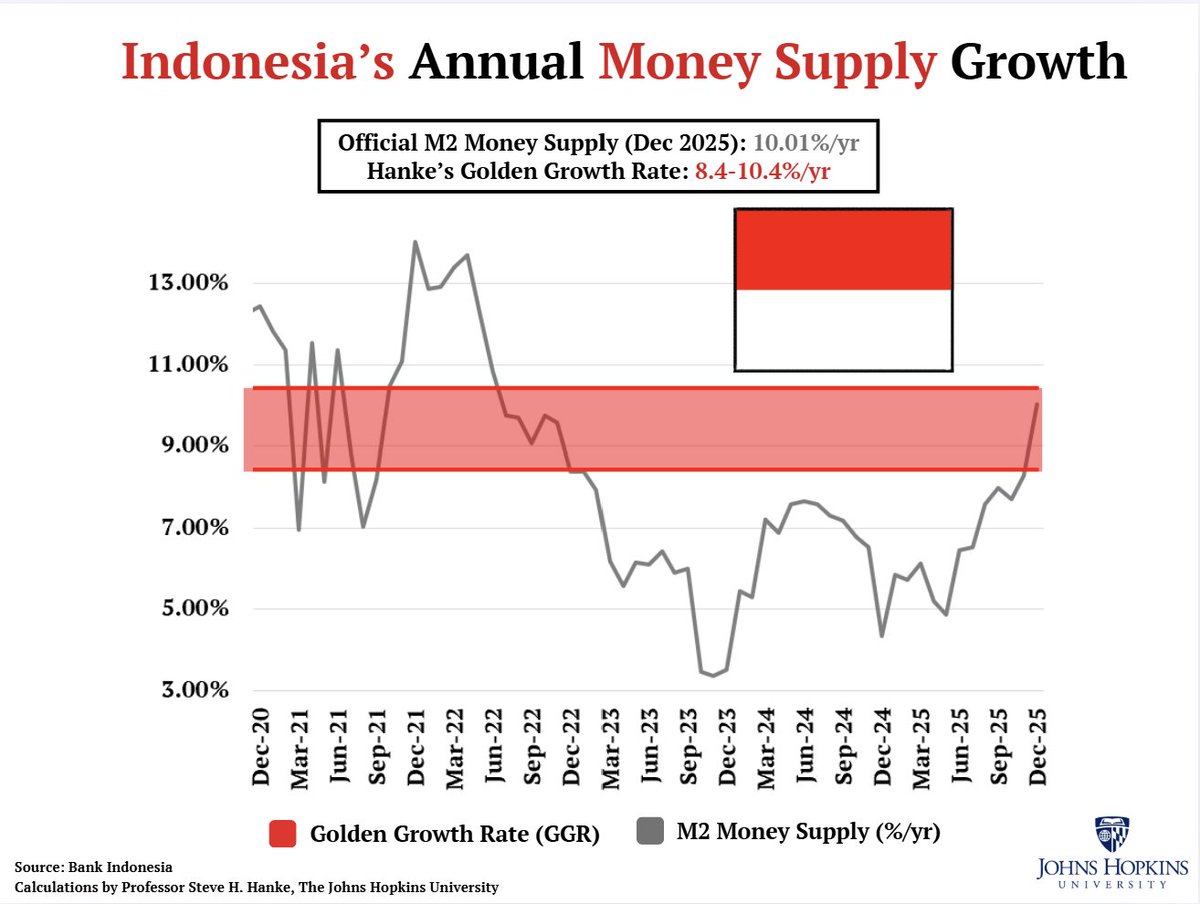
Indonesia’s CPI is 2.92%/yr.
Indonesia’s money supply (M2) is growing at 10.01%/yr. That’s WITHIN Hanke's Golden Growth Rate of ~8.43-10.43%/yr, a rate consistent with Indonesia’s 1.5-3.5%/yr inflation target.
THE INFLATION STORY = A MONEY SUPPLY STORY.











![MazzucatoM's tweet photo. Tesla received billions in government loans, tax credits and subsidies, making Elon Musk the world's richest person. The public? No equity stake, no profit-sharing, no guarantee of affordable access.
My working paper with @rodrikdani has now been published in Industrial and Corporate Change. It explores the conditionalities—profit-sharing, reinvestment requirements, knowledge transfer—that can ensure industrial policy delivers public value, not just private wealth. [LINK IN NEXT POST]](https://pbs.twimg.com/media/HE4cvoIWsAE56By.jpg)