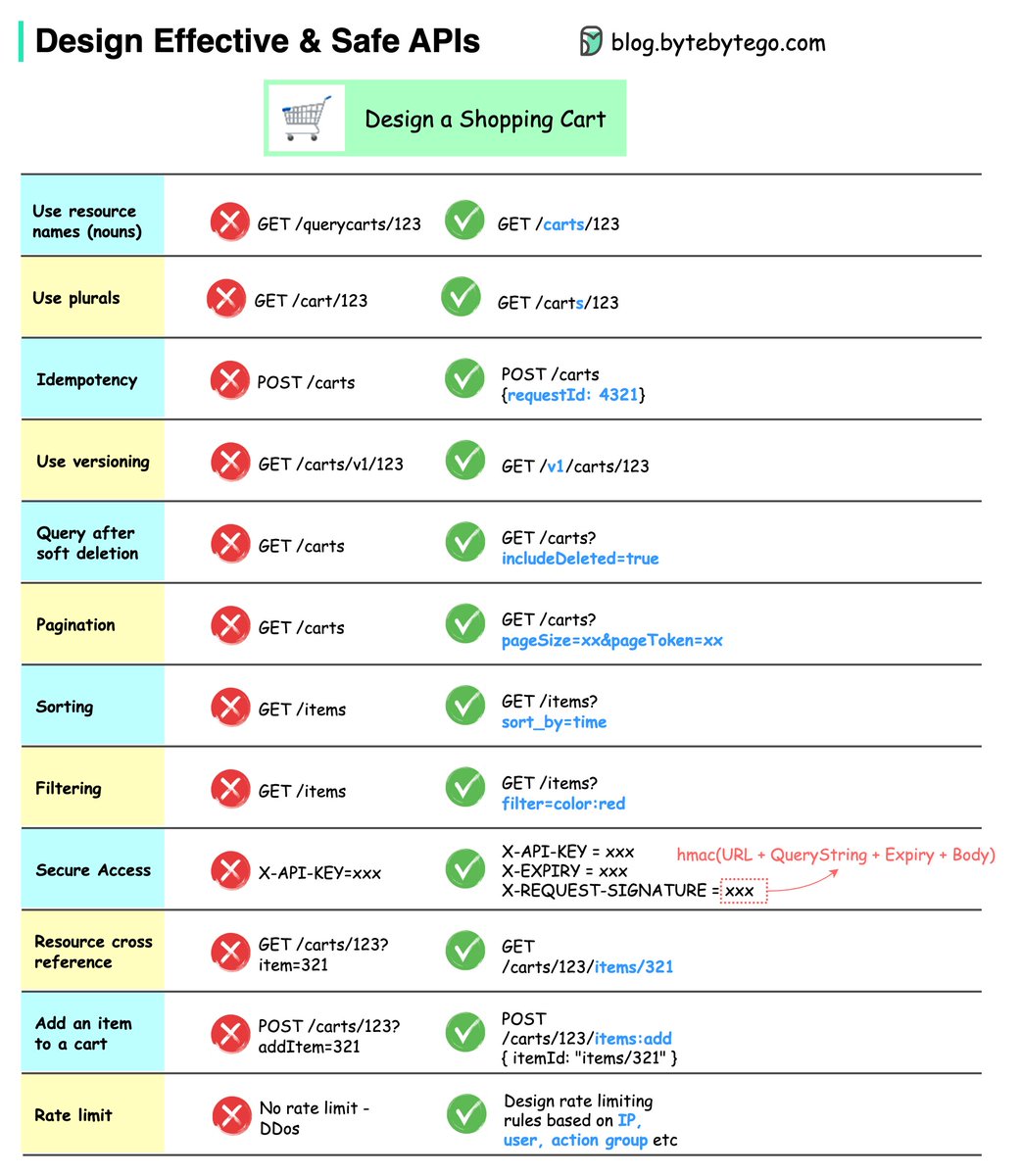
How to design effective and safe APIs?
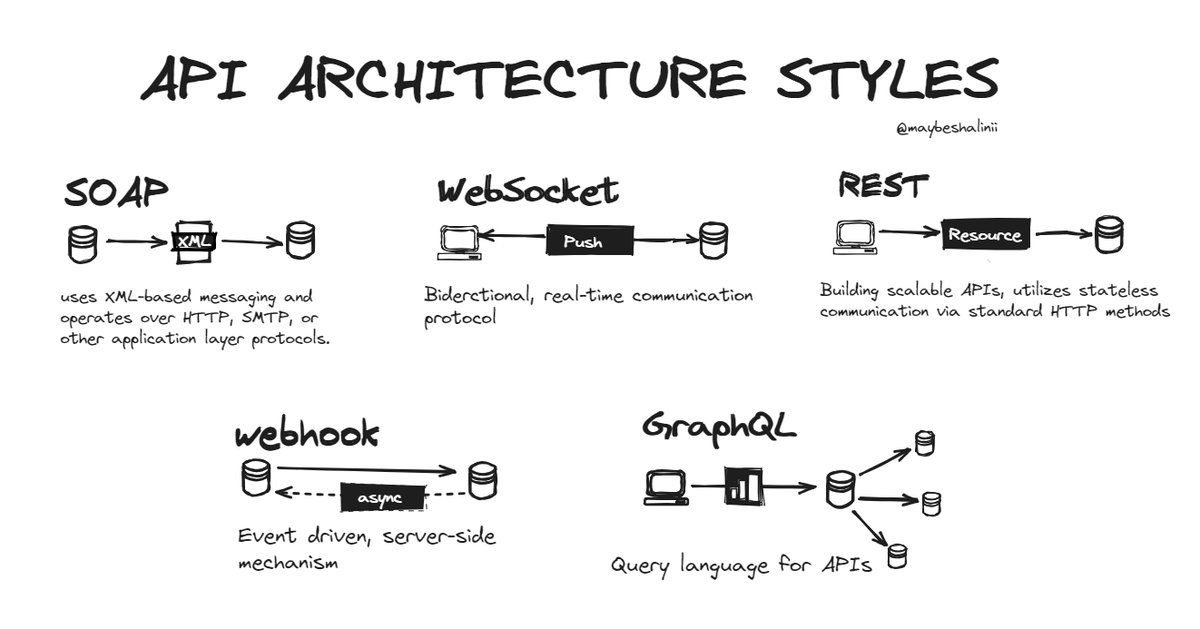
The diagram below shows typical API designs with a shopping cart example.
Note that API design is not just URL path design. Most of the time, we need to choose the proper resource names, identifiers, and path patterns. It is equally important to design proper HTTP header fields or to design effective rate-limiting rules within the API gateway.
Over to you: What are the most interesting APIs you’ve designed?
–
Subscribe to our weekly newsletter to get a Free System Design PDF (158 pages): https://t.co/FIzCeaWsZV
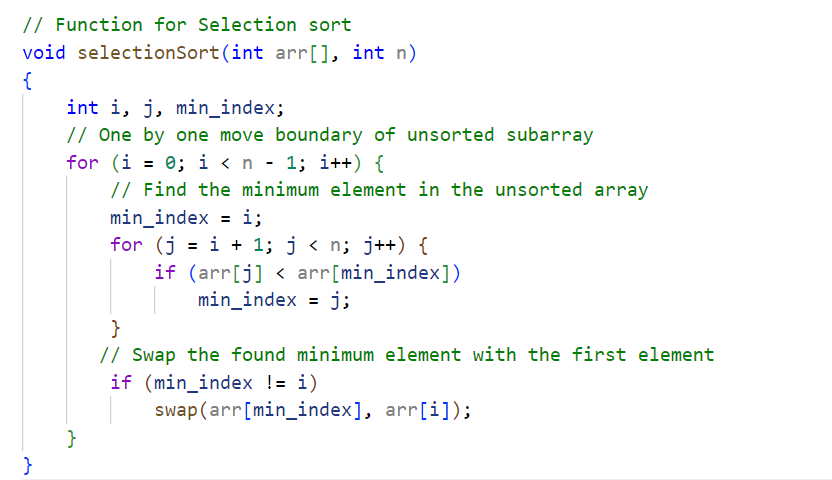
Selection sort explained🔎
Selection sort is like organizing a deck of cards from left to right.
Think of it like:
- Imagine you have a deck of unsorted cards.
- Start at the left end and look for the smallest card in the whole deck.
- Swap that smallest card with the first card in the deck.
- Now, consider the remaining deck (excluding the first card) as unsorted.
- Repeat the process: find the smallest card in the remaining unsorted deck and swap it with the second card in the deck.
- Keep doing this until you've sorted all the cards.
In essence, you're selecting the smallest card one by one and putting them in order from left to right. That's how selection sort works – it selects the smallest element and moves it to its correct position in the sorted part of the array or list.
Time complexity
The time complexity of selection sort being O(N^2) means that the time it takes to sort a list gets much larger as the list gets longer.
Imagine you have a list of numbers, and you want to sort them using selection sort:
- You go through the list one by one (first loop), which takes some time, let's call it "N times."
- For each number in the list, you compare it with every other number in the list (second loop), which also takes some time, "N times" for each number.
So, when you multiply the time it takes for the first loop by the time it takes for the second loop, you get N * N, which is the same as N^2.
This is why we say the time complexity is O(N^2), and it means that if you double the size of your list, it will take roughly four times as long to sort it, and if you make the list ten times bigger, it will take about a hundred times longer to sort it.
So, the time it takes grows quickly as the list size increases.
What is gRPC? And why has it become so popular for service-to-service communication?
gRPC is a powerful remote procedure call (RPC) framework developed by Google, enabling efficient and fast communication between services.
To understand gRPC, remote procedure calls must first be understood.
A local procedure call is a function call within a process to execute code. A 𝗿𝗲𝗺𝗼𝘁𝗲 𝗽𝗿𝗼𝗰𝗲𝗱𝘂𝗿𝗲 𝗰𝗮𝗹𝗹 enables a program to 𝗲𝘅𝗲𝗰𝘂𝘁𝗲 𝗰𝗼𝗱𝗲 𝗼𝗻 𝗮𝗻𝗼𝘁𝗵𝗲𝗿 𝗺𝗮𝗰𝗵𝗶𝗻𝗲 or server as if it were a local procedure call. It 𝗳𝗮𝗰𝗶𝗹𝗶𝘁𝗮𝘁𝗲𝘀 𝗰𝗼𝗺𝗺𝘂𝗻𝗶𝗰𝗮𝘁𝗶𝗼𝗻 𝗶𝗻 𝗱𝗶𝘀𝘁𝗿𝗶𝗯𝘂𝘁𝗲𝗱 𝘀𝘆𝘀𝘁𝗲𝗺𝘀 by allowing services to communicate with each other over a network.
How does gRPC work, and why has it become so popular in microservices:
𝗴𝗥𝗣𝗖 𝗶𝘀 𝗯𝘂𝗶𝗹𝘁 𝗼𝗻 𝗛𝗧𝗧𝗣/𝟮 𝗮𝗻𝗱 𝗣𝗿𝗼𝘁𝗼𝗰𝗼𝗹 𝗕𝘂𝗳𝗳𝗲𝗿𝘀. This is where a lot of the benefits of gRPC are derived from;
🔶 Harnesses Protocol Buffers (Protbufs) as its interface definition language (IDL) 𝗵𝗲𝗹𝗽𝘀 𝗮𝗹𝗹𝗲𝘃𝗶𝗮𝘁𝗲 𝘁𝗲𝗰𝗵 𝘀𝘁𝗮𝗰𝗸 𝗹𝗼𝗰𝗸-𝗶𝗻. Each service can be written in any popular programming language, the IDL works across them all.
🔶 The compact 𝗯𝗶𝗻𝗮𝗿𝘆 𝗳𝗼𝗿𝗺𝗮𝘁 of Protobufs provides 𝗳𝗮𝘀𝘁𝗲𝗿 𝘀𝗲𝗿𝗶𝗮𝗹𝗶𝘇𝗮𝘁𝗶𝗼𝗻/𝗱𝗲𝘀𝗲𝗿𝗶𝗮𝗹𝗶𝘇𝗮𝘁𝗶𝗼𝗻, and a 𝘀𝗺𝗮𝗹𝗹𝗲𝗿 𝗽𝗮𝘆𝗹𝗼𝗮𝗱 𝘁𝗵𝗮𝗻 𝗝𝗦𝗢𝗡. Less data sent means better performance.
🔶 Since Protobufs are strongly typed, they provide 𝘁𝘆𝗽𝗲 𝘀𝗮𝗳𝗲𝘁𝘆, which can eliminate many potential bugs.
🔶 Utilizing 𝗛𝗧𝗧𝗣/𝟮 𝘀𝘂𝗽𝗽𝗼𝗿𝘁𝘀 𝗯𝗶𝗱𝗶𝗿𝗲𝗰𝘁𝗶𝗼𝗻𝗮𝗹 𝘀𝘁𝗿𝗲𝗮𝗺𝗶𝗻𝗴 and 𝗿𝗲𝗱𝘂𝗰𝗲𝗱 𝗹𝗮𝘁𝗲𝗻𝗰𝘆 for 𝗿𝗲𝗮𝗹-𝘁𝗶𝗺𝗲 𝗱𝗮𝘁𝗮 𝘁𝗿𝗮𝗻𝘀𝗺𝗶𝘀𝘀𝗶𝗼𝗻.
🔶 The combination of HTTP/2 and Protobufs provides 𝗺𝗮𝘅𝗶𝗺𝘂𝗺 𝘁𝗵𝗿𝗼𝘂𝗴𝗵𝗽𝘂𝘁 𝗮𝗻𝗱 𝗺𝗶𝗻𝗶𝗺𝗮𝗹 𝗹𝗮𝘁𝗲𝗻𝗰𝘆. It's often faster than the traditional JSON over HTTP approach.
The easy implementation and benefits above have made gRPC very popular for microservices communication.
One of the main reasons 𝘄𝗵𝘆 𝘄𝗲 𝗱𝗼𝗻'𝘁 𝘀𝗲𝗲 𝗶𝘁 𝘄𝗶𝗱𝗲𝗹𝘆 𝘂𝘀𝗲𝗱 𝗯𝗲𝘁𝘄𝗲𝗲𝗻 𝘄𝗲𝗯 𝗰𝗹𝗶𝗲𝗻𝘁𝘀 𝗮𝗻𝗱 𝘄𝗲𝗯 𝘀𝗲𝗿𝘃𝗲𝗿𝘀 is that it relies on lower-level access to HTTP/2 primitives. The lack of native browser support for gRPC means that traditional web applications can't easily make gRPC calls directly from the browser.
API Vs SDK!
API (Application Programming Interface) and SDK (Software Development Kit) are essential tools in the software development world, but they serve distinct purposes:
API:
An API is a set of rules and protocols that allows different software applications and services to communicate with each other.
1. It defines how software components should interact.
2. Facilitates data exchange and functionality access between software components.
3. Typically consists of endpoints, requests, and responses.
SDK:
An SDK is a comprehensive package of tools, libraries, sample code, and documentation that assists developers in building applications for a particular platform, framework, or hardware.
1. Offers higher-level abstractions, simplifying development for a specific platform.
2. Tailored to specific platforms or frameworks, ensuring compatibility and optimal performance on that platform.
3. Offer access to advanced features and capabilities specific to the platform, which might be otherwise challenging to implement from scratch.
The choice between APIs and SDKs depends on the development goals and requirements of the project.
Over to you:
Which do you find yourself gravitating towards – APIs or SDKs – Every implementation has a unique story to tell. What's yours?
–
Subscribe to our weekly newsletter to get a Free System Design PDF (158 pages): https://t.co/uc5M7CdXXC