@Shipululo This kind of fake information is deliberately disturbing ears of people. Where is the date stamp here? Acknowledgement with visible stamped date.
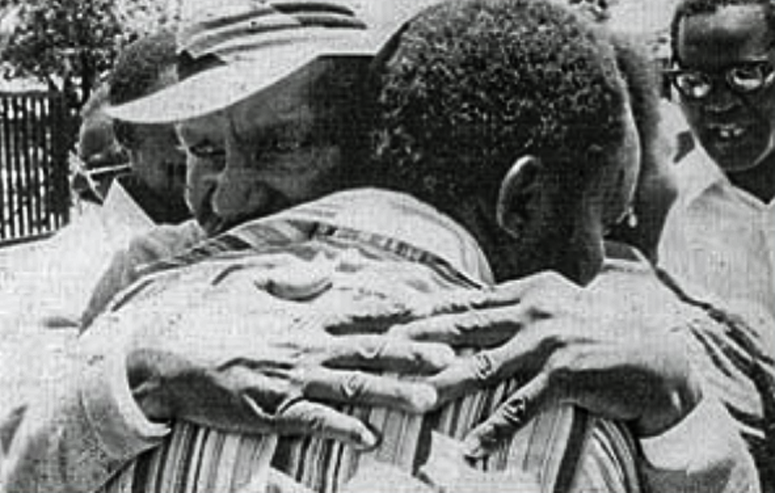
🇳🇦Eliaser "Kaxumba Kandola" Tuhadeleni,🕊️
Born in 1918 in the village of Omundudu in northern Namibia (then South West Africa), commonly known as "Kaxumba Kandola."
While little is documented about his early education, he was influenced by the harsh realities of colonial rule and the struggles of the local population under South African administration. This environment shaped his political awakening and set the stage for his future activism.
During the 1950s and 1960s, Tuhadeleni became politically active, motivated by the rising anti-colonial sentiment sweeping across Africa. He was deeply committed to the ideas of liberation and self-determination.
In 1960, Tuhadeleni became one of the founding members of the South West Africa People’s Organization (SWAPO), which aimed to achieve Namibian independence from South African rule through both political and military means.
SWAPO's military wing, the People’s Liberation Army of Namibia (PLAN), was established to conduct guerrilla warfare against the South African colonial forces. Tuhadeleni played a key role in the early organization and leadership of PLAN.
On August 26, 1966, he participated in the historic battle at Ongulumbashe, marking the beginning of the armed struggle for Namibian independence. This event is often regarded as the start of the Namibian War of Independence.
Shortly after the battle at Ongulumbashe, Tuhadeleni was captured by South African forces. He was tried in a highly publicized "Terrorism Act" case and, in 1967, sentenced to life imprisonment along with several other SWAPO leaders.
They were convicted of terrorism and sabotage under the oppressive anti-terrorism laws of the South African apartheid regime.
Tuhadeleni endured nearly two decades of harsh conditions in Pretoria Central Prison, becoming a symbol of the anti-apartheid struggle and garnering international solidarity.
Tuhadeleni was released from prison in 1985, part of broader efforts to ease tensions and negotiate an end to the conflict in Namibia. After his release, he continued to support the cause of Namibian independence, although his role was more symbolic as the leadership of SWAPO had shifted during his long imprisonment.
He died on November 28, 1997.
@TheNamibian You see... This is the reason why condoms supply is insufficient. The country does not have enough condoms for citizens just because of the idiots.
@NewEraNewspaper Please women let's make state facilities to our babies abandoning sites because it is the only safest place. Children are innocent human beings, they never applied for you to become pregnant. What you are doing is an evil.