PREPRINT 🚨 You know that feeling when you're jamming out to your favorite song (say, La Macarena 💃) and suddenly it skips, or a completely random remix drops out of nowhere? That everyday surprise tells us something profound about how our brain works! 1/24
Hopefully, these results can improve tDCS effects and its efficacy for the treatment of different conditions, specially since the human brain is also highly convoluted and neurons have widely different orientations 12/13
Finally, we used Neuropixel recordings to corroborate these results in simultaneously recorded neurons which have opposite orientations in the cerebellum, also corroborating the effect in behaving condition 11/13
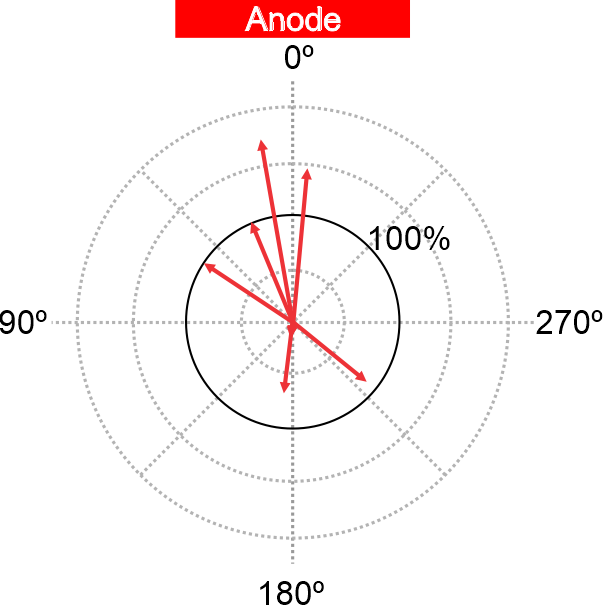
While neurons pointing away from the electrode decrease⬇️their activity for anodal stimulation and increase⬆️for cathodal. This phenomenon could be explained by the polarization of the neuron and changes in membrane resting potential (more in the paper) 10/13
Matching the orientation of the neurons with their modulation under tDCS, we discovered that their orientation was a key factor determining tDCS effects, with neurons pointing toward the electrode increasing⬆️their activity for anodal stimulation and decreasing⬇️for cathodal 9/13
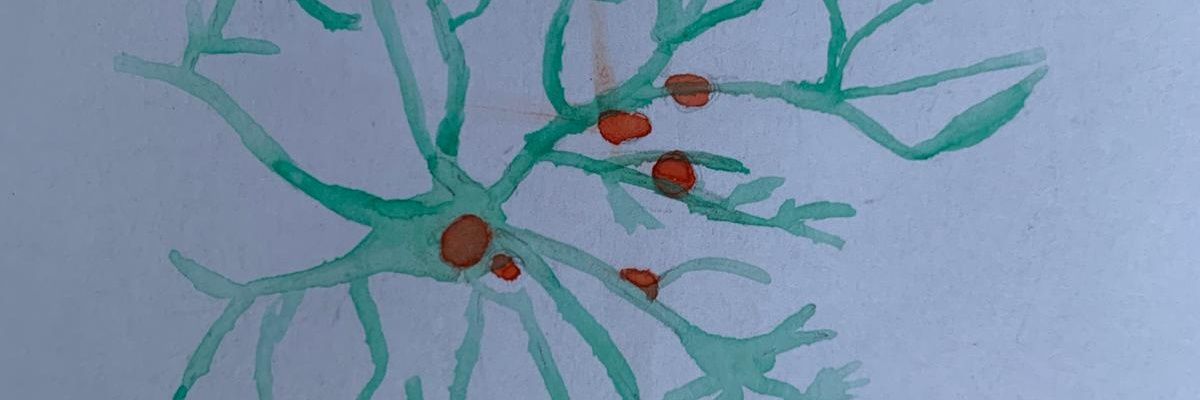
We observed this heterogeneous modulation in all types of neurons in the cerebellum, among them the Purkinje cells, which are particularly interesting since they are the only output from the cerebellar cortex 7/13
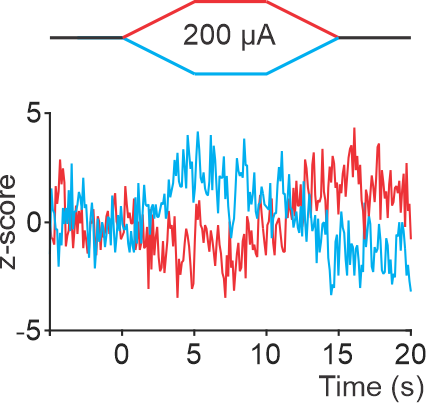
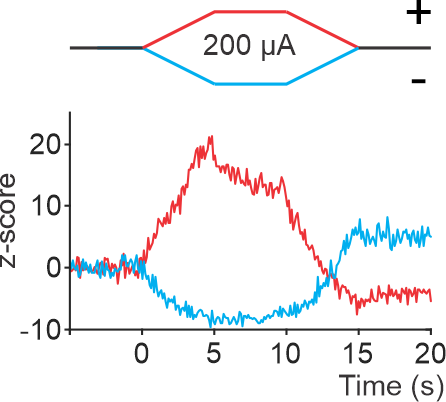
To address this, we applied tDCS and record the activity of individual neurons in behaving mice🐭. As expected, we observed neurons increasing⬆️their activity under➕electrical currents (anodal tDCS, red) and decreasing during➖currents (cathodal tDCS, blue) 5/13
Nonetheless, despite the simplicity of the technique, the results can be highly variable between persons and sessions, partly because we still know very little about how this electrical currents are affecting the neuronal activity 4/13
This non-invasive neurostimulation is called transcranial direct-current stimulation (tDCS) and can improve our learning abilities or the perception of a sensory stimulus, as well as some symptoms of brain disorders 3/13
https://t.co/F6s5TfB96o
Our neurons are electrical cells, meaning they can generate and transmit electricity, so, what would happen if we place a couple of electrodes on top of your head and pass a weak electrical current through your brain (so weak that you barely notice)? 2/13
PREPRINT🚨Ever wonder how electrical⚡️ stimulation of the brain🧠modulates neuronal activity? Are you working with brain stim and variability makes you want to smash your pc and go to a mountain to grow tomatoes? Are you a family member or a friend who really appreciate me? 1/13