My South African brothers and sisters, allow me to narrate a short story to you. Between approximately 3000–2000 BCE, Bantu speaking communities began a gradual expansion across Africa. They moved mainly in two directions, eastward into East Africa and southward into Central and Southern Africa. By around 1000–1500 CE, these Bantu speaking communities had gradually settled in parts of what are today Kenya, Uganda, Tanzania, Rwanda, and Burundi, as well as regions including Democratic Republic of Congo, Zambia, Malawi, Zimbabwe, Mozambique, Botswana, and South Africa.
When Bantu speaking groups such as the Zulu, Xhosa, Sotho, Tswana, Venda, and Tsonga arrived in Southern Africa, they encountered earlier populations, the Khoisan speaking peoples. Over time, there was cultural exchange, coexistence, intermarriage in some regions, and displacement in others.
Why am I telling you this? I want you to understand your roots. As Africans, we often lack a deep understanding of our shared history, largely because during the colonial period much of our history was distorted, rewritten, or underrepresented, and we were taught narratives that served external interests.
It is understandable to raise concerns about illegal immigration and national regulations, and I fully acknowledge that. Where we differ is in how these issues are addressed. It is not right for an African to turn against another African. We cannot promote the idea that all Africans should leave South Africa. While some advocate for the removal of illegal immigrants, others go further and target all Africans, including those who are legally documented yet still face harassment.
We must be able to call out wrongdoing without turning against one another. Your fellow Africans are not strangers, they are people you share deep ancestral and historical connections with. Our forefathers moved, settled, and evolved across this continent. I am Kenyan today because my forefathers journeyed and settled in Kenya, you are South African because your forefathers journeyed south and settled in South Africa. The borders that divide us today were largely drawn by colonizers.
History also reminds us that during the colonial period, there were individuals referred to as collaborators, people within communities who worked with colonial powers and sometimes helped enforce foreign rule or suppress resistance. Today, similar dynamics still exist in different forms, where individuals may be used to push narratives that divide Africans and weaken unity. Some of the conflicts and tensions we see across the continent are also influenced by external interests.
We must ask ourselves why is African unity still resisted so strongly? In Europe, several countries share a common currency, the Euro. Do we have a similar level of economic integration in Africa? No. In Europe, agreements such as Schengen allow easier movement across multiple countries. Do we have that level of integration in Africa? Not yet.
Instead, we often find ourselves divided over issues that should not break our unity. Many African countries continue to face economic dependence, relying on external loans and financial systems, which in some cases leads to debt burdens and corruption that ultimately affect ordinary citizens through heavy taxation and hardship.
We should be able to sit as a people and speak with one voice. This generation carries the responsibility to rise above division, strengthen African unity, and build systems that honor our ancestors and secure a better future for those who come after us. Think about that kindly.
Im trying to find the best words to try and liberate youbfrom you biased view but all I can say is do a lot of research and dont use these biased reports. Really look for the truth you will be shocked.
Munoramba henyu asi varungu vane superior logic kudarika munhu mutema. From Scientific discoveries, inventions and knowing WHEN to resign
Kuno kuAfrica be it President, Pastor muChurch or Chairman weBurial society anoda kufira pachigaro😂🙌🏾
When the place around KFC Borrowdale was full of mist yesterday, this is what I thought KFC could do and I created this ad. What do you think @kfczimbabwe ?
🔸Thank you Loyiso for singing our great nation’s anthem so beautifully. We continue to rally behind @SablesRugbyZW. It wasn’t the result we wanted but we move! Time to knuckle down and work! #TeamZimbabwe🇿🇼
10 Things that are lacking from our Zimbabwean primary education curriculum that I believe every Zimbabwean will definitely need in their day to day life:
1. Driving and road safety- we should start teaching this from ECD. Traffic lights, road safety and road use. Avoiding jaywalking and respecting the highway code as well as critical decision making behind the wheel.
2. Critical Thinking - we argue a lot as Zimbos instead of putting across facts. We also get scammed too often because we do not think critically and consider all angles before accepting a deal or proposal. This needs to be taught from as early as possible.
3. Swimming - we have soo many cases of death due to drowning when people can't even swim to save their lives. Climbing trees too should be part of this and the whole survival skills package.
4. First Aid - we has so many road accidents, chronic disease attacks, emergencies etc and people die unnecessarily when simple first aide could have saved a life.
5. Communication - a lot of problems emanate from "hearing" instead of "listening" or listening to win an argument instead of listening to communicate. Texting or calling the whole day is also not communication. kuma LIVE eFacebook or Twitter spaces people resort to saying zvinyadzi because they can't hold a debate based on facts, unfortunately it even spills over to parliamentary debates.
6. Cooking, Hygiene and Food preparation - I remember there is a topic in home economics in primary school but the practical side of this lacks a lot. Anyone should be able to prepare themselves a meal and not have 20 year olds starving because no one could cook for them. changing car tyres and light bulbs too should be done by everyone. Hygiene should also be emphasized. we can't be well known for having stinking armpits worldwide.
7. Basic Law - I know @advocatemahere and I will agree on this (just don't say the lesson of naming locust parts haina basa lol, we also named parts of a flower, named the 4 stroke engine cycles, types of clouds, sarajevo assassination etc which others do not use at all in their daily lives but doesn't mean they are all useless) but yes, we need to know the law. Many times we are duped and oppressed simply because we do not know basic law. It should be taught from ECD.
8. Financial Literacy - The difference between asstes and liabilities, investing, stocks, loans, bonds, profit, loss, everything to do with business should not start way late in life. It should start as early as possible so that we have better way s of handling money when we make it. We don't want to grow up one day and then say "haa ndakamboita mari vakomana"
9. Self Defense - yes, we can't have people bullying us. We also can not tolerate not having a chance to survive if rogue elements attack. We must be able to defend ourselves.
10. Digital Literacy - maCitizens apa anoda help. This is non negotiable from safety online, to what can be incriminating and which digital footprints can harm you and how to be safe. Also on how to search for relevant information online and vet credible sources, to avoid being scammed or being overcharged for something simple (those vema C.O.S scams realized later that all the information they wanted was for free).
You can also add more that you believe can help us as a nation.
They won’t teach you about these Black inventions and innovations in schools. That’s why you need to read and do research for yourself while teaching the younger generation.
Some people depend entirely on street vending, hoping to earn just enough to face the difficult challenges back home. Imagine if she has a son who is critically ill, yet she is the sole breadwinner through street vending—and then the city council attacks her like this!
😭😭😭
Had a tough but fascinating talk with form 1 to 4 students at a 🇿🇼 high school in today. The topic was money.
My core message was simple:
Money is earned through value exchange.
You do not “get” money.
You earn it by offering goods or services valuable enough for other people to exchange money for.
Just like you don’t “get” a degree; you earn it.
I can tell a lot about a person about how they speak about money:
Let get that paper (not manufacturing it)
Getting that bread (not baking it)
Making Cheddar? (That’s valuable)
I tried to challenge how we speak about money. Instead of saying:
“Let’s go get money”.
We should ask:
“How do I become more valuable?”
“How do I create more value for others?”
Because if you can consistently provide value, you will never truly have “no money.”
Value can be:
Good food
Convenience
Security
Education
Entertainment
Skills
Technology
Solving difficult problems
A plumber earns because plumbing is valuable to people who cannot plumb.
A developer earns because software can solve problems.
A musician earns because joy and entertainment are valuable.
Then I asked the students what they wanted to become.
A large number said:
IRL streamers
YouTubers
TikTok influencers
A few said app developers.
Nobody said accountant.
Nobody said scientist.
What struck me was this:
Many of them admire wealth outcomes without understanding value creation.
One student said he wants to be like Elon Musk.
I explained:
Elon Musk became wealthy because he created massive value at scale, through payments, electric vehicles, internet infrastructure, rockets, communications platforms, and engineering companies.
Another said he wants to be like Mark Zuckerberg.
But the important question is not:
“How do I become Zuckerberg?”
The real question is:
“What value did Zuckerberg create for billions of people?”
Then someone said they wanted to be like Wicknell Chivayo.
Everyone laughed… 🤣
But... Whether you like him or not, whether you agree with the value he’s creating benefit to society or not, he’s creating value to someone or something. Could be at the detriment or others, who knows. But someone finds it valuable. You don’t get that rick without creating VALUE!
Pablo Escobar and Michael Jordan both have created value … for better or worse.
A lot of young Zimbabweans today can clearly see money… but cannot clearly see the value system behind it.
With people like Strive Masiyiwa, it’s easier:
We understand the value created through Econet and telecommunications.
The danger is when young people only see the money at the end, without understanding the years of value creation underneath it. Behind the slay queen with the orange iPhone, is a satisfied overweight married businessman.
Zimbabwe desperately needs a generation obsessed not with “looking rich” , but with becoming genuinely useful to humanity by creating value!!
Thanks for coming to my Ted Talk
The kids who are raised with fear learn how to avoid punishment. Kids who are raised with respect learn self-discipline.
Some parents don't need to shout, threaten, or control every move because they are present, consistent, and set clear boundaries. Their children behave not because they are terrified, but because they understand accountability and mutual respect.
@bla_bidza We will work on the bins previously they become illegal dump sites as private companies from out of town would dump there .We will discuss with @GeoPomonaZW on how to create a workable system in the CBD.
We have a pot full of goodness waiting for your script or idea so we can cook something exciting for you.
We do animations for
Muisc videos
Ads
Youtube intros
Short stories
Presentations
And many more
Someone of our work
https://t.co/8R9LIVGoV8
+263777439808
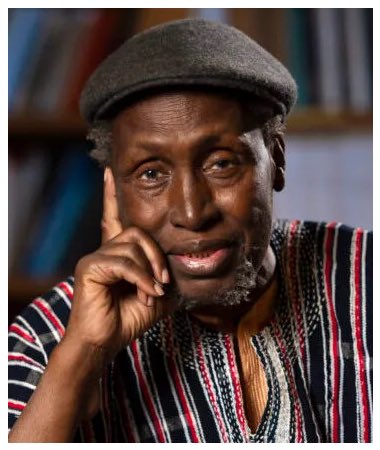
The great African and Kenyan author and university professor Ngũgĩ wa Thiong’o argued that celebrating English as a marker of intelligence or progress in Africa reflects a deeper problem of mental colonisation.
In his view, English, like French or Spanish, is not an African language, and turning it into a measure of identity or superiority only reinforces the legacy of colonial domination. He pointed out that societies begin to normalise this mindset when people take pride in mastering a colonial language while neglecting their own.
He also highlighted the troubling reality that many African children, and even their parents, can no longer speak their mother tongues, yet feel a sense of achievement in speaking English. For him, this was not empowerment but a loss of cultural grounding.
He made it clear that he had no issue with using English, but insisted it should not replace African languages as the primary means of expression. If you can speak many global languages but cannot speak your own, that, in his view, reflected the enduring impact of colonial thinking rather than true progress.
Even in jest, elevating English as the benchmark of intelligence or educational success entrenches a colonial hierarchy that devalues African identity and knowledge systems.
It reinforces the false idea that proximity to a colonial language defines worth, distorting how societies measure progress and quietly eroding cultural confidence across generations.
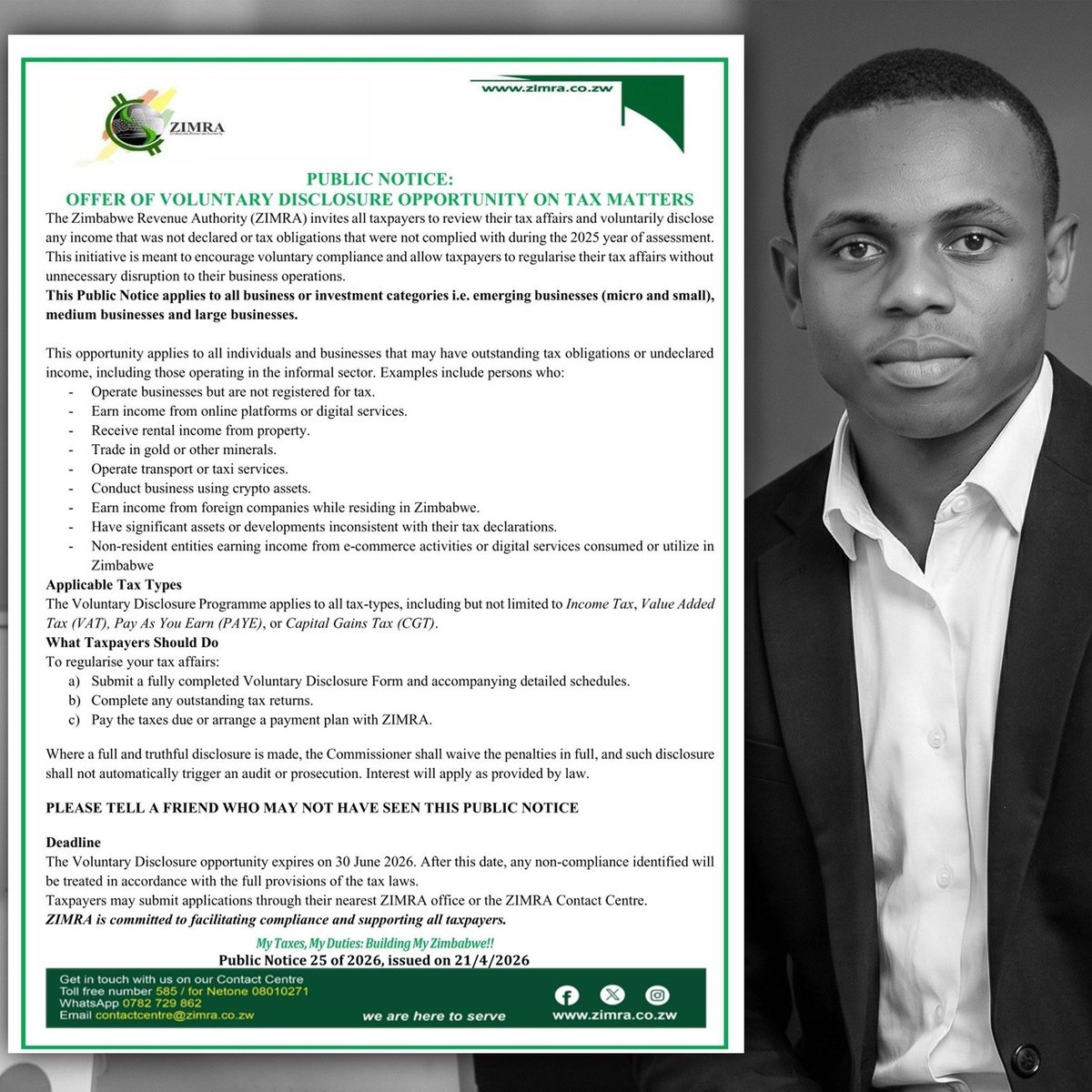
Its already hard as it is for content creators. Adding more burdens on top isn't going to increase the tax base. First increasing the revenue and number of contene tcreators then taxing them later is the best option. Lets support them.