The world’s largest diamond, Cullinan Diamond, was stolen from Africa and pieces put on the British sovereign crown, royal scepter and the rest in the royal jewel collection.
The British claimed it given to them as a symbol of friendship and peace yet it was during colonialism.
The Kingdom of Kush (Nubia) 𓎡𓄿𓈙𓈉 was an ancient kingdom of Nubia, centered along the Nile Valley in what is now northern Sudan and southern Egypt.
The region of Nubia was an early cradle of civilization, producing several complex societies that engaged in trade and industry.
The Kingdom of Kush lasted for over 1400 years. It was first established around 1070 BCE when it gained its independence from Ancient Egypt (Kemet). It quickly became a major power in Northeast Africa. In 727 BCE, Kush took control of Egypt and ruled until the Assyrians arrived.
The kingdom began to weaken after Rome conquered Egypt and eventually collapsed sometime in the 300s CE. Like the Egyptians, religion played an important role in the lives of the Kushites. They believed strongly in the afterlife.
The Kemites were the first to identify Kerma as “Kush", and over the next several centuries the two civilizations engaged in intermittent warfare, trade, and cultural exchange, Kushites also built burial mounds and pyramids, sharing some of the gods worshiped in Ancient Egypt.
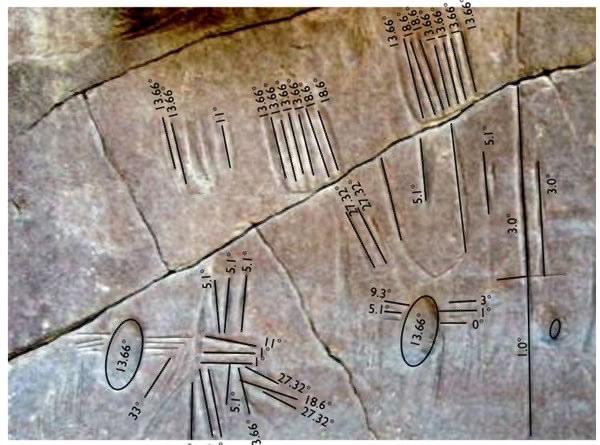
Based on engraved plans of Meroitic King Amanikhabali's pyramids, Nubians had a sophisticated understanding of mathematics as they appreciated the harmonic ratio. The ancient Nubians also established a system of geometry which they used in creating early versions of sun clocks.
During the Bronze age, Nubian ancestors of the Kingdom of Kush built speos between 3700 to 3250 BCE. This greatly influenced the architecture of the New kingdom.
They built over 225 pyramids.
They built a stone paved road at Jebel Barkal and many wells.
In battle, Kush was famous for its archers and the bow and arrow were often depicted in the art of Ancient Kush. Sometimes the region was called the "Land of the Bow" because of its famous archers. Women played an important role by being leaders in Kush Many of them were Queens.
One of the most famous leaders of Kush was Piye who conquered the whole Egypt and became pharaoh of Egypt meanwhile the priests of the Kushites were so powerful they could decide when it was time for the king to die.
Most of the people of Kush were farmers. Their primary crops were wheat and barley. They also grew cotton to make clothing. Besides gold and iron, other important trade items included ivory, incense, feathers, and wild animal hides.
The pyramids of Kush tended to be smaller than the pyramids of Egypt. The burial chambers were located below the pyramids. Many of these pyramids were built near the city of Meroe and can still be seen today.
Jewelry found on the Mummy of Nubian King Amaninatakilebte (538-519 BCE), Nuri pyramid
And Gold flower shaped diadem, found in the Pyramid of King Talakhamani (435–431 BCE), Nuri pyramid 16. All in the Museum of Fine Arts, Boston.
A reminder...
In 2020 archaeologists discovered an incredibly rare undiscovered burial with a 4,000-year-old coffin with an incompletely untouched mummy inside.
The coffin was covered in hieroglyphic markings immediately giving the archaeologists vital information about who the mummy was.
They discovered that the person inside was a male called Shemay, they described him as a high priest member of the Elite Family who founded the cities of that region of Kemet.
The markings also identified his father as Kemay powerful governor of the region of Upper Kemet. And his mother was Satethotep, daughter of the founder of that region of Upper Kemet, Sarenput I. A man who was known as the right arm of the pharaoh of Kemet during that period, Senusret I. All this happens more than a millennia before the so-called invasion of the "Black Pharaohs" of the 25th supposedly the only black rulers of Kemet.
This is not crazy to us because we already know that the people of Kemet were black Africans, especially the Elite. The founding fathers, the natives, are the Africans who came from the south. Narmer/Menes is the first ruler of Kemet and all his depictions clearly show his Black African Origin.
If they can admit that the proximity with Nubia makes their blackness normal, why is it still difficult to admit that the pharaohs were blacks? Since we know that they came from that exact same region filled with black people to this day?
They are still trying to create a difference between the Kemites and their southern neighbors. A white Mediterranean people VS Black people frontier which is a complete lie.
The Kemites were similar to their southern neighbors. All the people who met them at that time admitted it. But people still try to sell us that mediteranean fantasy of a White/mediteranean Kemet as if Mediteranean is a race.
There have been migrations into Kemet, but the power remained in the hands of the southern families who were blacks until the late period when Kemet fell.
Credit @Mister_Imhotep
#Africa
Africa’s Oldest Written Languages
When I was in high school, we were taught that the Sumerians were the first to use a written script about 5000 years ago, and that written languages spread out from there to the rest of the world. However, scholars now recognize that writing was independently developed in at least five ancient civilizations: Mesopotamia (between 3400 and 3100 BC), Egypt (around 3250 BC), China (2000 BC),lowland Mesoamerica (by 650 BC), and Peru (perhaps as early as 2700 BC).
Now archaeological evidence suggests that writing started much earlier in other parts of Africa. Except for Egypt, Africa has been ignored in traditional history texts about written languages, but the evidence is there to suggest that this comes from prejudice, not proper scientific study and, like so many prejudices, is wrong.
The oldest scripts in the world to be discovered so far were found at the Kharga oasis in what was Nubia and is now part of present-day Sudan. They were written in what is called the Proto Saharan language. Extraordinarily, they date from 5000 BC. Since Sumerian and other Asian written languages appear about 3000 BC and Greek script was not fully in use until 1400 BC, it appears from this evidence that the Proto-Saharan written language is at least two thousand years older.
Other written tablets were found at Ge’ez in Ethiopia that are up to 3000 years old and yet, astonishingly, that ancient script is still in use, as the main liturgical language of the Ethiopian Orthodox churches and the Jewish community. The vast proportion of inherited nouns are unchanged, and even spelled identically in both Geʽez and Amharic. The Ge’ez script is certainly the oldest written language that is still in use. The closest living languages to Geʽez are Amharic, Tigre and Tigrinya, and in the oral tradition of those peoples, Ge’ez is the oldest language of humans.
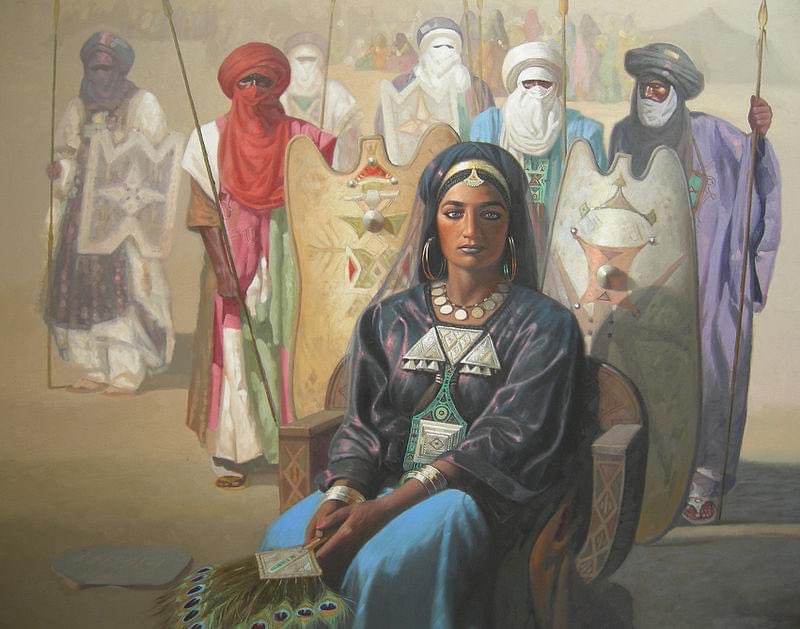
Most of the languages of Northern Africa are classified as Afro-Asiatic and this shows the influences of both European and Middle Eastern languages due to migrations, warfare and religious subjugation but there is a surviving ancient tongue in the region: the Tifinagh of the Tuareg people and it has a written form that dates back at least 1500 years. The Tuareg believe themselves to be the descendants of a queen, Tin HInan, known as the mother of us all to the Tuareg, whose tomb was found in 1925. According to legend, Tin Hinan was a fugitive princess who was driven from her home in the northern Sahara. She and her followers nearly perished in the desert but were saved by ants when they stumbled upon grains buried in desert anthills.
The Val and Mende written languages of Liberia and Sierra Leone have been found at the site of Goundaka in Mali, that date back to about 3000 BC so they are also at least as old as the Sumerian written language.
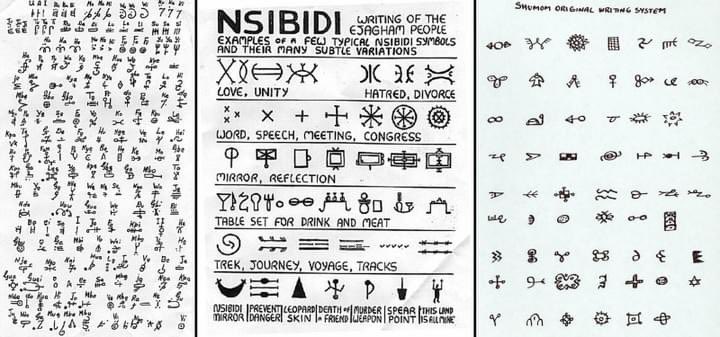
Other written languages existed in Southern Africa, including the Adinkra of the Akan people of Ghana. The symbols of Adrinka are still used today on cloth but may have existed for thousands of years.
Another old written language is Nsibidi of Nigeria and W.Central Africa where early forms are found on excavated pottery that is at least 1500 years old. More studies are necessary to see if these written languages are actually far older.
And many other written languages ….
#Africa
When I got the revelation that God is inside of time, outside of time, He is time and He’s always on time, I stopped thinking that I’m running out of time. You can trust God and His timing. It’s not too late for you.
Worthy you were
Worthy you are
Worthy you will be forever Yahweh
What an amazing time in worship today🙌 If you missed it, go to https://t.co/rao8arYbV1 for rebroadcast times❤️