@shreyas One of the things that clicked me is how externally visible these are as yard sticks.
Mastery is observable to few who you closely work with
Impact to close network - typically in same function / peer set
Prestige /titles are visible to most - family and friends.
Stop treating engineering estimates like prophecies.
Start treating them like conversations.
Here's how:
1. Instead of asking "How long will this take?"
Ask "What makes this complex?"
2. Instead of pushing for faster delivery
Ask "What could make this simpler?"
3. Instead of accepting the first estimate
Ask "What would change if we had half the time?"
4. Instead of diving into solutions
Ask "What are we assuming about the problem?"
5. Instead of fighting over story points
Ask "What could go wrong?"
The goal isn't to get faster estimates.
It's to build shared understanding that removes the cruft and builds sustainable velocity.
OpenAI just released the largest-ever report on how consumers are using ChatGPT.
It looks at millions of (anonymized) messages over the last 3 years to analyze usage evolution over time.
Key takeaways 👇
@shreyas One corelation that I make here is : during product discovery PMs are/should be in mindset 2 most of the time. But during product delivery/execution, mindset 1 is required often. Similarly even GTM may have those two motions (discovery and delivery).
It's the only ancient wonder that we haven't been able to locate. Whether or not the gardens existed at all has been debated for centuries.
No archaeological evidence has yet been found, but they were said to lie in the ancient city of Babylon - near present-day Hillah, Iraq.
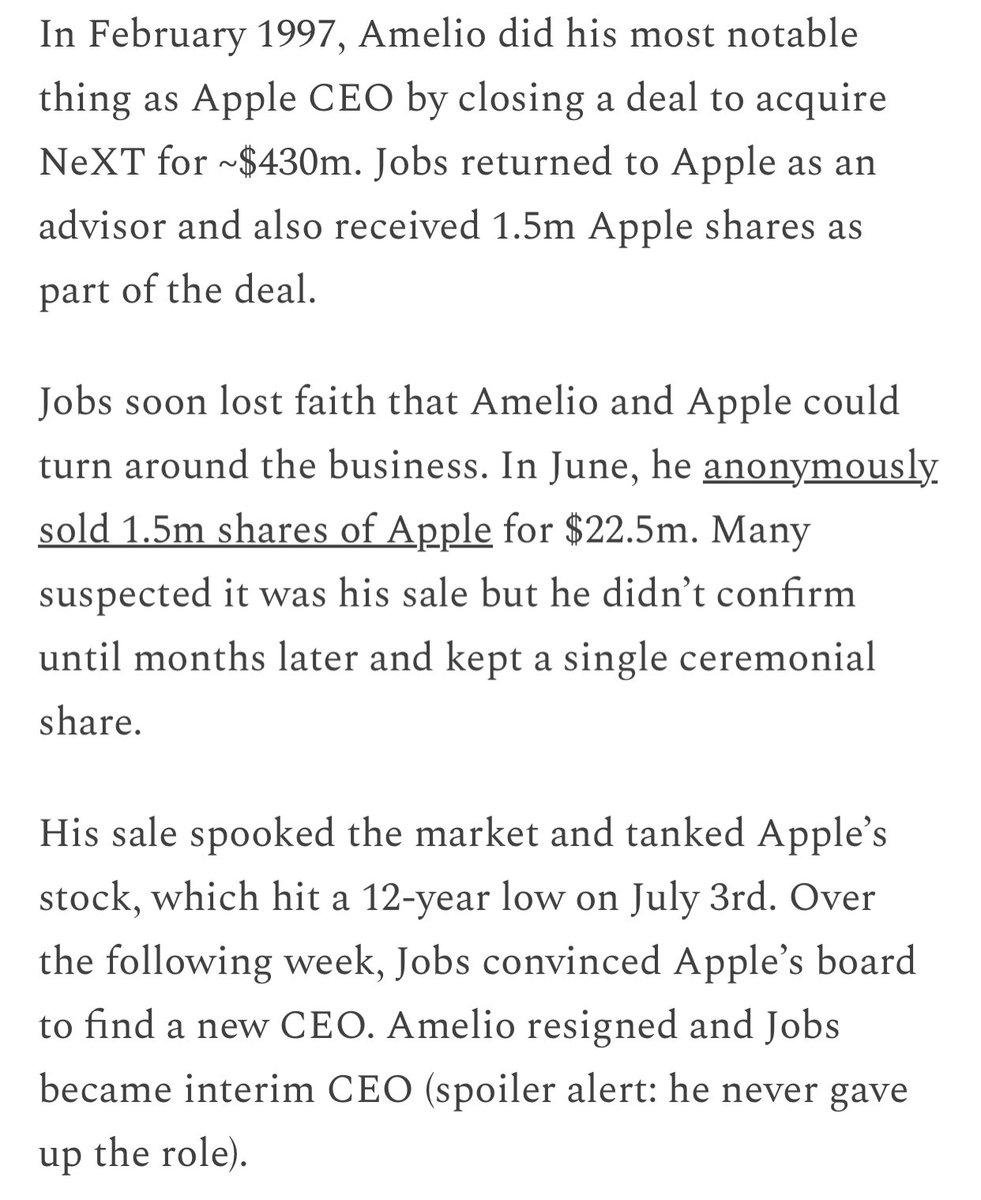
Steve Jobs 4D chess’d his way back to Apple CEO: in June 1997, he sold 1.5m shares of Apple. The stock tanks. The board freaks out. Jobs convinces them to get rid of the CEO. He takes over.
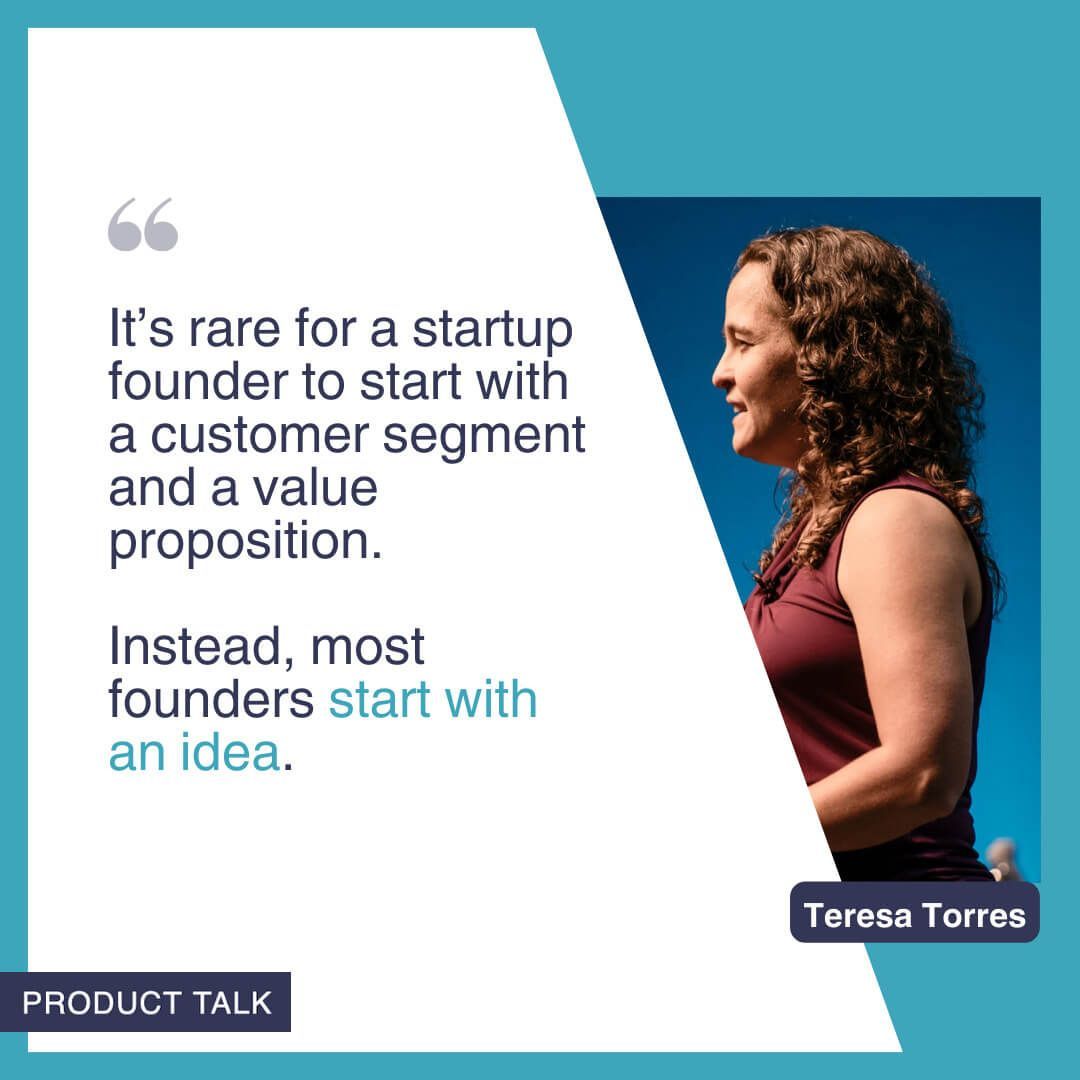
"It’s rare for a startup founder to start with a customer segment and a value proposition. Instead, most founders start with an idea."
https://t.co/7RXD1VPXhe
#prodmgmt#ux#engineering
In practice…
- ~2.5x cost reduction
- ~16x longer context
- Multimodal via API
- Assistants API
- Retrieval system
- TTS (and 10x cheaper than market!)
- JSON mode
- Seeds
- Copyright Shield (underrated)
Add all that together and you’re about to see some insane AI software.
This is a legitimate question.
I think GPTs could get broad adoption if:
1. People make good ones.
2. They share it with the right audience.
3. There's a low-friction way to call and mix multiple GPTs in a single conversation (e.g., via / commands).
Zuckerberg is way richer than me, but I'm pretty sure that if I blew out my knee, I would have the same surgery as him. This simple truth, about how technological advances diffuse through a population, escapes critics of techno-capitalism.
@Ashneer_Grover I think there are multiple new age / New thought kids schools in Gurgaon and Bangalore. But not sure about Delhi - govt enabled upper cap on prices isn't helping either as it nullifies incentives to open new schools
@sairahul1 A more lateral thinking I add here : SEO in its current form typically adds negative value to end consumers, most marketers create quick content with keyword mappings and put it out there (reverse engineer). It may not live long in its current form.
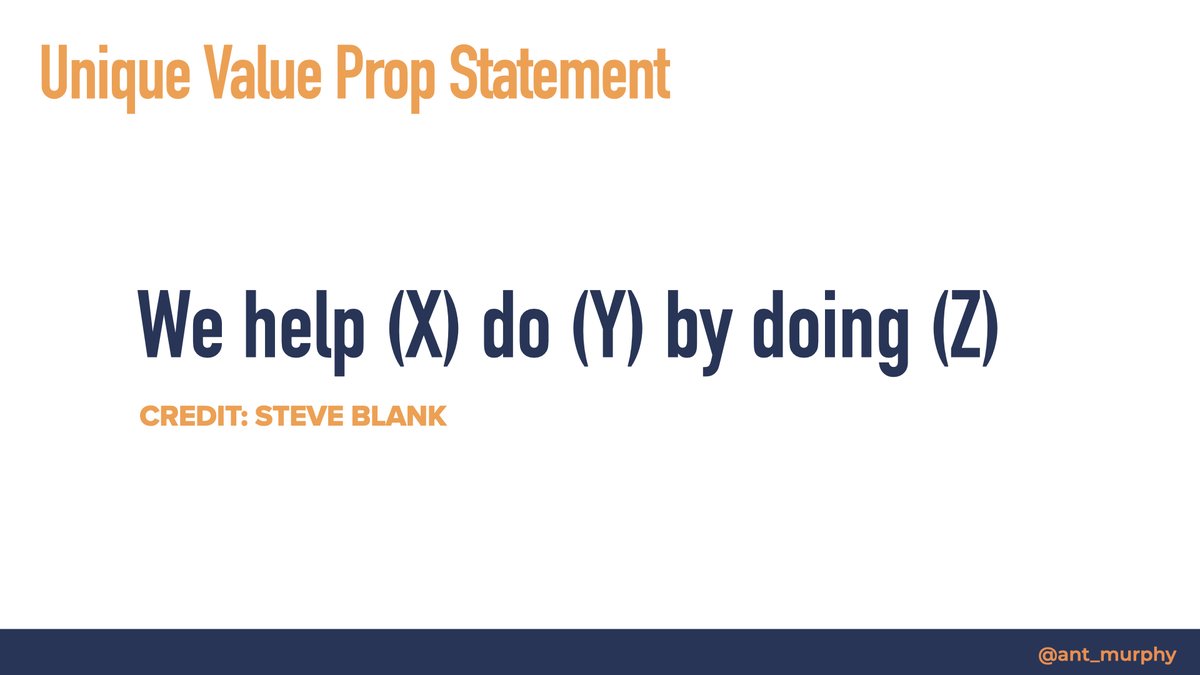
A guide to communicating your product’s Unique Value Prop:
Steve Blank developed the following statement for articulating your UVP:
We help (X) do (Y) by doing (Z)
X = Target customer
Y = Problem they’re facing
Z = How we solve it for them
Let's look at some examples 👇
10/ To recap:
1. Help the LLM succeed (e.g., "you're an expert", "step by step")
2. Be specific and give examples
3. Load relevant context into its memory
4. Encourage it to ask for more info
5. Use LLMs with other tools
Follow me @petergyang and RT below if you enjoyed this:
A 2-minute introduction to the fundamental building block behind Large Language Models:
Text Embeddings
(This is the most helpful explanation you'll read online today. I promise.)
The Internet is mainly text.
For centuries, we've captured most of our knowledge using words, but there's one problem:
Neural networks hate text.
Judging by how good language models are today, this might not be obvious, but turning words into numbers is more complex than you think.
Imagine a 4-word vocabulary: King, Queen, Prince, and Princess.
The most straightforward approach to converting our vocabulary into numbers is to use consecutive values:
• King → 1
• Queen → 2
• Prince → 3
• Princess → 4
Unfortunately, neural networks tend to see what's not there. Is a Princess four times as important as a King? Of course not, but the values say otherwise: Princess is "worth" 4 while a King is "worth" 1.
We don't know how a neural network will interpret this, so we need a better representation.
Instead of using numerical values, we can use vectors. We call this particular representation "one-hot encoding," where we use ones and zeros to differentiate each word:
• King → [1, 0, 0, 0]
• Queen → [0, 1, 0, 0]
• Prince → [0, 0, 1, 0]
• Princess → [0, 0, 0, 1]
This encoding fixes the problem of a network misinterpreting ordinal values but introduces a new one:
According to the Oxford English Dictionary, there are 171,476 words in use. We certainly don't want to deal with large vectors with mostly zeroes.
Here is where the idea of "word embeddings" enters the picture.
We know that the words King and Queen are related, just like Prince and Princess are. Word embeddings have a simple characteristic: related words should be close to each other, while words with different meanings should lie far away.
The attached image is a two-dimensional chart where I placed the words from our vocabulary.
Look at the image and something critical will become apparent:
King and Queen are close to each other, just like the words Prince and Princess are. This encoding captures a crucial characteristic of our language: related concepts stay together!
And this is just the beginning.
Notice what happens when we move on the horizontal axis from left to right: we go from masculine (King and Prince) to feminine (Queen and Princess). Our embedding encodes the concept of "gender"!
And if we move on the vertical axis, we go from a Prince to a King and from a Princess to a Queen. Our embedding also encodes the concept of "age"!
We can derive the new vectors from the coordinates of our chart:
• King → [3, 1]
• Queen → [3, 2]
• Prince → [1, 1]
• Princess → [1, 2]
The first component represents the concept of "age": King and Queen have a value of 3, indicating they are older than Prince and Princess with a value of 1.
The second component represents the concept of "gender": King and Prince have a value of 1, indicating male, while Queen and Princess have a value of 2, indicating female.
I used two dimensions for this example because we only have four words, but using more would allow us to represent other practical concepts besides gender and age.
For instance, GPT3 uses 12,288 dimensions to encode their vocabulary. That's a lot!
Text Embeddings are the backbone of some of the most impressive generative AI models we use today.
I love explaining Machine Learning and Artificial Intelligence ideas. If you enjoy in-depth content like this, follow me @svpino so you don't miss what comes next.
A 2-minute introduction to the fundamental building block behind Large Language Models:
Text Embeddings
(This is the most helpful explanation you'll read online today. I promise.)
The Internet is mainly text.
For centuries, we've captured most of our knowledge using words, but there's one problem:
Neural networks hate text.
Judging by how good language models are today, this might not be obvious, but turning words into numbers is more complex than you think.
Imagine a 4-word vocabulary: King, Queen, Prince, and Princess.
The most straightforward approach to converting our vocabulary into numbers is to use consecutive values:
• King → 1
• Queen → 2
• Prince → 3
• Princess → 4
Unfortunately, neural networks tend to see what's not there. Is a Princess four times as important as a King? Of course not, but the values say otherwise: Princess is "worth" 4 while a King is "worth" 1.
We don't know how a neural network will interpret this, so we need a better representation.
Instead of using numerical values, we can use vectors. We call this particular representation "one-hot encoding," where we use ones and zeros to differentiate each word:
• King → [1, 0, 0, 0]
• Queen → [0, 1, 0, 0]
• Prince → [0, 0, 1, 0]
• Princess → [0, 0, 0, 1]
This encoding fixes the problem of a network misinterpreting ordinal values but introduces a new one:
According to the Oxford English Dictionary, there are 171,476 words in use. We certainly don't want to deal with large vectors with mostly zeroes.
Here is where the idea of "word embeddings" enters the picture.
We know that the words King and Queen are related, just like Prince and Princess are. Word embeddings have a simple characteristic: related words should be close to each other, while words with different meanings should lie far away.
The attached image is a two-dimensional chart where I placed the words from our vocabulary.
Look at the image and something critical will become apparent:
King and Queen are close to each other, just like the words Prince and Princess are. This encoding captures a crucial characteristic of our language: related concepts stay together!
And this is just the beginning.
Notice what happens when we move on the horizontal axis from left to right: we go from masculine (King and Prince) to feminine (Queen and Princess). Our embedding encodes the concept of "gender"!
And if we move on the vertical axis, we go from a Prince to a King and from a Princess to a Queen. Our embedding also encodes the concept of "age"!
We can derive the new vectors from the coordinates of our chart:
• King → [3, 1]
• Queen → [3, 2]
• Prince → [1, 1]
• Princess → [1, 2]
The first component represents the concept of "age": King and Queen have a value of 3, indicating they are older than Prince and Princess with a value of 1.
The second component represents the concept of "gender": King and Prince have a value of 1, indicating male, while Queen and Princess have a value of 2, indicating female.
I used two dimensions for this example because we only have four words, but using more would allow us to represent other practical concepts besides gender and age.
For instance, GPT3 uses 12,288 dimensions to encode their vocabulary. That's a lot!
Text Embeddings are the backbone of some of the most impressive generative AI models we use today.
I love explaining Machine Learning and Artificial Intelligence ideas. If you enjoy in-depth content like this, follow me @svpino so you don't miss what comes next.
AI race is heating up daily 🤯
Text-To-Video Search
Leaked Google doc
OpenAI $100B for AGI
ChatGPT destroys education stocks
Brain-to-Video is next big thing
Most powerful ChatBot released
IBM replace 7,800 jobs w/ AI
New ChatGPT competitor
Come and see 🧵👇


![svpino's tweet photo. A 2-minute introduction to the fundamental building block behind Large Language Models:
Text Embeddings
(This is the most helpful explanation you'll read online today. I promise.)
The Internet is mainly text.
For centuries, we've captured most of our knowledge using words, but there's one problem:
Neural networks hate text.
Judging by how good language models are today, this might not be obvious, but turning words into numbers is more complex than you think.
Imagine a 4-word vocabulary: King, Queen, Prince, and Princess.
The most straightforward approach to converting our vocabulary into numbers is to use consecutive values:
• King → 1
• Queen → 2
• Prince → 3
• Princess → 4
Unfortunately, neural networks tend to see what's not there. Is a Princess four times as important as a King? Of course not, but the values say otherwise: Princess is "worth" 4 while a King is "worth" 1.
We don't know how a neural network will interpret this, so we need a better representation.
Instead of using numerical values, we can use vectors. We call this particular representation "one-hot encoding," where we use ones and zeros to differentiate each word:
• King → [1, 0, 0, 0]
• Queen → [0, 1, 0, 0]
• Prince → [0, 0, 1, 0]
• Princess → [0, 0, 0, 1]
This encoding fixes the problem of a network misinterpreting ordinal values but introduces a new one:
According to the Oxford English Dictionary, there are 171,476 words in use. We certainly don't want to deal with large vectors with mostly zeroes.
Here is where the idea of "word embeddings" enters the picture.
We know that the words King and Queen are related, just like Prince and Princess are. Word embeddings have a simple characteristic: related words should be close to each other, while words with different meanings should lie far away.
The attached image is a two-dimensional chart where I placed the words from our vocabulary.
Look at the image and something critical will become apparent:
King and Queen are close to each other, just like the words Prince and Princess are. This encoding captures a crucial characteristic of our language: related concepts stay together!
And this is just the beginning.
Notice what happens when we move on the horizontal axis from left to right: we go from masculine (King and Prince) to feminine (Queen and Princess). Our embedding encodes the concept of "gender"!
And if we move on the vertical axis, we go from a Prince to a King and from a Princess to a Queen. Our embedding also encodes the concept of "age"!
We can derive the new vectors from the coordinates of our chart:
• King → [3, 1]
• Queen → [3, 2]
• Prince → [1, 1]
• Princess → [1, 2]
The first component represents the concept of "age": King and Queen have a value of 3, indicating they are older than Prince and Princess with a value of 1.
The second component represents the concept of "gender": King and Prince have a value of 1, indicating male, while Queen and Princess have a value of 2, indicating female.
I used two dimensions for this example because we only have four words, but using more would allow us to represent other practical concepts besides gender and age.
For instance, GPT3 uses 12,288 dimensions to encode their vocabulary. That's a lot!
Text Embeddings are the backbone of some of the most impressive generative AI models we use today.
I love explaining Machine Learning and Artificial Intelligence ideas. If you enjoy in-depth content like this, follow me @svpino so you don't miss what comes next.](https://pbs.twimg.com/media/FxIqKPjXsAMhXXJ.jpg)
![TrungTPhan's tweet photo. Christopher Nolan and Hans Zimmer have collaborated on some of the most iconic film soundtracks.
[THREAD] Here is the theme behind the 6 soundtracks: https://t.co/AzUz3W5jwX](https://pbs.twimg.com/media/Fw_Kj8iagAAhBwd.jpg)


