Tim Cook: "Despite this table being so small, you could put every Apple product on it. Every single one that we ship today."
"Most companies begin to do larger and larger and larger portfolios because it's so easy to add. It's hard to edit. It's hard to stay focused.
Yet we know we'll only do our best work if we stay focused.
The hardest decisions we make are all the things not to work on. There are lots of things we'd like to work on, that we have interest in, but we know that we can't do everything great."
(Charlie Rose || 2014)
The popular quote "Don't speak negatively about yourself, even as a joke. Your body doesn't know the difference. Words are energy and they cast spells, that's why it's called spelling" Bruce Lee :
Elon Musk: “If you want to recruit talented and driven people, you must state the mission, the problem to solve, and show you’re willing to pour blood, sweat, and tears into it with a convincing reason why it matters.
Motivation comes from three things: enjoying the work itself, fair financial rewards, and knowing the work will make a real difference in the world.”
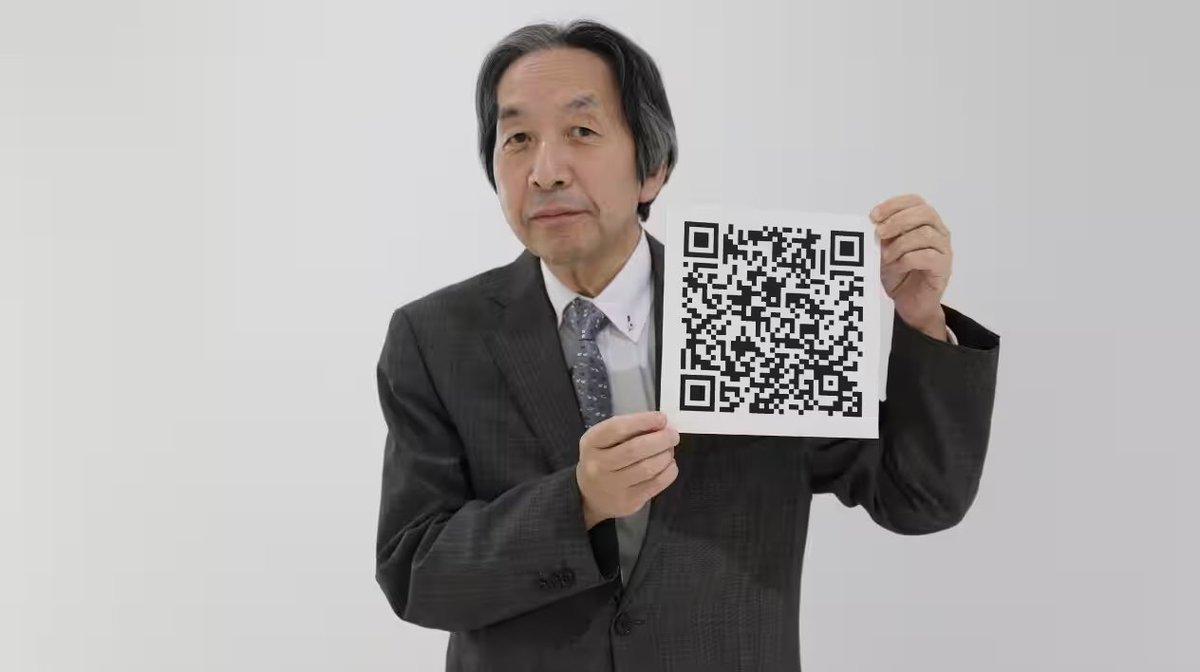
A Japanese engineer invented the QR code for one job, tracking car parts on a Toyota line, then his company chose to give the patent away for free, which is the only reason it ended up on every restaurant table on Earth.
His name is Masahiro Hara. The company was Denso Wave, a parts supplier owned by Toyota.
In 1992 the problem landed on his desk, and it was not glamorous. Workers on the factory floor were drowning.
Every car part had a barcode, but a barcode can only hold about twenty characters, so to track one component they had to stick five or ten barcodes on it.
A worker would stand there scanning a single part ten times in a row. Some of them were scanning close to a thousand barcodes a day. The job had stopped being about building cars and turned into pointing a scanner at stickers all day long.
And there was a second problem nobody upstairs cared about. This was a factory. Oil got on everything. A smudge of grease across a barcode and the whole thing became unreadable, and the line stopped.
Hara was asked to make the scanner faster. He looked at it for a while and realized the scanner was not the problem. The barcode itself was the ceiling. A line of black bars can only hold information going one direction, left to right.
He decided to build something that held information in two directions, up and down as well as across, so it could store hundreds of times more in the same little square.
Then came the part that sounds made up but is not.
Hara played Go on his lunch breaks, the old board game with black and white stones sitting on a grid. He was staring at the board one day and it clicked.
The grid of black and white stones was already a way to store information in two directions. That was the shape of his code.
But building the code was the easy half. The hard problem was speed, because the whole point was to be fast, and a scanner wastes most of its time just trying to figure out where the code is and which way it is turned.
The fix came to him on a train. He was looking out the window at buildings, and one building stood out from all the others because of its shape against the sky. That was the idea.
He put three little square targets in three corners of the code. The moment a scanner sees those three squares, it knows instantly where the code is and how it is rotated, even upside down, even at an angle.
Now here is the detail that shows how far he was willing to go. Those three corner squares only work if nothing else on the page looks like them.
If a magazine ad or a cardboard box happened to have the same black and white pattern nearby, the scanner would get confused and grab the wrong thing.
So Hara and his tiny two-person team went and surveyed printed material. Magazines. Flyers. Cardboard boxes. Piles of it, for days, reducing every picture down to its ratio of black to white area, hunting for the one ratio that almost never shows up in print anywhere. They found it. One to one to three to one to one.
That exact rhythm of black and white is baked into every corner square of every QR code on Earth, and it is there because it is the pattern the printed world almost never produces by accident.
Then he solved the oil.
He built the code so it carries a backup of its own information, spread mathematically across the whole square. You can tear off, smudge, or scratch out up to thirty percent of a QR code and it still scans perfectly, because the code rebuilds the missing piece from the copy it kept of itself.
A worker could get grease on a third of the label and the line would keep moving. This is the same math that lets a scratched CD still play and lets a spacecraft send data back across the solar system without asking to repeat itself.
He finished in 1994. He named it Quick Response, after what it does for the person using it, not after what it is.
And then Denso made the decision that actually mattered.
They held the patent. They could have charged a fee on every single scan, and given how many billions happen now, that would have made someone unimaginably rich.
Instead they announced they would not enforce their rights to collect royalties, and they published the specification openly so anyone could use it. Hara later said it was not even a big argument inside the company.
That one choice is the whole story. A code that costs nothing to use is a code everyone builds on. Airlines put it on tickets. Phone makers built readers into cameras.
Then a pandemic hit and the world needed a way to hand someone information without touching anything, and the free little square that a Toyota engineer built for greasy factory workers was suddenly on every menu, every payment, every door.
Hara still works there. He has said, more than once, that he never imagined it would spread this far, and that the part he is proudest of is that it got used to keep people safe.
The man built it to survive oil on a factory floor. It ended up surviving everything else too.
You have scanned his work a hundred times this year. Now you know whose it was.
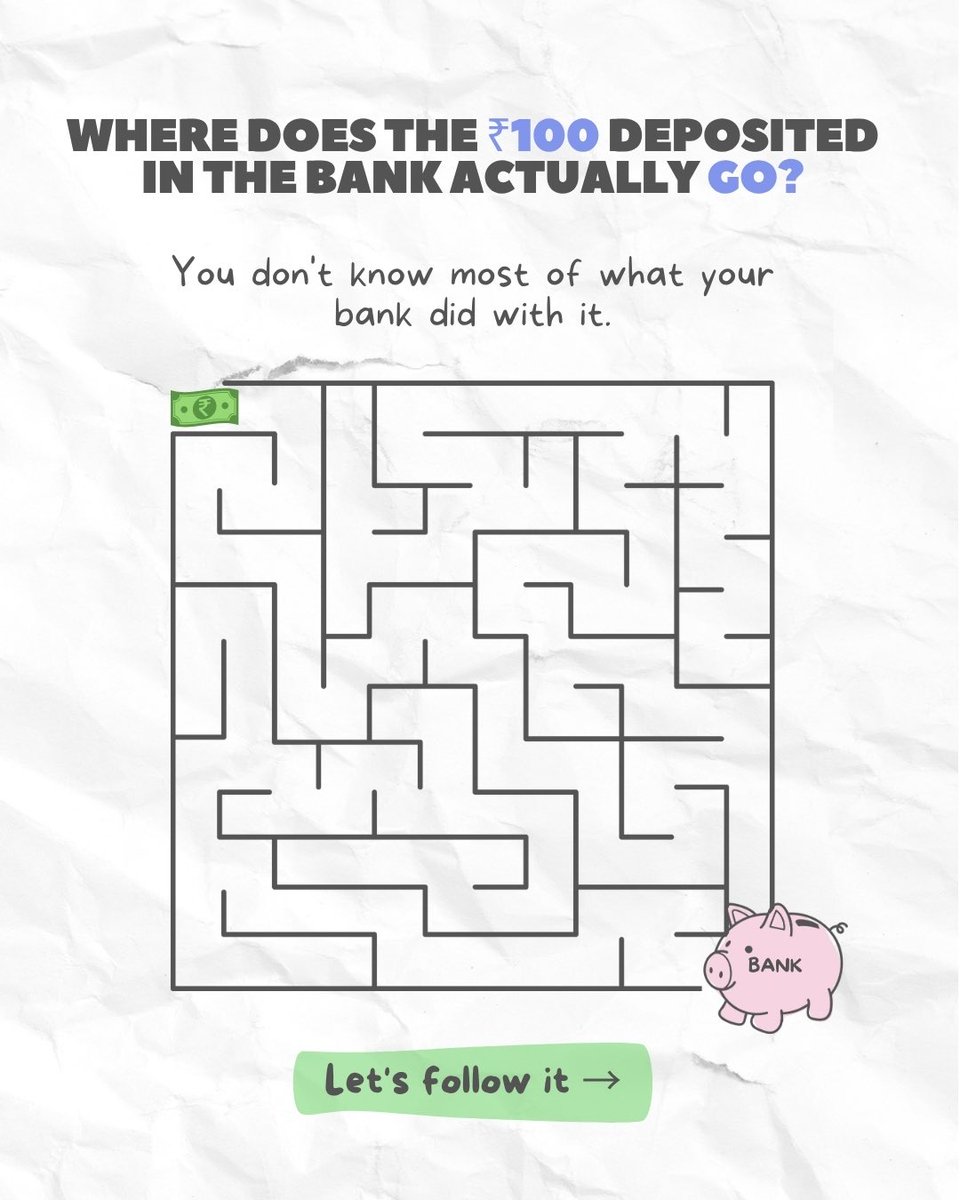
Did you know your ₹100 in the bank isn’t sitting in a vault?
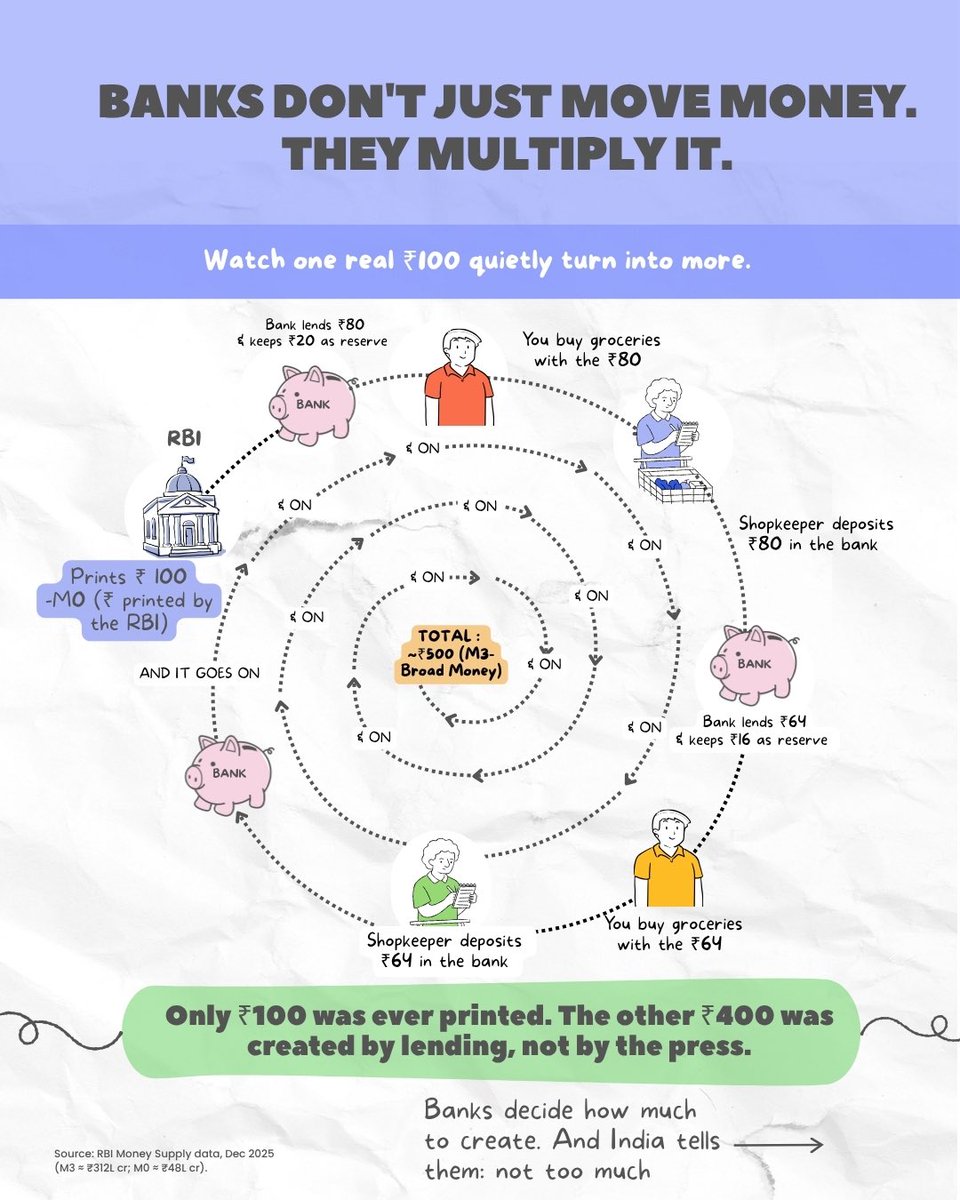
It’s lent, spent, and re-deposited within hours. One printed ₹100 turns into ₹500 across the economy. Banks decide how much.
India runs this slower than the rest of the world. 50% credit-to-GDP against a global 148%. On purpose.
The instinct was built in 1969 and never left. It’s the shield that kept India out of 2008. It’s also the ceiling.
You can’t fully have one without the other..
If you watch only one investing video this year, make it this one.
Warren Buffett. 1998. 84 minutes.
He explained how to never lose money.
That framework is now worth $1 trillion.
The best investing course you'll never pay for.
Even 5 minutes can shift your investing mindset more than hours of market noise.
Save it.
I'm in love with this quote.
"The highest form of wealth is the ability to wake up every morning and say, I can do whatever I want today.'"
- Morgan Housel