Managing Partner at SourceMash. We build AI enablement, automation & digital transformation that ships - real strategy plus execution. Let’s Talk - SourceMash
Two more of Google's top Gemini researchers are reportedly off to Anthropic. The headline is the talent war. The real story for buyers: frontier capability is consolidating into 2-3 labs — so your "AI strategy" is now a vendor-concentration bet. Plan for it.
The best-run engagements I've been part of all start the same way: hour one isn't about the work. It's about agreeing how we'll disagree — who decides when we're stuck, how fast we escalate. Settle that on day one and you never lose a week to a standoff in week six.
4/ Surface the Q&A. Real customer questions plus your answers are the most citable content on your site — they match how people ask AI. Stop hiding them three clicks deep.
1/ Your customer reviews are now SEO assets. AI answer engines pull from them when deciding what to recommend. Most brands treat reviews as a vanity widget. Here's how to make them work for search instead. 🧵
3/ Structure them so they're readable. Reviews trapped in a JS widget an engine can't crawl don't exist. Render the text in HTML, with the product and the attribute clearly tied to it.
The most expensive consultant is the one who agrees with you in the first meeting. You're not paying for a yes. You're paying for the person willing to tell you the project you scoped isn't the project you actually need.
M-Files just shipped AI agents for document workflows. The tip nobody sells you: a content agent is only as good as your metadata. Messy structure in, confident-but-wrong out. Fix how your files are tagged and organized before you point an agent at them.
OpenAI is building its own inference chip with Broadcom. The signal for buyers: the cost that matters isn't training the model — it's running it. When the biggest lab optimizes inference economics, your per-seat AI pricing follows. Budget for the run, not the demo.
SpaceX buying Cursor for $60B isn’t a coding story.
It’s a stack story. Whoever owns the compute AND the developer’s cursor owns the whole pipeline — from the chip to the keystroke.
The platform war just moved up a layer. “Best model” stopped being the moat a while ago.
We stopped asking teams “is it done?”
Now we ask: “what would you need to feel safe shipping this?”
The first question gets you a yes. The second gets you the real risk — the thing they were quietly worried about but no one made space to say.
4/ A checkout an agent can actually complete — fewer forced steps, fewer human-only gates on the path. And copy specific enough for a model to quote back. Optimize for the agent’s shortlist, not just the human scroll.
1/ Agentic commerce is almost here. Soon a shopping AI — not a shopper — lands on your product page, evaluates it, and decides whether to buy. Most stores aren’t readable to a machine that’s trying to check out. 4 things to fix: 🧵
3/ Real-time inventory + price via API. Agents won’t tolerate “add to cart, then discover it’s out of stock.” Stale data gets you dropped from the shortlist on the spot.
Most “strategy decks” aren’t strategy.
They’re an expensive permission slip for a decision the client already made.
The real work isn’t the 40 slides. It’s the one conversation where someone finally says the thing everyone was avoiding.
Another AI “modernization platform” just raised $60M this week.
These tools are getting good at the rewrite. They still can’t tell you WHICH legacy system to modernize first.
That’s a discovery question, not a tooling one. Modernizing the wrong one fast is just expensive.
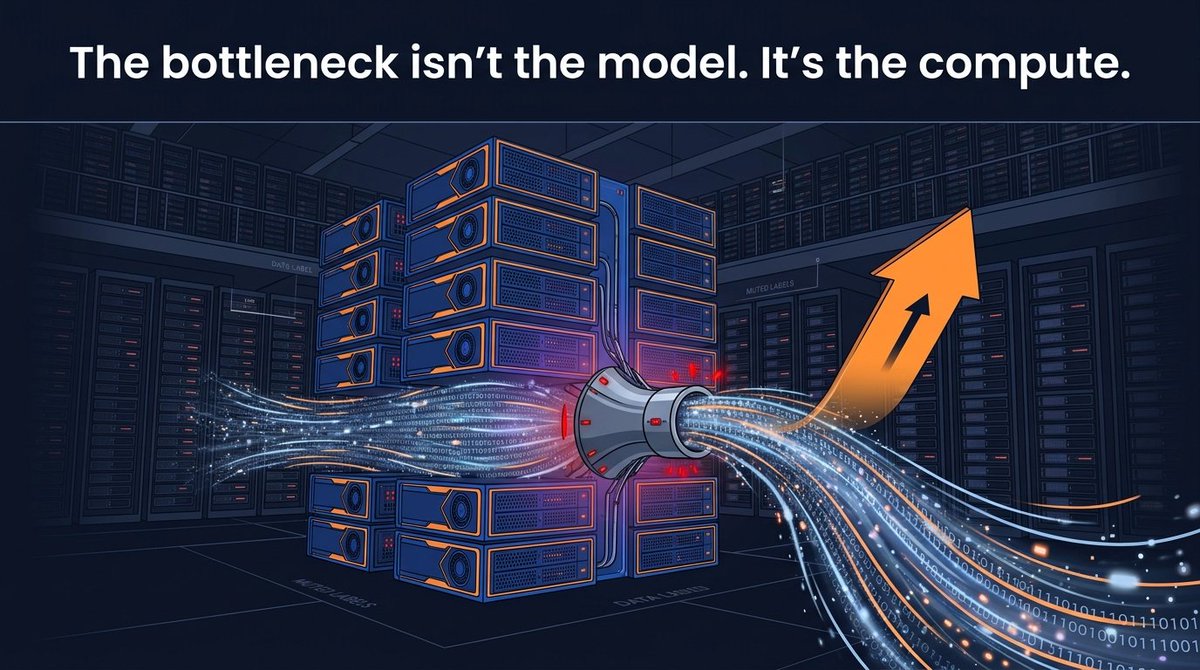
AI’s real 2026 bottleneck isn’t model quality. It’s compute supply.
When the labs behind your tools are paying over a billion dollars a month just to rent capacity, that cost lands somewhere — usually your renewal.
Budget for AI like a volatile utility, not a fixed SaaS line.
OpenAI raises $122B at an $852B valuation — and Nvidia put $30B of it in.
The headline is the number. The real story is the circle: the chipmaker funding its biggest customer to go buy more chips.
That's not investing in AI demand. That's manufacturing it.
A thing I underestimated for years: protecting the team's focus is a leadership job, not the team's.
Every "quick favor" you wave through is a tax someone pays later in context-switching.
The best operators I know are ruthless about what they keep OFF the team's plate.